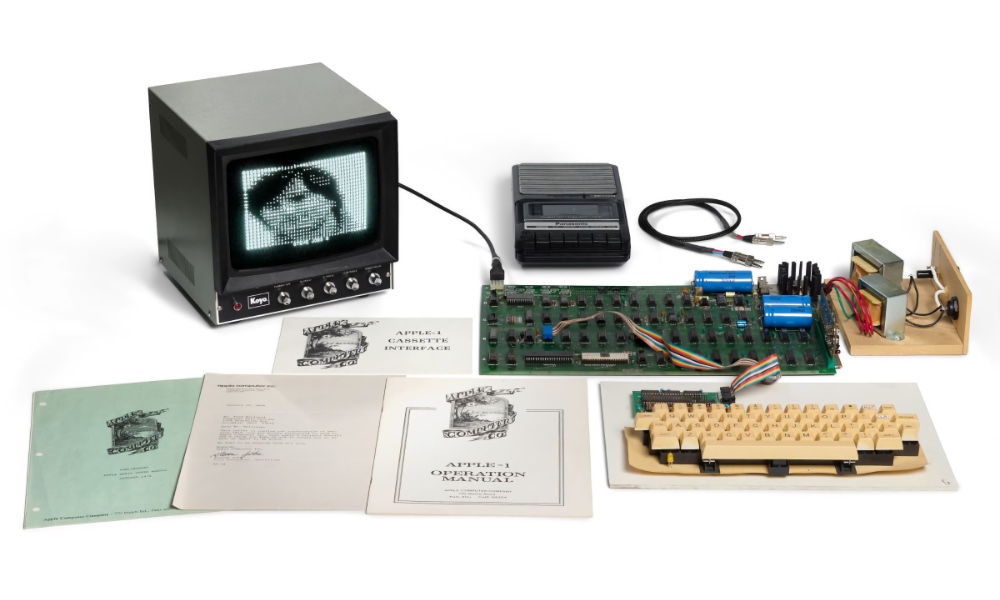
When we talk about the beginnings of Apple, we're not just talking about a startup that emerged from a humble garage, but a pivotal moment that forever altered the course of technological history. Today, an exceptional opportunity presents itself for collectors of rare items, as Bonhams auction house prepares to offer one of the rarest computers in the world: a fully functional Apple-1, number 48 in the official Apple-1 catalog, signed by co-founder Steve Wozniak, and accompanied by an extremely rare historical letter signed by Steve Jobs himself. Estimates suggest this historic machine could fetch up to $800, and perhaps even more, at the upcoming Science, Technology, and Computing History auction this October.
The Hatfield story: Jobs' letter and a promotion rejected because of $400
This computer is named the “Hatfield Apple-1” after its original owner, Fred Hatfield, a tech enthusiast and former employee of Computer Data Systems. The story begins when Hatfield purchased the machine in 1976, but he later complained about the limited software available for the Apple-1, a common complaint for a device at the dawn of the technological revolution. This is where the true magic of this machine lies; Hatfield received an official letter, dated January 18, 1978, personally signed by Steve Jobs, then Vice President of Operations at Apple Computer Inc., offering to replace his machine with the newer Apple II, equipped with 4 kilobytes of memory.
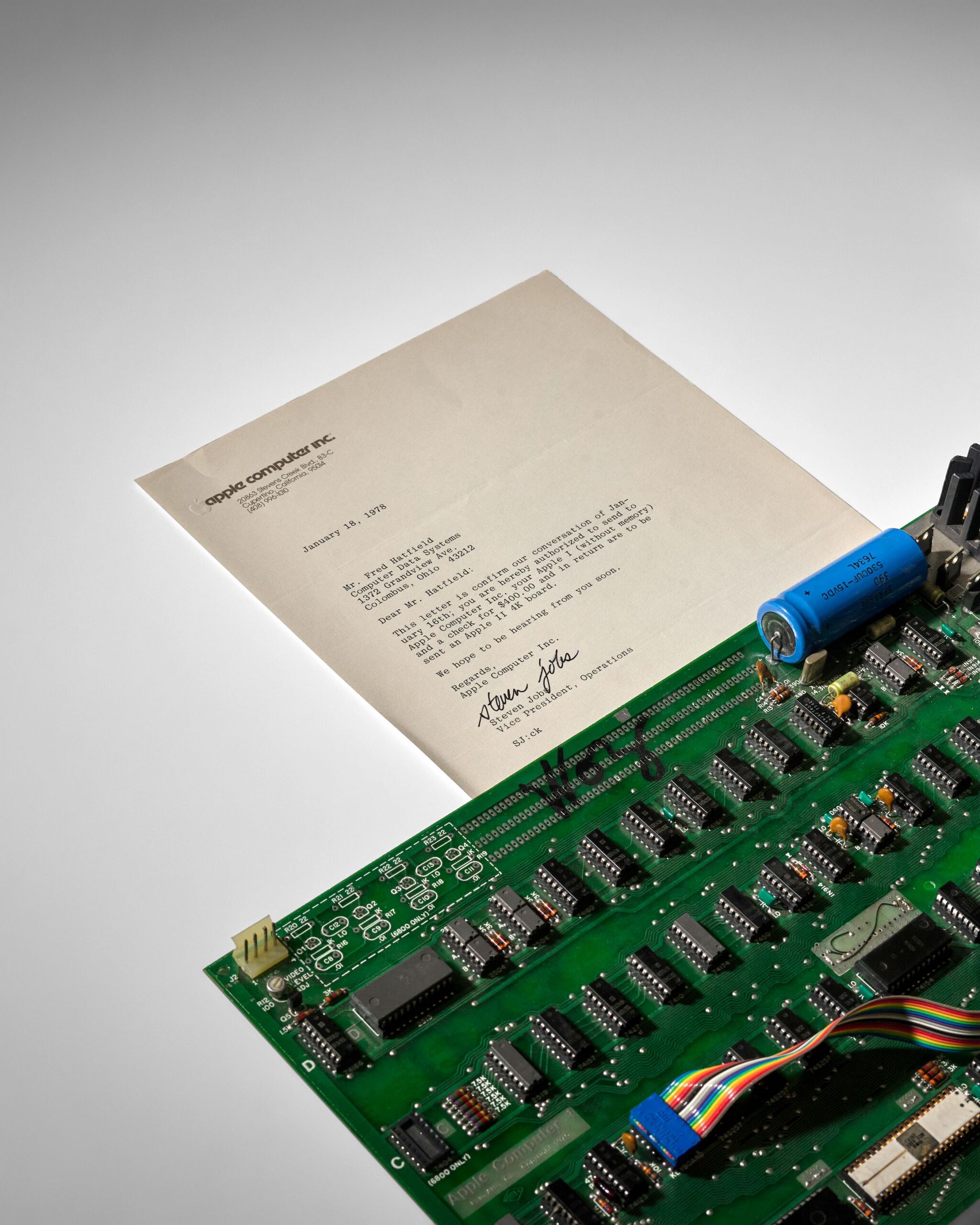
The funny irony of the story is that Hatfield refused Jobs' offer! Why? The offer required him to pay an additional $400 for the upgrade, which he considered a huge sum at the time, so he decided to keep his old computer in the closet. This rare piece of paper correspondence is priceless today, as it documents a golden era when Steve Jobs and Steve Wozniak personally managed everything, from soldering and assembly to directly responding to customer complaints and providing technical support.
From a broken machine to a legend worth nearly a million dollars
The computer remained in Hatfield's possession until 2013, when he sold it in a completely non-functional state for $40. The new buyer didn't leave it as a silent piece of junk. Instead, he undertook a monumental engineering effort to repair it, replacing the damaged components with genuine parts until it was fully functional again. He later obtained Steve Wozniak's personal signature on the motherboard and sold it at auction for $671,400. Today, the computer is returning to auction platforms in remarkably good working condition, making it one of fewer than 75 Apple-1s remaining in the world, and one of the very few that are still alive and kicking.
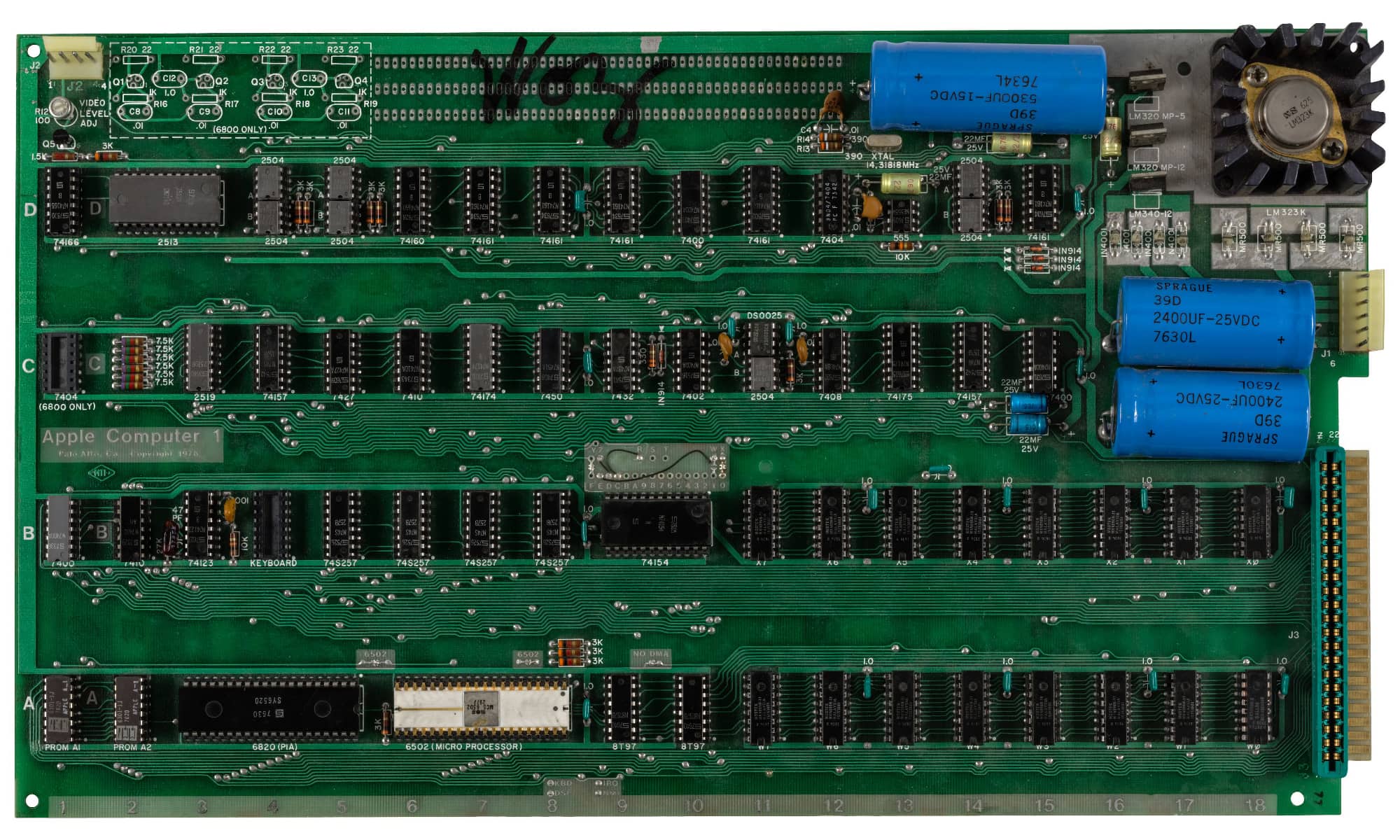
According to Ian Illing, director of books and manuscripts at Bonhams North America, this device represents the cornerstone of the personal computing revolution. Its continued functionality, Wozniak's signature on the keypad, and an original letter from Jobs make it the most complete and significant copy ever produced. It will be available for public and private viewings in Los Angeles, Boston, and San Francisco before moving to New York for bidding from October 4 to 14.
Specifications ahead of their time and other treasures up for auction
Jobs and Wozniak produced only about 200 units of the Apple-1 computer in 1976. Originally, the device was just a bare circuit board that hobbyists had to assemble themselves, before Jobs persuaded The Byte Shop to buy 50 fully assembled units for the exorbitant price of $666.66. The computer was based on the popular 8-bit MOS Technology 6502 processor and featured an integrated video circuit that allowed it to be connected directly to a home television via a standard video cable, saving users the expense of purchasing expensive computer monitors at the time, although the buyer still had to provide the keyboard, power supply, and outer casing.
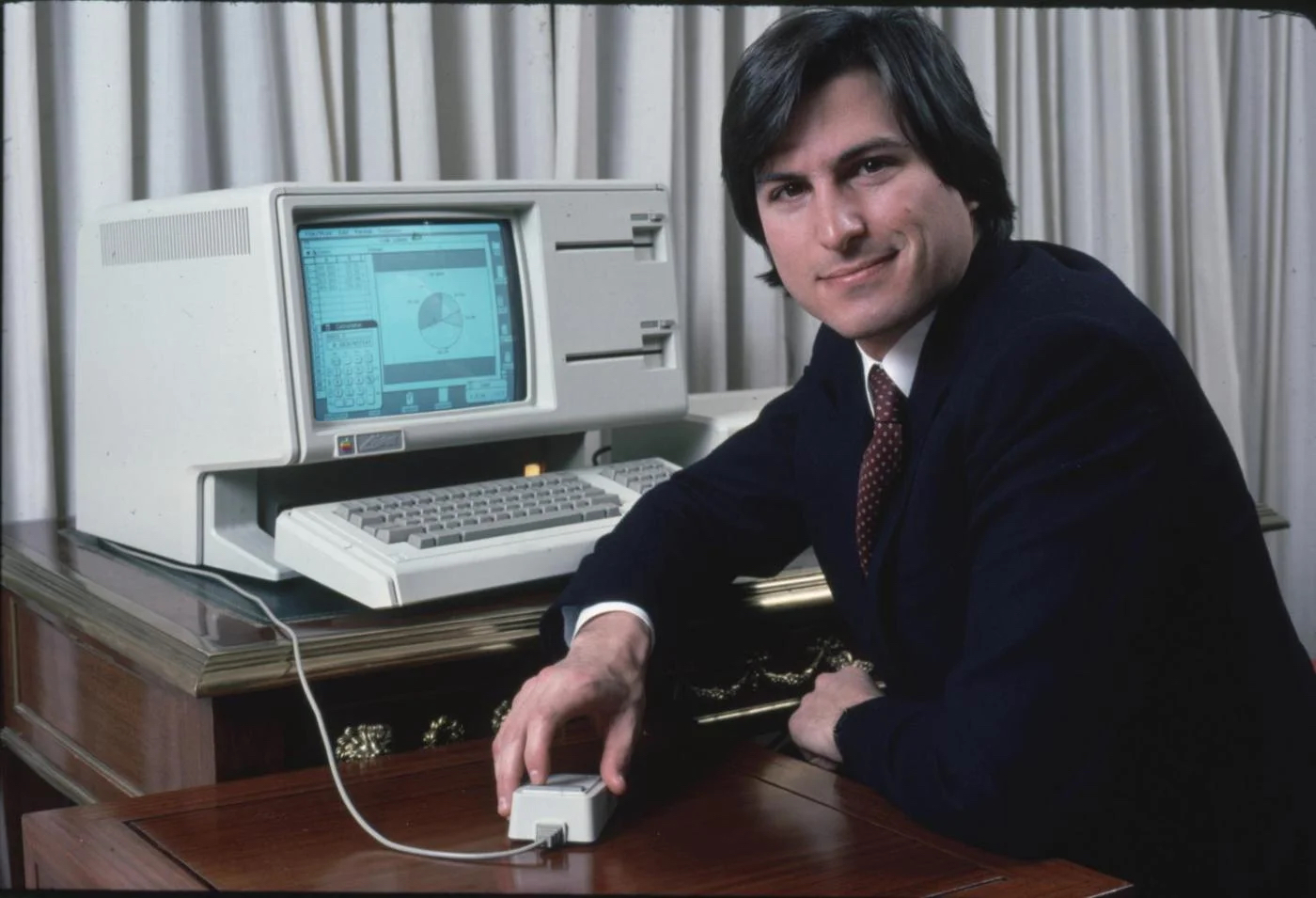
The upcoming auction will not be limited to the Apple-1 only, but will include other rare items that will make Apple fans salivate, most notably the rare Apple Lisa 1 computer expected to fetch between $50 and $80, the famous Jolly Roger pirate flag designed by Susan Kerr and flown by the original Macintosh development teams, a rare prototype of the Apple Paladin with an estimated price of up to $60, in addition to a transparent plastic prototype of the flagship Macintosh Portable.
Source:


4 comment