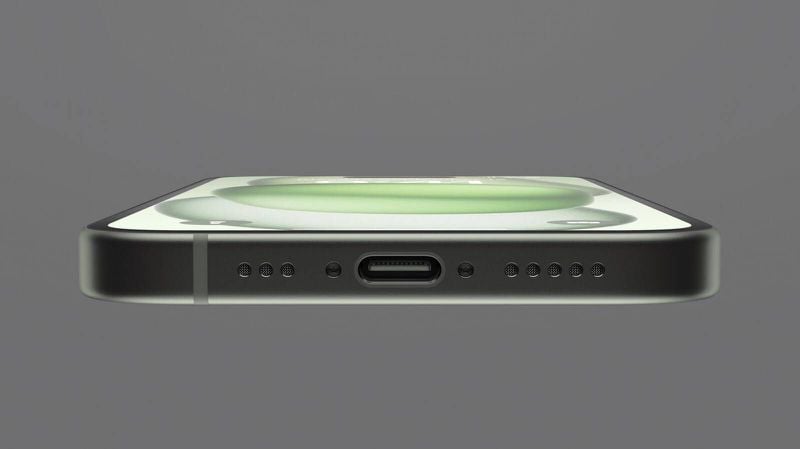
The USB‑C port today is a global standard that seamlessly combines charging, data transfer, and media playback. The iPhone 15 series and later models come equipped with this port, allowing users to charge the device and easily connect it to a wide range of accessories such as Macs, iPads, even AirPods, as well as external storage devices. The iPhone can also connect to external displays without any issue, providing a more flexible user experience. But that’s not all—below we will explore more of the amazing capabilities of the new port and see how iOS 26 turned the USB‑C port into a superpower.
iPhone-to-iPhone Charging
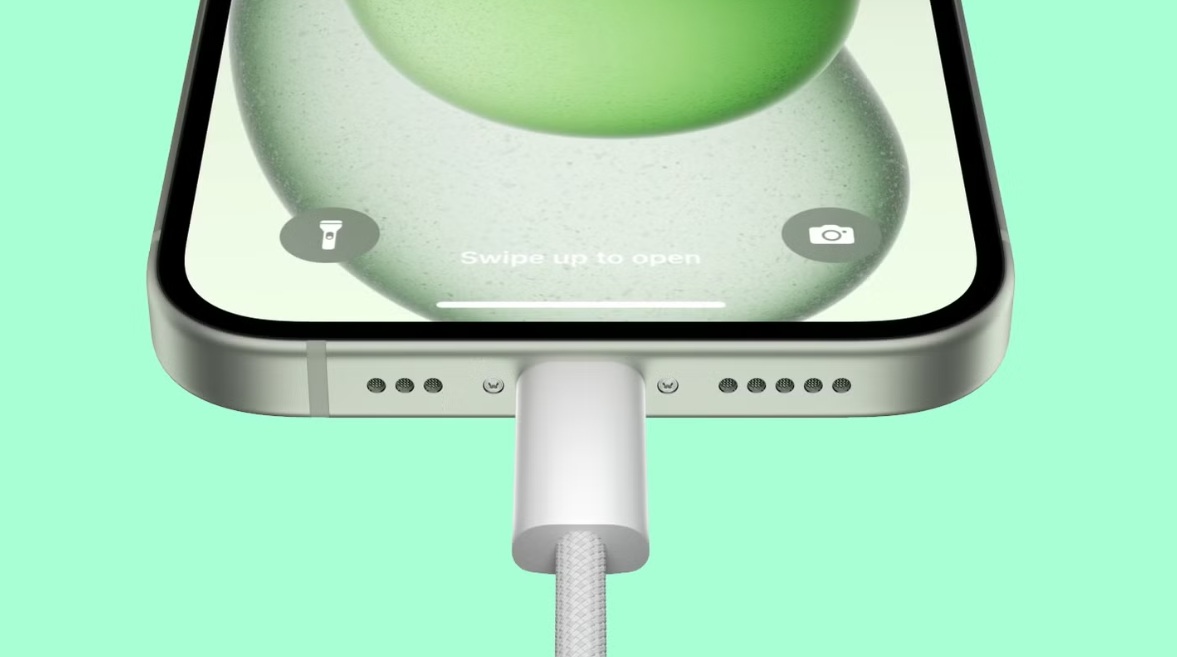
Imagine your iPhone’s battery is about to run out and there’s no power outlet nearby, but a friend has enough charge. With a USB‑C cable you can transfer power directly from one device to another. This capability turns the iPhone into a smart portable battery, ideal for travel, outdoor events, or any emergency situation. It’s a simple idea but crucial in critical moments.
The iPhone as a Power Source for Your Accessories
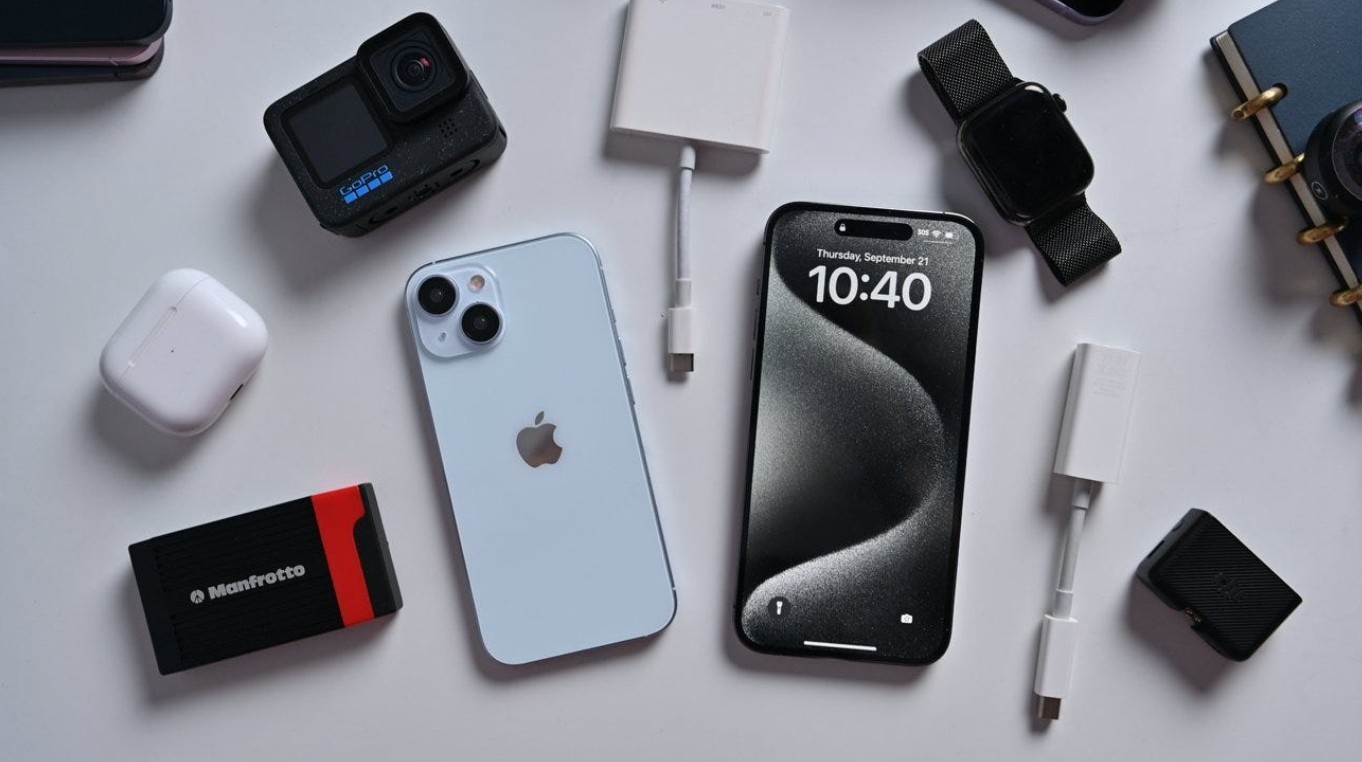
With iOS 26, the phone becomes more independent in power management. You can charge your earbuds, smartwatch, or any USB‑C‑compatible accessory directly from the iPhone. Thus, instead of carrying multiple chargers and cables, a single cable is enough to charge all your various devices with ease. This flexibility is useful for those who work on the go or rely on their devices all day.
Turning the iPhone into a Real Workstation
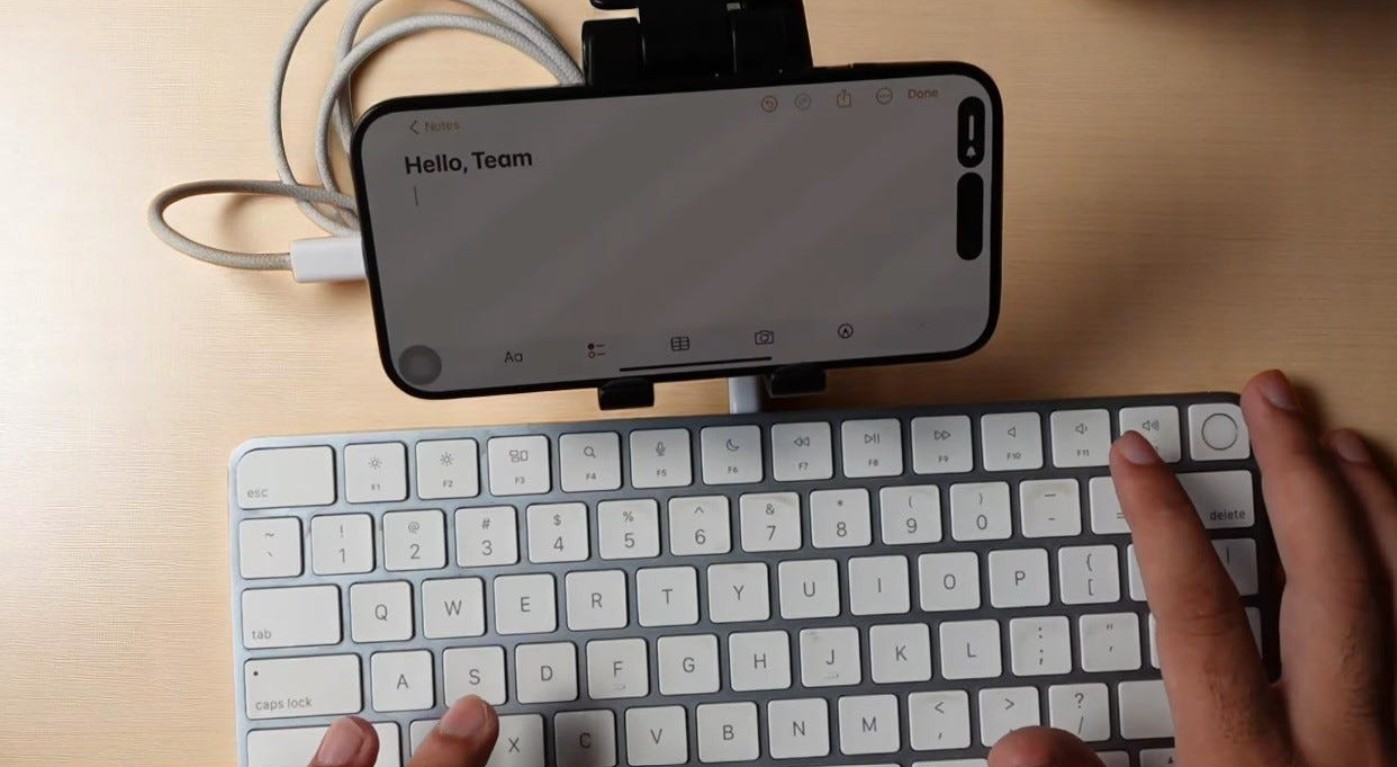
One powerful use that many overlook is support for external keyboards. When a full keyboard is connected via USB‑C, the iPhone becomes a comfortable writing and productivity environment. Consequently, this feature can be leveraged to write articles, edit documents, and take long notes faster and more professionally. Moreover, with external keyboard support, the iPhone becomes a very valuable tool for work and study.
Transferring Large Files at Rocket Speed
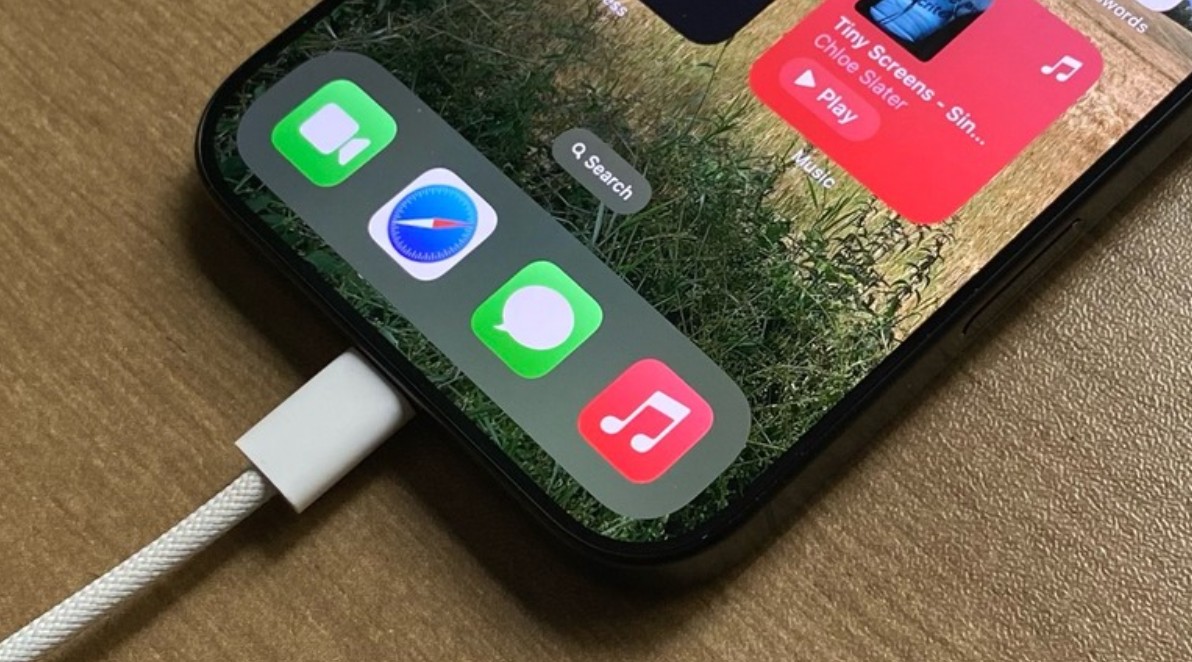
Although wireless transfer is convenient, a cable remains the fastest option when dealing with high‑quality videos or libraries containing large images. Through the USB‑C port, iOS 26 allows more data to be moved in less time, meaning higher productivity—a crucial advantage for content creators, photographers, and even everyday users who constantly handle large files.
The USB‑C Port as a Complete System
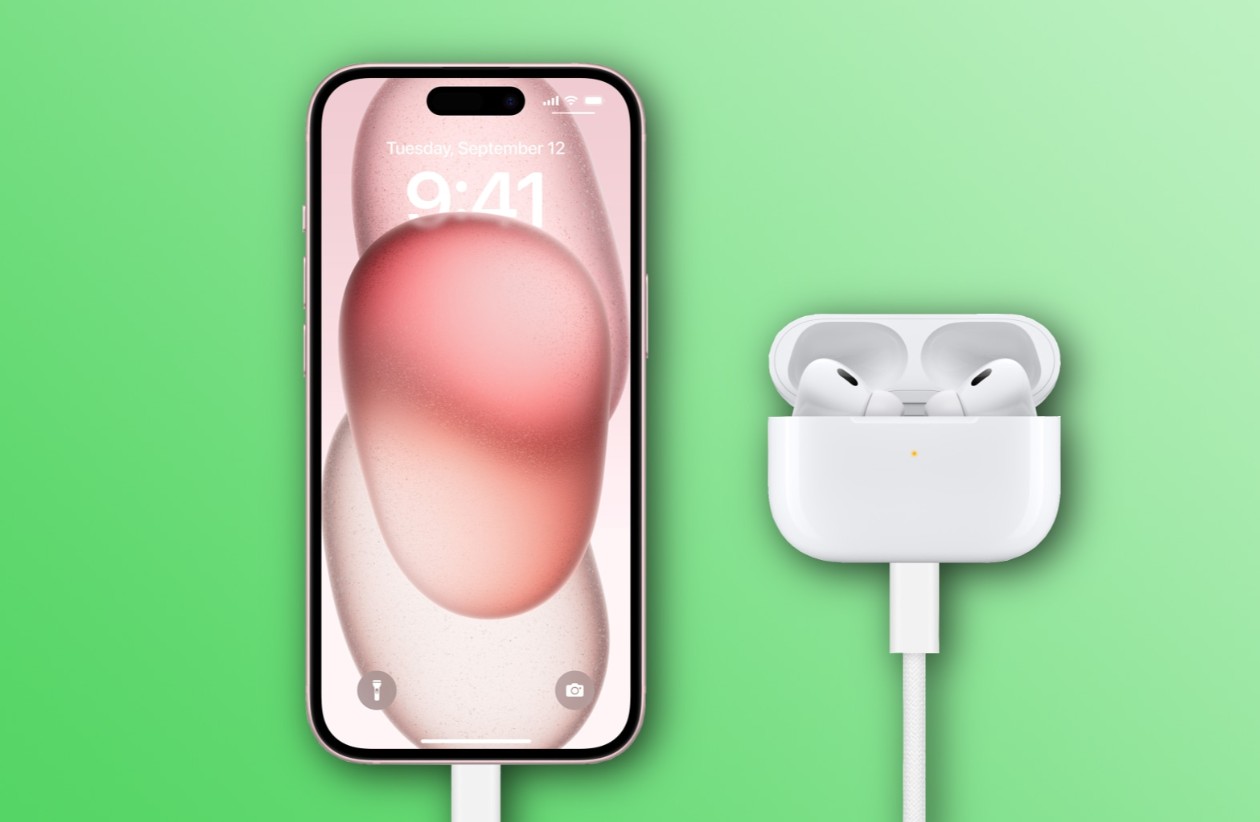
The shift to USB‑C is not a cosmetic decision, but part of a broader move toward unification and flexibility. USB‑C is a single port that can:
- Charging
- Power sharing
- Connecting professional accessories
- High‑speed data transfer
Then it’s the operating system’s turn: iOS 26 intelligently leverages these capabilities, making the user experience less complicated.
We have reached the end after learning how iOS 26 turned the USB‑C port into a superpower. It can be said that this port was not just a technical upgrade, but a radical transformation that enhances the iPhone’s capabilities. It goes beyond faster charging or data transfer, opening new possibilities—from connecting to external displays and storage devices to seamless integration with other Apple products—making the overall experience more integrated and flexible than ever before.
Do you think the USB‑C port is a game‑changer for the iPhone? Let us know in the comments!
Source:
Leave a Reply