For years, both Telegram and Signal have sat on the throne of messaging apps as the safe and final refuge for those seeking privacy and end-to-end encryption. Over time, a common belief took root that deleting messages or even removing the app from the phone was enough to permanently erase any trace of conversations. However, recent investigations have revealed a vulnerability in the iPhone that allows access to parts of messages indirectly, without the need to hack the app or break the encryption. In this article, we review the details of this vulnerability, how it can affect your privacy, and most importantly, what you can do to secure your conversations and prevent spying.
A vulnerability in the iPhone
The story began when the FBI was able to access incoming messages from the Signal app on an iPhone belonging to a suspect, even though the app itself had been deleted from the device. This was not the result of breaking encryption or hacking servers, but rather due to an unexpected vulnerability: the iOS notification system.
Where does the problem lie?
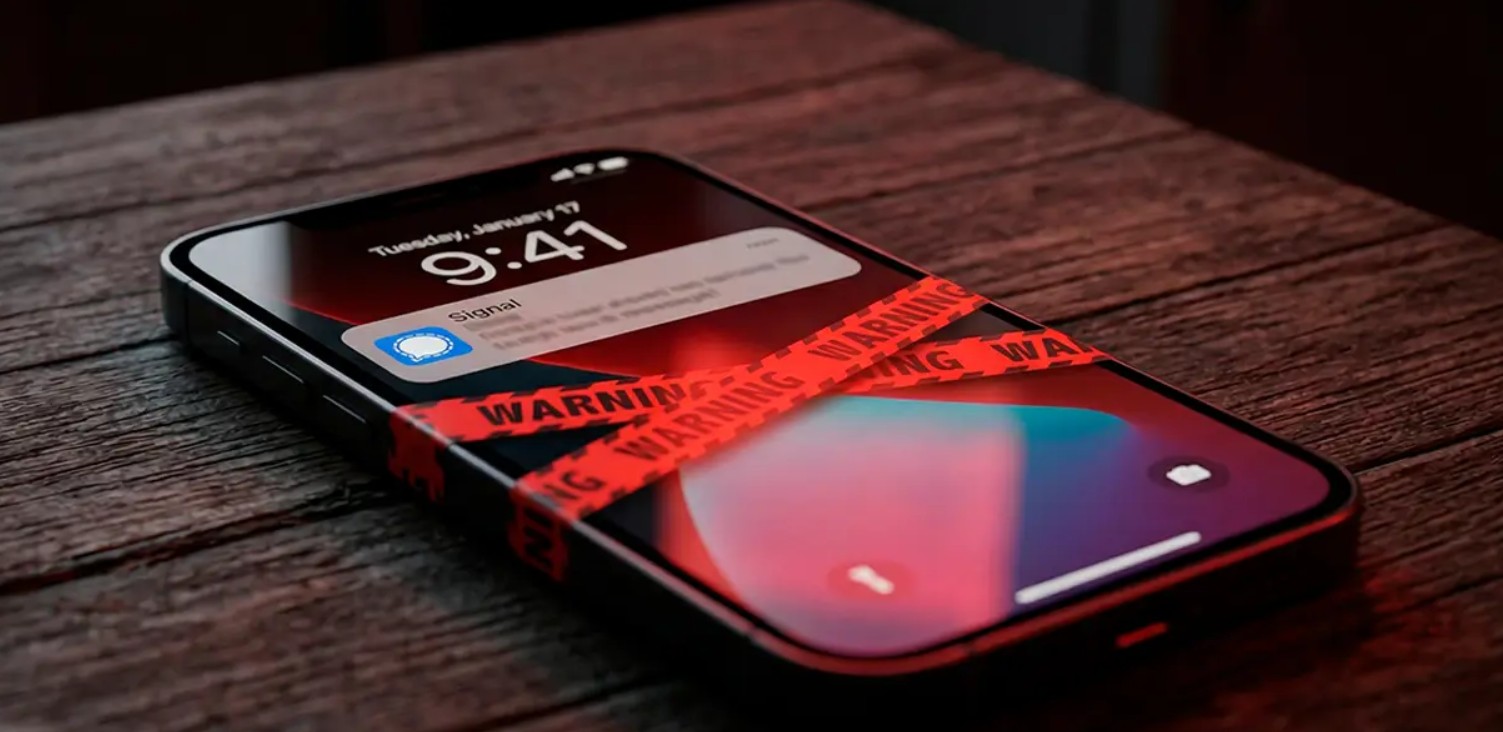
When you receive a message through any app, the iPhone operating system displays a portion of it within notifications, whether on the lock screen or in the Notification Center. This data does not always disappear once the app is deleted; it may remain stored within system databases for a certain period. This is where the vulnerability lies: even if the app relies on end-to-end encryption, the content of the messages may remain visible outside the app itself, specifically within the notification log.
In other words, encryption protects messages during transmission, but it does not prevent them from appearing as plain text if the phone’s settings allow it.
What were they able to see?

It can be said that the investigators were not able to access the messages sent by the phone owner, but they were able to view the messages received by them—the other side of the conversation. This alone is enough to reveal half the story, and sometimes the entire story.
What is the solution?

This problem is not a complex vulnerability but rather the result of a default setting that most users prefer for ease of use. You can simply reduce this risk by controlling notification content within the app itself. In Signal, for example, you can prevent the message text or even the sender’s name from appearing in notifications. However, this comes at a price, as you will lose the feature of quickly knowing the message content without opening the app, which some may find annoying during daily use. Nevertheless, protecting privacy should come at the expense of convenience.
Is the problem limited to Signal only?
The answer is no. Any app that displays message content within notifications can face the same scenario. Therefore, it is best to review the settings of all messaging apps you use, rather than just changing the settings in Signal or Telegram.
As for WhatsApp users, another disaster is looming. Pavel Durov, the founder of Telegram, stated that the Meta-owned app is the biggest user scam in history. Durov based his accusation on lawsuits alleging the existence of backdoors that allow app employees and third parties to bypass the encryption system and read users’ private messages. Although WhatsApp rushed to deny these allegations entirely, describing them as ridiculous and completely false, the seeds of doubt have been sown, prompting many to seriously consider migrating to more transparent alternatives.
Even Telegram, which claims to be the strongest in terms of protection and privacy, is not immune to security vulnerabilities. A vulnerability was recently discovered within the app that could lead to exposing users’ IP addresses, helping to track them and determine their geographic locations with ease.
Finally, in a world where governments and companies are racing to collect user data, relying on promises of end-to-end encryption is no longer enough. Digital security has become a personal responsibility that requires deep awareness and a precise understanding of how to enhance privacy and secure your sensitive data; otherwise, a fleeting message on an iPhone lock screen could be the vulnerability that tears down your wall of privacy.
Will you change your settings after this information, or do you think it is an exaggeration? Tell us in the comments!
Source:

Leave a Reply