It seems the Apple train never stops breaking records. At a time when the technology sector is groaning under the weight of economic challenges, Apple has succeeded in seizing the lead in global smartphone shipments during the first quarter of 2026. This achievement is not just a fleeting figure; it is the first time in history that Apple has dominated the top spot in the opening quarter of the year (the March quarter), a quarter that has long been the playground for its traditional rivals while it takes its post-holiday season break.
Numbers that speak the language of excellence
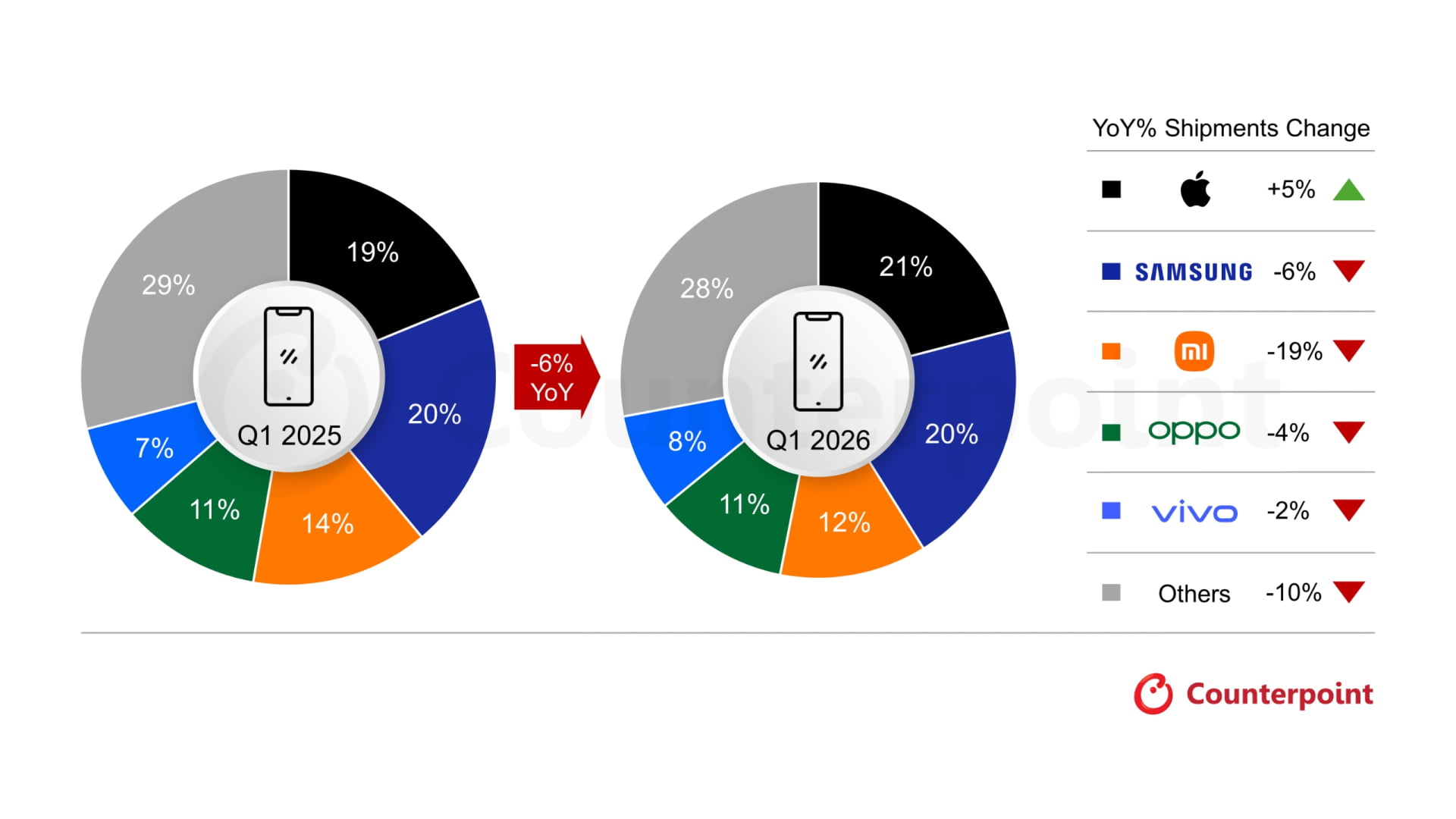
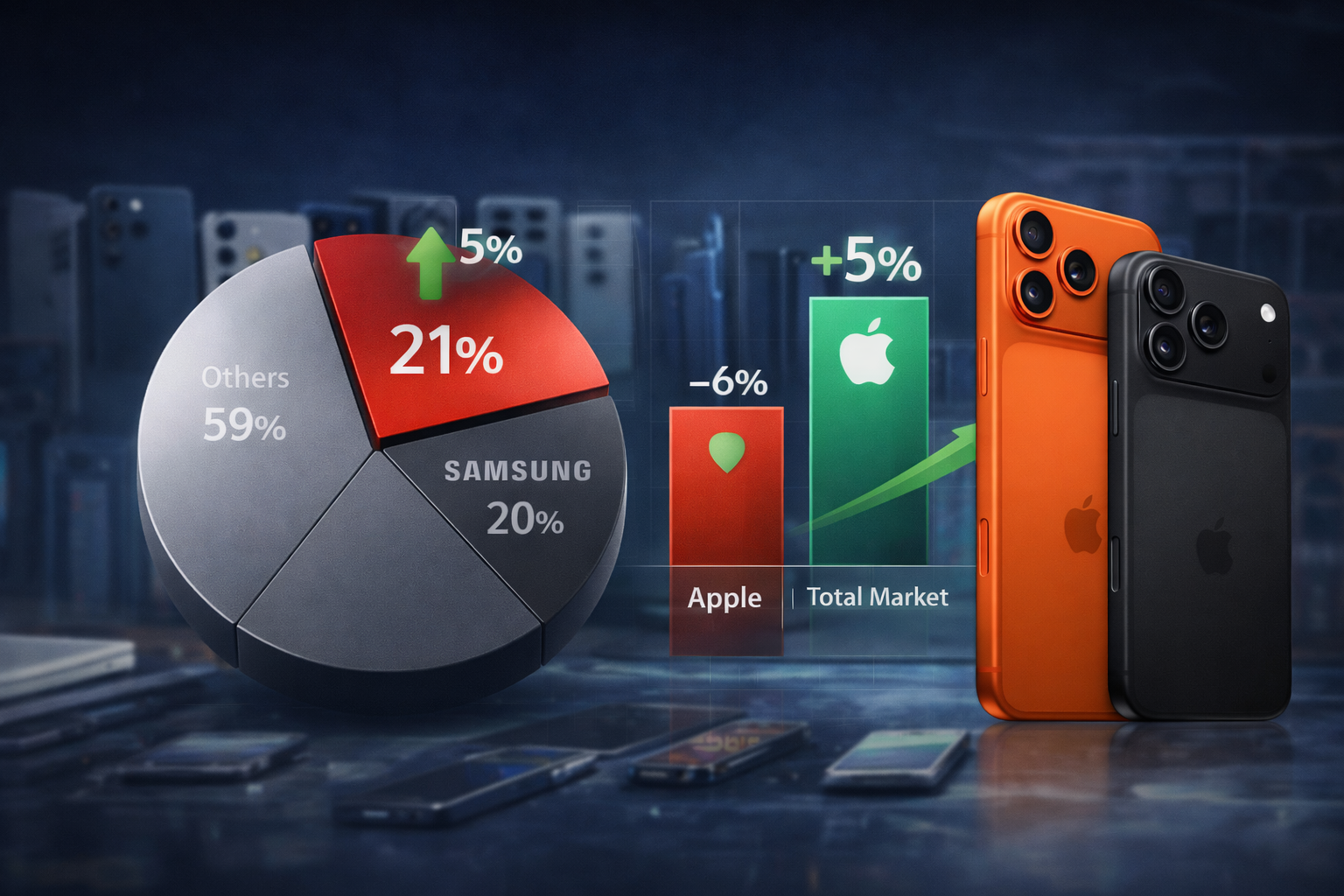
According to the latest data from Counterpoint Research, Apple captured a 21% market share, achieving a 5% year-over-year growth. What is truly surprising is that this growth came at a time when industry shipments as a whole shrank by 6%. In other words, while others were retreating, Apple was devouring their market shares with an open appetite.
This sweeping victory is an extension of the successes of 2025, where Apple displaced Samsung from its throne as the largest phone manufacturer by volume. It seems that momentum has not lost its steam; rather, it has intensified with the start of the new year, supported by demand that Tim Cook described as “stunning” for the iPhone 17 series.
The secret recipe: iPhone 17 and China
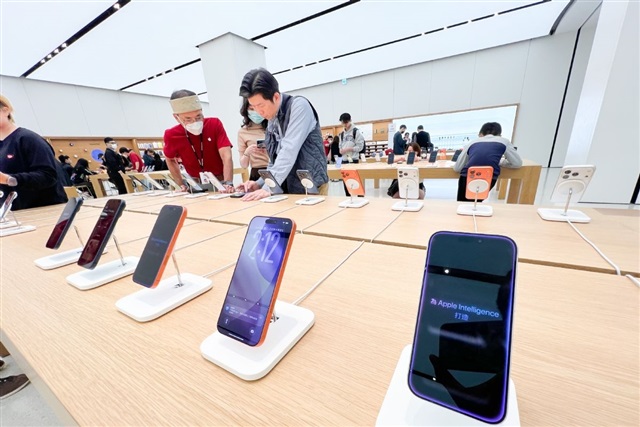
What drives people to flock to the iPhone 17 in this way? The secret lies in the perfect blend of design and performance. The success was not limited to Western markets; Apple achieved a massive 23% jump in its sales in China during the first weeks of the year, a market that was previously considered a major challenge. While local competitors struggled to maintain their positions, Apple was smiling and reaping the gains.
Even with the challenges faced by some of the company’s services and global price changes, user loyalty to the Apple brand remained an impregnable fortress. The ability to maintain this momentum in a volatile market requires more than just a good product; it requires a strategic vision that knows when and how to strike hard.
The memory crisis and besieged competitors
One of the most important stories this quarter is the acute global shortage of DRAM and NAND memory. Suppliers are currently directing their energy toward high-profit AI data centers, leaving phone manufacturers struggling with high component costs. Here, Apple’s genius in supply chain management shines; it appears relatively immune to these pressures thanks to its positioning in the premium segment and its close relationships with suppliers.
In contrast, Samsung fell to second place with a 20% share. This decline is partly due to the delayed launch of the Galaxy S26 series and the general weakness in its budget models. Samsung has already begun to reduce its budget options and push users toward more expensive tiers to counter rising component prices, but it seems users prefer to go straight to the “original” when it comes to luxury phones.
The collapse of budget segments and Apple’s resilience
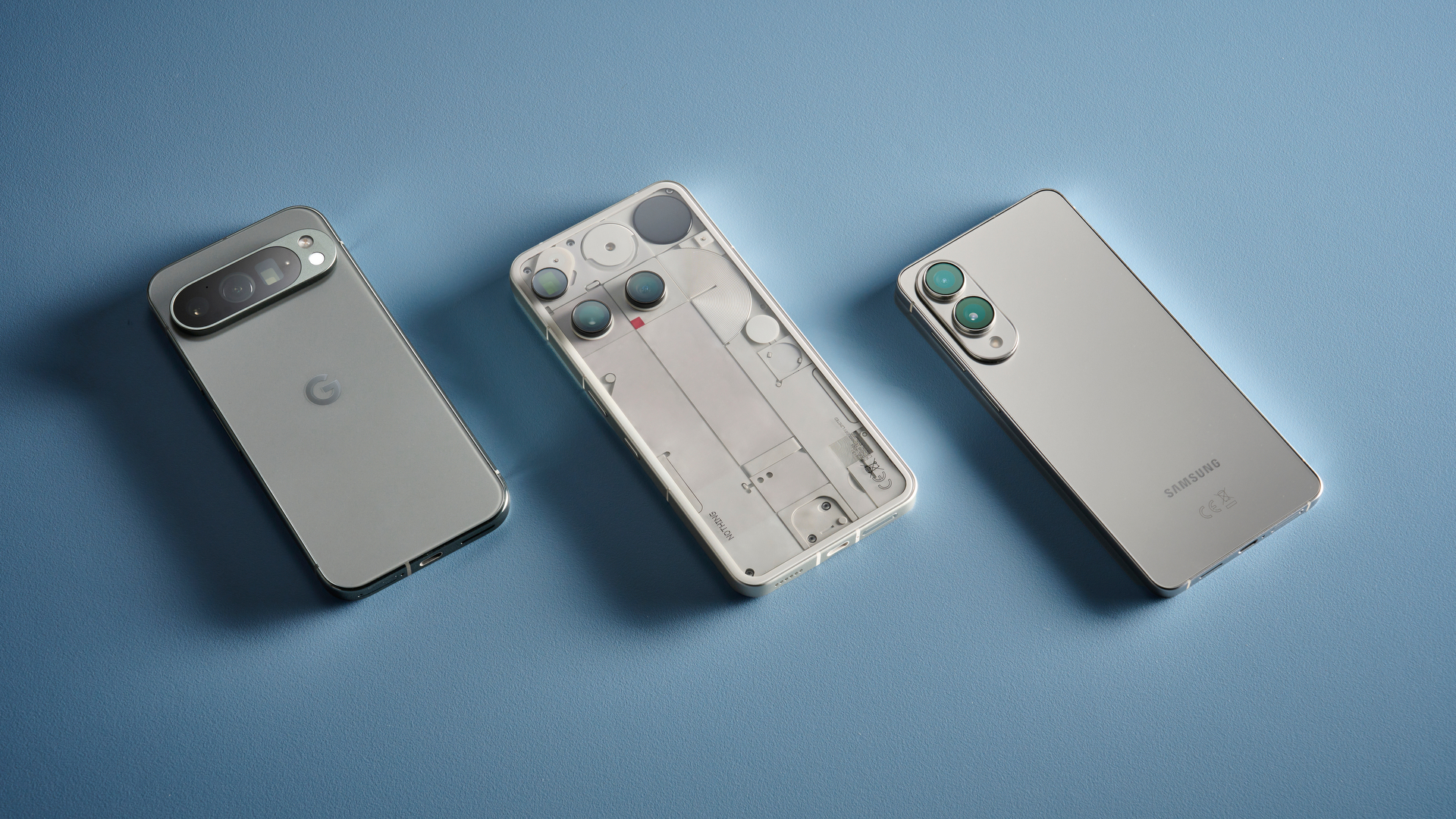
Xiaomi, which holds third place, saw the largest drop among the top five, at 19%. The reason? Its heavy reliance on the budget segment, which was hit hard by rising memory costs. Conversely, companies like Google and Nothing managed to achieve growth thanks to more focused strategies, but they are still very far from bothering the giants.
The memory crisis is expected to continue until late 2027, which means the rules of the game have changed. The search for shipment volume is no longer the priority; rather, it is protecting profit margins and focusing on premium devices. This shift plays entirely into Apple’s hands, as it relies on its record-profit services and high-quality devices to offset any rise in costs.
In the end, Apple proves once again that it is not just a tech company, but an economic machine capable of adapting to the toughest conditions. Its lead in first-quarter shipments is a clear message to competitors: the summit currently has only one owner, and reaching it requires more than just copying specifications.
Source:
Leave a Reply