It seems the era of switching between browser tabs to consult AI and your design software is coming to an end. In a smart move (literally!), Anthropic has announced the launch of a set of “Connectors” that integrate its famous assistant, “Claude,” directly into the heart of the most popular creative tools we use daily. Instead of being just an isolated chatbot, Claude has now become a “coworker” residing within Adobe, Autodesk, Blender, and other applications, ready to handle the heavy lifting for you.

Creative giant Adobe opens its doors to Claude
Anthropic didn’t stop at a simple integration; it provided access to over 50 tools within the Adobe Creative Cloud suite. Whether you are editing photos in Photoshop, editing video in Premiere, or even designing quickly via Express, Claude now has the ability to understand the context of your work and assist you in execution. This integration reinforces Adobe’s strong push toward artificial intelligence, complementing what the company started with its own smart assistant, Firefly.
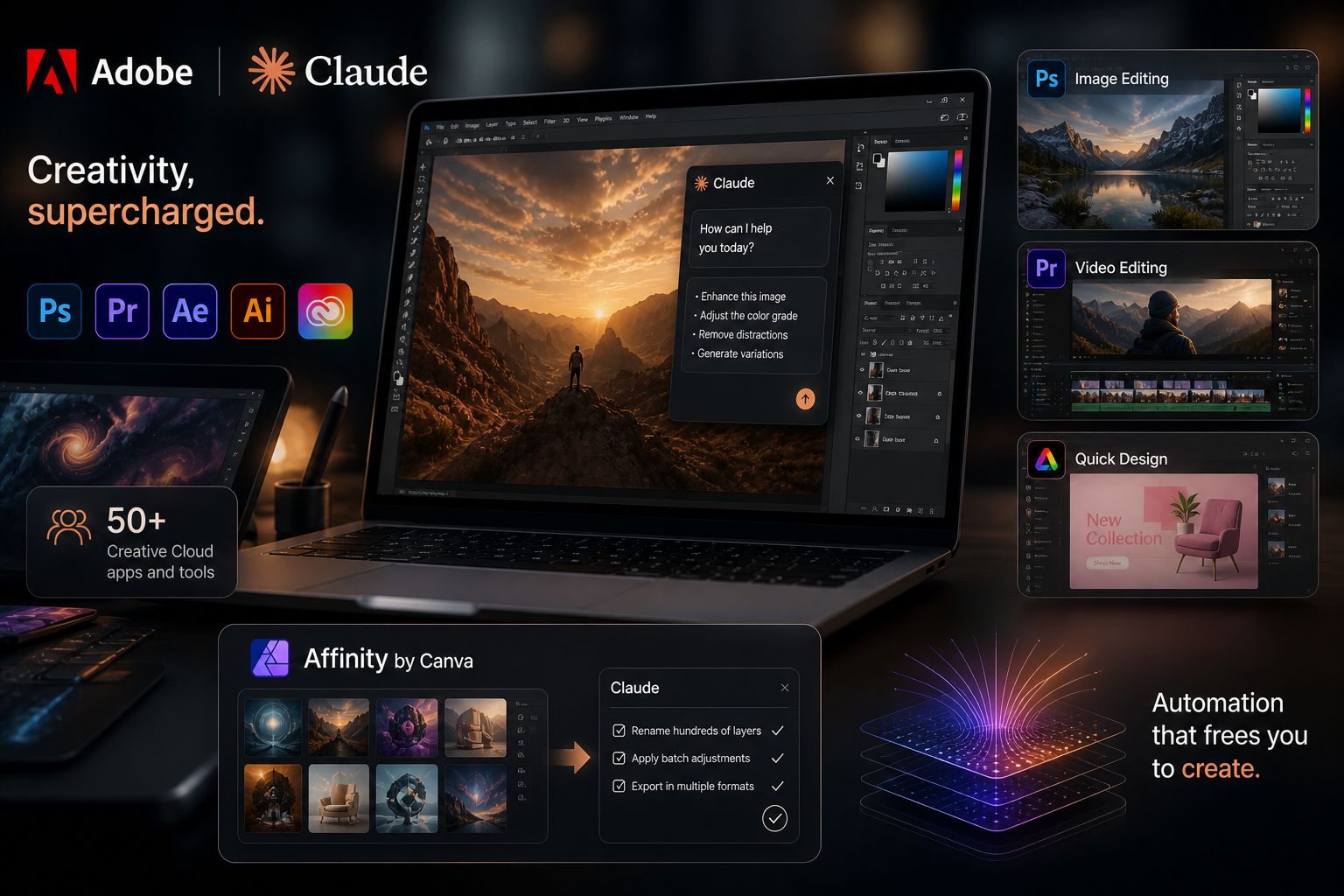
Similarly, “Affinity by Canva” has received its share of this development, where the integration focuses on repetitive productivity tasks that stifle creativity. Imagine asking Claude to rename hundreds of layers with the click of a button, perform batch edits on a huge set of images, or even export files in different formats without having to waste your time in traditional menus. It is the true power of automation that allows the artist to focus solely on the art.
A revolution in the world of 3D and engineering
Regarding more complex tasks, Claude has arrived in Autodesk Fusion, allowing engineers and designers to create and modify 3D models using natural text commands. You no longer need to search every corner of the program to find a specific tool; just tell Claude what you want, and it will handle the technical work, accelerating the modeling process like never before.
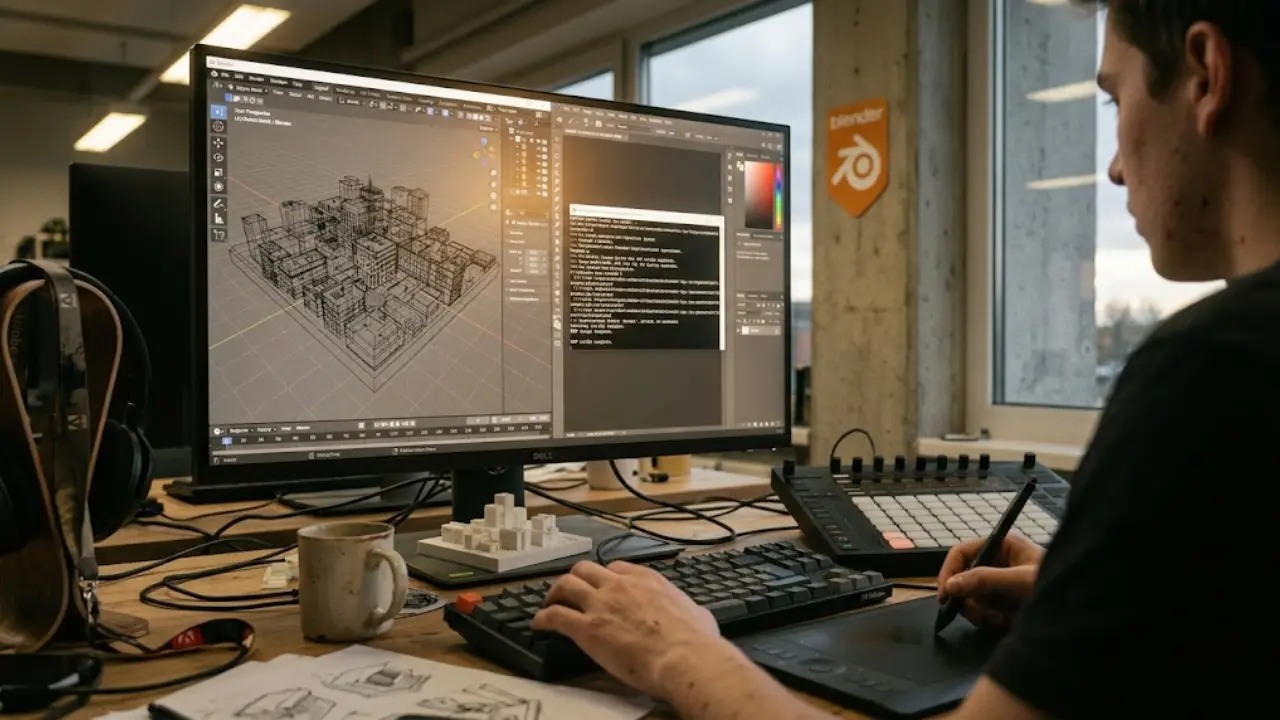
As for Blender fans, things have become even more exciting. Anthropic has provided a text interface that interacts directly with the software’s Python API. This means greater ease in exploring complex scenes, accessing programming documentation, and writing scripts to apply changes to hundreds of objects at once. It is worth noting that Anthropic has officially joined the Blender Development Fund to support the continuity and development of these open technologies.
Music and live visual displays
Audio and visual creativity have not been left out. SketchUp is now able to turn your conversational inputs into a starting point for your architectural models. In the world of music, Claude can now search the massive Splice sample library to find the perfect sound for your project, and it offers direct assistance within the chat interface of Ableton Live and Push, relying on their official documentation to provide accurate answers on how to execute specific tasks.
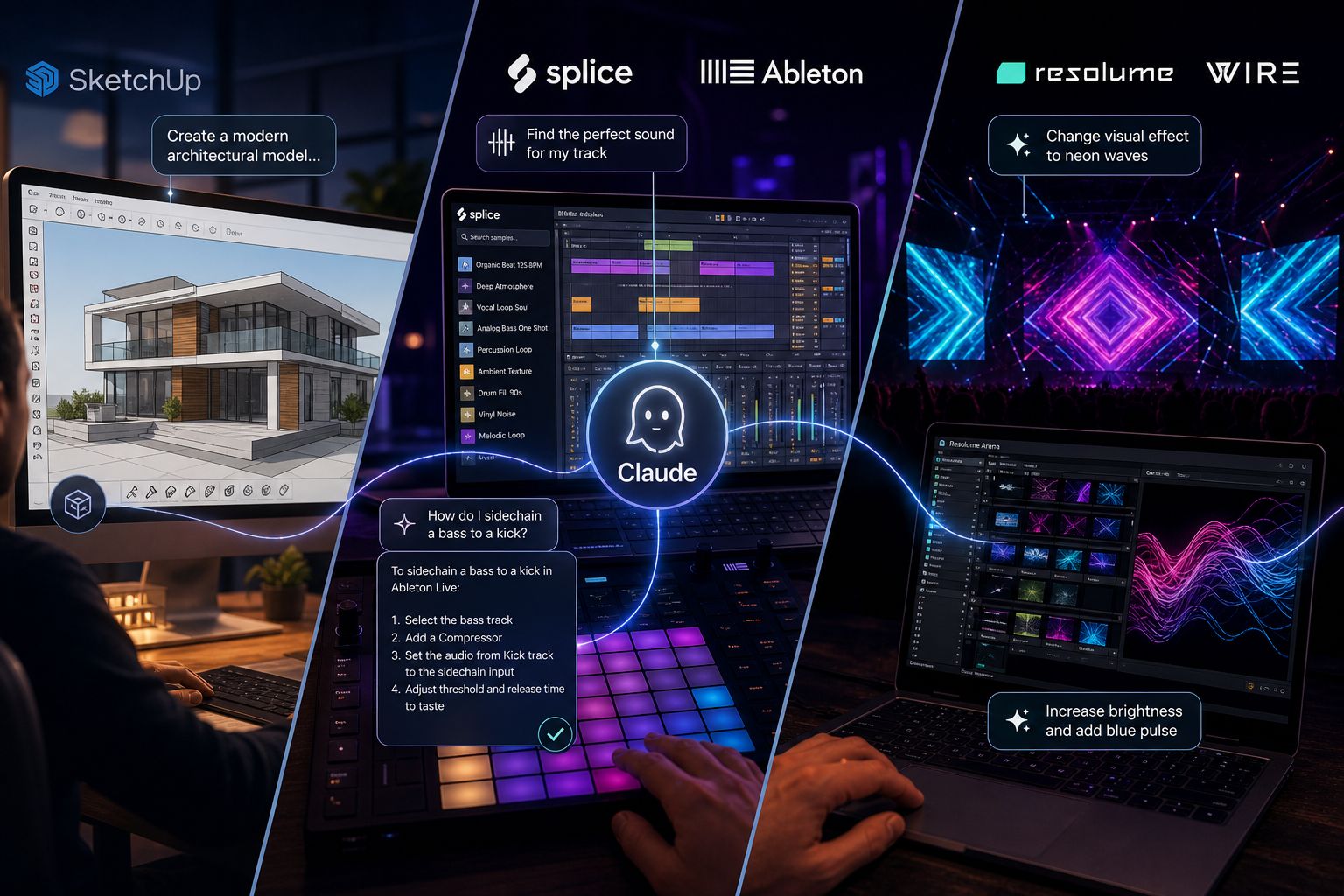
For those working in live visual performances, the integration of Claude with Resolume Arena and Wire gives creators instant control over live visuals. This means the ability to modify and coordinate visual effects during a show via smart commands, opening entirely new horizons for live interaction with audiences at concerts and light shows.
More than just execution: Learning and development
Anthropic emphasizes that these connectors are not just tools for execution, but powerful learning assistants. Claude helps creators learn complex tools and connect workflows between different applications with ease. It can translate formats, sync assets across projects, and manage multi-step tasks like building complex project structures or applying changes across multiple files at once.
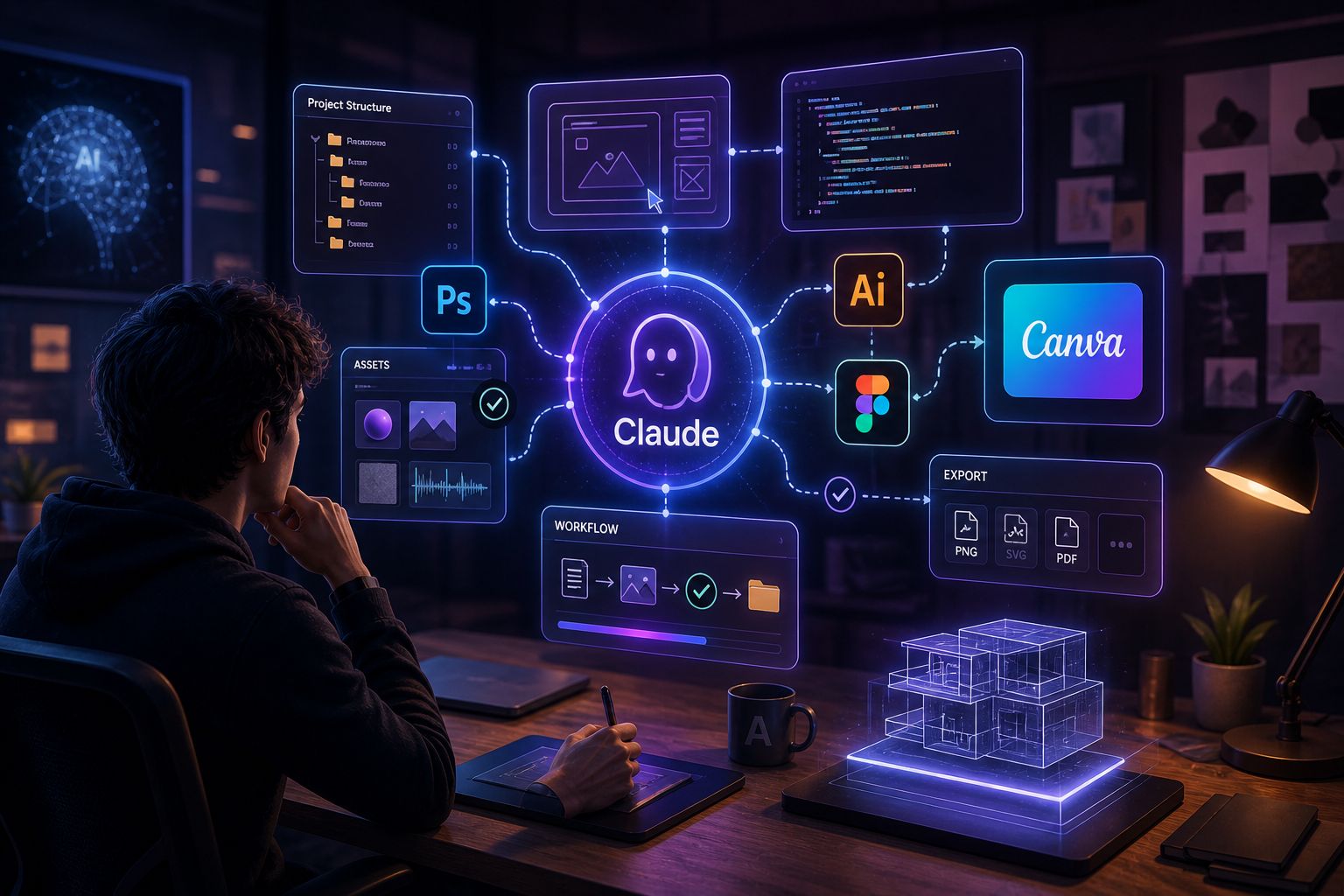
Additionally, the company unveiled the “Claude Design” tool from its labs, which aims to visualize software concepts and export them to other platforms, starting already with Canva. To ensure these technologies reach the next generation of designers, Anthropic has launched an academic program in collaboration with major art institutes such as the Rhode Island School of Design and Goldsmiths, University of London, where students will receive full access to these tools to test them in real creative environments.
Source:

Leave a Reply