Who would have imagined that the tables would turn and Apple would return to Intel’s embrace once again? After years of the famous technical “divorce” in which Apple announced its independence with its own processors (Apple Silicon), moving away from Intel’s problems and delays, it seems that the winds of interest have begun to blow in a completely different direction. Recent reports indicate that Apple and Intel have signed a preliminary agreement that paves the way for Intel’s return as a key player in Apple devices, but this time not as a processor designer, but as a manufacturer.
A Preliminary Agreement for a New Marriage of Convenience
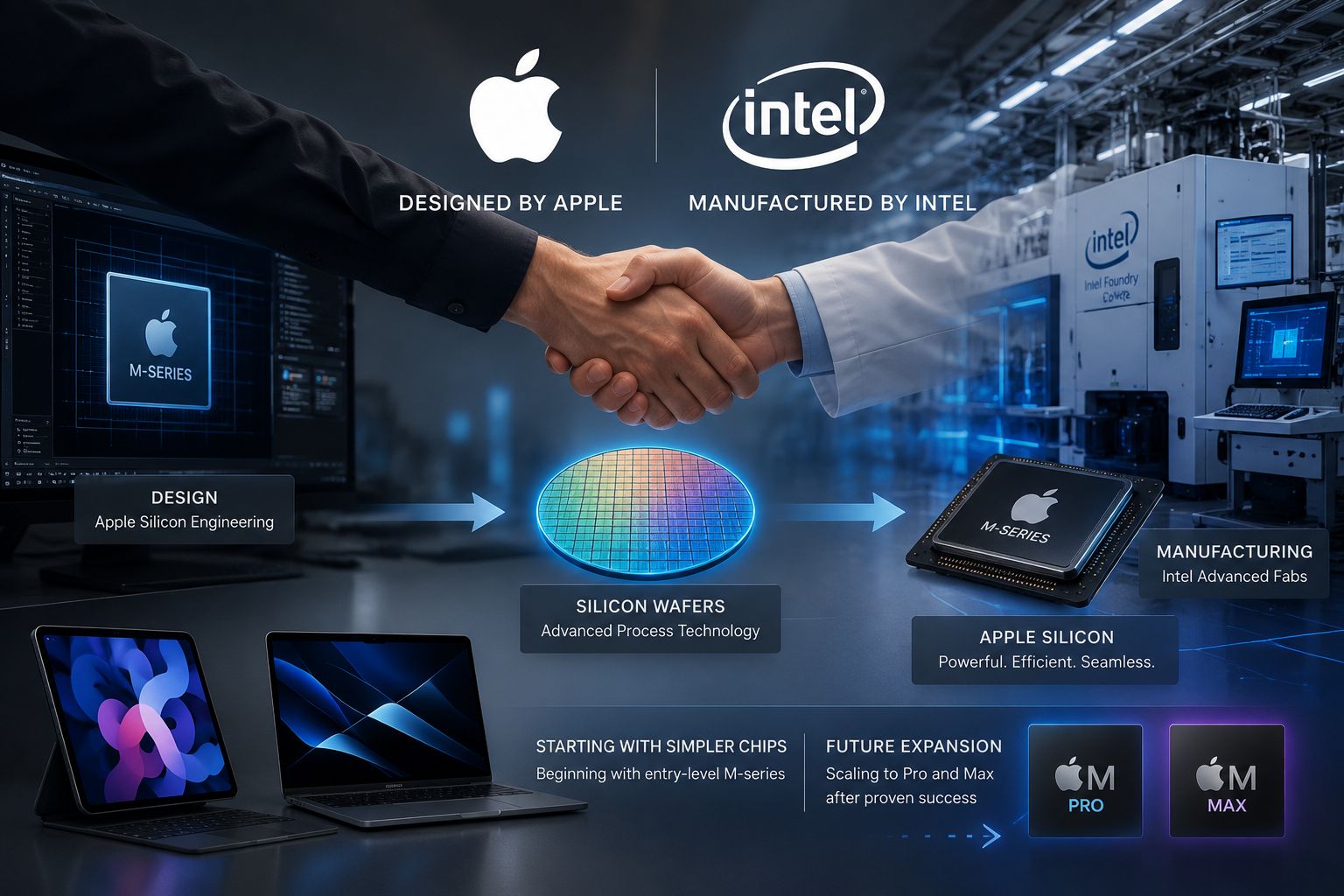
According to a report published by The Wall Street Journal, Apple and Intel have reached a preliminary agreement under which Intel will manufacture processors designed by Apple. The idea here is that Intel will play a role similar to the one currently performed by the Taiwanese company TSMC; it will take the brilliant designs of Apple’s engineers and turn them into actual silicon chips inside its advanced factories.
Leaks suggest that Apple may start with less complex chips at first, such as the basic M-series processors used in iPads and some low-cost Mac models. This gradual approach is very logical, as Apple does not want to risk its flagship processors (such as Pro and Max) before ensuring the quality and efficiency of Intel’s new production lines.
Why is Apple returning to Intel now?
Historically, Apple abandoned Intel because the latter suffered from constant delays in improving manufacturing precision, which hindered Apple’s plans to update its devices. But the scene has now changed with Lip-Bu Tan taking over as head of Intel, succeeding Pat Gelsinger; Tan is leading massive efforts to revive Intel’s manufacturing sector and attract major clients the size of Apple.
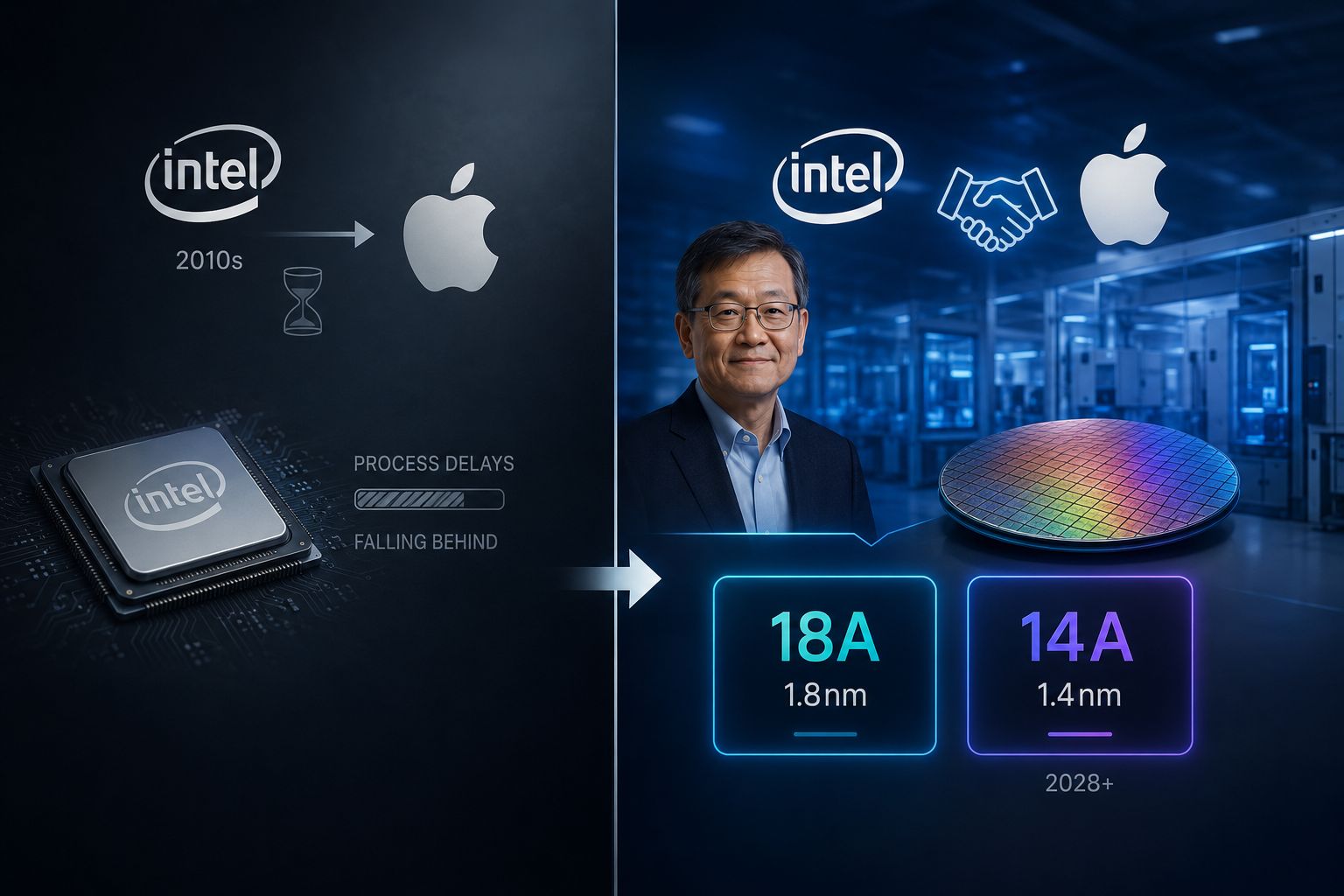
Intel is currently betting on 1.4nm manufacturing technology (known as 14A), which is supposed to begin production in 2028, in addition to 18A technology (1.8nm). These technologies are what Apple needs to stay at the forefront of the performance race, and it seems that Intel has finally begun to catch up with the pack that TSMC and Samsung have led for years.
The TSMC Crisis and the Search for an Alternative
The most important reason for this collaboration is Apple’s urgent desire to diversify its supply chains. Currently, Apple relies entirely and exclusively on TSMC to manufacture every “Apple Silicon” chip in the world. This total reliance represents a major risk, especially with the geopolitical tensions surrounding Taiwan.
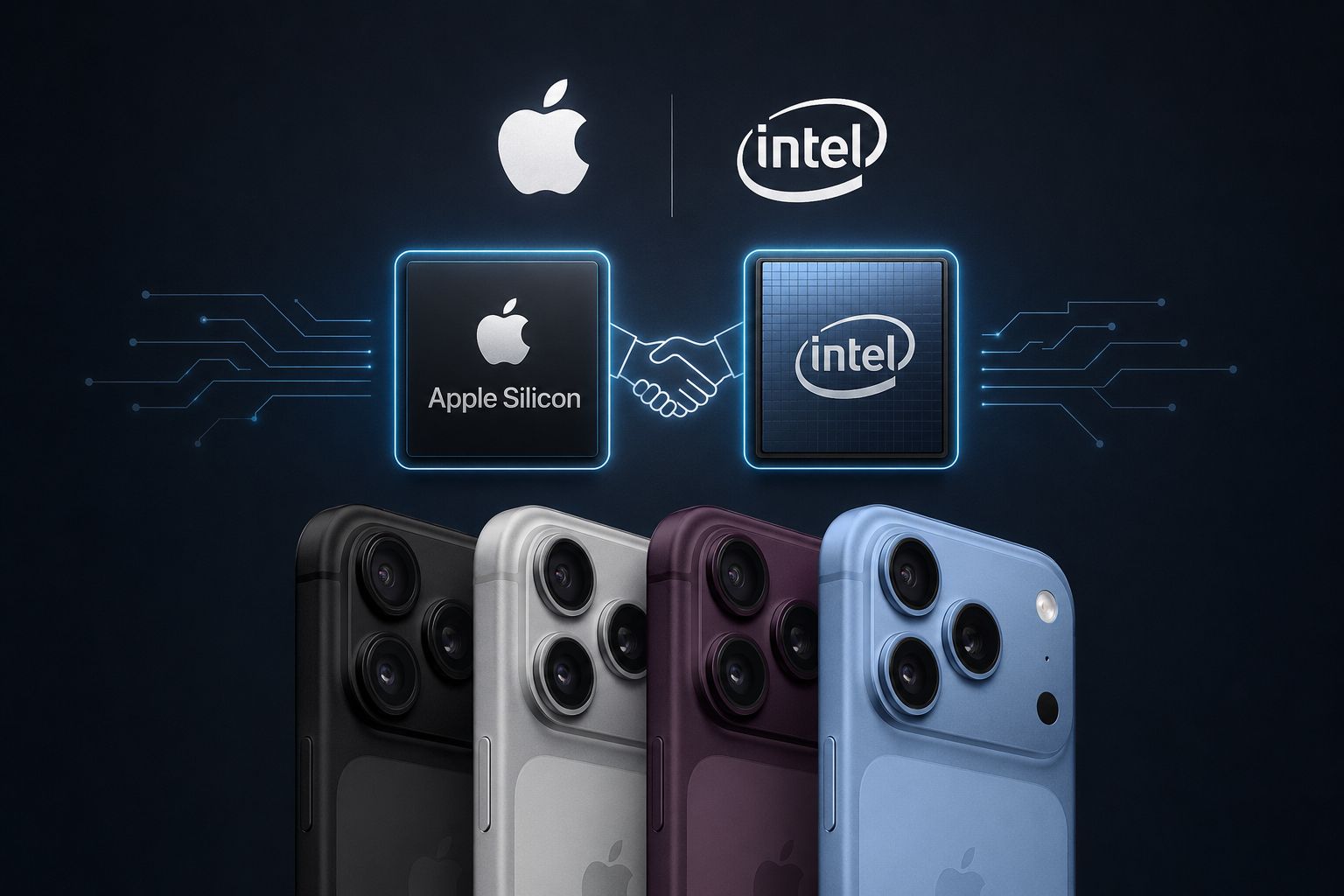
Furthermore, Tim Cook noted in the latest earnings call that iPhone 17 models faced some availability constraints due to TSMC’s inability to provide sufficient quantities of A19 and A19 Pro chips. With the AI craze, major companies like Nvidia have been devouring a large share of TSMC’s production capacity, which has weakened Apple’s influence and its ability to push for absolute priority.
Securing the Future of Silicon
Entering Intel as a second manufacturing option will give Apple tremendous flexibility and make it less affected by any production pressures in Taiwan. It is Apple’s usual strategy: do not put all your eggs in one basket, even if that basket is currently the best in the world. As for Intel, having Apple as a client for its foundry business is the greatest testament to success it could receive on its journey back to the top.
Source:



Leave a Reply