Apple has long boasted that its devices are impenetrable fortresses, especially with the introduction of its proprietary silicon chips that elevate security to the hardware level. However, it seems artificial intelligence has decided to put this reputation to the ultimate test. The cybersecurity startup “Calif” has announced that it managed to develop an exploit against the security of Apple’s latest M5 chip in less than a week—a record time that raises many questions about the future of device security in the age of AI.
AI cracks the M5 code
The discovered vulnerability targets the “Memory Integrity Enforcement” (MIE) system, a hardware-backed security mechanism introduced by Apple last year to prevent memory corruption attacks, which are among the most dangerous types of breaches. What is surprising is not just the breach itself, but the tool used; the team utilized a preview version of Anthropic’s “Claude Mythos” model, which demonstrated unparalleled efficiency in analyzing complex systems.
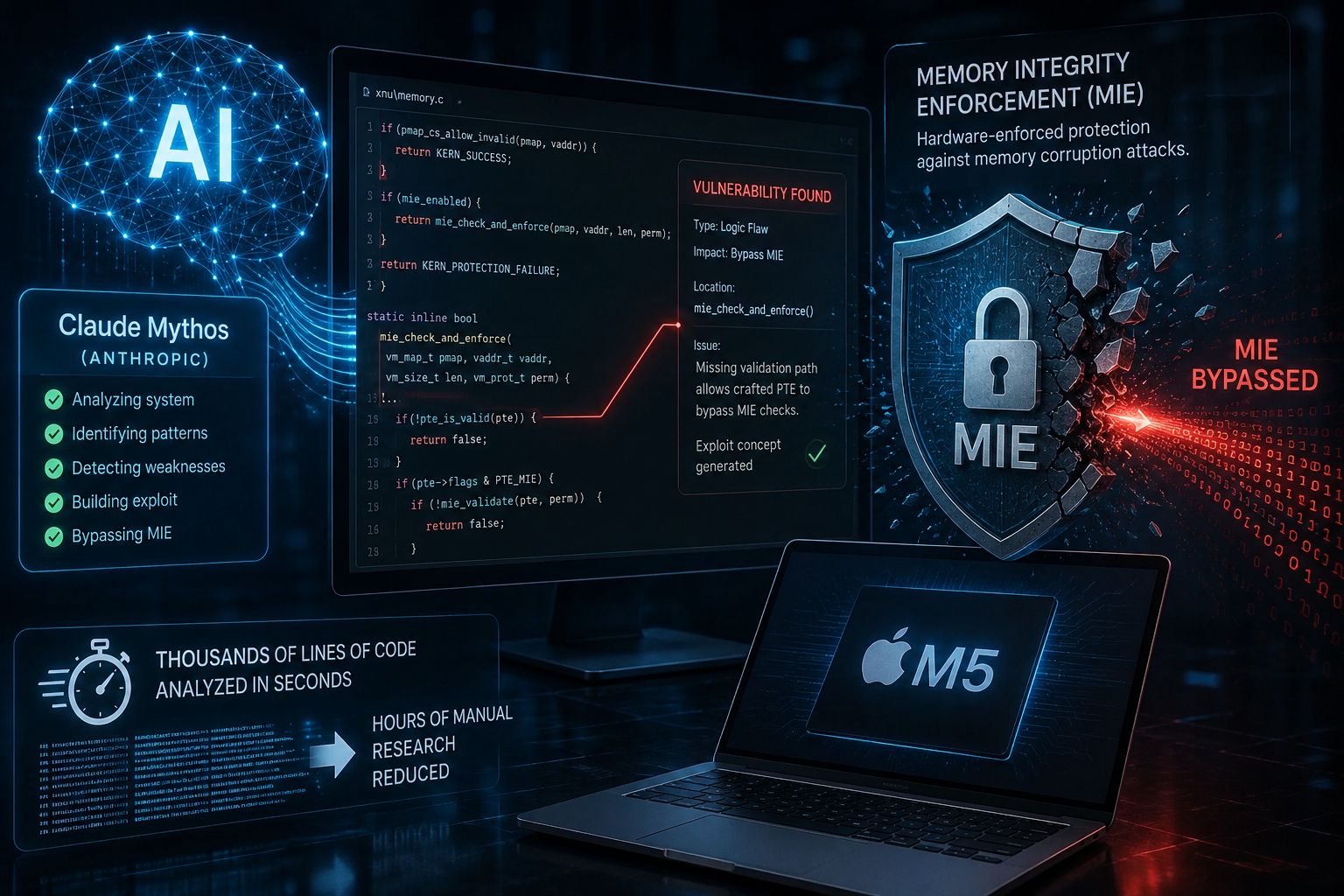
This model helped identify patterns and weaknesses at lightning speed, allowing the team to build the first public macOS kernel exploit capable of bypassing and surviving the strict MIE protection. It seems the era of long, manual vulnerability research is beginning to fade in the face of algorithms capable of scanning thousands of lines of code in mere seconds.
How was the exploit built in just a few days?
The timeline of this achievement is as impressive as it is frightening. Researcher “Bruce Dang” discovered the bugs on April 25, security expert “Dion Blazakis” joined on April 27, and by May 1, the exploit was fully operational. Thanks to the Mythos model’s ability to recognize known vulnerability classes and apply them to new systems, the time that humans usually take for such tasks was reduced from months to just a few days.
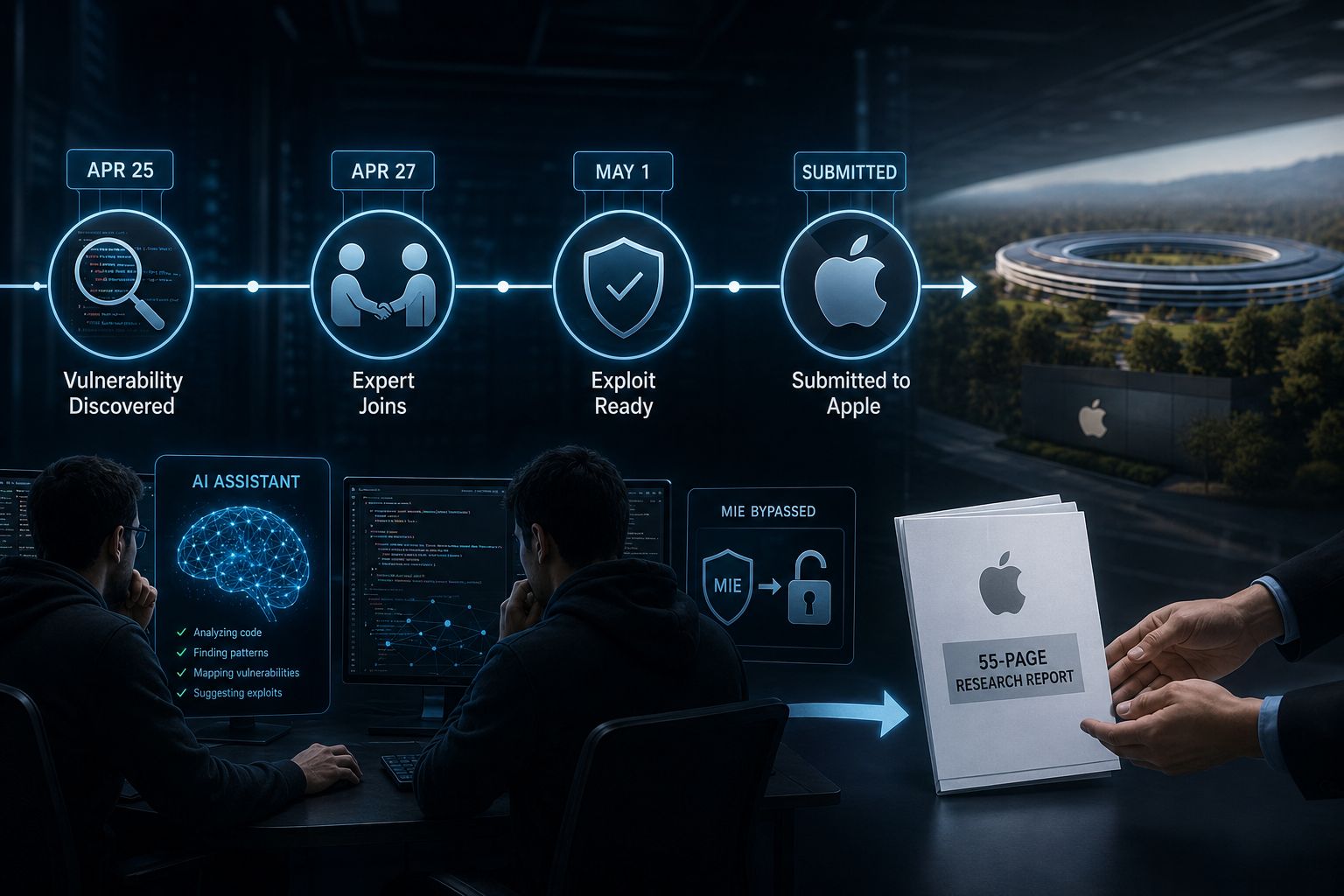
However, the team emphasized that human expertise remains crucial; Apple’s MIE system is brand new and complex, and the AI acted as a super-intelligent “co-pilot” rather than a replacement for the creative human mind. The team submitted their 55-page research findings directly to Apple’s headquarters in Cupertino, which in turn responded by confirming they are reviewing the report with great interest, emphasizing that security remains their top priority.
Should you be afraid for your Mac?
Before you start worrying or consider selling your Mac, it should be clarified that this research was conducted under laboratory conditions and controlled by professional researchers, and it was responsibly shared with Apple before being made public. This means Apple is already working on patching this vulnerability, and security updates are expected to be released soon that will make this breach a thing of the past.

The real message here is not the weakness of Apple devices, but the rapid evolution of AI in the field of cybersecurity. If “good guy” researchers are using these tools to accelerate discoveries and protect us, the other side is certainly doing the same. Therefore, the golden rule remains unchanged: always keep your system updated to the latest version, as this is your first and most important line of defense against any future threats.
Source:

Leave a Reply