The Apple Watch has long been the primary choice for Apple users looking to monitor their heart rate during workouts and daily activities, but this dominance is no longer as guaranteed as it once was. With the launch of the AirPods Pro 3, equipped with advanced health sensors, wireless earbuds have entered a field that was the exclusive domain of smartwatches for many years. Surprisingly, recent tests have revealed results that make the difference in data accuracy between the two devices smaller than ever before. So, is the Apple Watch still the most accurate tool for tracking heart rate, or have the AirPods Pro 3 become a genuine alternative that combines entertainment and health in one device? In this article, we review the numbers and tests to discover which one deserves the top spot.
Apple Watch or AirPods Pro 3
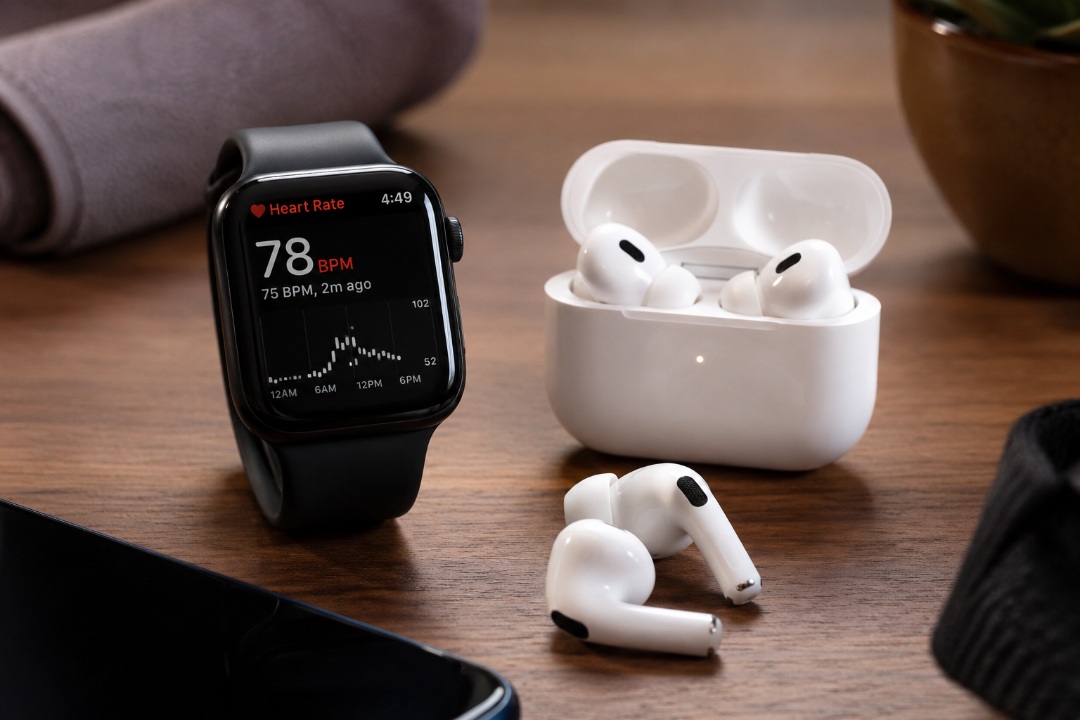
Recent tests showed that the average error rate in heart rate measurement via the AirPods Pro 3 was only 1.67% compared to the Polar H10 medical chest strap used as a reference standard. Although the Apple Watch Series 11 retained the top spot with an average error of 0.98%, the gap between the two devices remained very limited.
The tests were based on a protocol consisting of four laps on a sports track using the Polar H10 strap, a methodology similar to that used in exercise physiology labs to verify the accuracy of optical pulse sensors (a technology that relies on using light to measure changes in blood vessel volume under the skin). According to the results, the AirPods Pro 3 outperformed all smartwatches and fitness trackers tested, except for the Apple Watch itself.
Which is more accurate?

The earbuds rely on a Photoplethysmography (PPG) sensor that uses infrared light and takes 256 readings per second to detect blood flow changes within the ear canal. Apple indicates that this technology was developed based on more than 50 million hours of collected data, and describes it as the smallest heart rate sensor the company has developed to date.
Furthermore, the evidence did not stop at laboratory tests; another study published in the journal PLOS Digital Health in April 2026 supported the results of the current study. The study included 40 adults and 16,735 dual heart rate measurements, revealing an average deviation of only 2.02% compared to reference devices. It also explained that the ear canal provides a more stable environment for measurement than the wrist due to the reduced impact of external light and movement during exercise.
However, a flaw appeared in Apple’s wireless earbuds, as researchers noted that the accuracy of individual readings decreases relatively during high-intensity exercise where the heart rate changes rapidly, a challenge faced by almost all optical sensors.
Which is better for tracking heart rate?
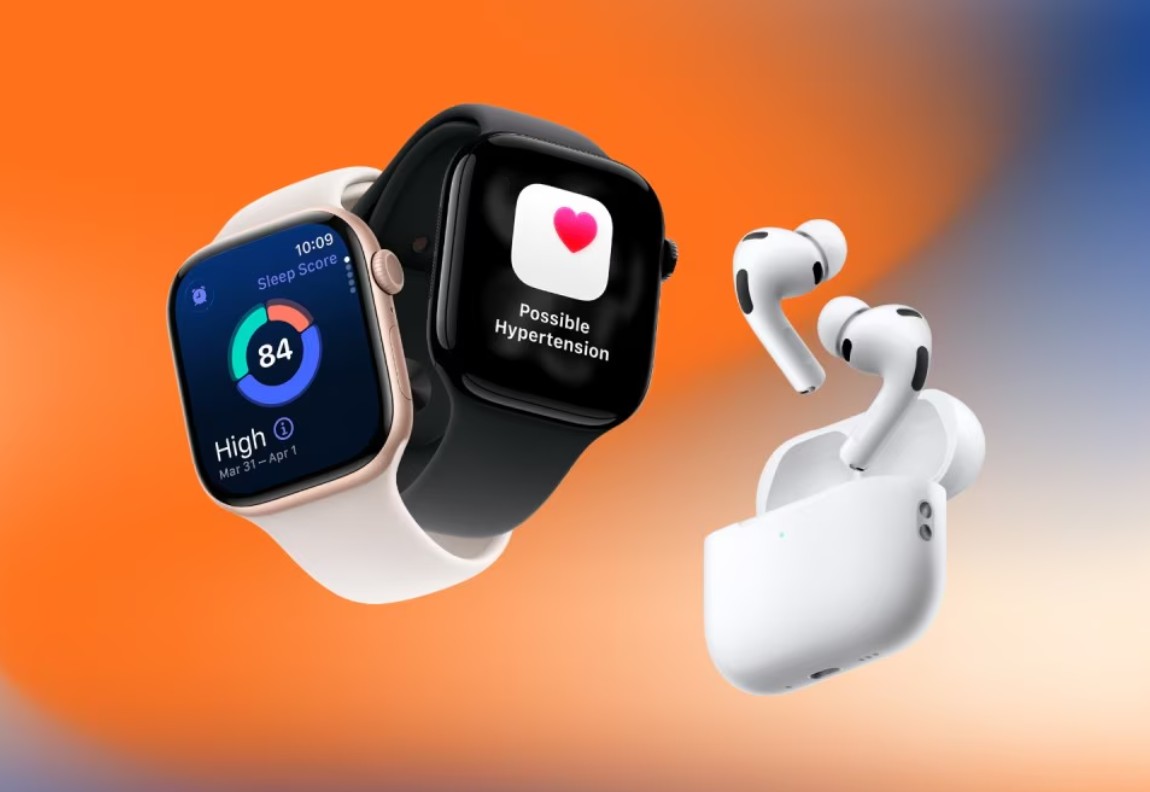
In terms of price, the AirPods Pro 3 cost about $250, which is $150 less than the Apple Watch Series 11, which costs $400. However, the watch still excels in terms of health functions, as it supports ECG and alerts for heart rhythm irregularities—features that have received US regulatory approval—while the AirPods are currently limited to heart rate measurement only, a feature that is not yet approved by the US FDA.
The wearable health device sector is also witnessing rapid expansion, with the emergence of devices like the Oura Ring 5, capable of measuring heart rate, temperature, and respiratory rate from the finger, the Whoop band designed for recovery tracking, and Google’s Fitbit Air at $99, which is supported by AI-based health coaching features.
Ultimately, with Apple now possessing accurate sensors in both the watch and the earbuds, expectations are rising for the possibility of integrating data from both devices in the future to obtain more accurate and comprehensive readings. Until then, the AirPods Pro 3 seem like a strong option for those looking for reliable heart rate tracking without the need to wear a smartwatch.
Do you think the AirPods Pro 3 are truly capable of competing with the Apple Watch in heart rate tracking? Let us know in the comments!
Source:



Leave a Reply