Siri, the voice assistant, has long been a subject of jokes among tech enthusiasts when it comes to answering real-world questions and knowing what is happening in the world accurately. However, it seems Apple has decided to put an end to this issue once and for all in its usual way: by injecting huge sums of money and playing by the correct legal rules. With the transition to AI-powered Siri in iOS 27 approaching, the company is making strenuous efforts to ensure its smart assistant is fully aware and up-to-date with what is happening around it, rather than just a reader of superficial web pages.

A Nine-Figure Budget to Connect Siri to Live News
According to a report published by The Wall Street Journal, Apple is in advanced talks with major publishing houses and media organizations to obtain official licenses to access their news content and reliable information. Interestingly, Apple did not come with modest offers; instead, it is proposing multi-year contracts with a massive budget reaching nine figures (i.e., hundreds of millions of dollars), reflecting Cupertino’s seriousness in building a strong and legitimate knowledge base for its voice assistant.
This trend represents a qualitative shift compared to what Siri was in the past, as it previously relied on search engine results and general knowledge sources like Wikipedia. When the company first announced Apple Intelligence, it focused on giving Siri a deep understanding of the user’s “personal context” by reading emails, messages, and appointments on the iPhone, while referring general questions and global knowledge to third-party tools like ChatGPT. However, constant reliance on a third party was never part of Apple’s long-term plan.
A Strict Practical Assistant, Not a Chat Companion
These deals also align with Apple’s strict philosophy toward artificial intelligence; company officials have clearly stated that Siri is not designed to be an “emotional companion” or a chatbot for entertainment, but a practical productivity tool. For this very reason, Apple avoids including a persistent memory feature for previous conversations in the way found in tools like ChatGPT or Gemini, which can sometimes cause context overlap and the transfer of digital hallucinations across multiple sessions.
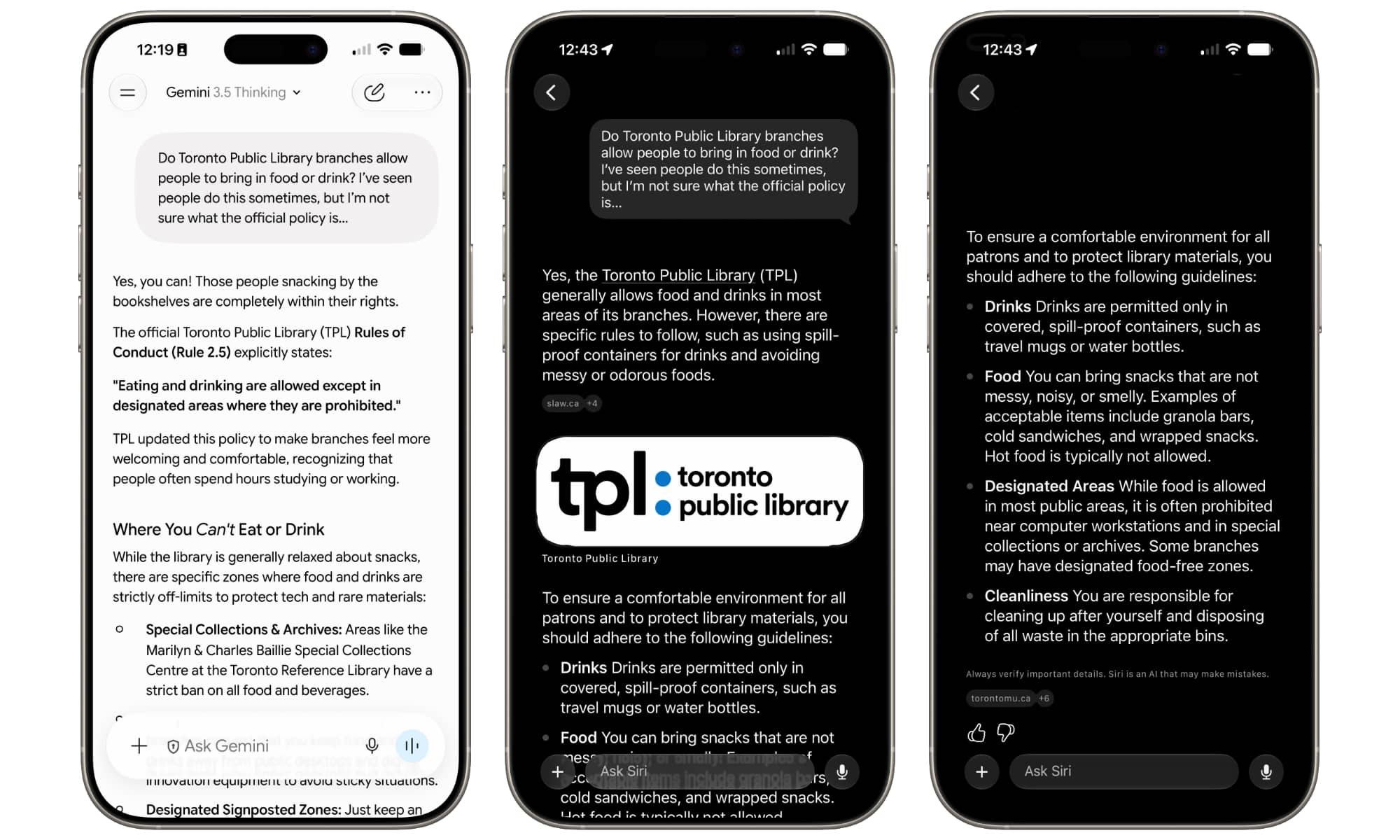
This approach has its pros and cons, of course. Not keeping a long conversation history ensures the user gets a clean conversation free of impurities and incorrect data every time they open the assistant, but it lacks the deep personalization offered by features like Custom GPTs or Gems on competing platforms, which may sometimes force the user to re-clarify some basic points.
Respecting Intellectual Property and Avoiding Controversy
The massive investment in purchasing content rights is not entirely new to Apple. Previous reports from The New York Times revealed early deals the company made in late 2023 to train its models, but the current trend focuses on providing Siri with immediate and legal news and information feeds that allow it to provide smart summaries and clear citations without falling into the trap of copyright infringement.

At a time when the entire AI industry is facing harsh criticism and lawsuits for training models on data stolen from the web or transcribing YouTube content without the creators’ permission, Apple is choosing the safer and more sustainable path by paying publishers directly, ensuring the accuracy of answers on our device screens and its own legal peace of mind at the same time.
Source:



Leave a Reply