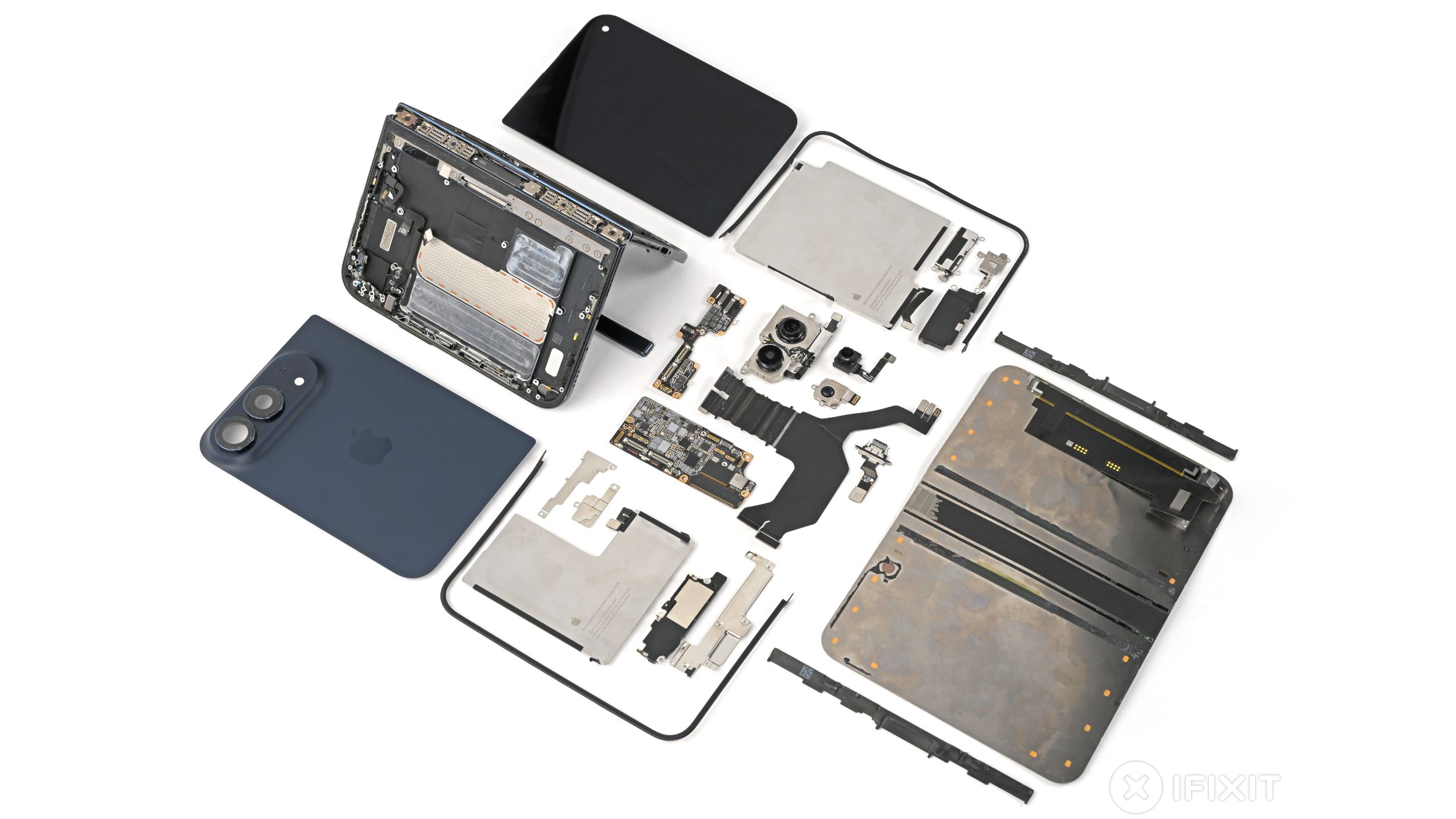
With the iPhone Duo reaching users’ hands, a wave of fascination with its slim design and innovative hardware has emerged, but it was quickly accompanied by concerning reports about cracks and sudden damage to the internal screen along the hinge line. This is where the famous teardown team iFixit comes in, putting the phone under their microscope to uncover its engineering secrets, test its resistance to dust, and most importantly: attempt to solve the mystery of those enigmatic cracks affecting the foldable screen.
The harsh dust test.. How does the hinge hold up?
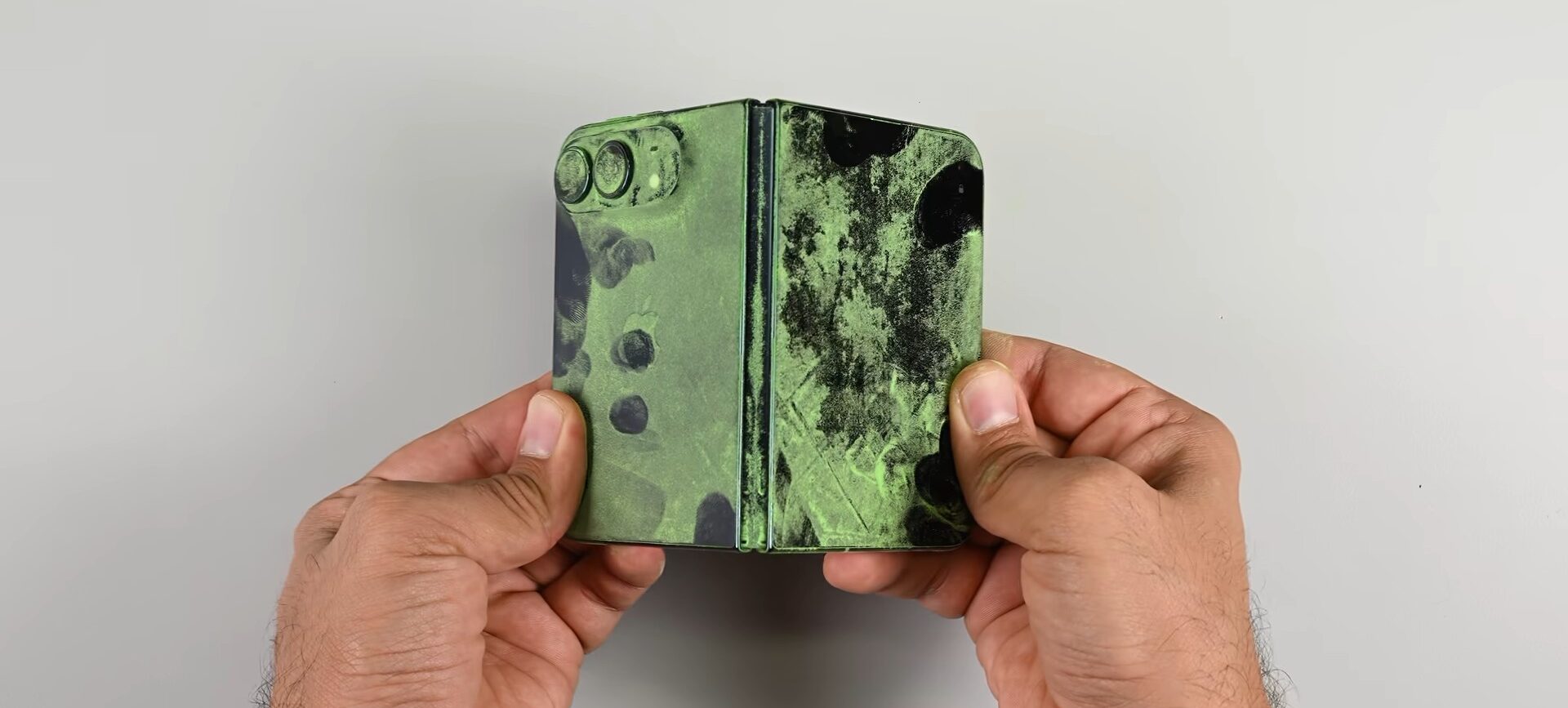
Before beginning the mechanical disassembly, the team subjected the iPhone Duo to a harsh test by drenching it in extremely fine fluorescent dust to examine the effectiveness of its seals. The phone carries an official IP68 water and dust resistance rating, which is no small feat in the world of foldable devices. The results showed that dust settled in the USB-C port, speaker grille, and outer frame, while the sensitive internal components remained largely protected and clean.
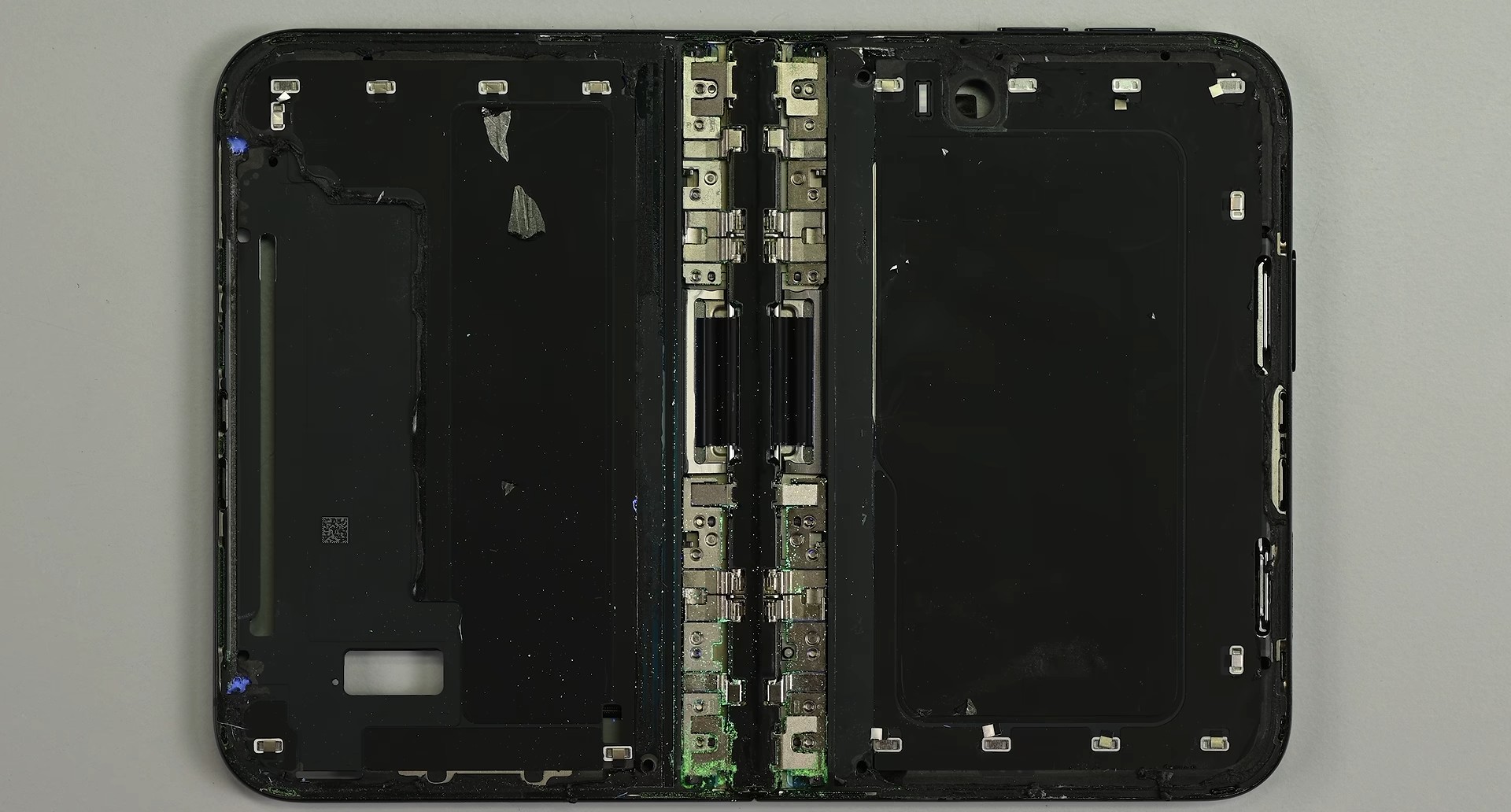
Despite this good resilience, some fine particles managed to sneak into the hinge itself, causing an annoying noise when opening and closing, which poses a real risk that could eventually lead to damage to the screen from underneath. Interestingly, the iPhone Duo hinge showed better cohesion and collected less dust compared to phones like the Galaxy Z Fold8 and Pixel 11 Pro Fold in similar tests, though the team advised against taking the phone to sandy beaches; moving parts remain, by nature, a weak point for any harsh dust.
The screen cracking mystery: What happens below the fold line?
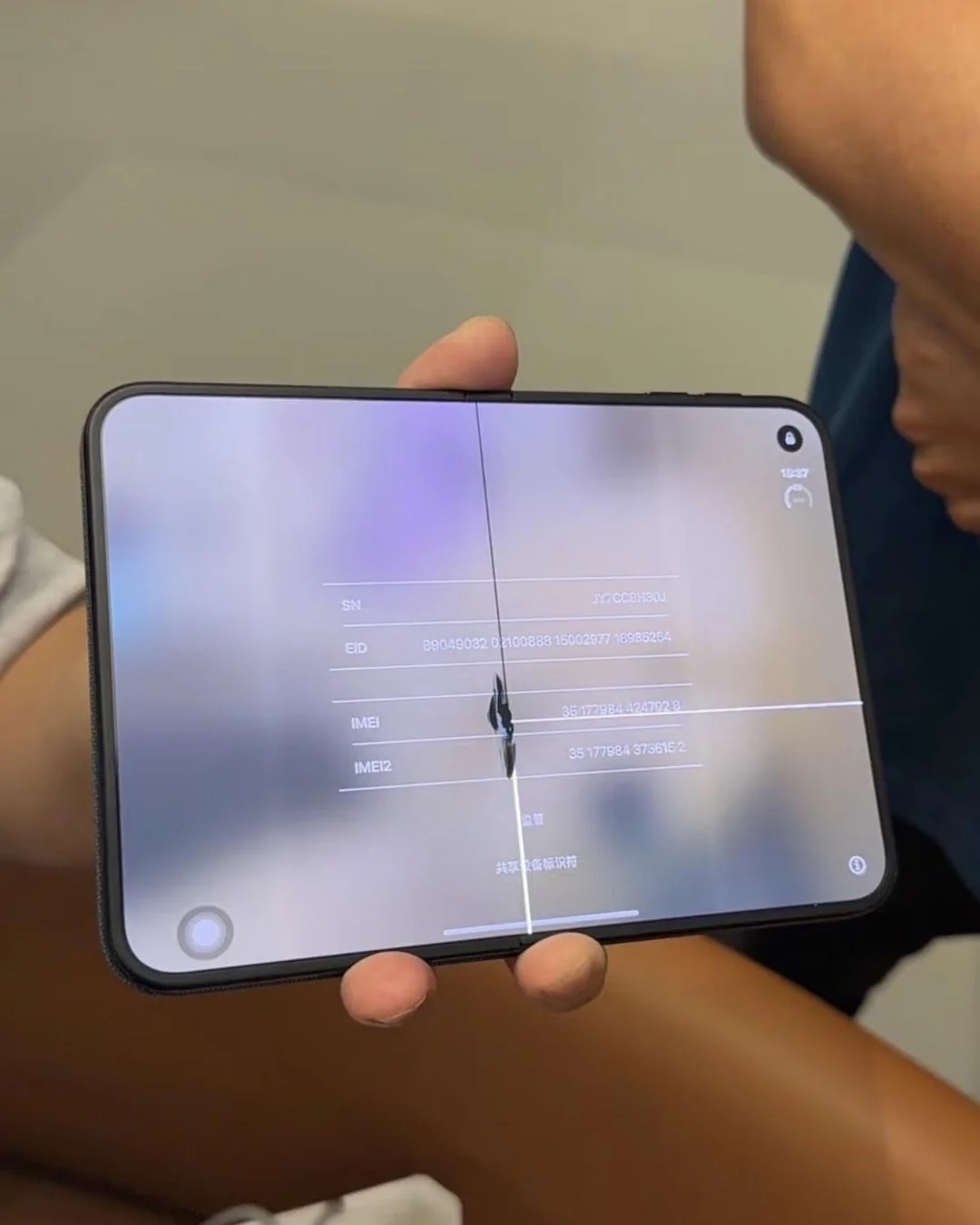
One of the main goals of the teardown was to investigate user complaints about breakage or white pixel lines along the hinge. To explain the phenomenon, iFixit engineers built a 3D model of the hinge based on teardown footage, published patents, and CT scans, then compared this model with common damage locations.
The result was surprising; the failures are not concentrated directly over the screen’s flexible cable, but slightly below it, specifically in the transition area where the cable gap meets the central hinge support. At that point, different geometric edges meet and change how the ultra-thin screen is supported while bending, which may lead to a concentration of immense mechanical stress on a very narrow area.
The team also proposed another hypothesis related to the curved hinge tracks that follow the screen’s pivot points. It seems these tracks may rise slightly above the flat hinge plates when the device is closed, and the location of one of these tracks matches exactly with the location of the recorded fractures, or perhaps there is a mechanical part that is supposed to retract during folding but gets stuck, creating concentrated pressure that leads to either a tear in the panel layers or a malfunction in the screen’s micro-connections.
Ingenious internal engineering: Flat motherboard and exceptional battery
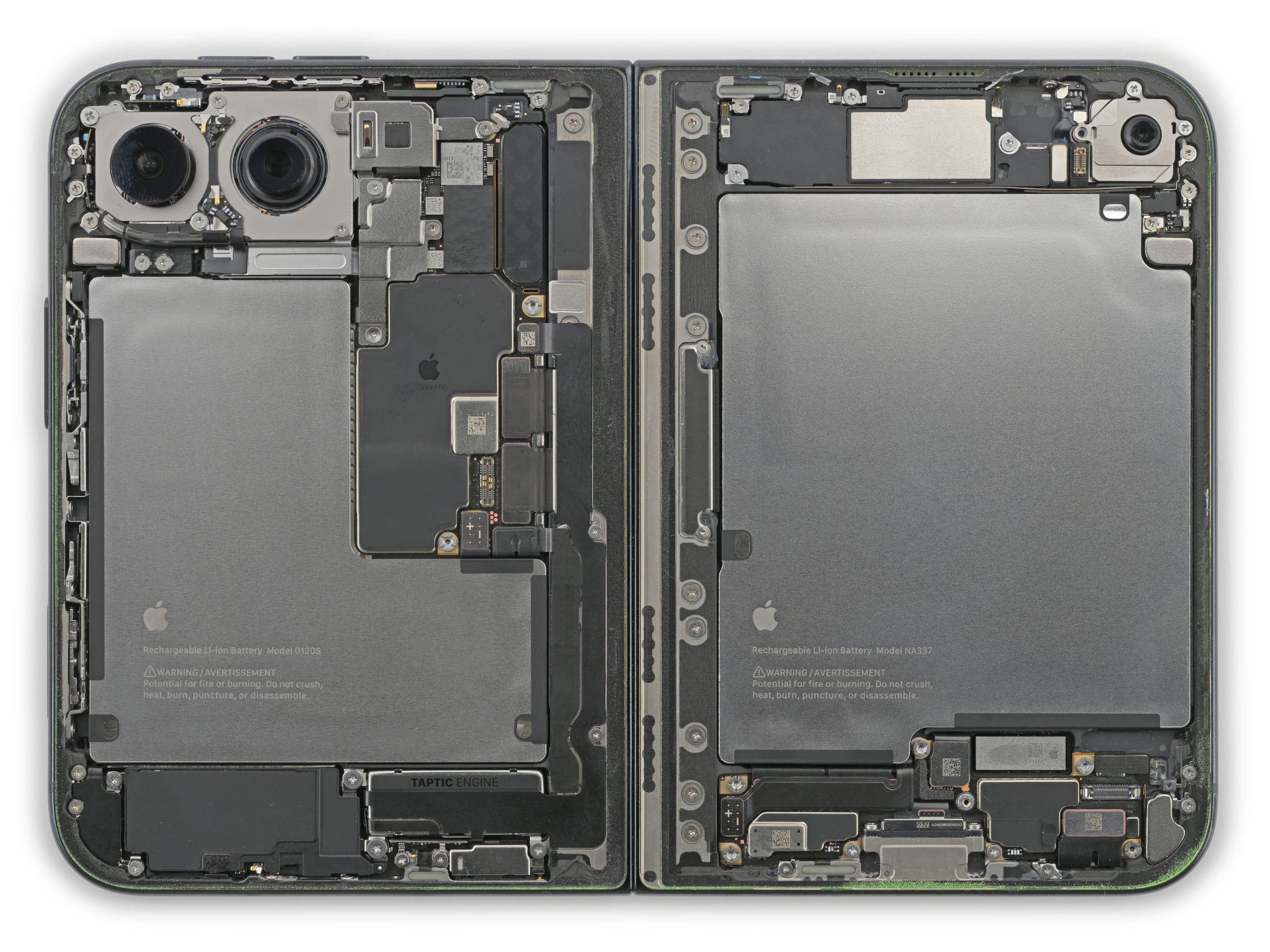
When delving inside the device, the extent of the engineering ingenuity Apple employed to reduce thickness becomes clear; the company adopted a single-layer logic board, the first time we have seen this design in an Apple phone since the iPhone 8. This move saved vital space that allowed the device to maintain its ultra-slim appearance without sacrificing essential hardware.
Regarding the batteries, Apple used adhesive technology that dissolves via a simple electrical charge, a feature that was first introduced in the iPhone 16 family. iFixit described the battery removal process as the best and smoothest battery replacement experience they have seen in any foldable phone to date, as they come out without any twisting or risk of damaging the cells.
Multi-layered screens and repairability
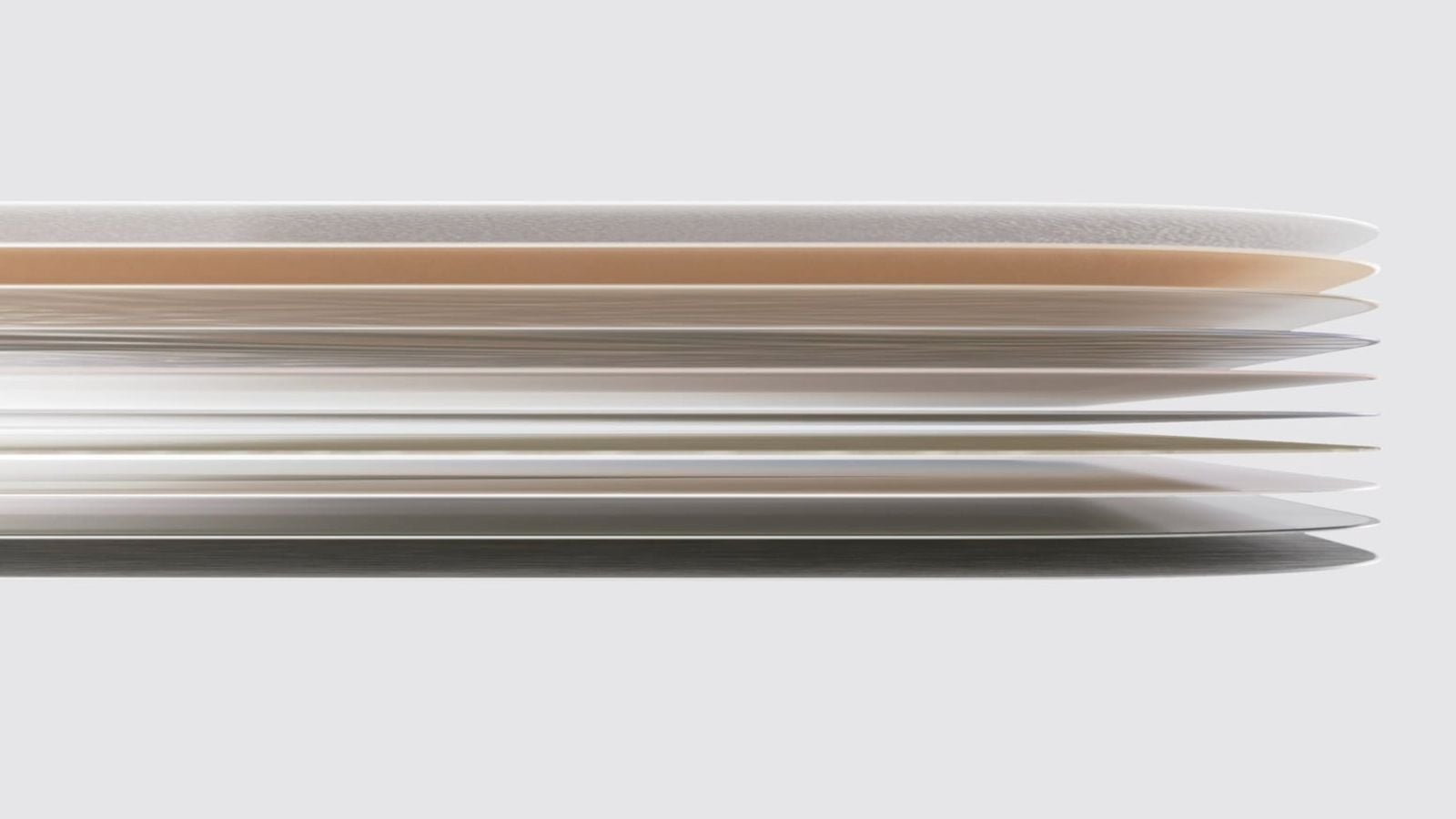
The internal screen of the iPhone Duo consists of a complex matrix comprising 10 different layers. Apple provides a top nano-technology protective layer that is peelable and directly replaceable. Apple designed this layer to be quickly changed inside service centers at a low cost of $19 for AppleCare+ subscribers and $49 for non-subscribers, and despite the ease of removing it, the company warns users against trying to peel it off themselves to avoid damaging the deeper layers.
On the other hand, the team praised the durability of the outer screen and the ease of removing it without breaking it, which is essential because accessing most internal components requires going through it first, while the internal screen requires heat and patience to dismantle the adhesives surrounding its frame.
At the end of the teardown, iFixit gave the iPhone Duo a score of 5 out of 10 on the repairability scale. Although this number seems modest for traditional phones, it makes it the most repairable foldable phone compared to its direct competitors like the Galaxy Z Fold8 and Pixel 11 Pro Fold, which stopped at 4 out of 10. The availability of the official repair manual from day one and the ease of removing the outer screen and battery gave it this advantage, although the complexity of the internal screen and hinge remains a major challenge for any repair technician.
Source:


Post Comment