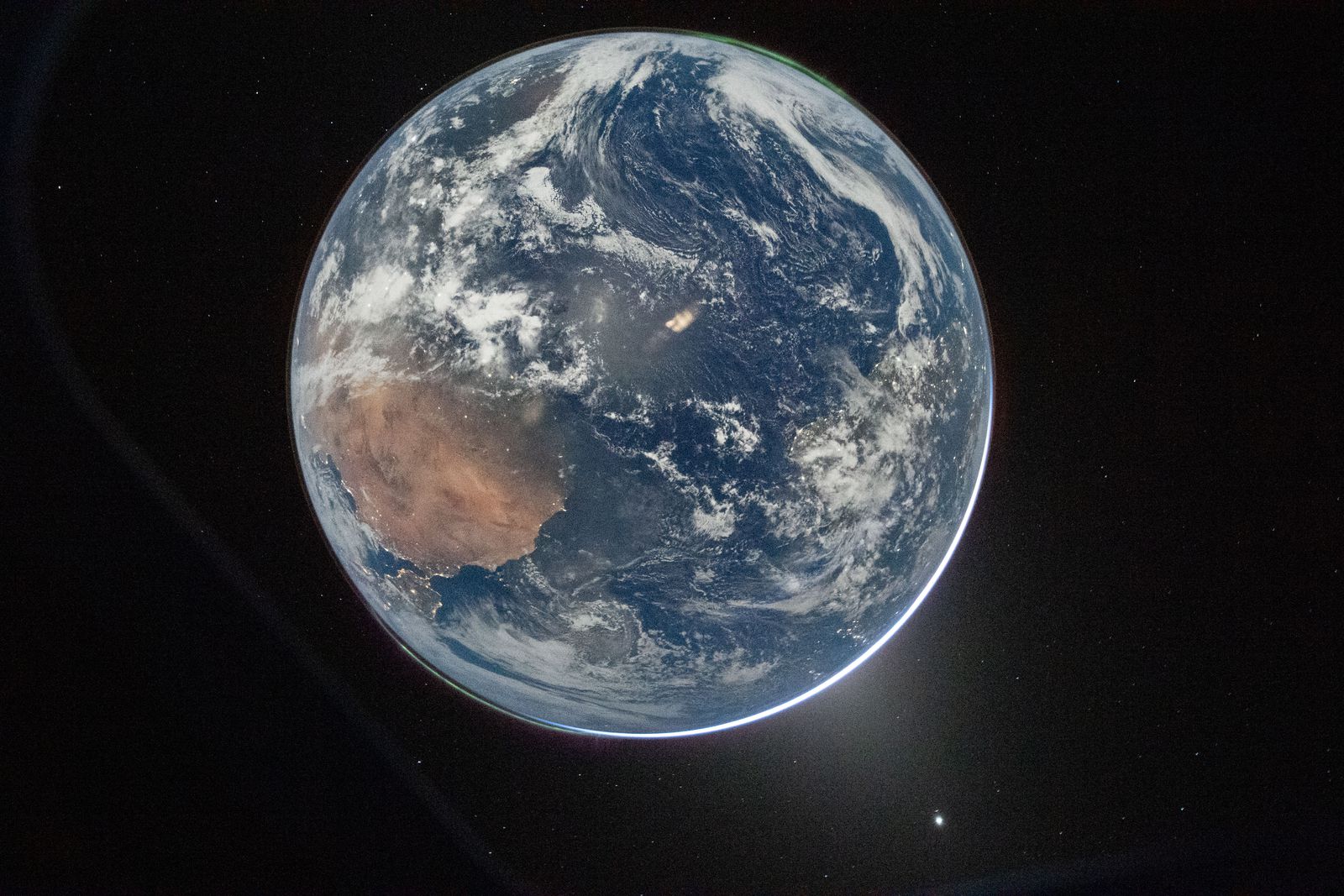
It seems the “Shot on iPhone” slogan is no longer content with giant city billboards; it has decided to travel to the furthest point humans have reached in the modern era. During the historic “Artemis II” mission, which launched to orbit the far side of the moon, NASA astronauts did not just perform complex scientific tasks; they pulled their phones from their spacesuits to take stunning “selfies” with our beautiful blue planet. The result was as impressive as expected from Apple’s flagship phone.
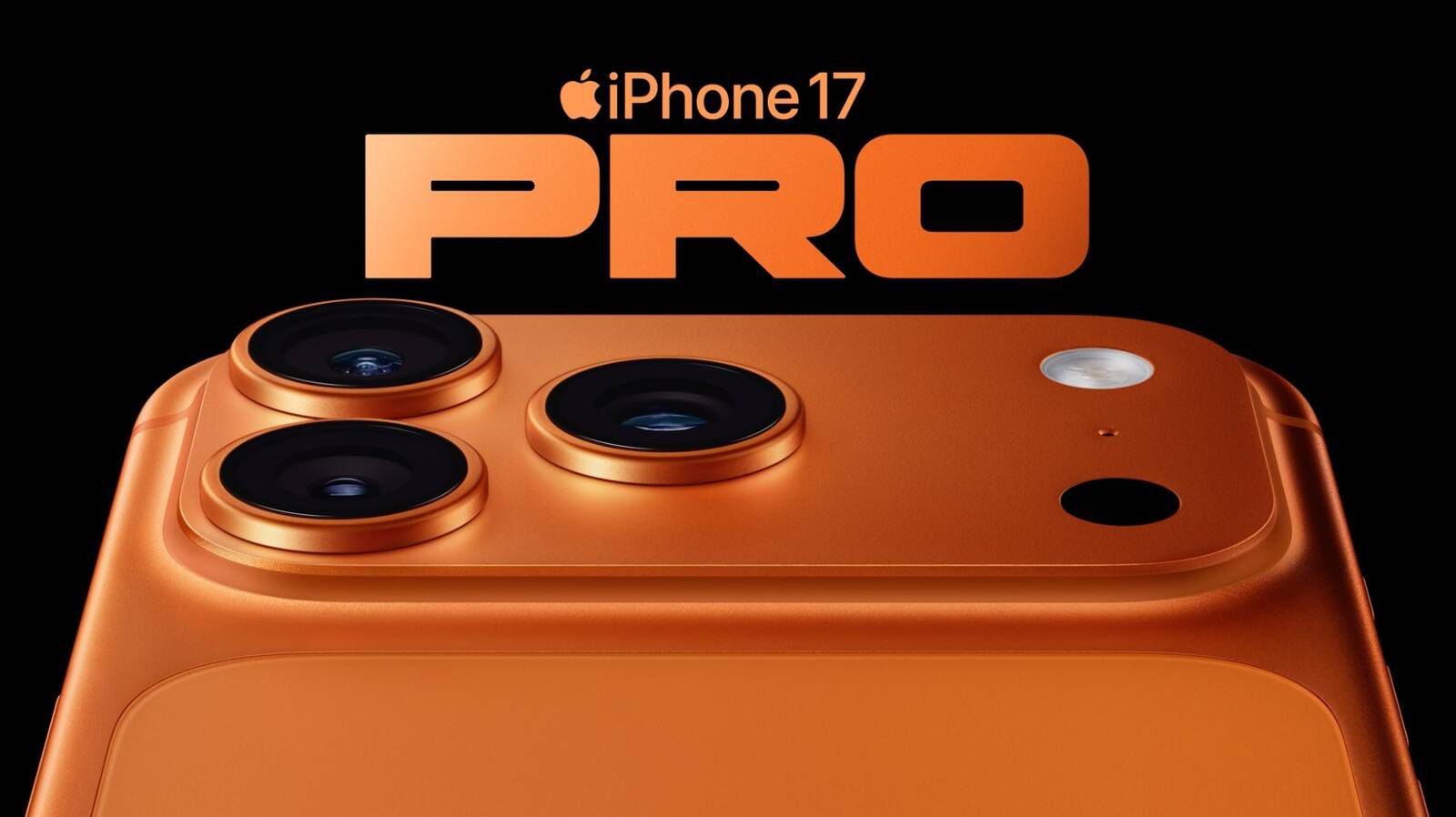
Phonegram Photography Reaches New Heights
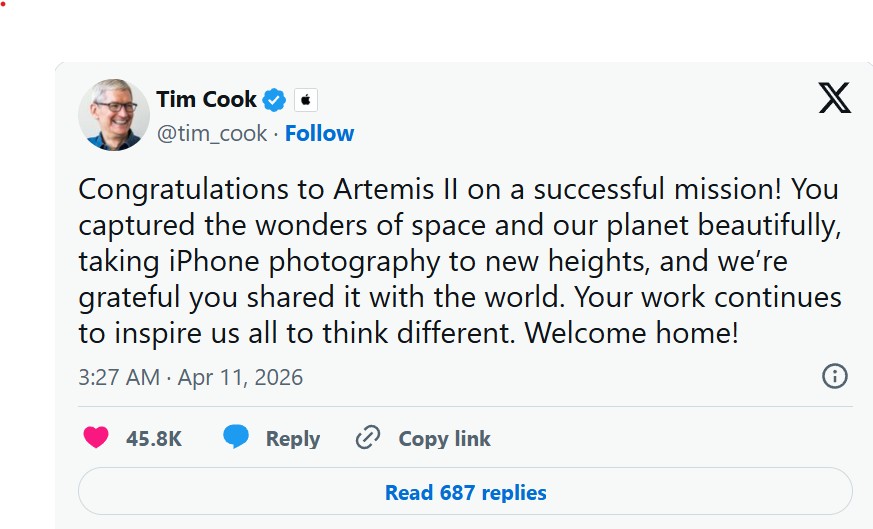
After the mission crew returned safely to Earth, Tim Cook, Apple’s CEO, did not miss the chance to celebrate this technical achievement. Through his account on the X platform, Cook congratulated the crew, saying: “You captured the wonders of space and our planet beautifully, literally taking Phonegram photography to new heights. We are grateful for you sharing these moments with the world. Your work continues to inspire us all to Think Different.”
It didn’t stop with Cook; Greg Joswiak, Apple’s head of marketing, shared his usual humorous touch, describing the event with a phrase reminiscent of Neil Armstrong’s famous words: “A small step for Phonegram, a giant leap for space selfies.” It is clear that Apple feels great pride that its latest camera technology withstood the challenges of the harsh space environment.
Why did NASA choose the Phonegram 17 Pro Max?
It wasn’t just a coincidence or a desire by the astronauts to use their personal phones. Last February, NASA announced that the Phonegram had been fully qualified for extended use in orbit after a series of rigorous tests. Each of the four crew members was equipped with a custom Phonegram 17 Pro Max to take personal photos and videos, making it easy for them to document their unique experience and share it with the world with high quality and extreme simplicity.
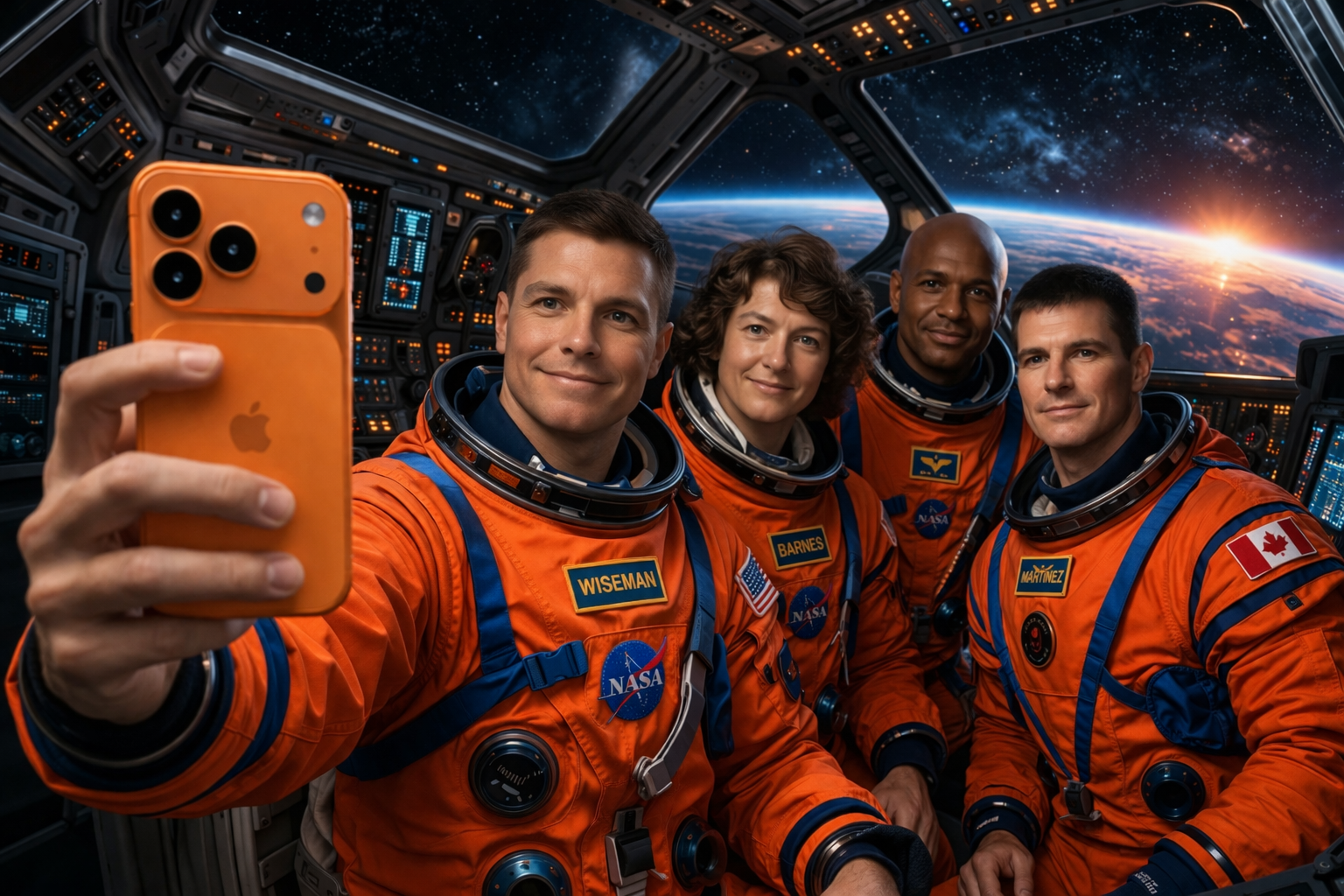
Data extracted from the published photos indicates that the “selfies” in which mission commander Reid Wiseman and mission specialist Christina Koch appeared looking at Earth from the window of the “Orion” capsule were taken using the device’s front camera on the second day of the mission.
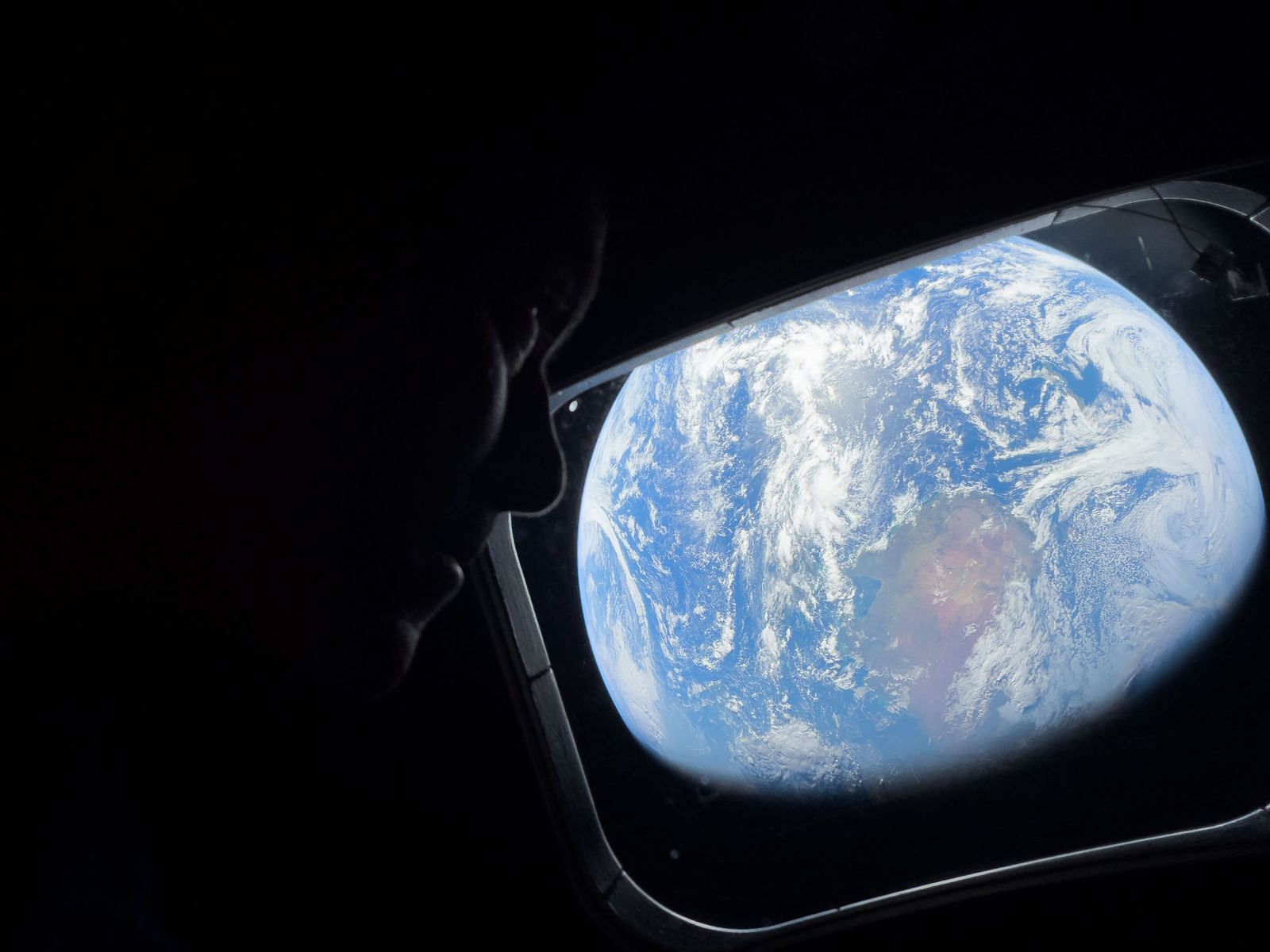
Although the astronauts used other professional cameras such as the Nikon D5 and Nikon Z 9, the ease of use of the Phonegram made it the ideal tool for those spontaneous, once-in-a-lifetime moments.
A Historic Mission and Record Numbers
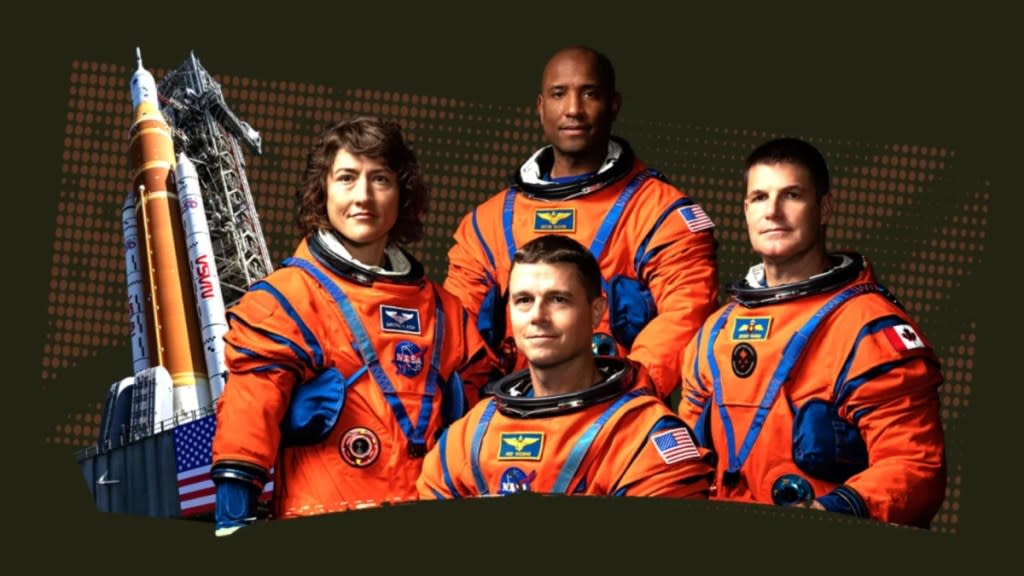
The “Artemis II” mission is the first crewed NASA flight to reach the vicinity of the moon since 1972. Although the Orion capsule did not land on the surface, it broke the record for the farthest distance humans have traveled away from Earth. It is interesting to see a device we use in our daily lives to browse the internet and send messages become part of the records of space exploration, documenting humanity’s return to the moon after a long absence.
Source:


Leave a Reply