To say that Apple’s new Siri AI represents a massive improvement over previous versions is a significant understatement; we are talking about rewriting the assistant from scratch to enter an entirely new era. However, this update may not be exactly what some hoped for, especially those who expected Siri to transform into a traditional chatbot like ChatGPT or Gemini. Although the exterior might suggest otherwise, the fundamental differences lie in the details and depth.
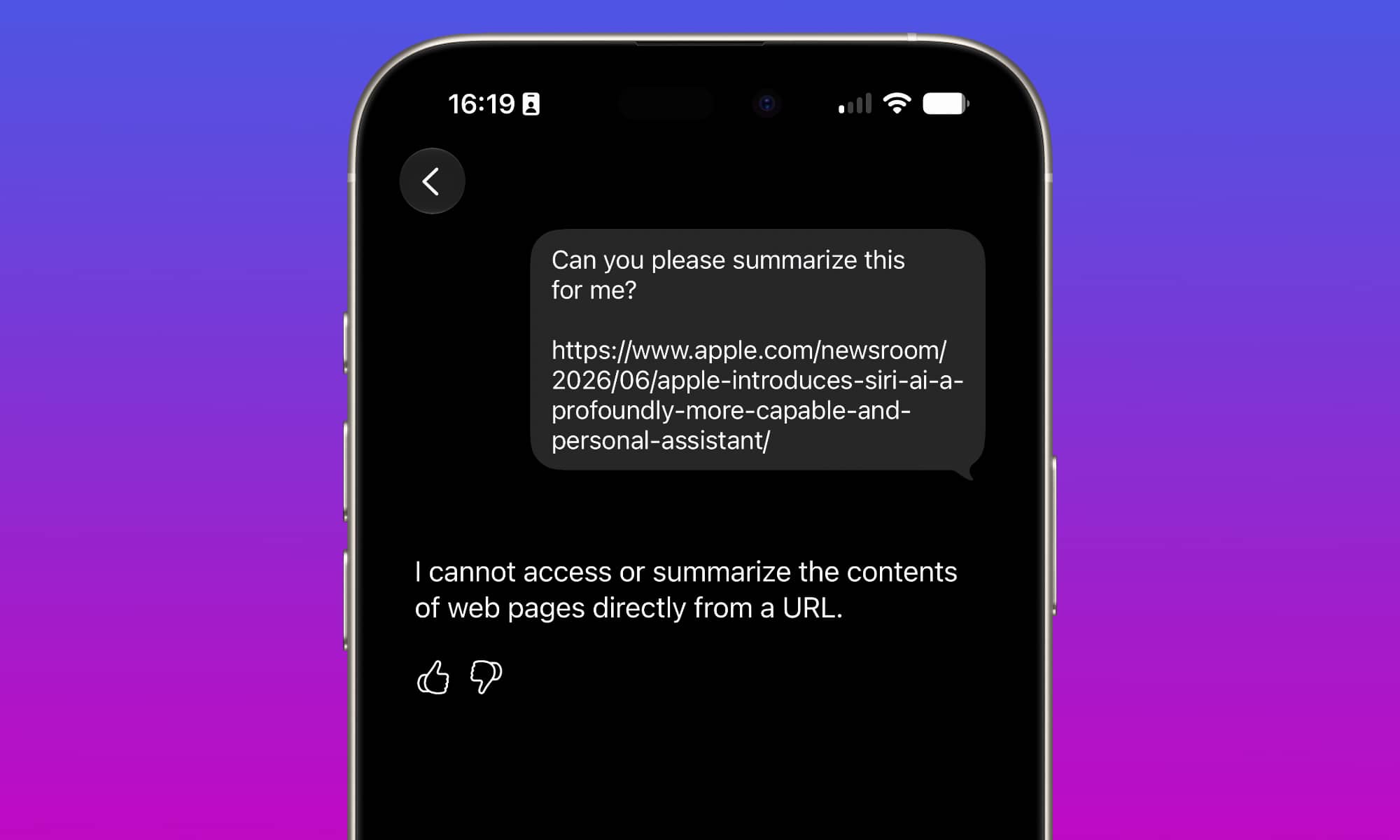
Siri is not a chatbot for your academic service!
Apple’s new design for Siri is never intended to make it your virtual companion; rather, Apple’s interest is clear and explicit: Siri is designed to be a professional and vocational personal assistant. Its answers are polite, yet dry and practical at the same time, maintaining the classic personality we knew 15 years ago, but with a much smarter brain this time.
This practical nature also means that Siri will not go off to write research papers for you or summarize long web pages with absolute freedom. While Google’s Gemini assistant or ChatGPT welcome going online and performing comprehensive research on your behalf, Apple has imposed clear restrictions that prevent Siri from reading external web pages upon direct request from links.
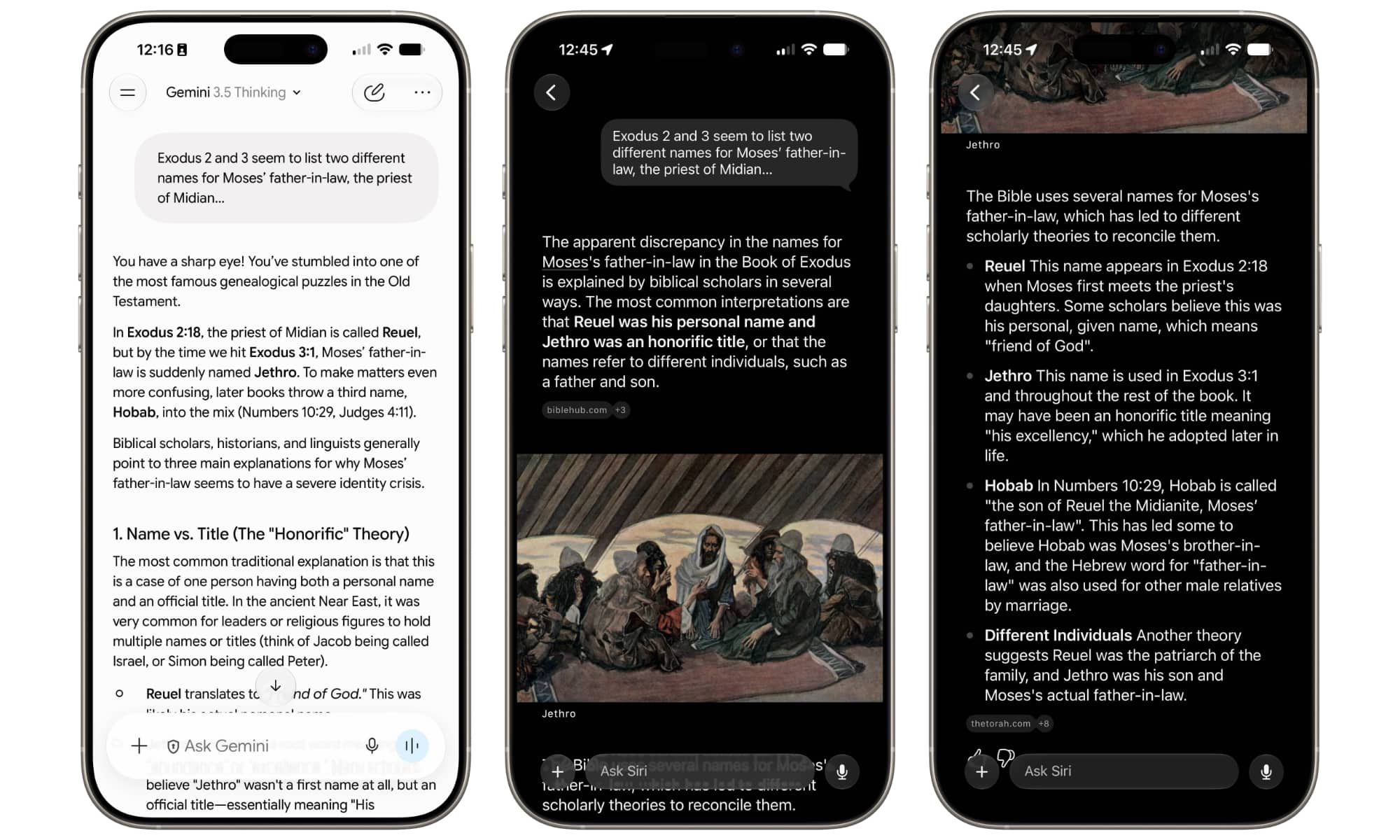
In the second developer beta of the iOS 27 update, this restriction has become official and clear; Siri explicitly refuses to fulfill any request related to summarizing or reading URLs. The internal System Prompts for Siri’s AI have revealed strict and direct instructions stating: “You cannot access content behind a URL: When a user provides a URL and asks you to summarize, read, or extract information from it, tell them explicitly that you cannot access web pages. Do not offer any follow-up suggestions or alternative solutions.”
Craig Federighi’s strict philosophy on privacy and integration
This clear restriction does not seem to be a technical limitation as much as it is a purely philosophical decision by Apple. Apple’s software chief, Craig Federighi, has long expressed skepticism and caution toward AI in general, seeking from the beginning to build a system-wide integrated experience that focuses on privacy and practicality rather than just pasting a “side chatbot” that has no real utility in managing your iPhone device.
In a famous interview with journalist Joanna Stern in June 2025, Federighi emphasized that Apple is not interested in providing just a random conversational interface, but that its true advantage lies in deep integration. When asked at the developer conference why the experience was made interactive and saved in a dedicated app, he explained that the user needs a clear place on the home screen to return to previous conversations and manage them in a familiar and natural way.

In addition, there is the issue of copyright and intellectual property; while Apple has faced some previous accusations regarding the training of its models, it remains more cautious than its competitors who collect data from the web without restrictions. Preventing Siri from reading links randomly aligns perfectly with this cautious vision, leaving ample space for competitors like Gemini and ChatGPT to perform those tasks, while Siri focuses on the affairs of your iPhone.
Source:


Leave a Reply