Since Tim Cook took the helm at Apple, the question has been constant: could the man who succeeded Steve Jobs maintain the company’s success? After many years, the numbers alone seem sufficient to provide part of the answer. Billions of iPhones have been sold, and a market valuation has made Apple one of the largest companies in history. But behind these massive achievements, a more obscure question emerges today; while the technology world is rapidly moving toward artificial intelligence, Apple has chosen to be patient and watch from afar. Was this a calculated strategy that will prove correct over time, or has the company allowed the greatest technological shift in recent years to pass it by? In this article, we review Tim Cook’s achievements during his leadership of Apple, and why his stance on the AI race may become one of the decisions that will leave the most distinct impact on Apple’s future and his personal legacy.
The Tim Cook Era
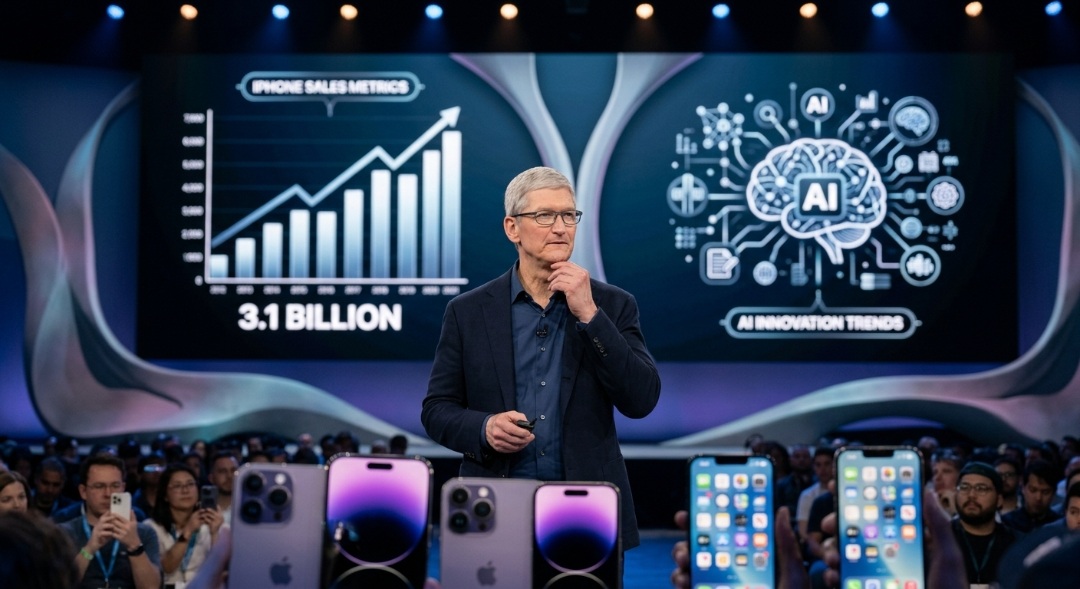
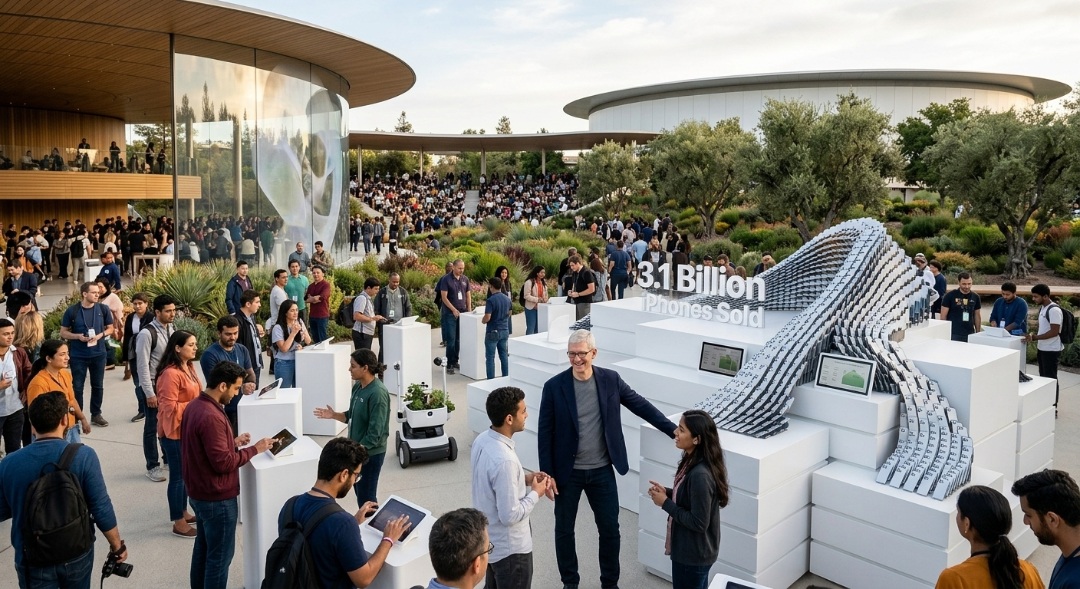
According to data from market research firm IDC, Apple has sold about 3.1 billion iPhones during Cook’s tenure as head of the company. The company’s market value has also risen tremendously, with Apple’s share of the total market capitalization of companies listed on the S&P 500 index doubling, rising from about 3% to about 6%.
Although Apple has maintained a leading position among the world’s largest companies, the rise of artificial intelligence has reshuffled the rankings. Nvidia has surpassed Apple in market value, driven by the massive demand for artificial intelligence chips. Nvidia’s market value is approximately $5.25 trillion, compared to $4.78 trillion for Apple, which still holds the second position and remains ahead of the rest of the Magnificent 7 companies (Apple, Microsoft, Alphabet, Amazon, Meta, Nvidia, and Tesla).
Note: The S&P 500 index includes 500 of the largest publicly traded US companies and is used to measure the performance of the US stock market by tracking the market capitalization of these companies.
The iPhone: A Success Not Repeated
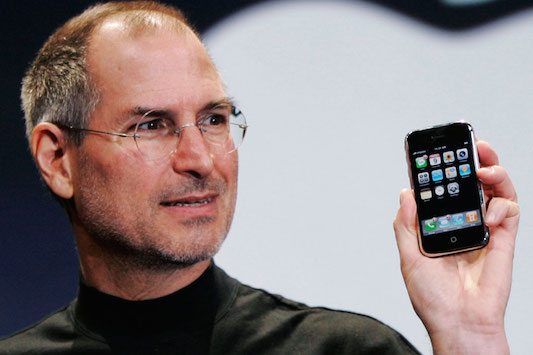
Perhaps the biggest criticism directed at the Tim Cook era is Apple’s failure to introduce a new product that approaches the impact of the iPhone. Since the launch of the first iPhone in 2007, the phone has remained the company’s most important product, and Cook has continued to develop it and add new features until it became one of the most successful and profitable smartphones in history. But relying on a single flagship product for nearly two decades raises questions about the company’s ability to create a new success of the same magnitude.
The Bet on Artificial Intelligence

Apple’s initial attempts to build its own AI technologies did not succeed at the required speed, before the company turned to relying on Google Gemini to power Apple Intelligence and enhance Siri’s capabilities, in a deal that Apple is reportedly paying about $1 billion annually for. While this move suggests that Apple has stepped away from the AI race, it also has another side. At the same time, Apple is avoiding the massive spending that companies like OpenAI, Anthropic, and Microsoft are bearing to build AI data centers.
Herein lies the paradox: if artificial intelligence continues to grow at the expected pace, Apple’s hesitation may seem like a historical mistake. But if this race slows down and AI turns out to be just a bubble, it may turn out that the company avoided one of the most expensive bets in the history of the technology sector.
In the end, Tim Cook will leave behind billions of iPhones sold, a massive market value, and huge wealth, but the evaluation of his legacy will not stop at what he has already achieved. The real question may be both simpler and more difficult at the same time: was stepping away from the AI race a smart decision that saved Apple from massive spending, or a major mistake that the company will pay for? The answer will not appear overnight, but its features will be revealed over the next few years, when the results of Apple’s bets become clear and the true picture of the future of artificial intelligence emerges.
Was Apple’s decision to step away from the AI race the right one? Let us know in the comments!
Source:
Leave a Reply