This year, Apple has presented its audience with an equation unfamiliar in its history: do you pay a hefty sum to own the first foldable phone in the company’s history, or do you settle for spending less to get more mature and advanced camera hardware with almost zero engineering compromises? In addition to the iPhone 18 Pro and iPhone 18 Pro Max, which start at $1,199 and $1,299, Apple has entered the flexible phone market with the iPhone Duo, starting at $1,999. Although all three devices share the powerful A20 Pro chip, the gap in design philosophy and usage makes the choice more complex than simply preferring one screen size over another.
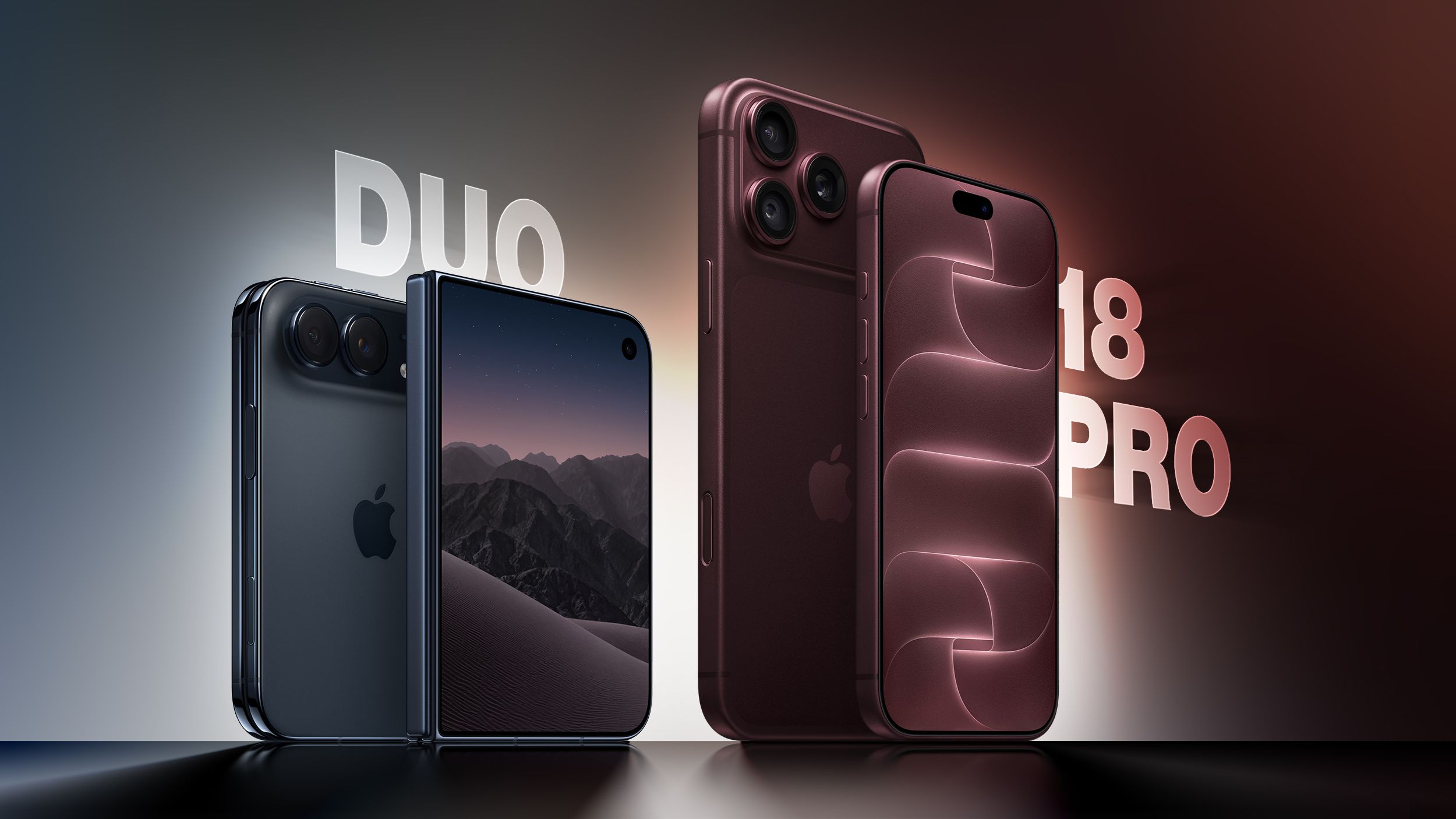
Screens and Design: The Magic of Flexibility vs. Classic Glass Durability
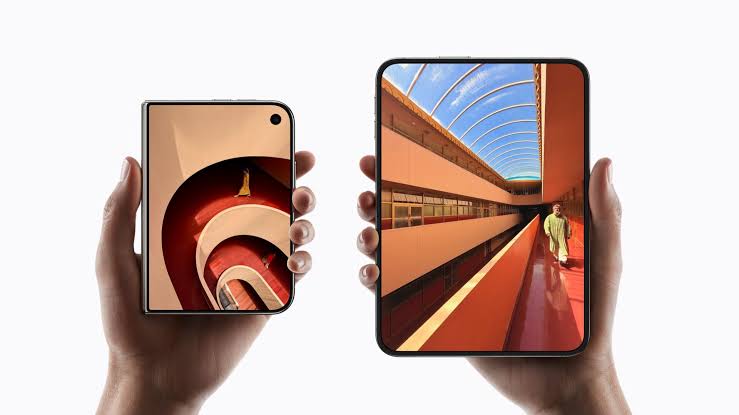
The $700 price difference between the iPhone Duo and the iPhone 18 Pro Max gives you a 7.6-inch foldable internal screen with a resolution of 1878×2670 pixels, supported by a replaceable polymer layer and governed by a slight crease that may appear under certain lighting angles, alongside a 5.4-inch compact external screen. The internal screen comes with an ultra-reflective-resistant nano-coating and a wide-angle OLED structure, with a promise of Apple Pencil (USB-C) support later in 2026. In contrast, the Pro models maintain their solid glass screens, completely free of any curvature, measuring 6.3 inches for the Pro model and 6.9 inches for the Pro Max model, with a density of 460 pixels per inch.
However, having a giant screen that folds into your pocket takes its toll on the device’s dimensions and daily weight; the iPhone Duo comes with a polished titanium frame and a 3D-printed hinge cover. It is 11.3 mm thick when folded (thinning to 5.2 mm when opened) and weighs 254 grams, making it thicker and heavier than the iPhone 18 Pro Max (249 grams) and the iPhone 18 Pro (211 grams). Interestingly, the hinge supports multi-angle positioning to use the phone as a self-standing mount during FaceTime calls and video viewing, in addition to supporting the StandBy feature without needing to be connected to a charger, and Split View multitasking to run two apps side-by-side with efficiency not available in traditional Pro phones.
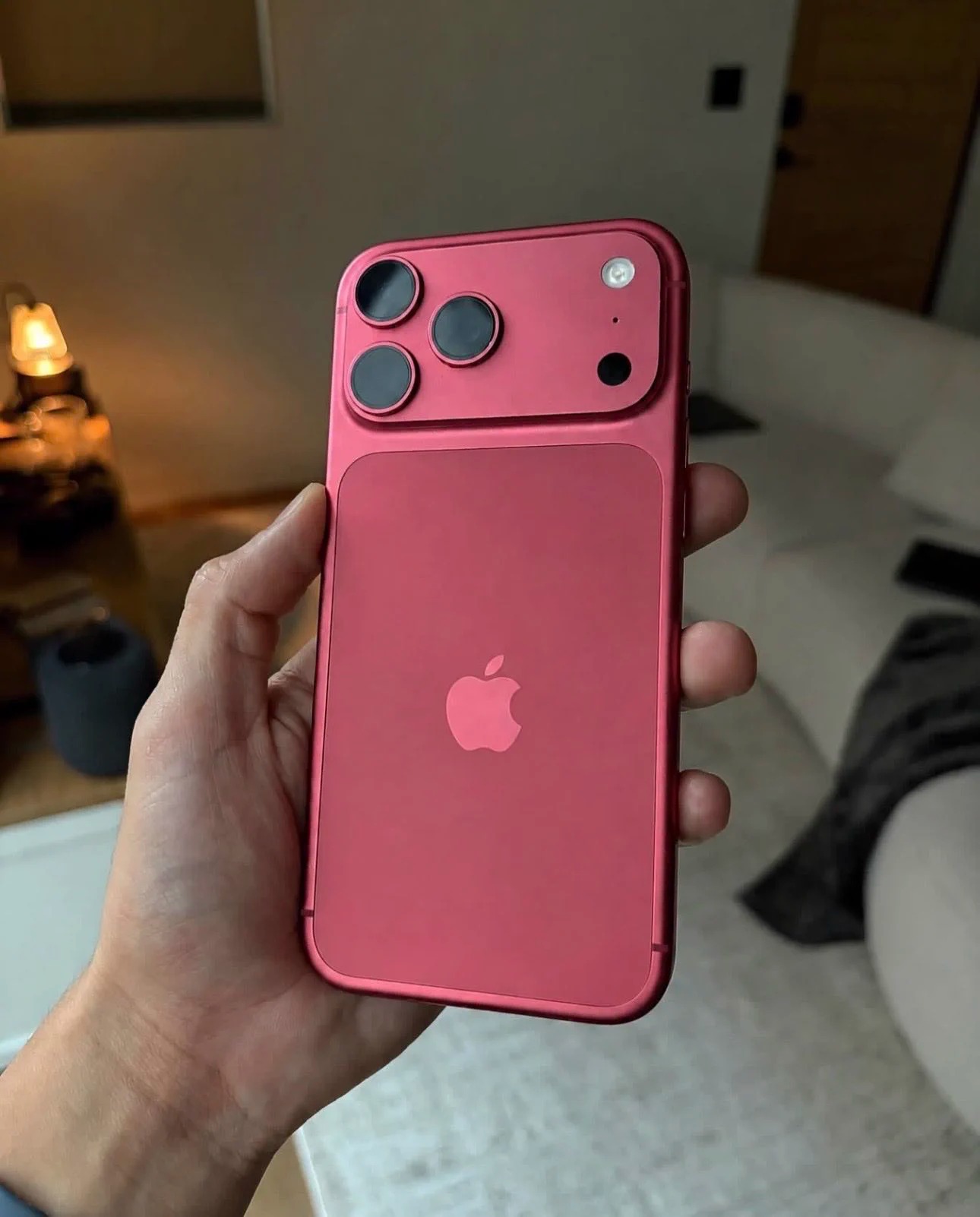
Design compromises don’t stop at weight; while the Pro models maintain Face ID and the customizable Action button, the iPhone Duo replaces facial recognition with a Touch ID fingerprint sensor integrated into the side button and completely abandons the Action button. Furthermore, iPhone Duo colors are limited to Night Sky and Starlight, while the Pro models shine with a wider selection including Black, Silver, Ice, and Dark Burgundy.
Camera System: Technical Regression vs. Software Innovation
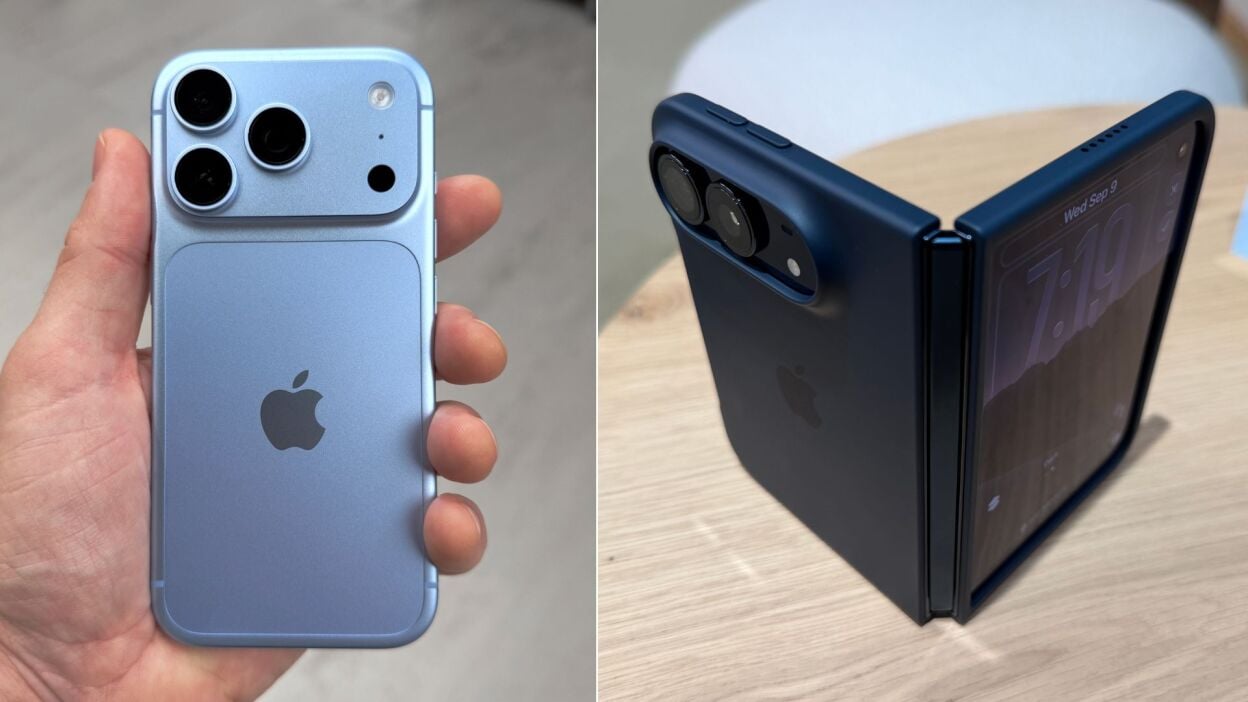
Here lies the real gap that may determine the purchase decision; the iPhone 18 Pro models offer the triple Pro Fusion system at 48 megapixels, which for the first time contains a variable aperture in the main camera (switching between f/1.48, f/1.8, f/2.8, and f/4.0) for precise control over depth of field and light capture. Added to this is a 48-megapixel telephoto camera with a tetra-prism design that gives you up to 4x optical zoom and high-quality cropping up to 8x, reaching a total zoom range equivalent to 16x in optical quality, with digital zoom reaching 40x for photos and 24x for video.
In contrast, the iPhone Duo settles for a Dual Fusion system that completely lacks a dedicated telephoto lens; it relies on the 48-megapixel main camera with a fixed f/1.6 aperture, with optical cropping capability up to only 2x, and a modest digital zoom of 10x for photos and 6x for video. The Duo phone is also deprived of advanced professional formats such as ProRes RAW, ACES color recording, Genlock technology, and DNG raw format, settling for some basic manual controls like white balance and focus.
Even in terms of front cameras, the Pro models excel with an 18-megapixel Center Stage camera with autofocus and support for professional files, while the iPhone Duo has a 12-megapixel external camera and another camera buried under the internal screen dedicated to FaceTime calls at 1080p, lacking Night mode, Portrait mode, or Photographic Styles. Nevertheless, the Duo phone offers unique features taking advantage of its structure, such as Kid Cue on the external screen to entertain children while taking photos, and the Duo Preview feature that allows a person to see themselves on the external screen while being photographed.
Performance, Battery, and Maintenance and Total Cost Calculations
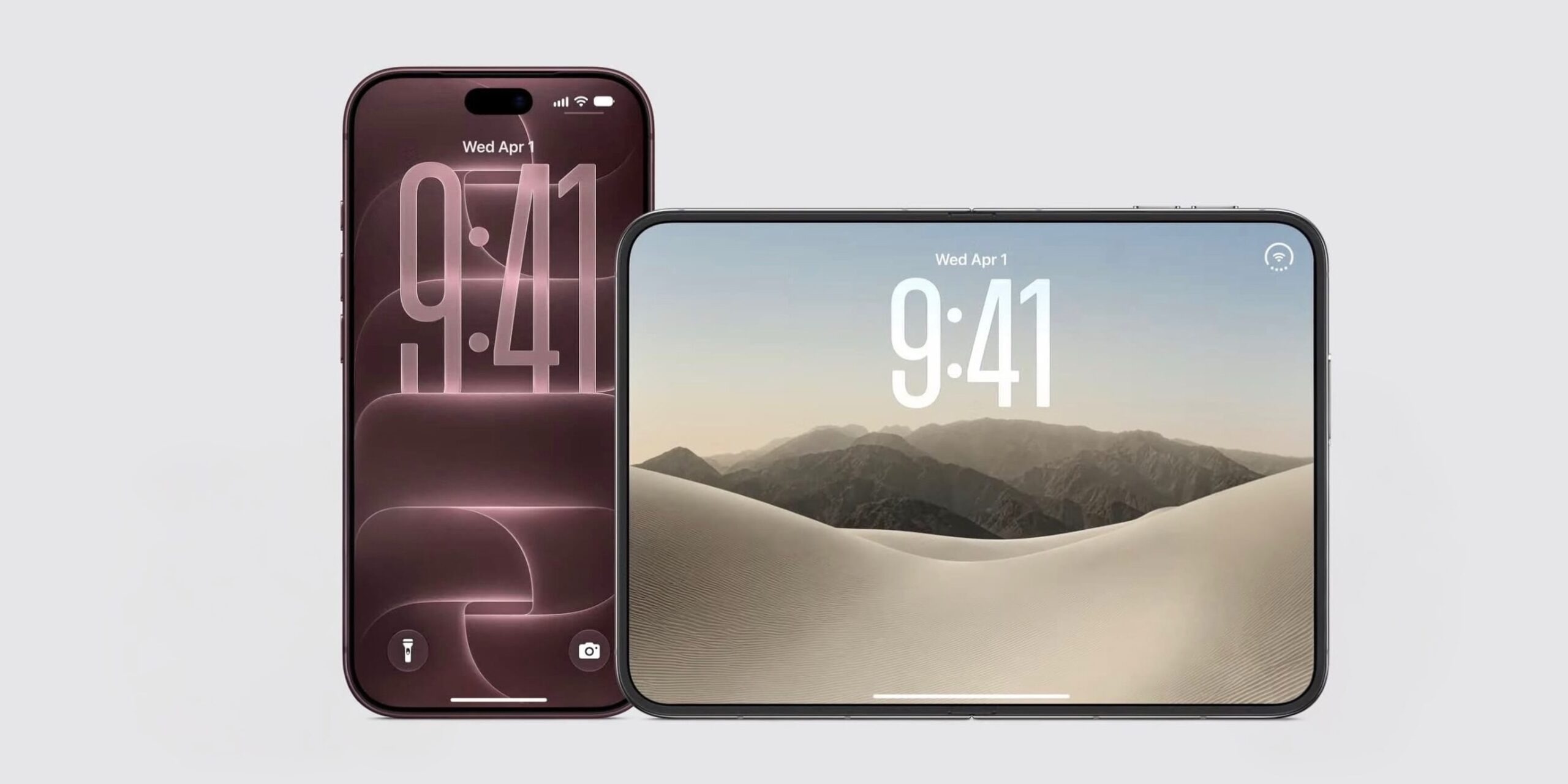
Under the hood, the core hardware is largely identical; all three phones are powered by the A20 Pro chip manufactured with an advanced architecture, featuring a six-core CPU, a seven-core GPU with neural accelerators, a 16-core dual neural engine, along with a C2 modem and N1 wireless chip, with full compatibility with Apple Intelligence features, emergency satellite connectivity, 25W MagSafe wireless charging, and an IP68 water and dust resistance rating.
As for the battery, it is subject to the screen usage equation; while the iPhone 18 Pro Max gives you up to 45 hours of video playback and 30 hours of typical use thanks to its massive battery, the iPhone Duo relies on two built-in batteries that provide up to 24 hours of typical use (identical to the small Pro model), and its video playback capacity drops from 44 hours via the power-efficient external screen to just 31 hours when consuming content on the large internal screen. Charging the Duo phone to 50% takes about 20 minutes using a 60W charger, compared to just 15 minutes for the Pro models.
The cost doesn’t end at the purchase price, but extends to the after-sales stage and maintenance risks; owning a 256GB iPhone Duo costs $1,999, which is $100 more than buying a 1TB iPhone 18 Pro Max. Shocking differences appear in the prices of Apple-certified spare parts; repairing the internal screen of a Duo phone without AppleCare+ costs about $999, compared to $329 for an 18 Pro screen and $379 for a Pro Max screen. Battery service for the Duo is $229 versus $129 for the Pro models, and even the monthly subscription to the AppleCare+ protection plan with theft and loss coverage rises to $19.99 per month for the Duo phone compared to $14.99 for the Pro.
Source:
Leave a Reply