Have you ever scrolled through social media and felt that something has changed? Similar posts constantly appear before you, comments seem as if they were written in the same way, and even the conversations you have over the internet might not even involve a human on the other end. This feeling is no longer just a fleeting impression for some users; it has become the focus of an increasingly popular theory known as the Dead Internet Theory. Let us take you on an interesting tour to learn what the Dead Internet is and why this theory is worrying the world.
What is the Dead Internet Theory?
This idea first appeared during the late 2010s, but its features began to clarify in 2021, after someone posted a thread in the Agora Road community titled “Dead Internet Theory: Most of the internet is fake.” The author of the post spoke about their feeling that the network had become empty and lacked real human interactions, considering that the internet had entered a new phase since 2016, when search engines and social media platforms began displaying increasing amounts of content produced by automated systems and artificial intelligence.
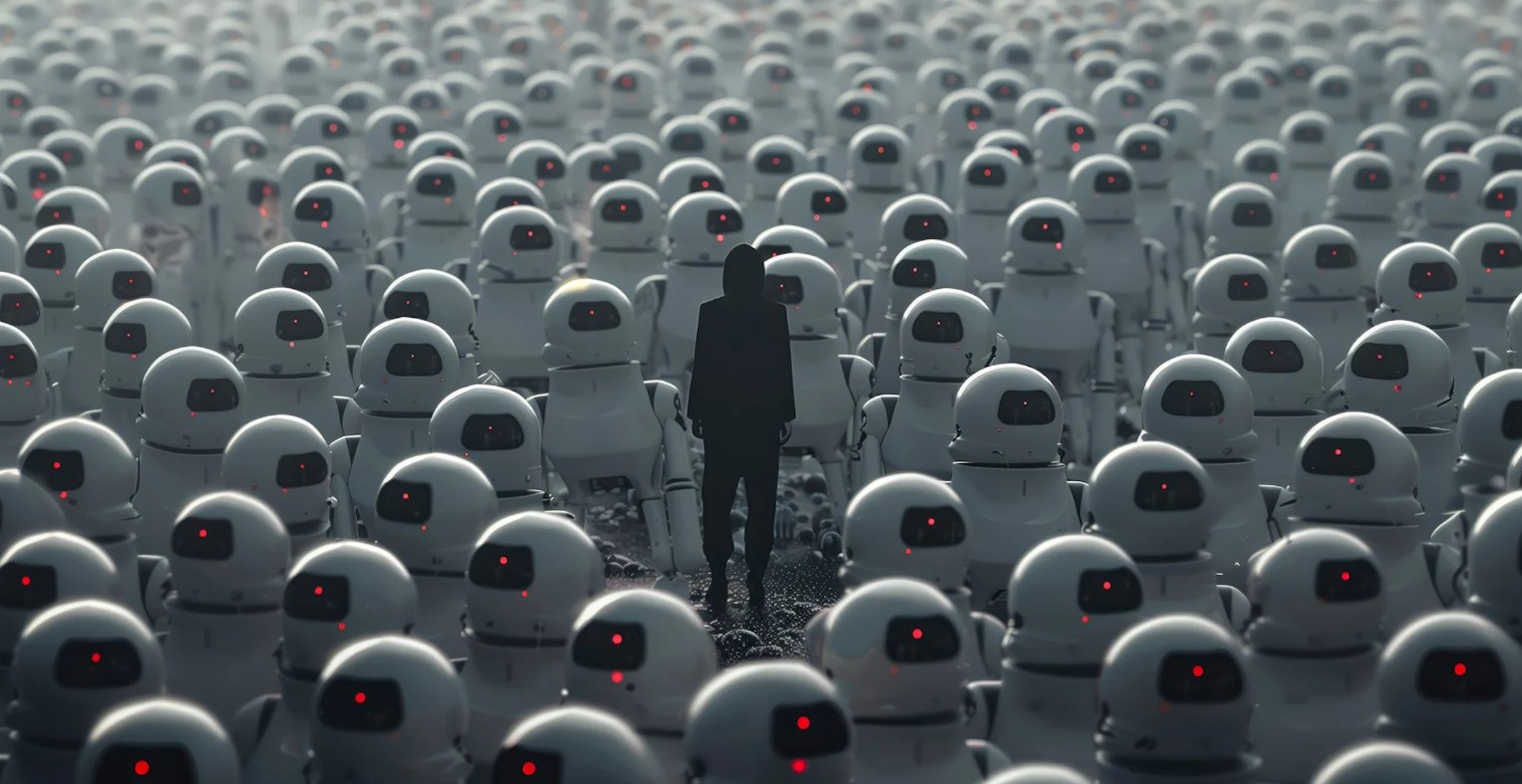
In short, this theory assumes that human activity on the internet is gradually declining, while robots, automated systems, and artificial intelligence are taking over the production of content and interaction with users. Although the idea started as a conspiracy theory on internet forums, technical developments and recent statistics have brought it back in a more serious light.
According to proponents of this theory, the internet has “died,” and the user is no longer necessarily interacting with real people. Instead, they may find themselves facing bots and automated accounts that post content, comment on it, and exchange interactions, creating the impression of widespread public interest in certain topics, even though a large portion of this activity may not be human.
With the rapid development of artificial intelligence, this hypothesis has become even more interesting. In September 2026, OpenAI (the developer of ChatGPT) announced that it had found a solution to a famous and complex mathematical problem known as the Navier-Stokes equations. At the same time, data from the cybersecurity group Thales revealed that robots were responsible for 53% of total internet traffic during the current year 2026, compared to about 51% during the previous year.
Not only that, but the activity of smart systems and robots is no longer limited to imitating humans; Meta acquired the Moltbook platform, a social network where AI robots exchange conversations with each other, mostly about the nature of humans, their behavior, and their actions.
How has artificial intelligence become part of our digital life?
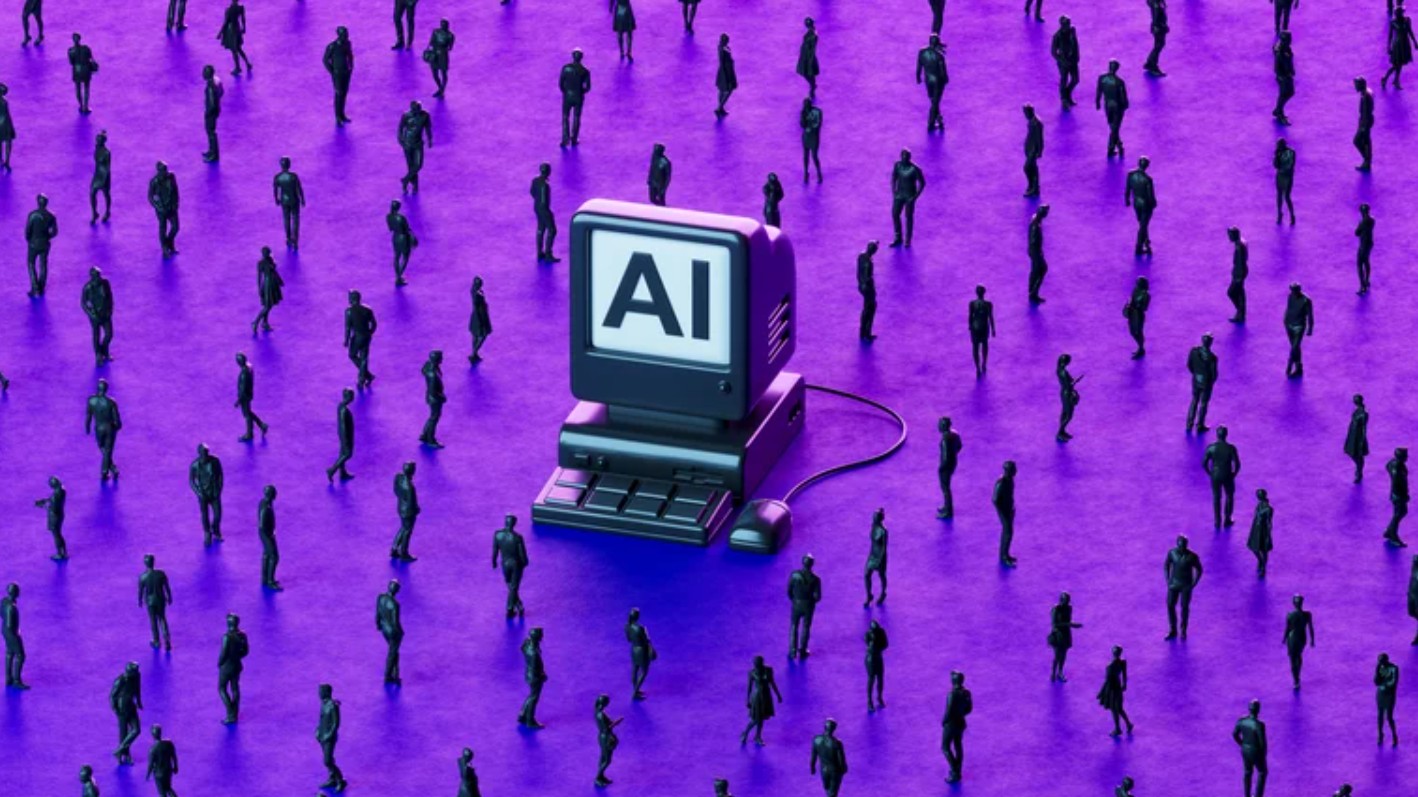
Using chatbots is no longer limited to those interested in technology. According to a study conducted by the Pew Research Center, the percentage of Americans who have used tools like ChatGPT, Gemini, and Copilot rose from 33% in 2024 to 49% in 2026, while about 25% stated that they use chatbots on a daily basis.
The effects of this shift are appearing in various fields. In education, students may use artificial intelligence to write research and assignments, and then teachers use similar tools to evaluate this work. In the job market, job seekers rely on chatbots to prepare resumes and optimized cover letters before these applications pass through recruitment systems that in turn rely on artificial intelligence. In this way, some interactions that humans used to perform themselves may become a series of automated processes, in which artificial intelligence takes over the preparation, analysis, and evaluation of content, while the direct role of the human declines.
Does the Dead Internet Theory deserve all this concern?
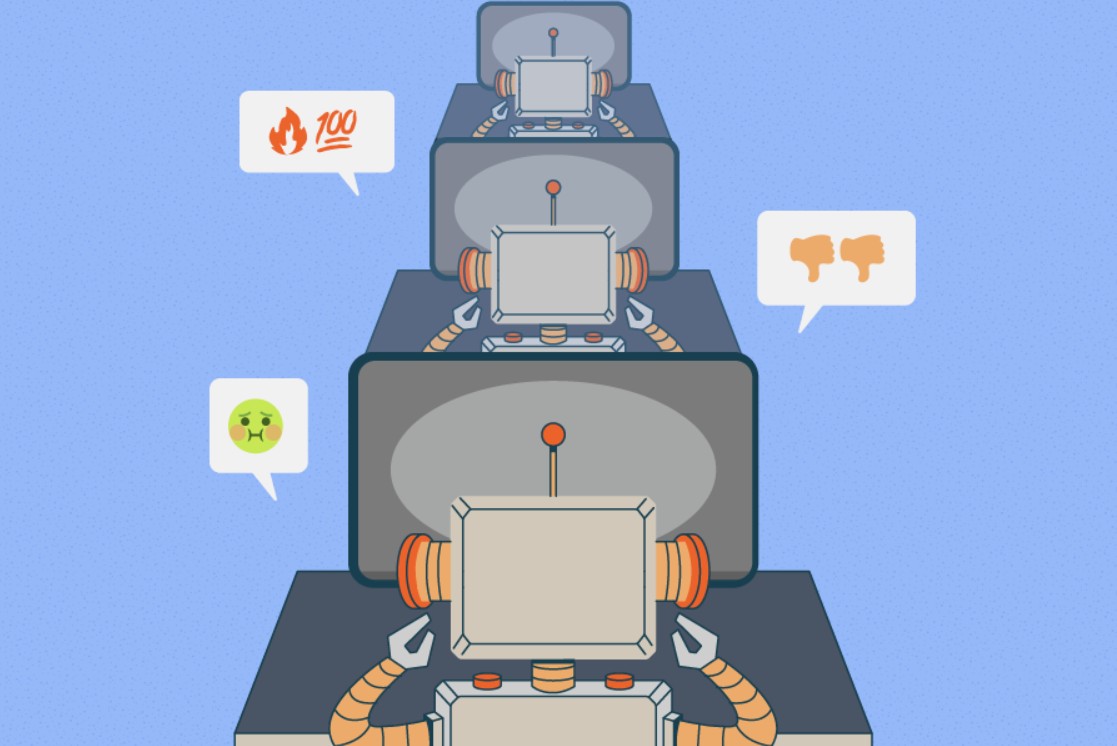
The problem does not stop at the user’s feeling that the internet has become less human; it extends to more serious risks, most notably the spread of misinformation. Automated accounts are capable of spreading, amplifying, and recirculating fake news on a large scale, and chatbots have become a potential source of misinformation related to elections. Government agencies have warned of the dangers of deepfakes and AI-powered technologies to the integrity of electoral processes, at a time when regulatory legislation is still facing major challenges in this new field that is growing at rocket speed.
Opinion polls reflect a side of societal anxiety. A Pew Research Center study showed that 40% of users expect the impact of artificial intelligence on society to be negative over the next twenty years.
In the face of this expansion, synthetic content detection technologies have begun to receive increasing attention. In July 2026, the company Pangram received $9 million in funding to develop a system that helps distinguish between texts produced by humans and those created by artificial intelligence. OpenAI has also begun adding watermarks to content produced by artificial intelligence, a move that comes as part of actions related to the EU AI Act, with the aim of making it easier to identify synthetic materials and distinguish them from human content.
Has the internet actually died?
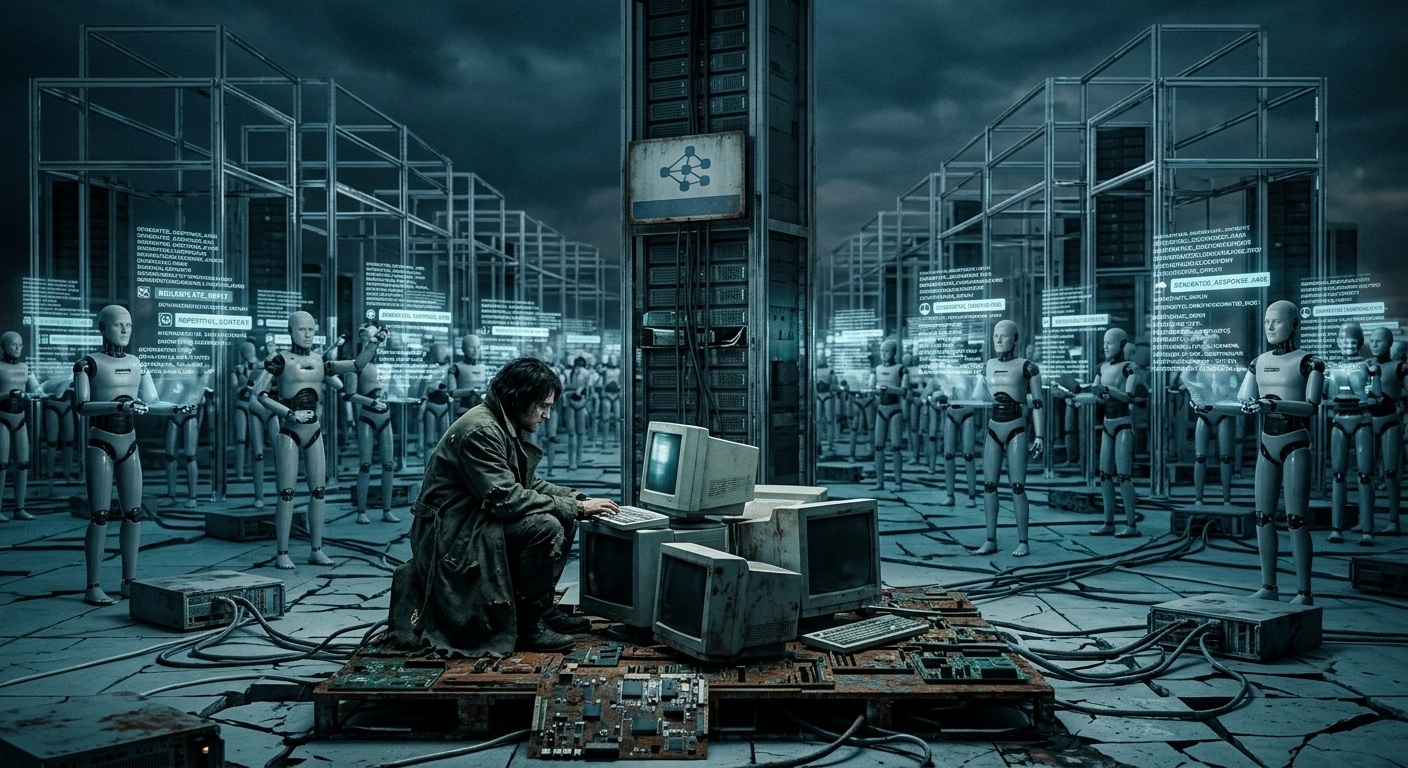
Despite the numbers and developments that give the Dead Internet Theory a degree of realism, this does not mean that the current web has become devoid of humans, or that every anonymous account and every repetitive post is backed by a robot. There is a difference between increased automated activity and the complete disappearance of human interaction. However, the real challenge lies in the difficulty of distinguishing between the two, especially with the development of artificial intelligence tools and their ability to produce increasingly natural-looking texts, images, and conversations.
Finally, the internet may not have died in the literal sense, but it is undergoing a transformation that makes the boundaries between human and automated activity less clear than ever before. With the increase in content produced by artificial intelligence systems and the spread of automated accounts capable of interacting and exchanging ideas, it is no longer always easy to know who is behind what we read or watch. The real problem may not be that humans have disappeared from the digital world, but that discovering their presence amidst this crowd has become much more difficult.
Do you think the Dead Internet Theory has become a reality we are living in? Tell us in the comments!
Source:


Post Comment