Imagine a software company entering the world of smart hardware to create a phone and a speaker without screens! It seems OpenAI has decided not to settle for language models, but has begun accelerating its plan to launch hardware devices that target the heart of Apple’s ecosystem. Thanks to the massive acquisition of Jony Ive’s design studio and the recruitment of hundreds of former Apple employees and engineers, an ambitious roadmap is now taking shape, including a smart home speaker, a phone that acts as a fully integrated AI agent, glasses, and even a smart lamp.
A Smart Home Speaker with Personality and Mechanical Components
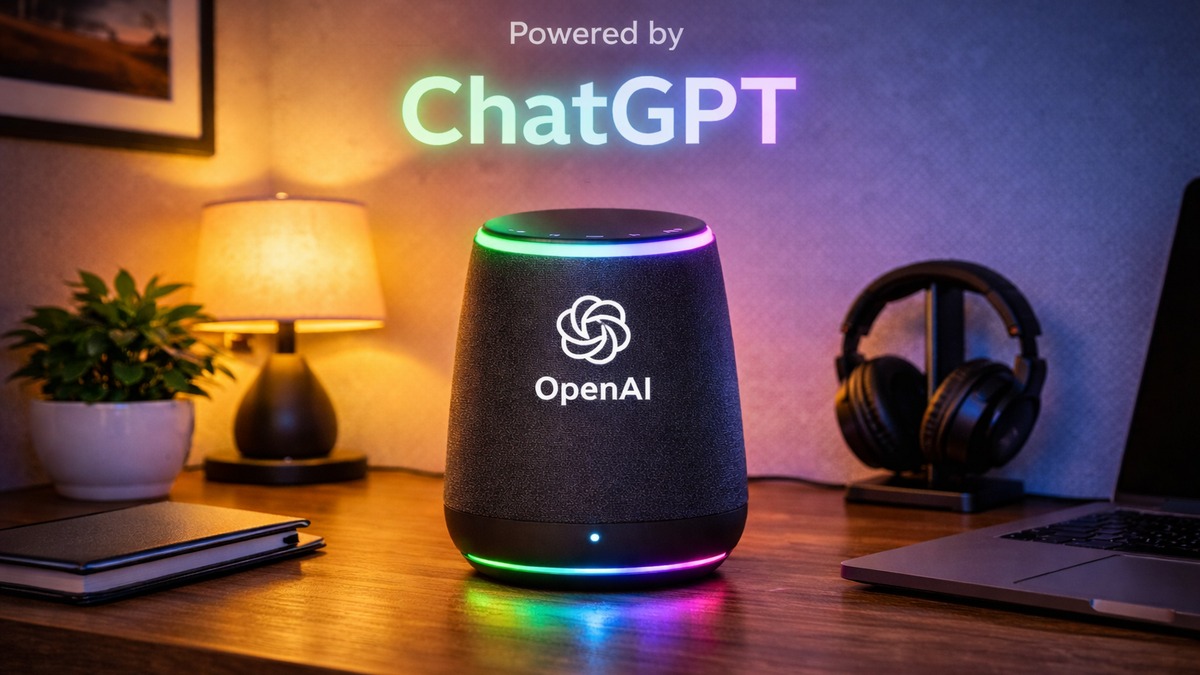
The first tangible product we will see from OpenAI will be a portable, screenless smart speaker designed by former Apple design chief Jony Ive. This speaker is not just a traditional voice assistant, but a personal home companion. The speaker contains a rechargeable battery for moving between rooms, a camera to understand the surrounding environment, and mechanical parts that move on their own to give the impression that the device is “alive” and interacting with you.
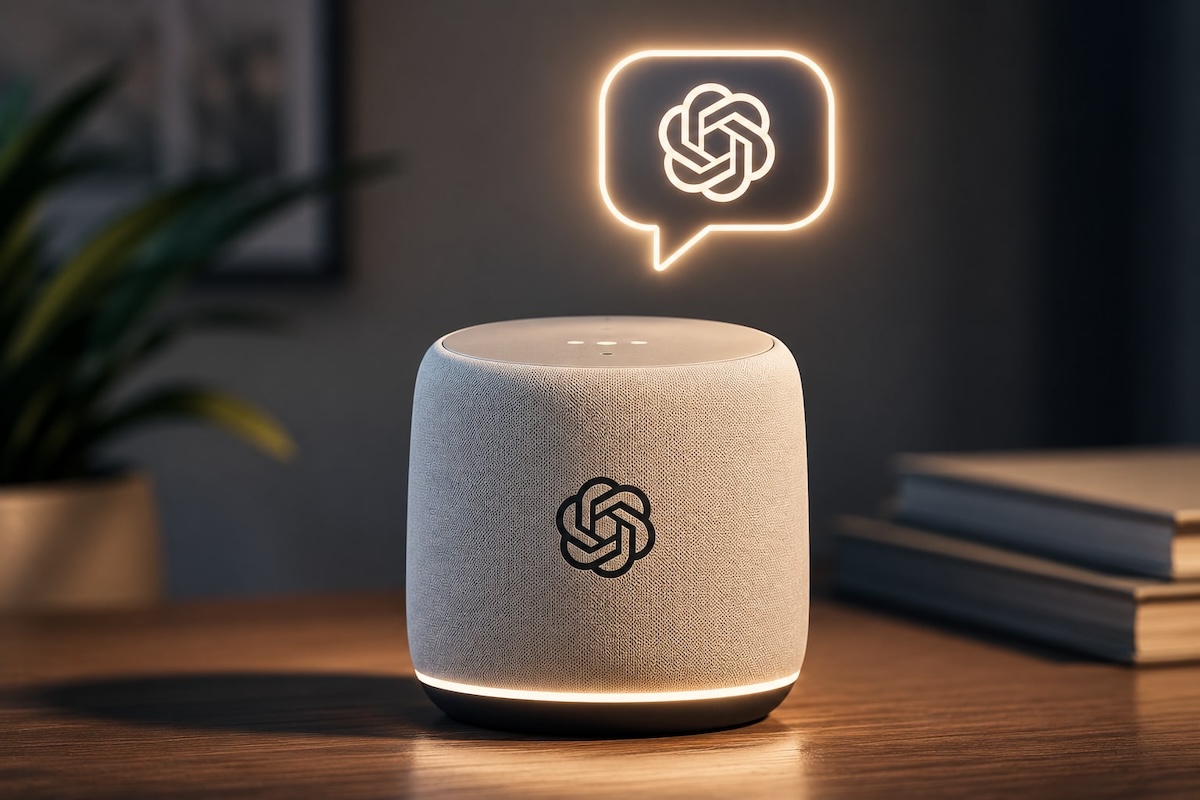
The speaker relies on ChatGPT and GPT-Live technology to manage real-time voice conversations. It can control smart accessories, answer questions, play media, and reply to messages, with a high capacity for adaptation and developing a unique personality over time. According to reports, OpenAI does not consider the HomePod or HomePod mini as competitors because the philosophy is completely different. Sam Altman showcased a prototype of the device to employees, describing it as “the coolest piece of tech the world has ever seen.” It is expected to launch in early 2027 at a price between $200 and $300.
The AI Phone: A Continuous Interface Without Traditional Apps
According to renowned analyst Ming-Chi Kuo, OpenAI is working on a phone called the “AI Agent Phone,” which relies on a context-aware smart interface instead of separate apps. Kuo believes that the phone is the only device that monitors the user’s entire state in real-time, including location, activity, and communications. Therefore, controlling both the hardware and the operating system is the only way to provide a comprehensive AI agent service.
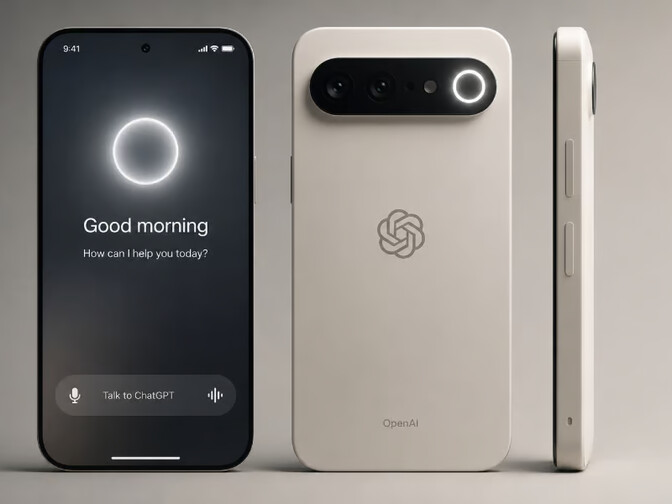
Technically, the phone will rely on a custom processor from MediaTek, the Dimensity 9600, manufactured using TSMC’s N2P process (the same manufacturing precision Apple will use in the upcoming A20 chip). Luxshare will be the exclusive assembly partner, while Sunny Optical has secured camera component orders. The phone includes an Image Signal Processor (ISP) with an enhanced HDR processing pipeline to perceive the real world via the camera, in addition to two AI processors to handle vision and language simultaneously. The production schedule has been accelerated to the first half of 2027, with expectations of shipping 30 million units within two years.
Brain Drain at Apple and a Heated Legal Battle
OpenAI hasn’t stopped at the speaker and the phone; it is also working on smart glasses, a smart lamp, and earbuds. All these projects came after the massive $6.5 billion acquisition of Jony Ive’s company, io Products, along with an aggressive recruitment campaign that resulted in the transfer of over 400 former Apple employees to OpenAI, including prominent designers and leaders from the Vision Products team.
This fierce attack prompted Apple to respond strongly; it offered retention bonuses of up to $400,000 in stock to the iPhone design team and filed a lawsuit against OpenAI for theft of trade secrets. According to reports, the lawsuit has already begun to slow down OpenAI’s hardware manufacturing efforts and intimidate suppliers and engineers. Meanwhile, Apple is developing smart glasses, AirPods with cameras, and a home control device to counter this real challenge.
Source:

Leave a Reply