Apple has officially announced the launch of the new generation of its flagship desktop, the Mac mini, powered by the all-new M6 chip and the M5 Pro chip designed for high-end professional workflows. The company also unveiled the all-new generation of its super-desktop, the Mac Studio, equipped with the latest and most powerful silicon produced by the Apple Silicon architecture to date: the M5 Max and M5 Ultra chips. The new device redefines the boundaries of professional desktop computing, bringing unprecedented capabilities for running AI models locally on your desk with maximum privacy, alongside massive leaps in graphics performance, storage speeds, and superior connectivity options—all within the same compact and elegant chassis.
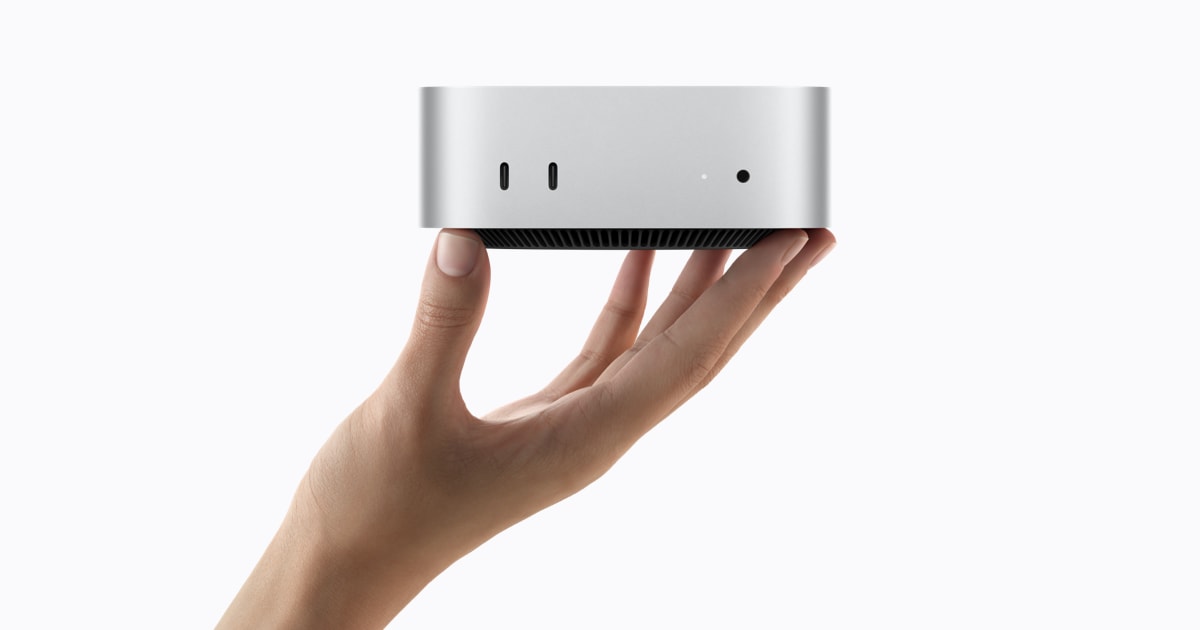
M6 Chip: A historic leap in AI and graphics performance
The new M6 chip tackles demanding tasks to provide users with stunning responsiveness at every step. The chip features a 12-core CPU, doubling the core count of the previous base generation while delivering the world’s fastest single-core performance. This power is complemented by a 12-core GPU featuring integrated Neural Accelerators in every graphics core for the first time ever in Mac mini devices, achieving up to 4x faster AI performance compared to the Mac mini with the M4 chip.
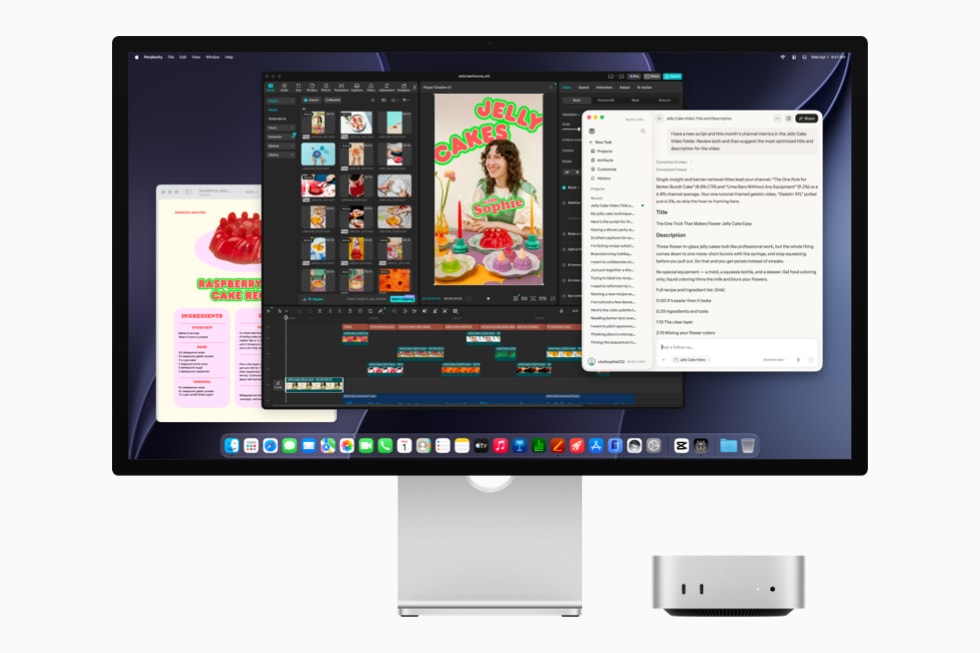
The M6-powered Mac mini includes a 16-core dual Neural Engine that offers twice the speed of the previous generation, in addition to unified memory starting at 16GB and upgradeable to 32GB with a bandwidth of up to 170GB/s. These specifications translate into ultra-fast real-world performance:
- Processing large language model queries in LM Studio is up to 13.5x faster compared to the M1 chip, and 4.8x faster than the M4 chip.
- Calculations in Microsoft Excel spreadsheets are 2.3x faster than the M1 chip and 50% faster compared to the M4 chip.
- Doubling the performance of ray-tracing supported games like Cyberpunk 2077: Ultimate Edition compared to the previous generation.
Unprecedented creativity and advanced daily productivity
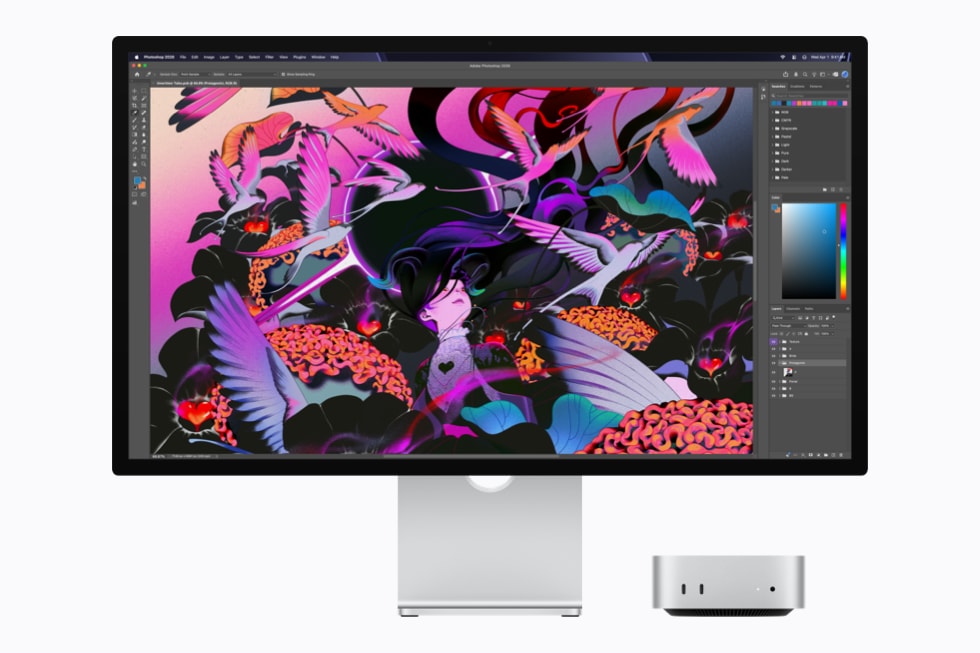
The Mac mini is designed to serve creators and content producers with total efficiency, allowing for complex photo editing with extreme precision and speed in applications like Adobe Photoshop, leveraging storage units that are twice as fast as previous generations, as well as improvements in handling massive data in unified memory.
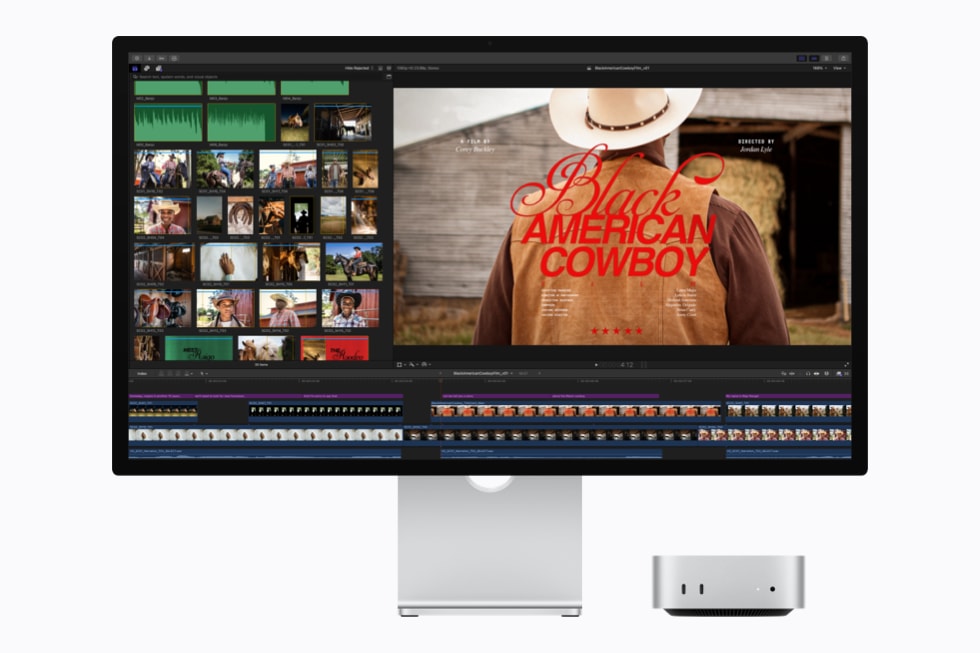
The device also provides video editors and producers with an extremely smooth workflow when working on high-resolution video projects via the Apple Creator Studio suite and Final Cut Pro, where 40% faster CPU capabilities combine with advanced graphics to accelerate rendering and live editing without any lag.
M5 Pro Chip: Superior professional performance for complex tasks
For professional users who demand maximum computing power, the Mac mini with the M5 Pro chip redefines the possibilities for a device of this compact size. The M5 Pro chip contains up to an 18-core CPU for exceptional multi-threaded performance, and up to a 20-core GPU with enhanced shading cores and third-generation ray-tracing technology, alongside Neural Accelerators in every graphics core.
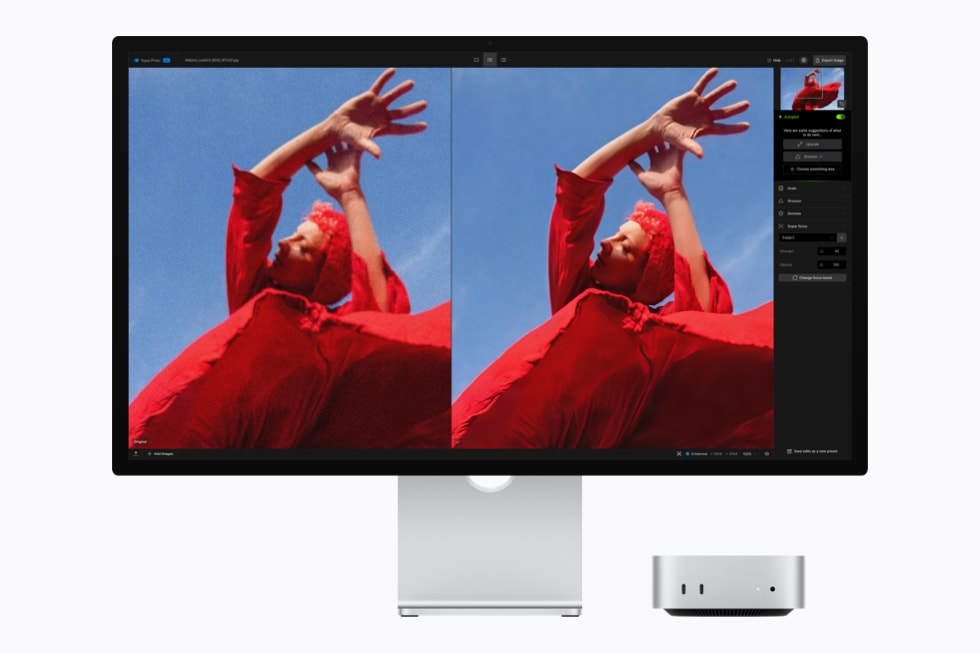
The M5 Pro chip supports up to 64GB of unified memory with a massive bandwidth of 307GB/s, allowing for local execution of the largest AI models, editing ProRes RAW files, and processing massive 3D scenes. Key performance improvements include:
- Processing large language model requests up to 8.5x faster compared to the Mac mini with M2 Pro, and 4x faster compared to the M4 Pro chip.
- Rendering ray-traced scenes in Blender is 4.5x faster compared to the M2 Pro chip, and 1.4x faster compared to the M4 Pro chip.
- Photo processing and editing in Affinity is up to 2.1x faster compared to the M2 Pro chip.
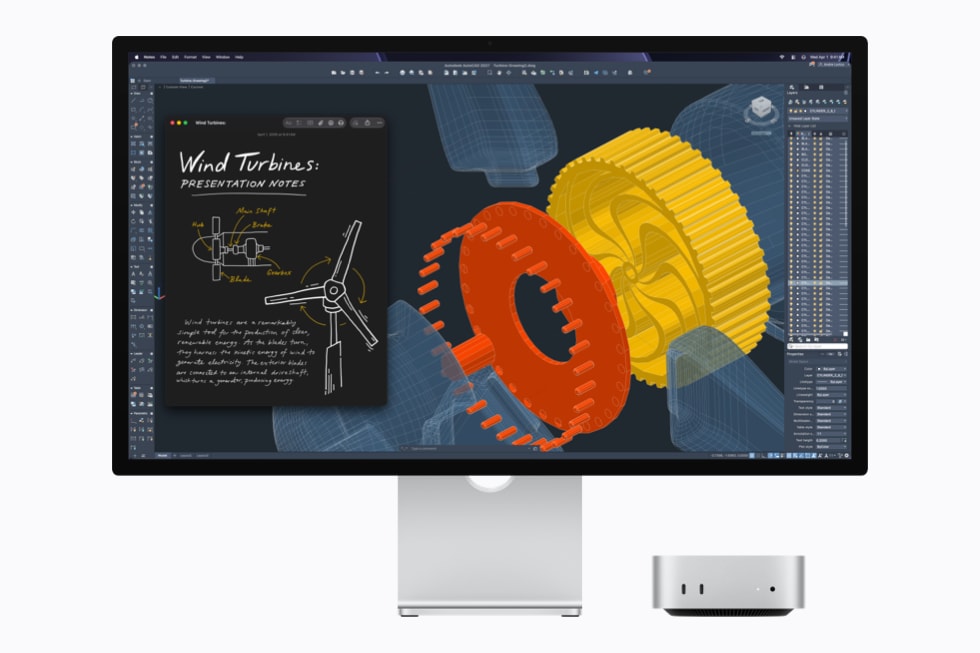
The device is an ideal solution for design engineers and visual effects artists who rely on software like Autodesk AutoCAD and Pro Tools, offering quiet performance and exceptional efficiency per watt to operate in studios and development offices as a permanent local server for AI agents and scientific simulations.
Advanced connectivity options and Thunderbolt 5 ports
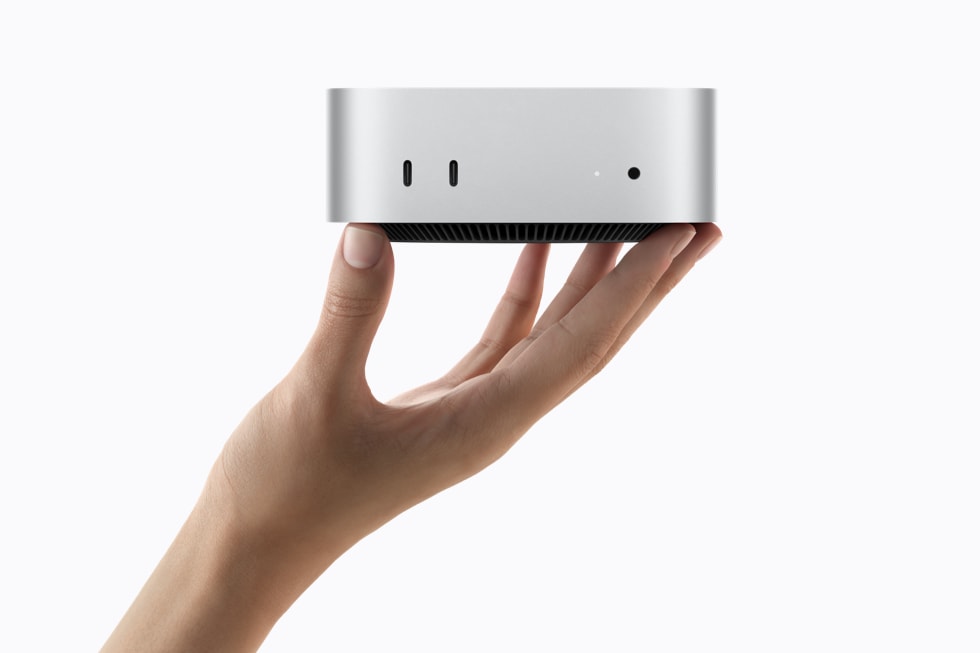
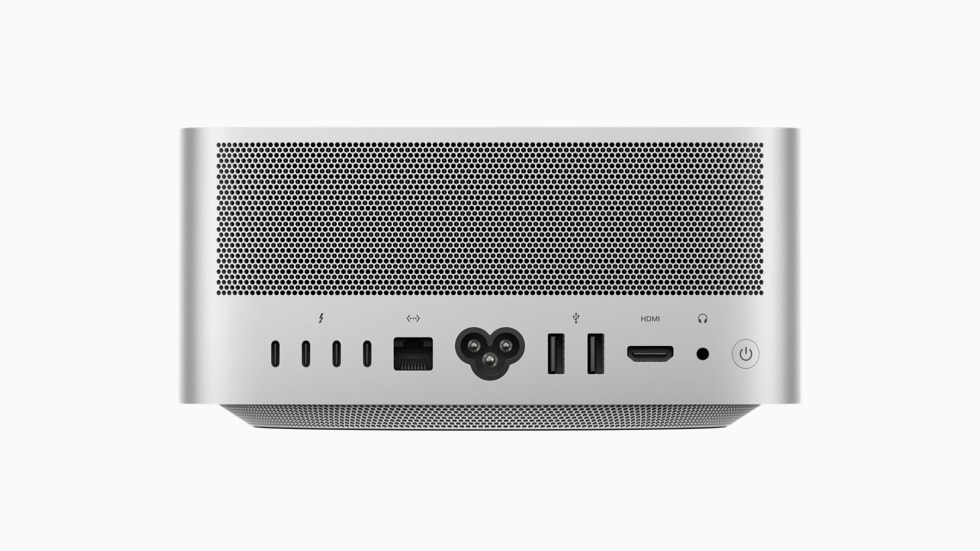
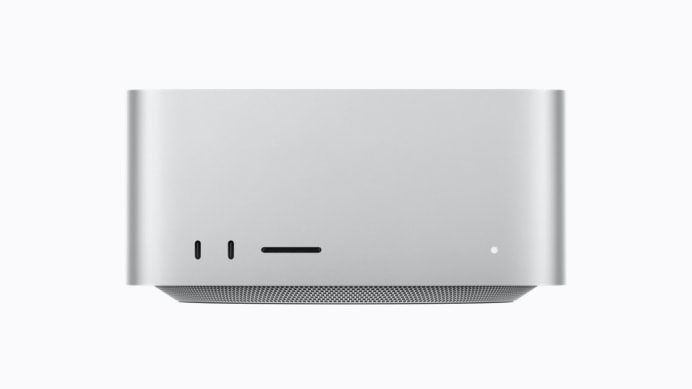
The Mac mini has received a comprehensive upgrade in its connectivity ecosystem, with both models supporting Wi-Fi 7 and Bluetooth 6, alongside a standard 2.5Gb Ethernet port with an option to upgrade to 10Gb. On the front, there are two USB-C ports supporting the USB 3 standard and an audio jack that supports high-impedance headphones for easy, quick access.

On the rear, the M6 model features three Thunderbolt 4 ports, while the M5 Pro model comes with three ultra-fast Thunderbolt 5 ports, in addition to an HDMI port and an Ethernet port. Thunderbolt 5 ports allow for linking multiple Mac minis together to create a custom computing cluster for running massive AI models entirely on-device, with genlock support via the USB-C port for precise professional synchronization between displays and cameras, including the iPhone 17 Pro.
Mac mini pricing and availability details
The Mac mini is available for pre-order starting today, with in-store availability and shipping to customers beginning September 22. The price for the Mac mini with the M6 chip starts at 3,799 AED, while the M5 Pro model starts at 7,299 AED.
The Mac Studio beast and a revolution in AI computing: Running the largest models locally
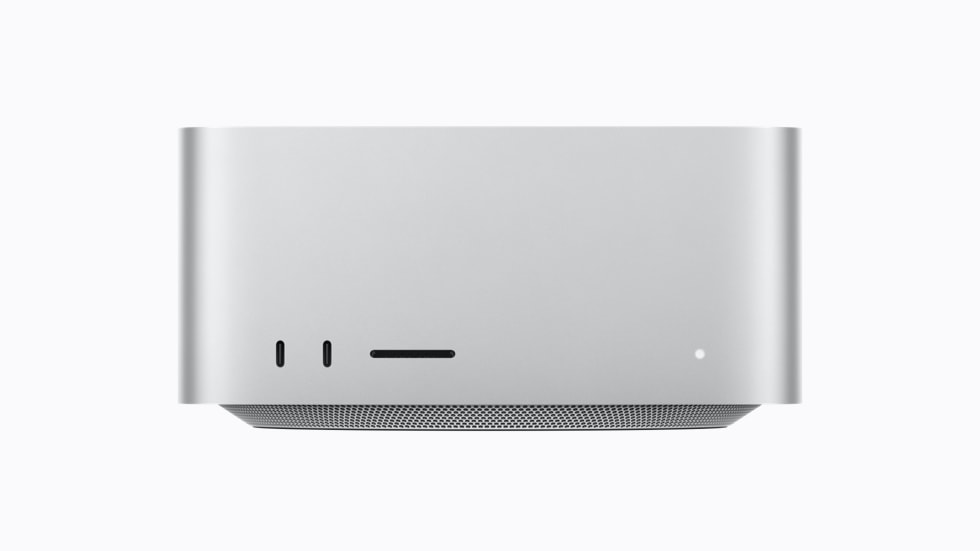
The new Mac Studio leads the high-performance AI computing scene, as Apple has equipped every GPU core with integrated Neural Accelerators that radically accelerate matrix multiplication operations. This engineering advancement gives the M5 Max chip up to 3.9x faster AI performance compared to the previous generation, while the M5 Ultra chip achieves a leap of up to 4.3x compared to the M3 Ultra chip, and about 9.8x compared to the first-generation M1 Ultra.
With a massive unified memory capacity of up to 512GB and a stunning bandwidth of 1.2TB/s (a 50% increase over the previous generation), AI researchers and data scientists can run the largest Large Language Models (LLMs) entirely locally without needing to calculate token consumption or worry about cloud server bills and privacy.
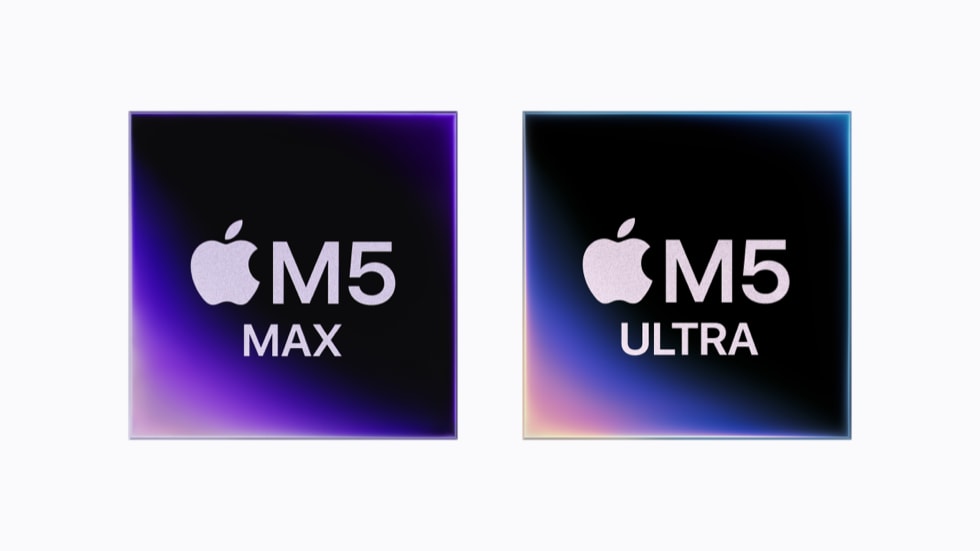
Apple didn’t stop there; it provided an integrated software environment via an all-new framework called Core AI to build and deploy models directly on Apple chips, alongside the open-source machine learning framework MLX, fully optimized to utilize CPUs, GPUs, and the Neural Engine with absolute efficiency within development environments like Xcode.
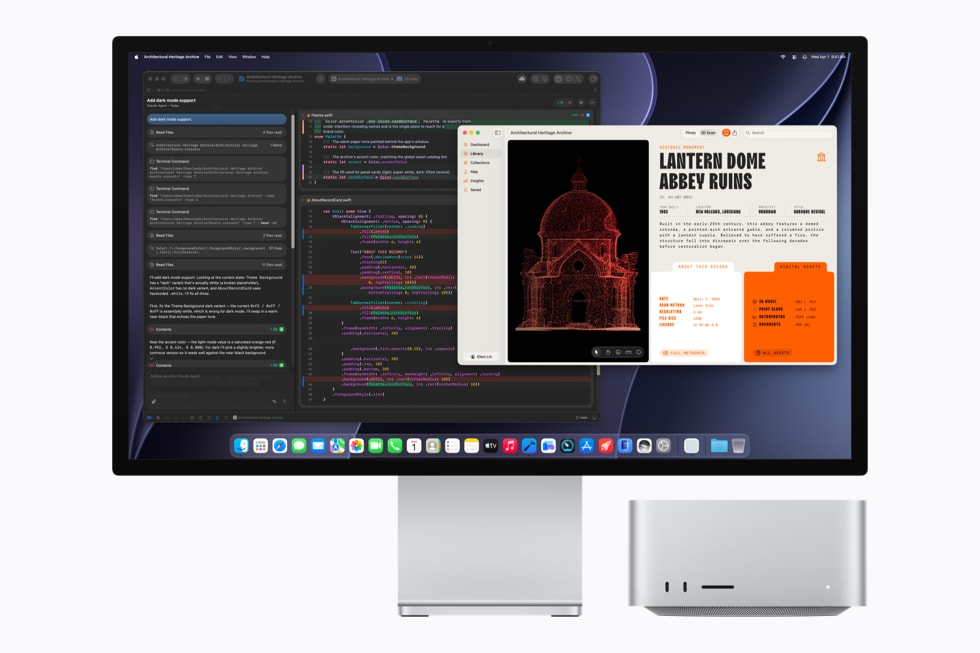
M5 Max Chip: The perfect power for designers and developers
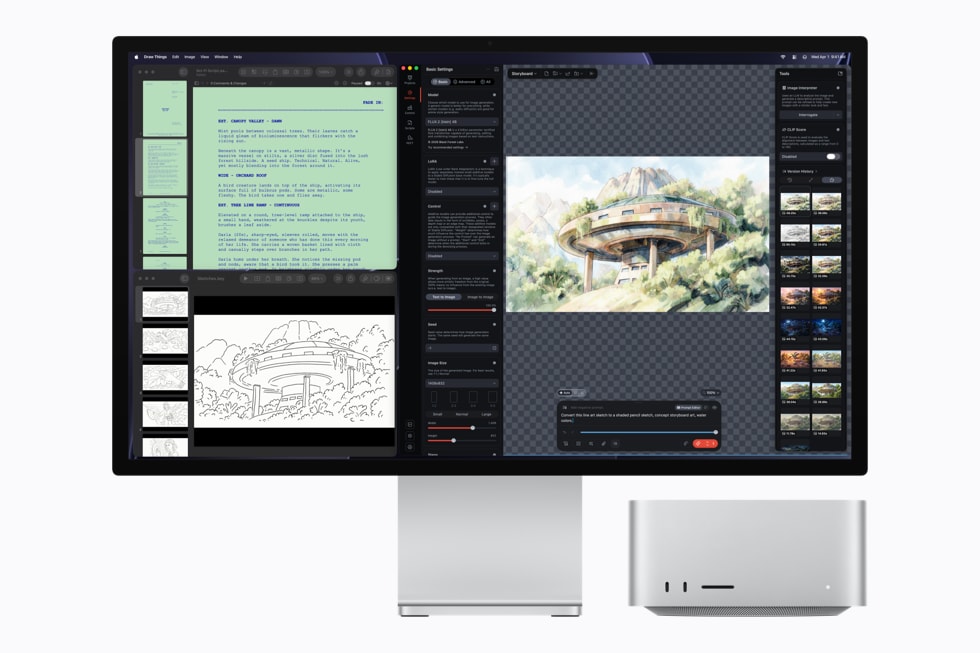
The M5 Max chip is designed to deliver exceptional performance for photographers, musicians, game developers, and software engineers. The chip contains an 18-core CPU (6 performance cores and 12 efficiency cores) and up to a 40-core GPU with integrated Neural Accelerators, making it up to 50% faster than the previous generation, with a unified memory bandwidth of up to 614GB/s and up to 128GB of memory.
The chip supports third-generation hardware-accelerated ray tracing and enhanced shading cores for parallel processing, providing real-time 3D rendering with extreme smoothness, as well as a media engine that supports hardware-accelerated encoding and decoding of ProRes, HEVC, and AV1 formats, and processing 8K video streams with total ease.
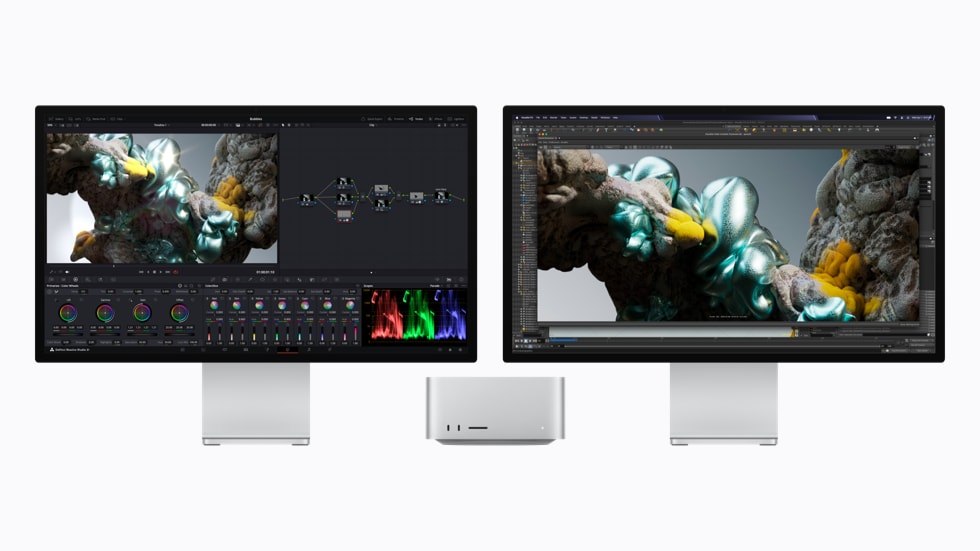
Key performance figures for Mac Studio with M5 Max chip:
- Processing language model requests in LM Studio is up to 3.9x faster compared to the M4 Max chip, and 10.7x faster compared to the M1 Max chip.
- AI text-to-image generation is up to 3.5x faster compared to the M4 Max chip, and 7.4x faster compared to the M1 Max chip.
- Magic Mask tool performance in DaVinci Resolve Studio is up to 3x faster compared to the M4 Max chip, and 5.3x faster compared to the M1 Max chip.
- DNA nitrogenous base identification in Oxford Nanopore MinKNOW is up to 1.9x faster compared to the M4 Max chip.
M5 Ultra Chip: The unconquerable beast
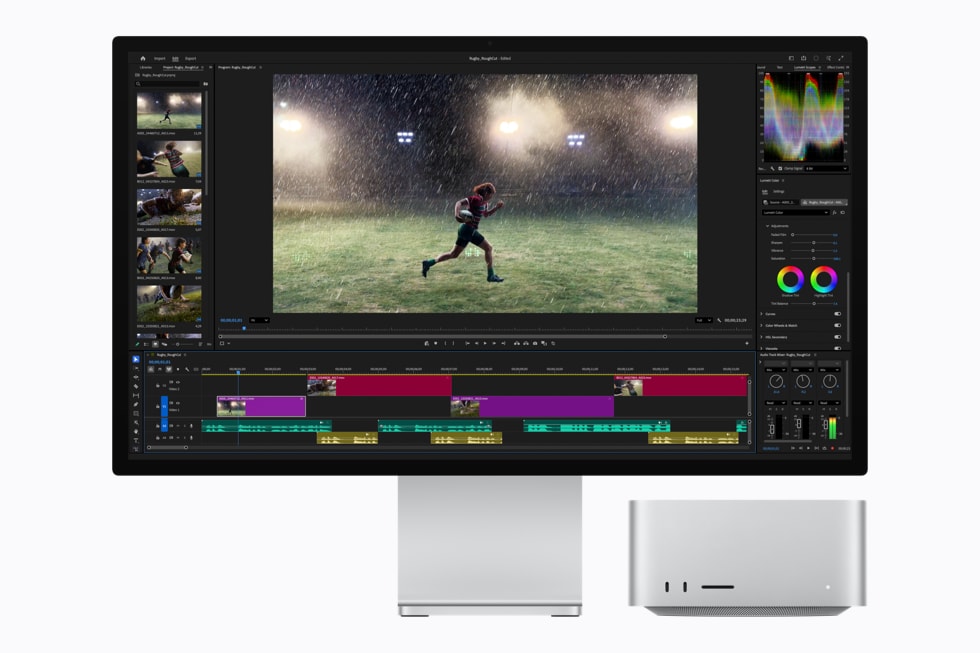
The M5 Ultra chip is the pinnacle of Apple’s technical engineering and the most powerful processor ever designed for a desktop computer. The chip includes up to a 36-core CPU (12 performance cores and 24 efficiency cores) and a massive 80-core GPU with integrated Neural Accelerators for the first time in the Ultra category, delivering about 1.8x faster graphics performance and 1.3x faster multi-threaded performance compared to the M3 Ultra chip.
The media engine in the M5 Ultra chip doubles the encoding and decoding capabilities compared to the M5 Max chip, allowing video editors and filmmakers to play up to 33 simultaneous streams of 8K ProRes 422 video at 30 frames per second without the slightest stutter.
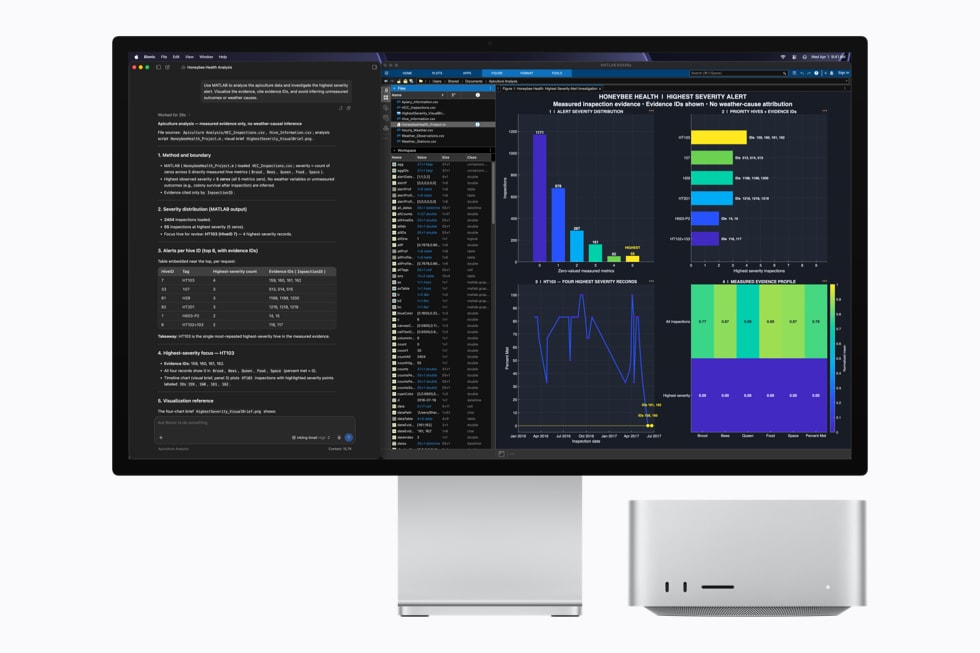
Key performance figures for Mac Studio with M5 Ultra chip:
- Training the CopyCat machine learning tool in Foundry Nuke is up to 3.3x faster compared to the M3 Ultra chip, and 15.4x faster compared to the M1 Ultra chip.
- Processing language model requests in LM Studio is up to 4x faster compared to the M3 Ultra chip, and 9.8x faster compared to the M1 Ultra chip.
- Text-to-image generation is up to 4.3x faster compared to the M3 Ultra chip, and 8.2x faster compared to the M1 Ultra chip.
- Scene rendering in Maxon Redshift is up to 1.7x faster compared to the M3 Ultra chip, and 4.7x faster compared to the M1 Ultra chip.
Thunderbolt 5, N1 chip, and incredible clustering capability
The storage system in Mac Studio has received a huge upgrade based on the new generation of PCIe Gen 6 SSDs, doubling read and write speeds compared to the previous generation to accelerate opening massive projects and loading AI models in seconds.
Regarding ports and connectivity, the device offers ultra-fast Thunderbolt 5 ports with a bandwidth of up to 120Gb/s, enabling support for expansion units and external PCIe cards, and support for up to 8 displays, or 4 Studio Display XDR monitors at 5K resolution and 120Hz. The all-new Apple N1 chip also provides support for Wi-Fi 7 and Bluetooth 6 for the first time in Mac Studio devices, in addition to Genlock support via the USB-C port for precise synchronization with professional cameras like the iPhone 17 Pro.
Perhaps the most impressive feature for teams and AI labs is the clustering feature via Thunderbolt 5 ports and RDMA technology, where up to four Mac Studio devices can be linked together to act as a single shared-memory system, providing up to 3x faster inference and training performance compared to a single device.
Mac Studio pricing and availability details
The device runs on the upcoming macOS 27 Golden Gate, which introduces the enhanced Liquid Glass interface, a completely rebuilt system-wide search, and higher speeds for transfer and synchronization services.
Pricing and launch dates:
- The price for Mac Studio with M5 Max chip starts at 10,499 AED
- The price for Mac Studio with M5 Ultra chip starts at 23,999 AED
Pre-orders begin immediately, and in-store availability starts September 22, while 512GB unified memory options will be available in late October.
Source:
Leave a Reply