The iPad mini has always been the darling of those who prefer the power of tablets in a size that is easy to carry everywhere without effort. However, this time, Apple decided to surprise everyone with a real technological leap rather than just routine improvements. With the launch of the eighth-generation iPad mini, the OLED display took center stage as the primary star of this update, as Apple bypassed the entire iPad Air series to bring advanced Pro display technology directly to its smallest tablet. The matter did not stop at the stunning screen alone, but extended to a massive leap in processing and internal hardware that makes the comparison between it and the seventh generation interesting and worth dwelling on for a long time.
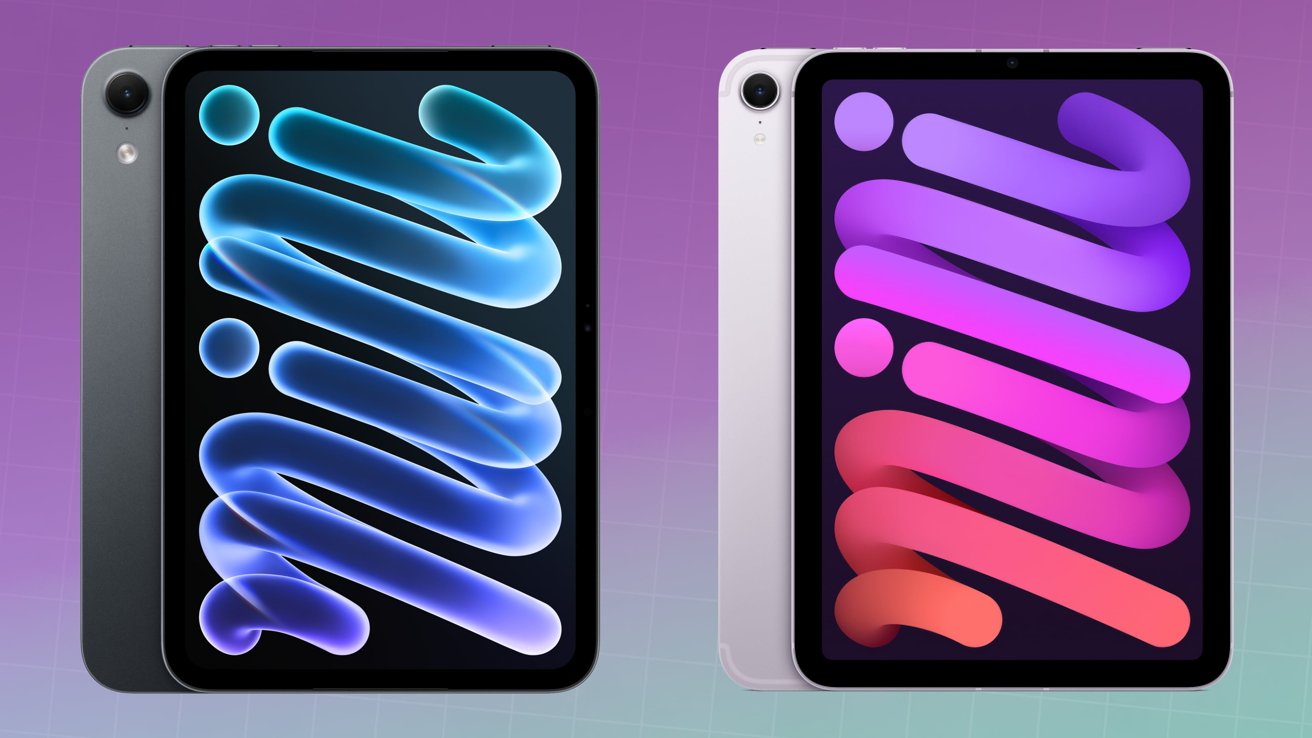
Hardware Specifications in Brief: iPad mini 8 vs. iPad mini 7
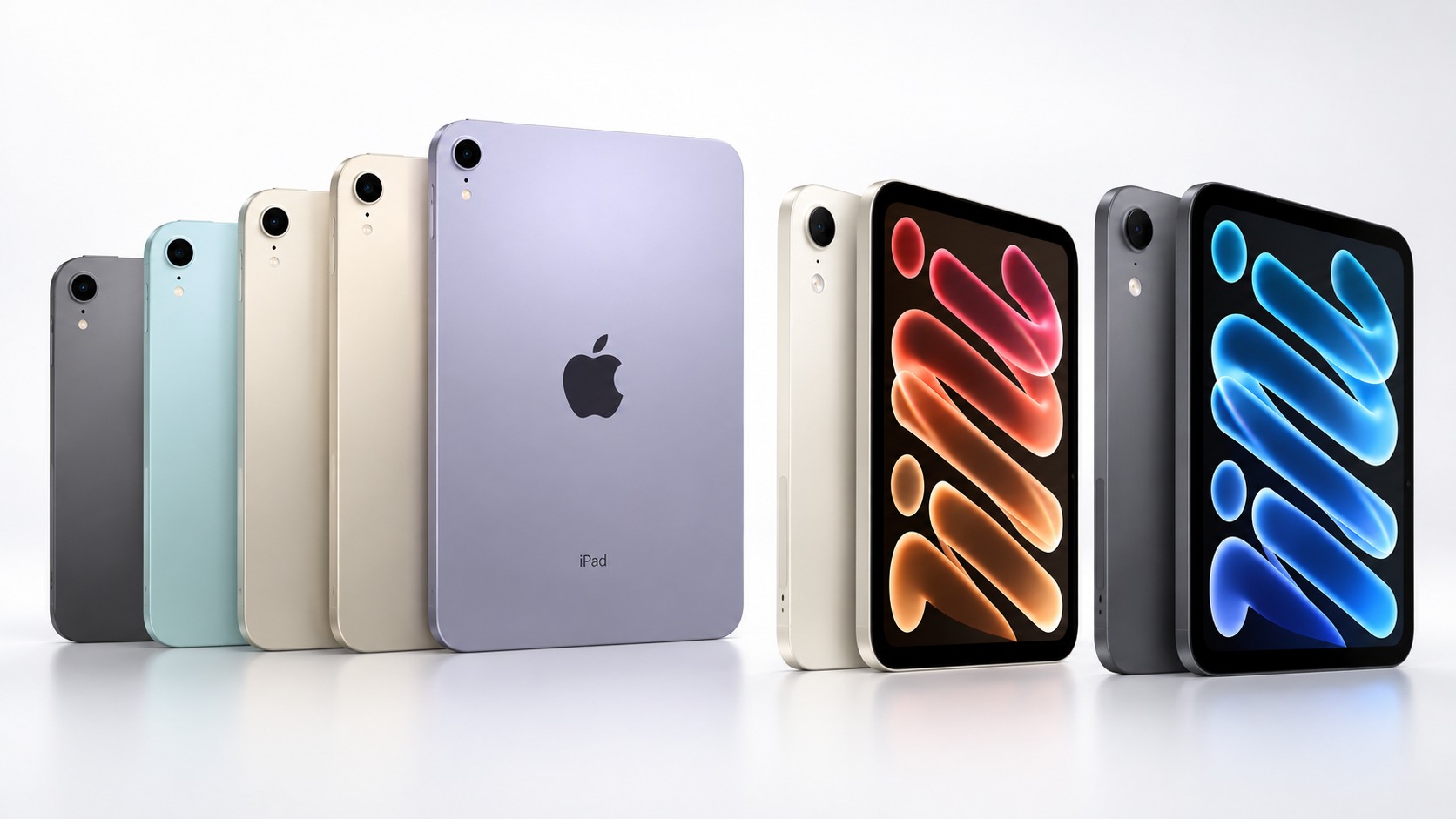
Before diving into the deep details of each feature individually, it is useful to take a general look at the fundamental differences in the language of numbers and specifications that Apple has set in both devices:
- Display: 8.5-inch hybrid OLED LTPS in the mini 8 versus 8.3-inch Liquid Retina LCD in the mini 7.
- Processor: A20 Pro chip in the new generation versus A17 Pro in the previous generation.
- Dimensions and Weight: 0.21-inch thickness and 0.56 lb weight for the mini 8 versus 0.25-inch and 0.65 lb for the mini 7.
- Front Camera: 12MP with f/2.0 aperture on the landscape edge in the mini 8, versus f/2.4 aperture on the portrait edge in the mini 7.
- Audio and Water Resistance: Acoustic Display technology with IP67 rating in the mini 8, versus traditional stereo speakers in the mini 7.
- Connectivity: Wi-Fi 7 and Bluetooth 6 support in the mini 8, versus Wi-Fi 6E and Bluetooth 5.3 in the mini 7.
- Starting Price: Starts at $699 for the eighth generation versus $499 at the launch of the seventh generation (and $599 later).
Design and Dimensions: Thinner and Lighter in the Hand
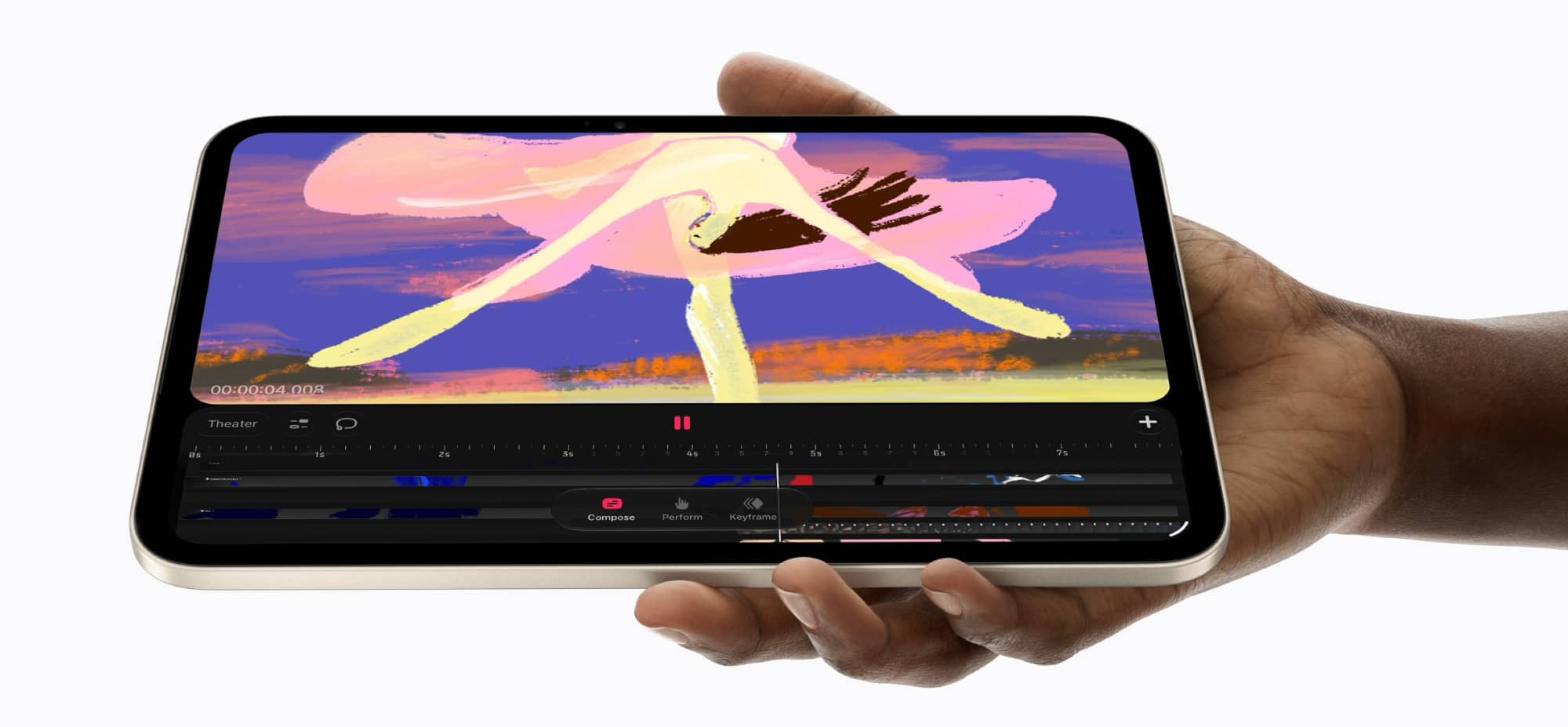
If you are a fan of the iPad mini because of how easily it fits into a coat pocket or a small handbag, you will be pleased with the engineering changes Apple has introduced in the eighth generation. Although the company maintained the same height of 7.69 inches, it made the device slightly narrower with a width of 5.22 inches compared to 5.3 inches in the seventh generation.
The most notable improvement is clearly visible in the thinness and weight; the thickness has decreased from 0.25 inches to just 0.21 inches, making the device look like a sleek glass slab. This reduction has positively impacted the weight, as the Wi-Fi version’s weight dropped from 0.65 lbs to just 0.56 lbs, a difference you will immediately feel during long reading sessions or browsing the web with one hand without straining your wrist.
Display: The OLED Revolution Reaches Apple’s Smallest Device

The Liquid Retina LCD screen in the iPad mini 7 was good and served its purpose, but the transition to the Super Retina XDR OLED display in the iPad mini 8 represents an unprecedented visual leap. Thanks to reducing the surrounding bezels, Apple was able to increase the screen size to 8.5 inches in almost the same footprint, while maintaining a constant pixel density of 326 pixels per inch at a resolution of 2,316 × 1,512 pixels.
The benefits of the OLED panel do not stop at true blacks and infinite contrast, but extend to brightness; the standard brightness for SDR content has increased from 500 nits to 600 nits, and the peak brightness for HDR content reaches 1200 nits. Although the device does not support the fast ProMotion refresh rate and remains fixed at 60Hz, Apple has provided for the first time an optional Nano-texture glass for the 256GB and 512GB capacities to reduce annoying reflections while reading under sunlight.
Processor and Performance: A Rocket-Like Leap with the A20 Pro Chip
Apple has jumped multiple generations in performance by moving from the A17 Pro processor in the mini 7 to the A20 Pro processor in the mini 8. However, Apple adopted a new policy by dividing the processor into two categories; the 128GB and 256GB capacities come with a processor containing a 5-core CPU and a 16-core Neural Engine, while the 512GB capacity gets a 6-core CPU and a dual 32-core Neural Engine to provide the highest possible performance for artificial intelligence technologies.
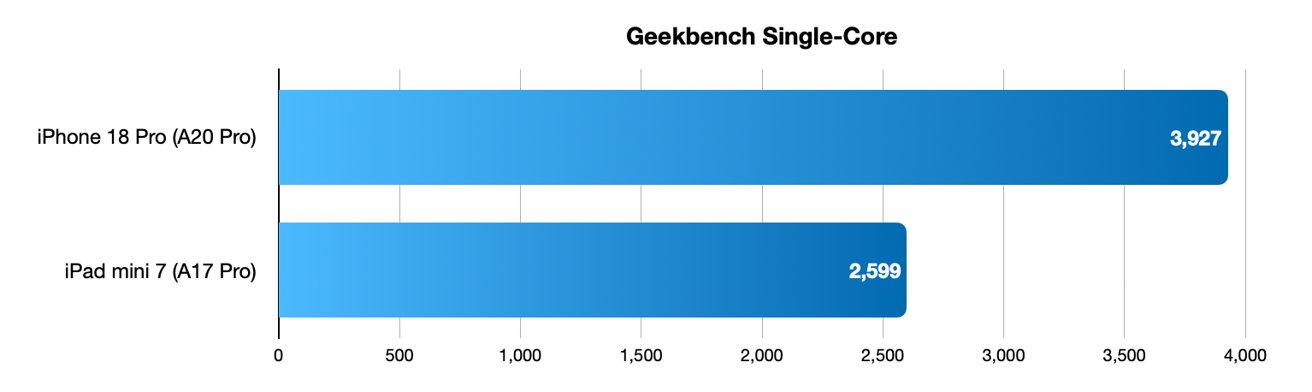
Geekbench platform tests illustrate the massive difference. In the single-core test, the A20 Pro processor achieved a score of 3,927 points, overwhelmingly outperforming the A17 Pro’s score of 2,599 points, which ensures ultra-fast responsiveness for daily tasks and switching between applications.
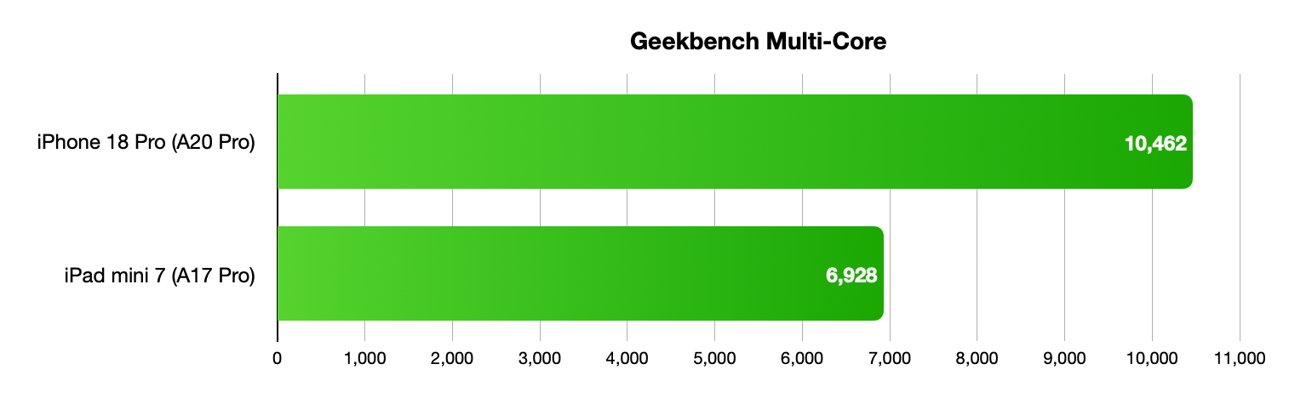
On the multi-core performance side, the A20 Pro chip soared to record 10,462 points compared to just 6,928 points for the iPad mini 7, making the device ready to handle the heaviest engineering, design, and video editing tasks with complete smoothness.
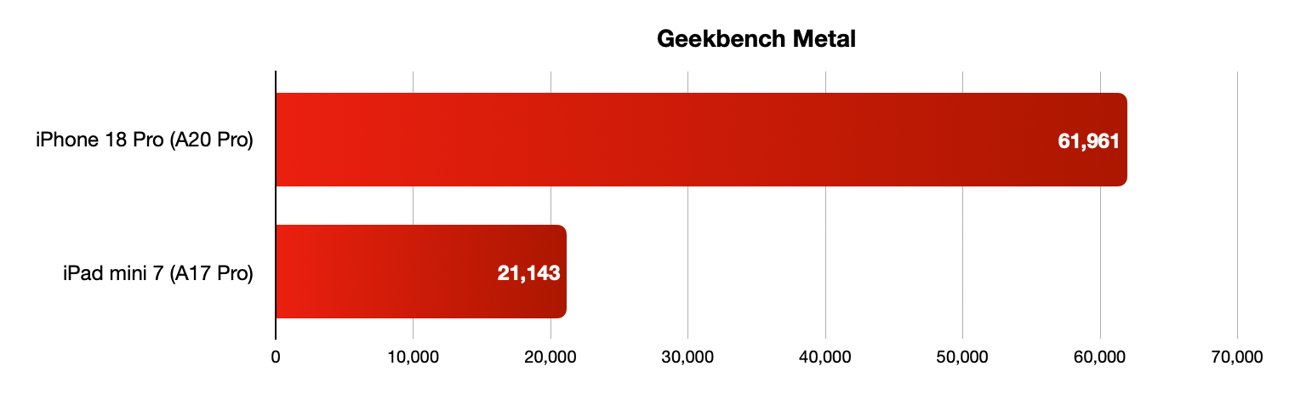
As for graphics processing via the Metal platform, the A20 Pro chip recorded a stunning score of 61,961 points against 21,143 points for the mini 7 processor, benefiting from a 7-core GPU with hardware-accelerated ray tracing support and advanced neural accelerators, which takes the high-end gaming experience to a whole new graphical dimension.
Cameras and Video Calls: A Thoughtful Adjustment to the Front Camera
The rear camera in the iPad mini 8 retained the same sensor as the previous generation with 12MP resolution and f/1.8 aperture, with support for up to 5x digital zoom and 4K video recording at 60 frames per second. Apple did not add 48MP sensors here, as it realizes that the rear camera in tablets is primarily intended for scanning documents and quick tasks.

The most important change was for the 12MP front camera; Apple finally moved it to the long edge to become a landscape camera that perfectly supports the ‘Center Stage’ feature when the device is mounted in landscape mode during video calls. Apple also improved the lens aperture to f/2.0 compared to f/2.4 previously, which allows more light to enter and gives you a clearer image in low-light conditions.
Audio, Connectivity, and a Touch of Water Resistance
Apple redesigned the audio system in the iPad mini 8 to rely on Acoustic Display technology, where dedicated woofers are coupled directly to the display with tweeters hidden between the glass and the aluminum chassis. This fully sealed audio design gave the device a long-awaited feature: an IP67 rating for dust and water resistance for the first time in iPad history, allowing it to safely withstand water splashes and accidental spills.
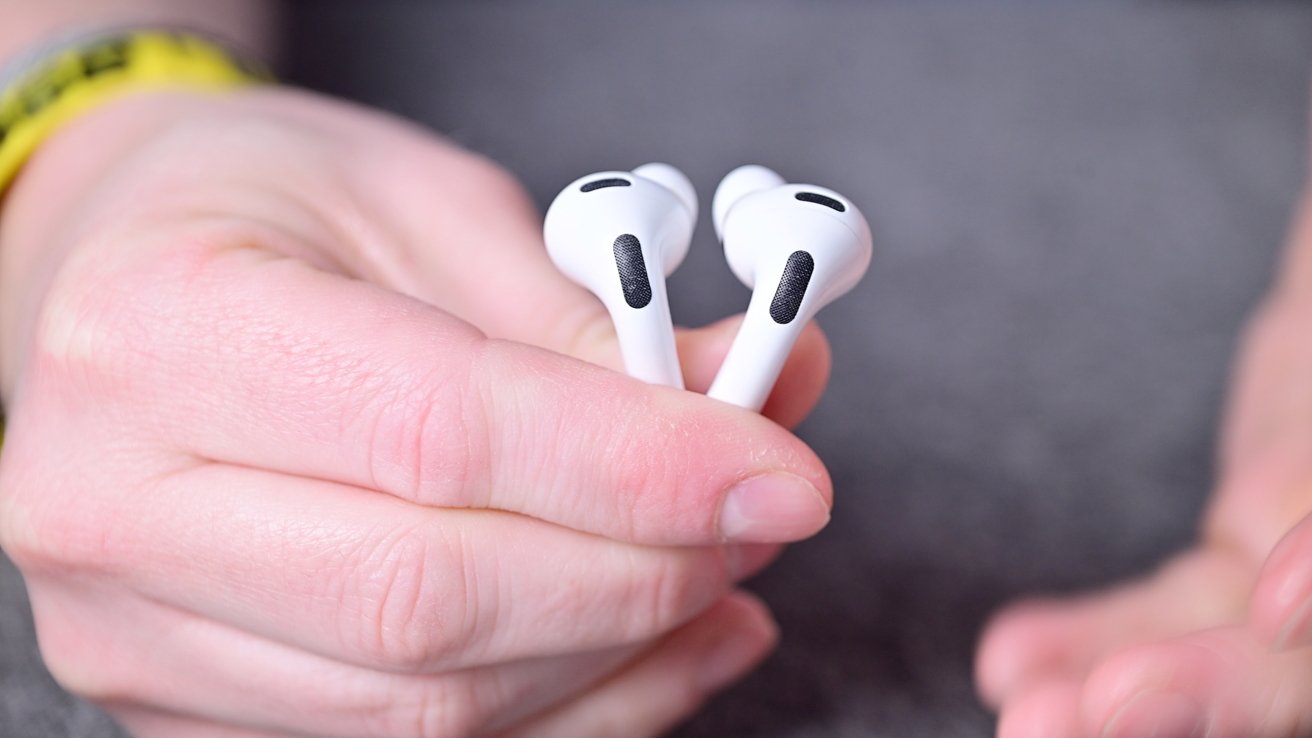
In terms of connectivity, wireless networks have been upgraded to support ultra-fast Wi-Fi 7 and advanced Bluetooth 6 to ensure a more stable and faster connection with accessories such as AirPods Pro and the Apple Pencil Pro, while the USB-C port remained at 10Gbps speeds without Thunderbolt support, and the Touch ID fingerprint feature continued in the top button without moving to Face ID.
Battery, Pricing, and the Upgrade Decision
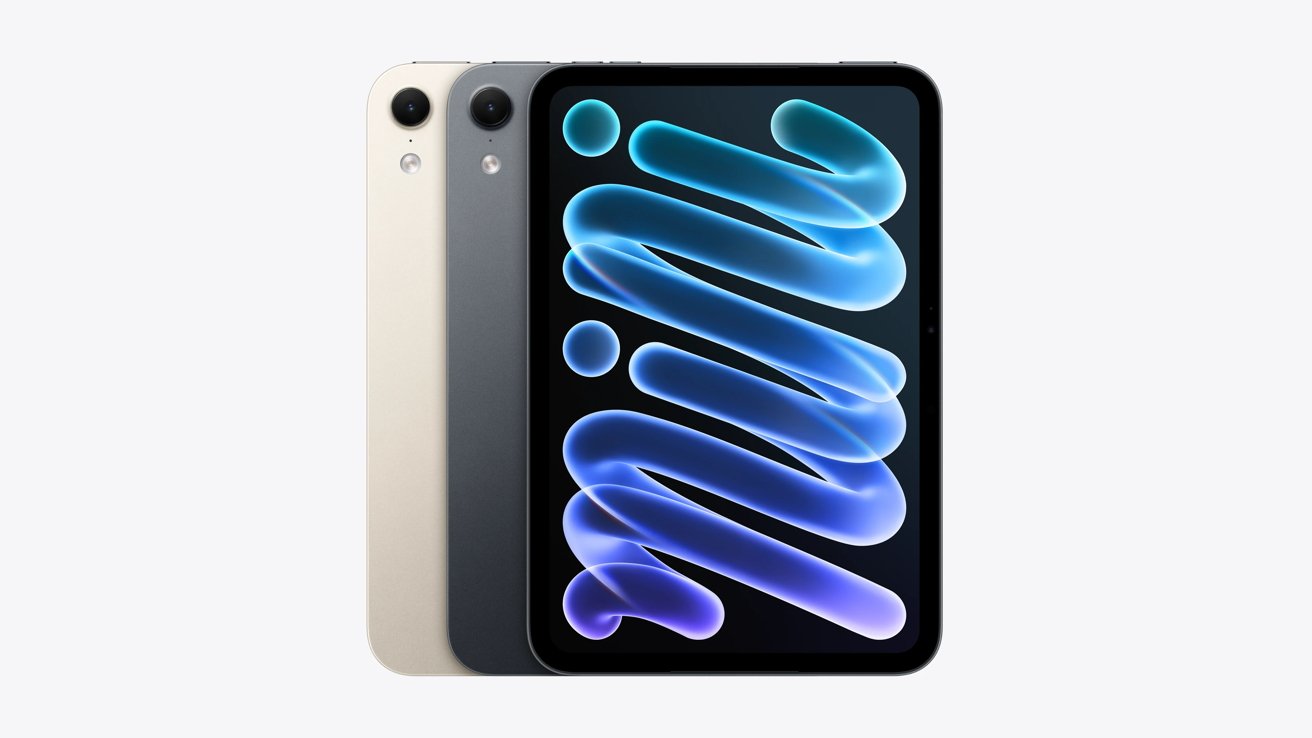
Although the battery capacity was reduced slightly to 18.9 watt-hours to fit the thinner chassis, the efficiency of the OLED display and the A20 Pro architecture maintained the same usual battery life of up to 10 hours of browsing. The device is available in two elegant colors: Midnight and Starlight.
The price of the iPad mini 8 starts at $699 for the 128GB capacity, rising to $799 for the 256GB capacity and $999 for the 512GB capacity, with an additional $100 for the Nano-texture glass option and $150 for cellular connectivity. If you are coming from an iPad mini 6 or older, the upgrade here is a leap into the future by all standards. As for mini 7 owners, the OLED screen, A20 Pro processor, and water resistance are strong temptations for those who demand the maximum that a small device can offer.
Source:
Post Comment