The foldable phone market has entered a new stage of maturity by adopting a design philosophy entirely different from what we have been accustomed to in recent years. Instead of those tall, narrow screens that resemble remote controls when closed, attention has shifted toward a short and wide “passport” design style. This vision meets head-on between two tech giants: Apple’s all-new iPhone Duo, starting at $1,999, and its direct competitor, Samsung’s Galaxy Z Fold 8, priced at $1,900. With a price difference of only $100, the choice is no longer about budget as much as it has become an intense struggle between two different philosophies of hardware and user experience.
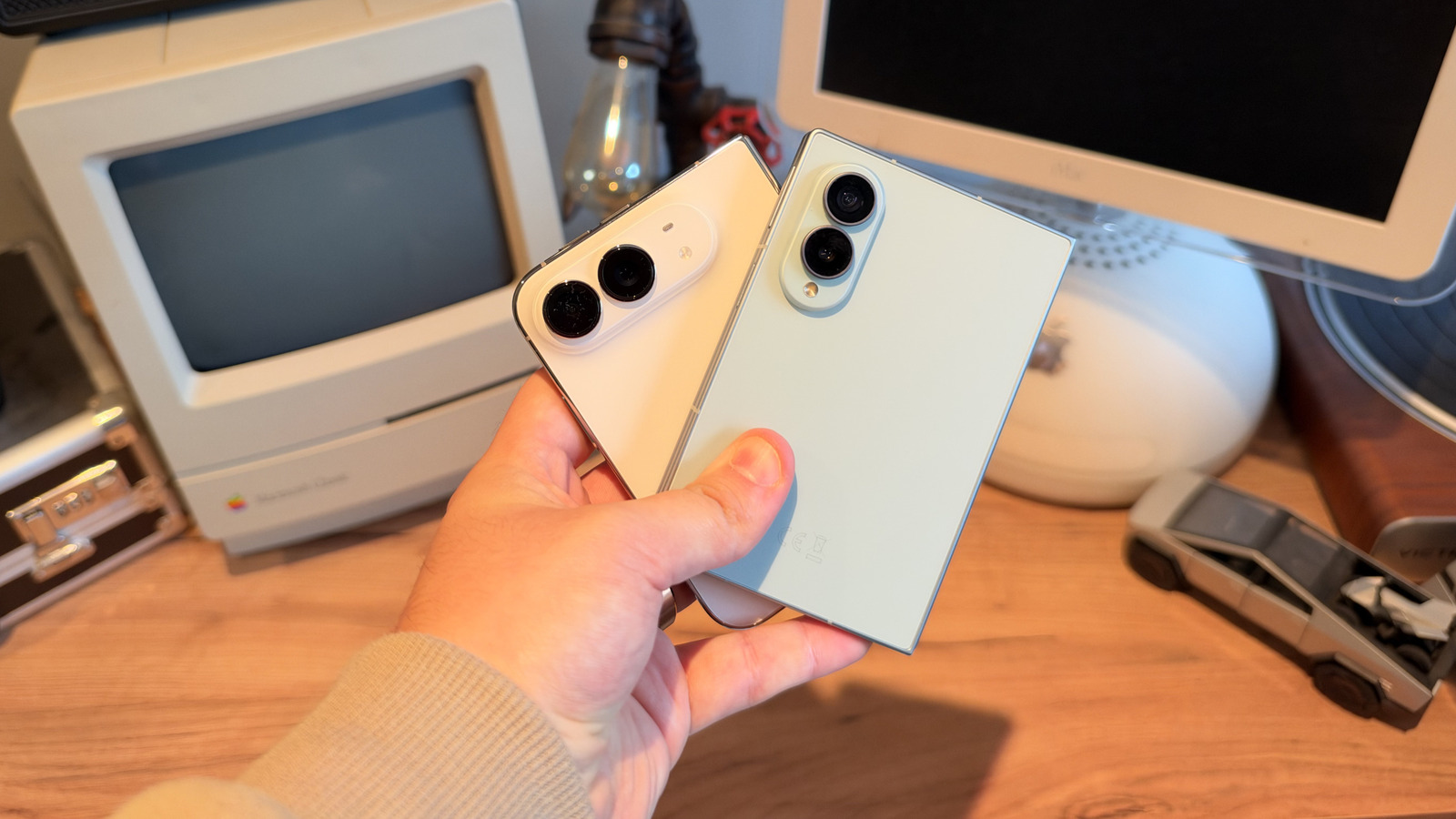
Similarities: A Unified Philosophy and Harmony in Core Hardware
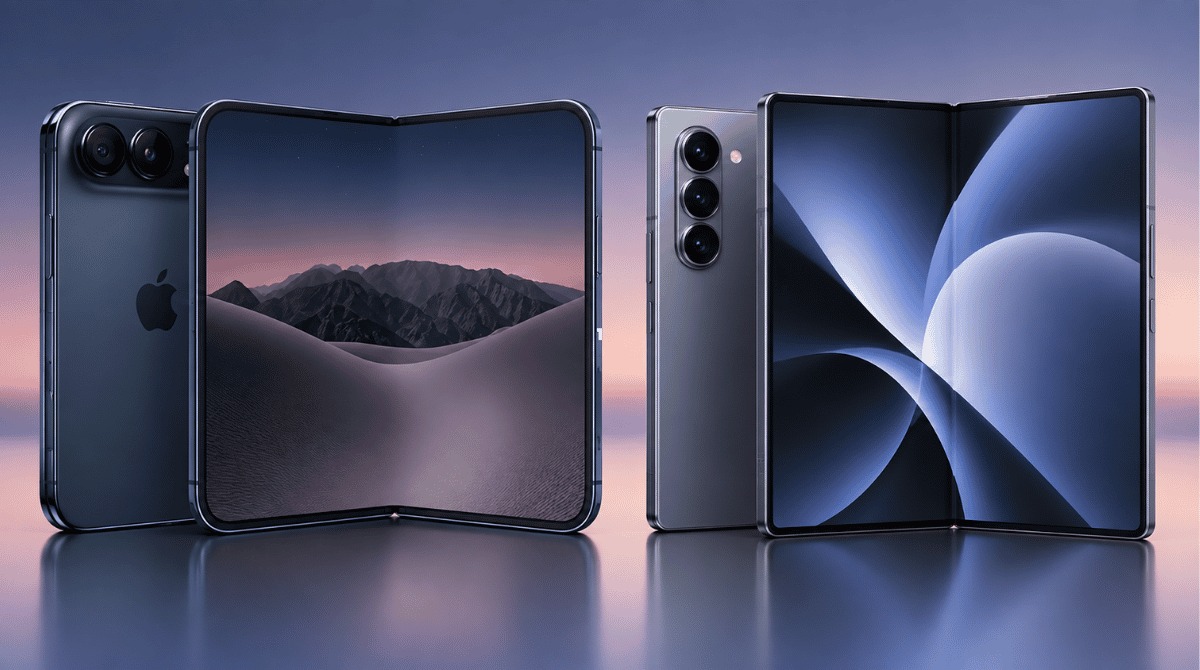
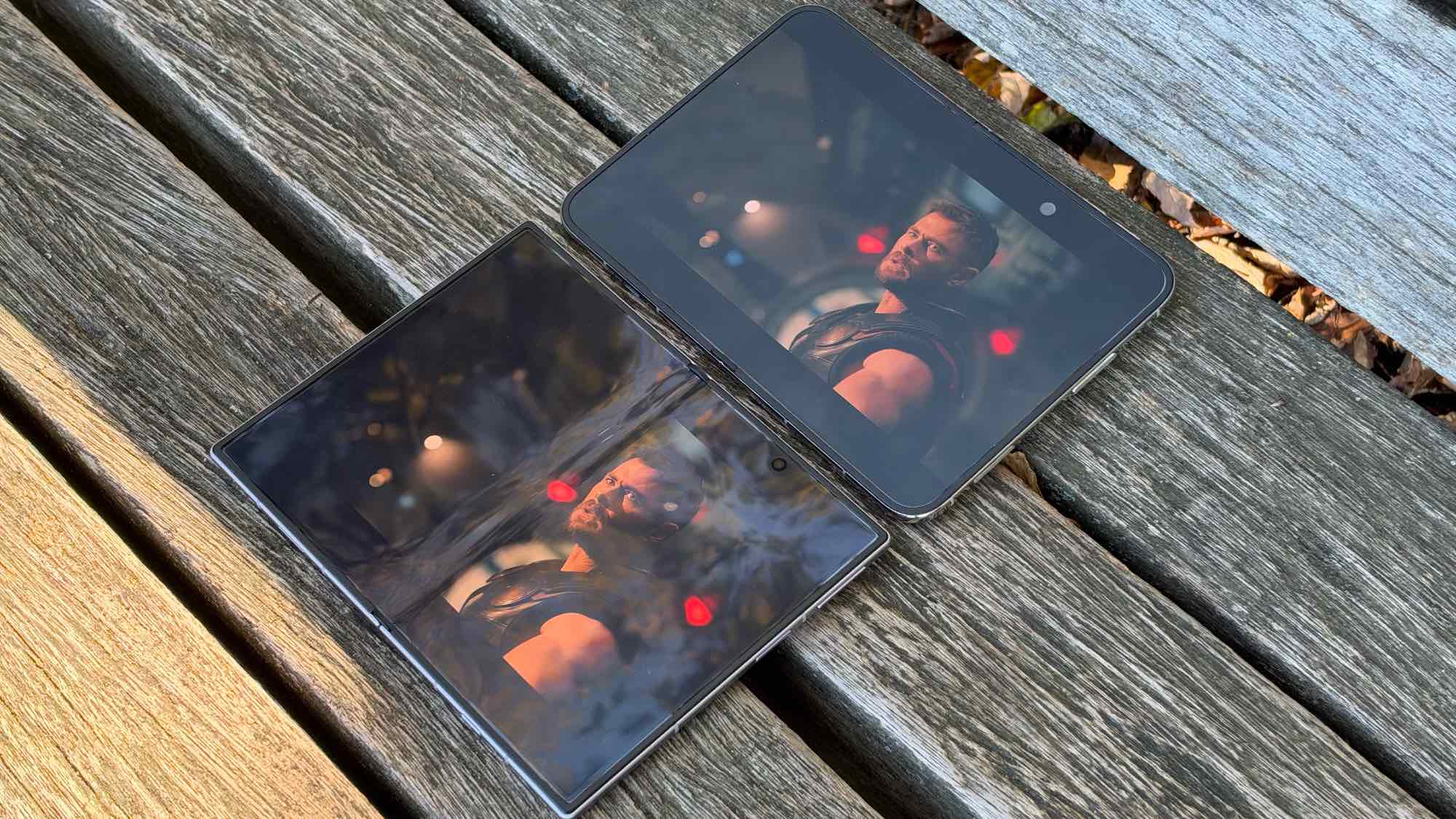
At first glance, it is clear that both phones have agreed on the same ideal dimensions. The internal screen on the iPhone Duo measures 7.6 inches, exactly the same as the Galaxy Z Fold 8. Both screens rely on a nearly square aspect ratio, which significantly limits the appearance of wide black bars while watching cinematic videos compared to older designs. As for the external screens, they are very similar; the iPhone Duo offers a 5.4-inch cover screen compared to 5.5 inches on the Fold 8. These screens feature a practical size that allows for running full applications comfortably and smoothly, unlike vertically foldable phone screens that are nothing more than a space for displaying widgets and notifications.
This similarity extends to the camera system; both companies decided to abandon the dedicated telephoto lens due to the impossibility of fitting it inside such a slim body. Instead, the iPhone Duo carries two rear cameras: a 48MP main camera and a 48MP ultra-wide camera, while the Galaxy Fold 8 offers two 50MP sensors for the same tasks, both relying on cropping from the main sensor for digital zoom. Furthermore, Apple has dispensed with Face ID in favor of a Touch ID fingerprint sensor integrated into the side power button, similar to Samsung, with Apple’s button featuring a slight protrusion that makes it easy to find by touch. Both devices start with a base storage capacity of 256GB and rely on titanium construction and advanced vapor chamber cooling systems to manage heat.
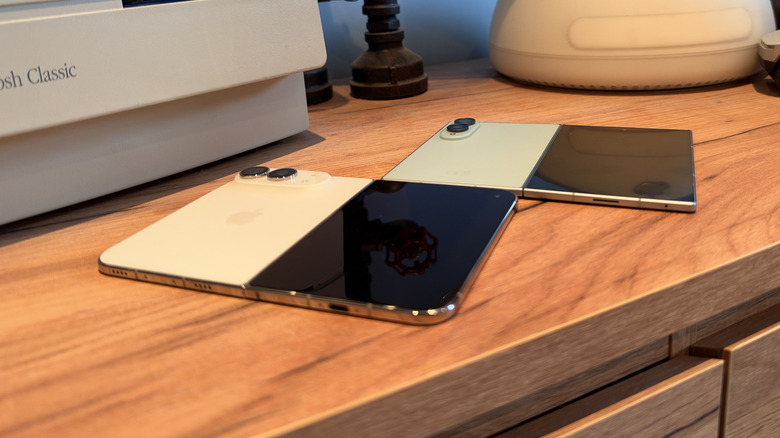
Differences: Slimness and Weight vs. Durability and Refined Details
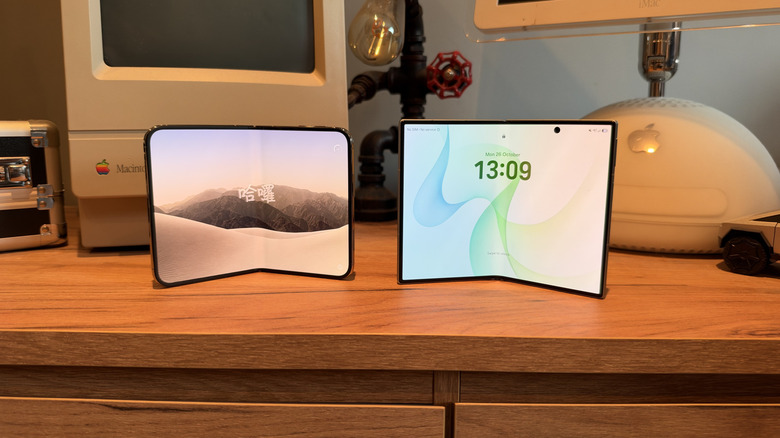
Samsung clearly excels when it comes to agility and light weight; the Galaxy Z Fold 8 weighs only 201 grams with a stunning thickness of 4.5mm when open and 9.7mm when closed. In contrast, the iPhone Duo is heavier at 254 grams and has a thickness of 5.2mm when open and 11.3mm when folded, a weight that puts it in the same class as the large iPhone Pro Max phones. Although the weight distribution in Apple’s phone is excellent during daily use, those who prioritize slimness and lightness will feel Samsung’s clear advantage in this area.
However, Apple responded strongly in the durability and screen quality equation. The iPhone Duo features an IP68 water and dust resistance rating, ensuring survival at a depth of 19.6 feet for half an hour, while the Fold 8 is limited to an IP48 rating, which offers very weak protection against dust particles—a fatal point for foldable phones with complex hinges. Apple also excelled by using a nano-texture matte finish on the internal screen, making the center crease almost invisible to the eye and touch compared to the reflective glossy panel on the Samsung phone. Add to that Apple’s complete concealment of the FaceTime camera under the screen, sparing the user the camera hole that interferes with interface elements on the Samsung phone.
In terms of performance and productivity, the iPhone Duo is powered by the flagship A20 Pro processor with iOS 27, which finally brought the Split View feature for multitasking, along with a 4,883 mAh battery offering up to 31 hours of video playback, and future support for the Apple Pencil. For its part, the Galaxy Z Fold 8 is armed with the Snapdragon 8 Elite Gen 5 processor for Galaxy with the One UI 9 interface based on Android 17, which provides a free-window system that excels in office productivity, supported by a 4,800 mAh battery with 45W wired and 20W wireless charging speeds, and support for a physical SIM card, which Apple has completely abandoned in favor of eSIM, while the Samsung phone lacks any support for the S Pen.
Which one is worth buying?
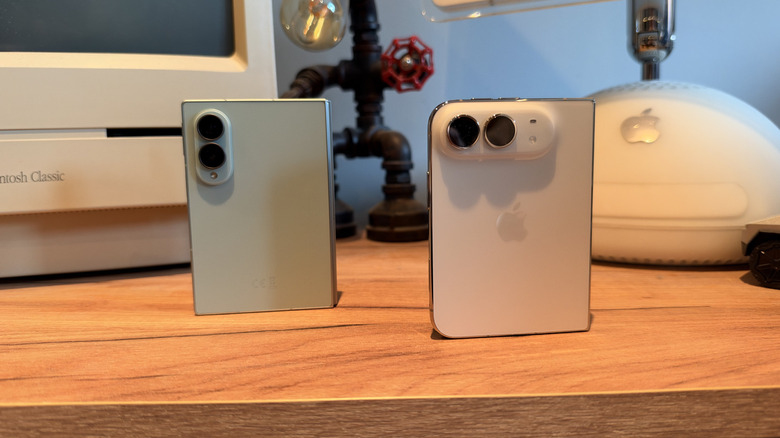
Ultimately, the operating system remains the true compass for your choice given the significant convergence in hardware and price. If you are already deeply embedded in the Apple ecosystem and are looking for a device that offers the highest possible degree of durability in the foldable category thanks to the IP68 rating, with an internal screen that brilliantly hides the annoying crease, and you are waiting for Apple Pencil support for note-taking and drawing, then the iPhone Duo offers the luxurious and integrated experience that has been long awaited.
On the other hand, the Galaxy Z Fold 8 stands out as an exceptional choice for those looking for the lightest and most agile foldable phone that can be put in a pocket without hassle, with a preference for a traditional SIM card slot and a seasoned operating system that provides unparalleled freedom in window management and true multitasking. Always remember that both devices are not the ideal choice if long-range optical zoom is your primary passion, due to the absence of dedicated telephoto lenses that would require looking at alternative options with greater thickness.
Source:


Leave a Reply