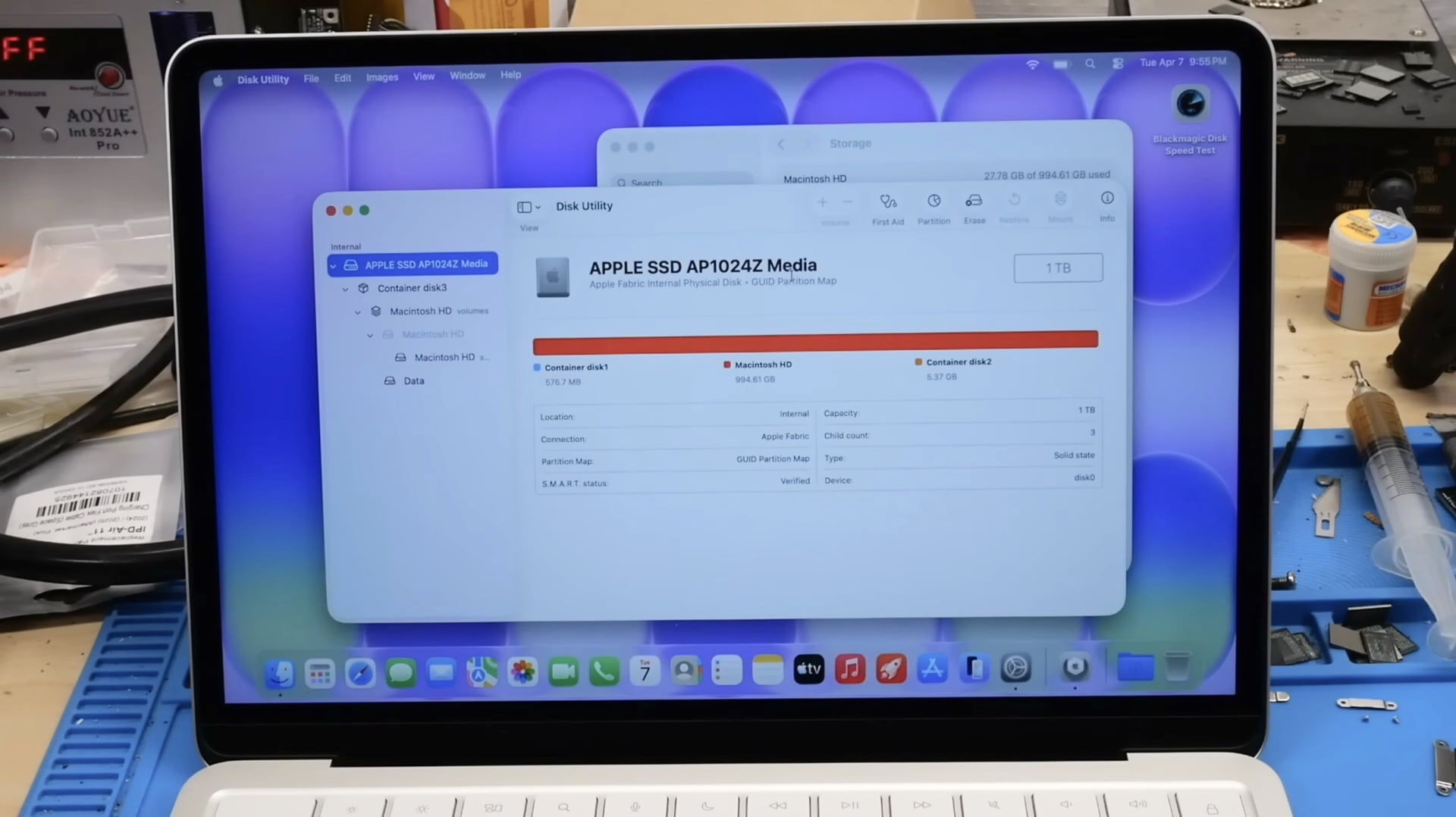
Have you ever thought that Apple’s budget-friendly MacBook could have a storage capacity that the company itself never dreamed of for this model? Well, it seems the genius of developers knows no bounds. Thanks to the shared architecture between Mac devices and iPhones, the famous modder dosdude1 has managed to achieve a qualitative leap, successfully upgrading the soldered storage capacity of the new MacBook Neo from 256GB to a full 1TB, and the secret lies in the heart of an iPhone 16 Pro.
The secret of the shared architecture between Mac and iPhone
This crazy upgrade wouldn’t have been possible without Apple’s smart (or perhaps cost-saving) decision to use the A18 Pro chip in the MacBook Neo, the same chip that powers the iPhone 16 Pro family. To achieve this massive capacity, the developer used a 1TB NAND flash storage chip (model K8A5) extracted directly from the iPhone 16 Pro supply chain.
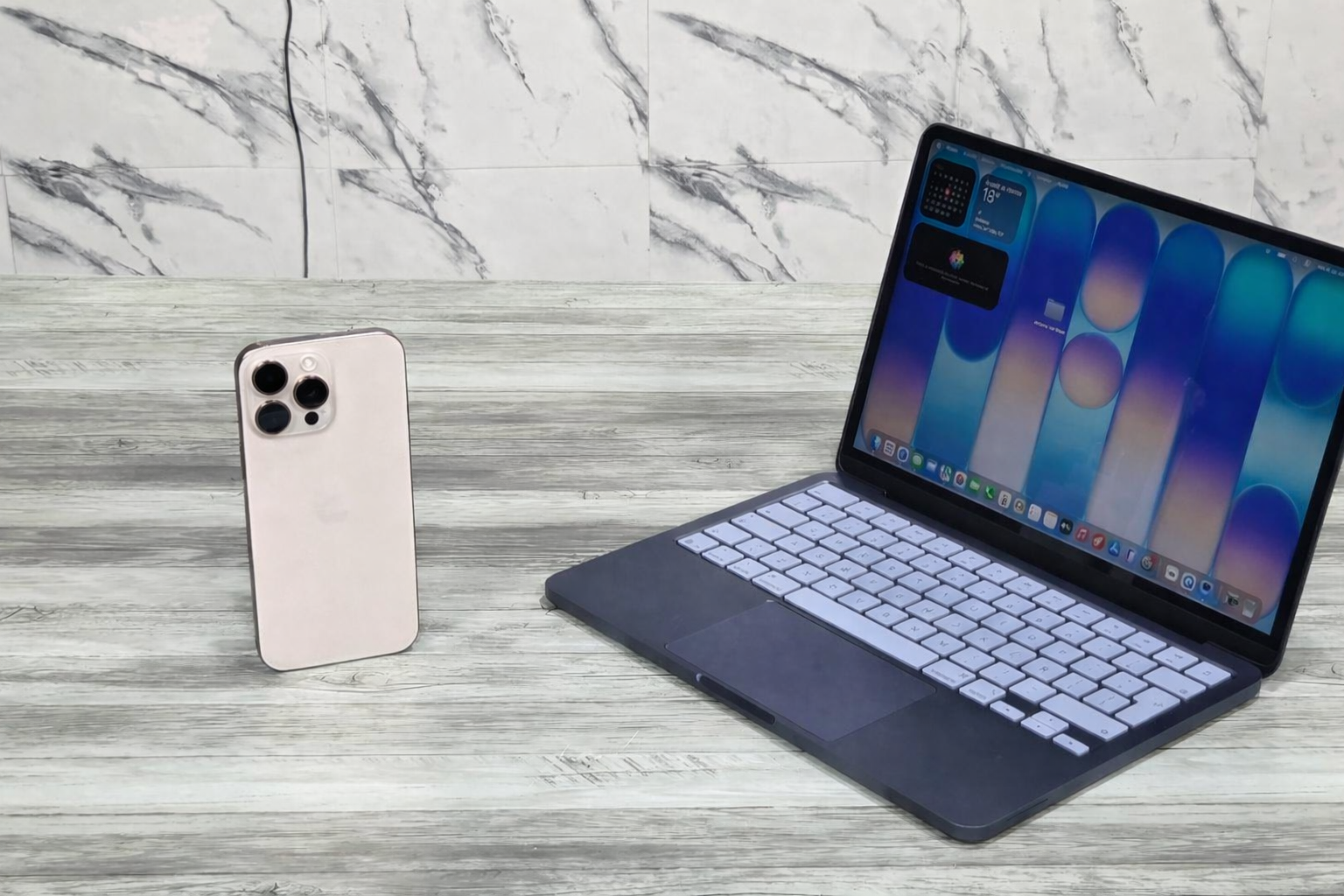
Although Apple officially supports a storage capacity of only up to 512GB for this device, the system was able to recognize the larger storage unit from the smartphone world perfectly, proving that limitations are sometimes more software and marketing-based than technical.
A delicate surgical operation for storage upgrades
Do not try this at home unless you are an experienced electronic surgeon! The process requires extreme precision because the storage capacity in modern Mac devices is soldered directly onto the motherboard. The task began by carefully removing the insulating material surrounding the original chip, then desoldering the 256GB unit and replacing it with the 1TB chip intended for the iPhone, which is blank and unprogrammed.
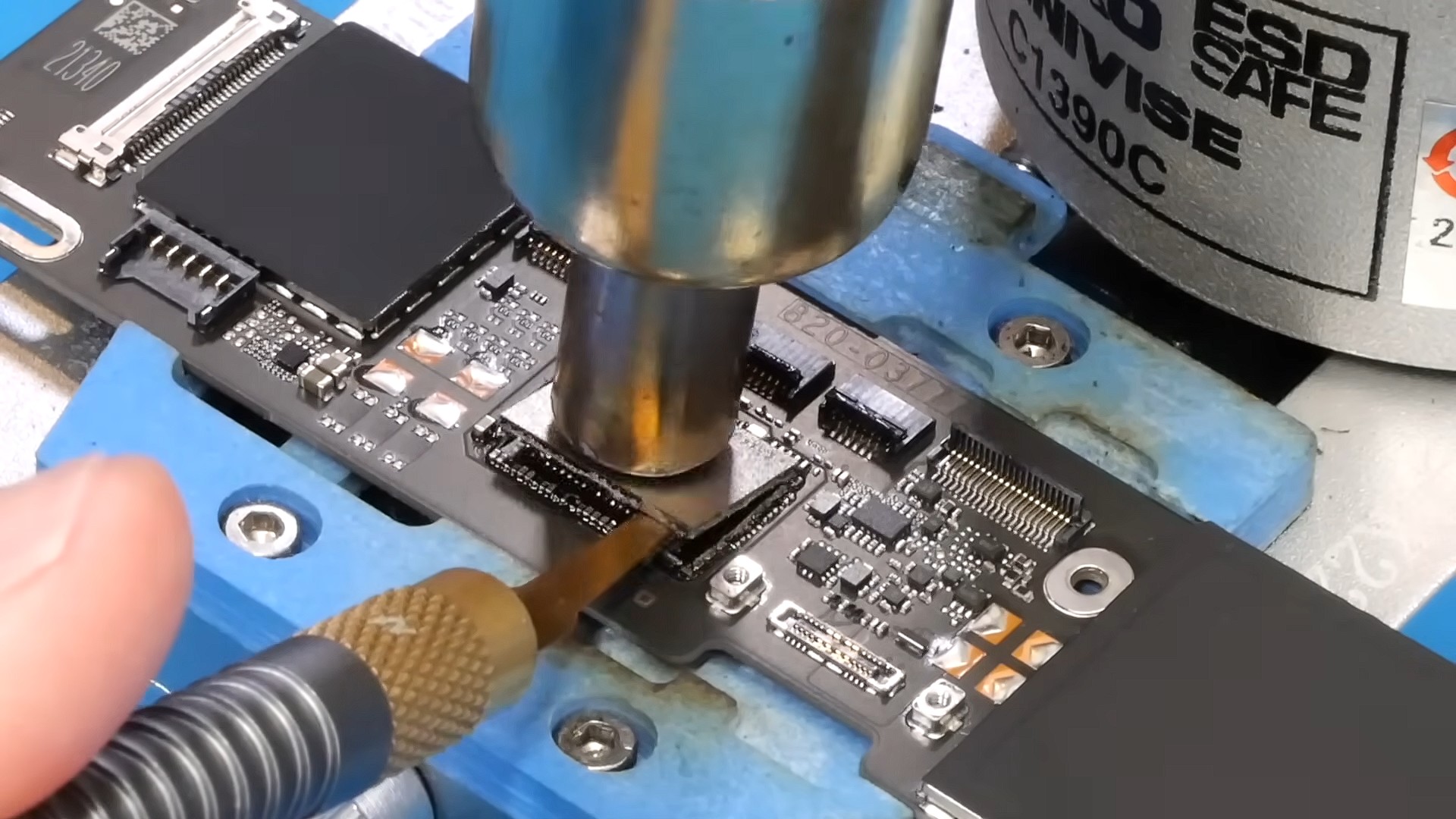
After installing the new part, the device does not work immediately as if by magic; it requires performing a full restore process via DFU mode to initialize the new storage unit and have the system recognize it. It is a complex process, but it opens the door to amazing possibilities for bypassing Apple’s strict limits on its budget devices.
Performance that exceeds expectations: Higher speeds and larger capacity
The surprise was not just in the capacity, but in the performance as well. Benchmarks showed a slight improvement in speed after the upgrade. While the original device recorded read and write speeds of approximately 1500 MB/s, the numbers jumped after installing the iPhone chip to reach about 1700 MB/s for reading and 1600 MB/s for writing.
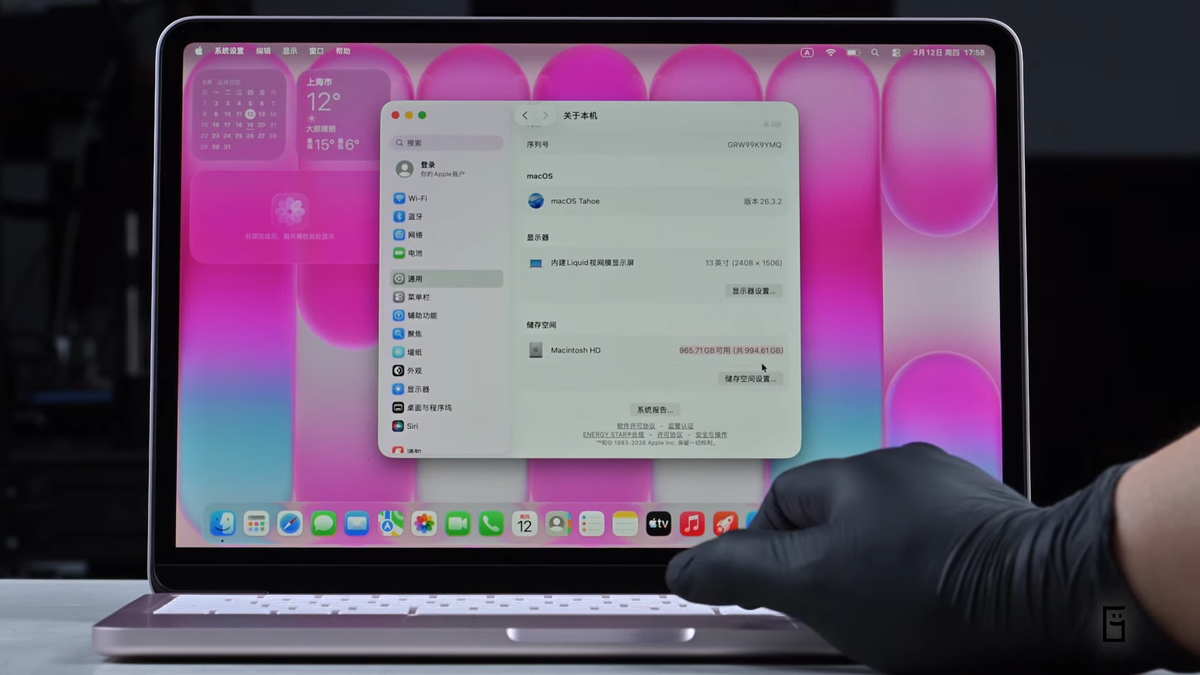
This improvement, although slight, makes the budget device closer to the performance of more expensive models and turns the MacBook Neo into a small beast for data processing, especially with the availability of massive space that Apple did not intend to provide you in this model.
Why does Apple recycle iPhone chips in Macs?
This mod highlights Apple’s strategy of hardware unification; using A-series silicon in Mac devices makes it easier for developers and modders to understand how the system works. By using parts from the massive iPhone supply chain, modders have practically bypassed the storage limitations that Apple imposes on its cheaper devices to push you to buy more expensive ones.
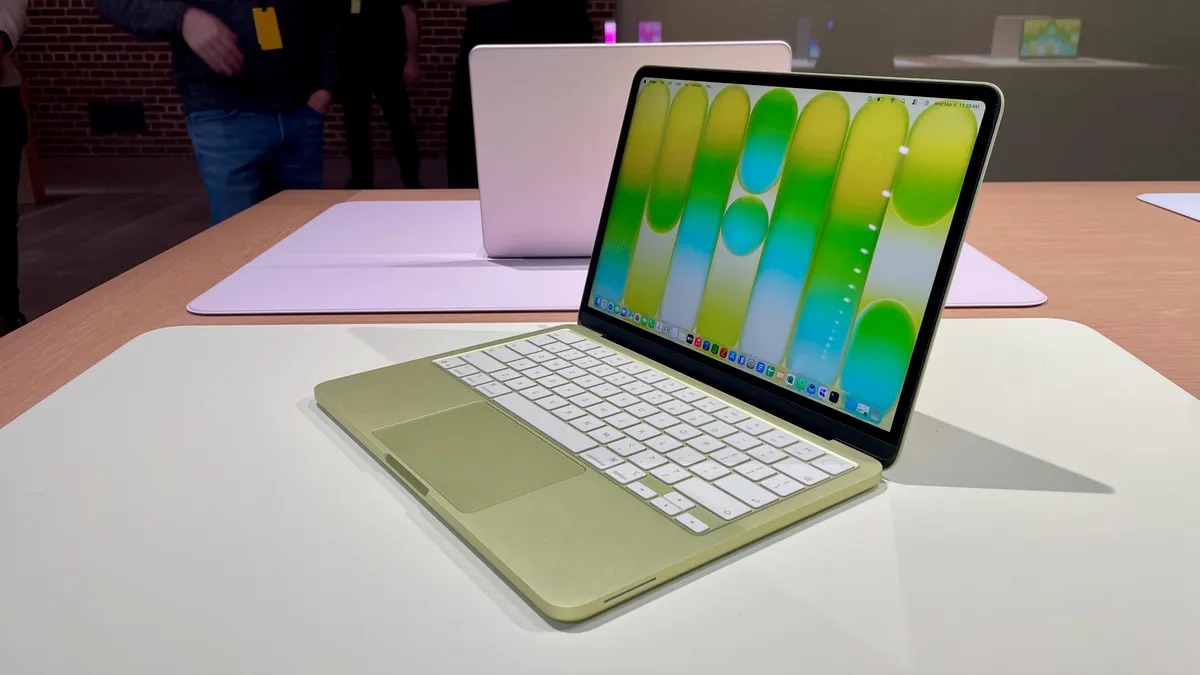
This unique overlap between the iPhone 16 Pro and the MacBook Neo proves that the true power of Apple chips lies in their flexibility, even if the company tries to hide that behind its closed walls.
Here is the full video of the amazing upgrade process that shows how this small Mac turned into a giant data store with parts from a smartphone:
Source:


Leave a Reply