In a new chapter of the ongoing interactions between Apple and the European Union, the company has announced a comprehensive restructuring of the operating terms for the App Store and alternative marketplaces within EU countries. These changes, which officially take effect on October 1st, come after intensive discussions with the European Commission to facilitate app distribution and digital payments across its various platforms.
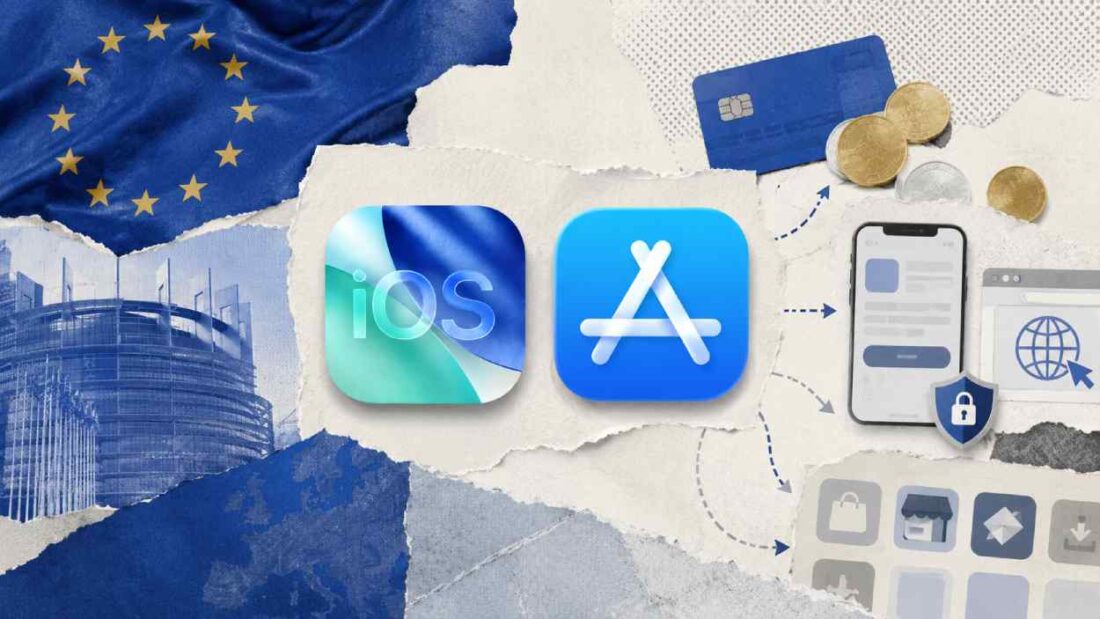
Abolishing the Core Technology Fee and replacing it with a 5% commission
The most significant turning point in the new terms is the cancellation of the “Core Technology Fee,” which previously imposed a fixed amount for every installation after exceeding a certain threshold. Apple has replaced it with a “Core Technology Commission” of just 5%, charged on digital transactions within apps distributed outside the App Store, whether through alternative marketplaces or directly via the web.
In addition, Apple has completely eliminated the initial acquisition fee and the store services fee, providing developers with a clearer financial model when operating outside the company’s traditional store ecosystem.
New commission rate structure within the App Store
For apps published on the App Store that choose to remain there, Apple has set new commission rates that vary according to the payment system used and the developer category:
- Apple In-App Purchase (IAP) system: The standard commission has dropped to 26%, and decreases to 15% for small developers, participants in special programs, and for auto-renewing subscriptions after their first year.
- Alternative in-app payment processing: Apps pay a standard commission of 20%, or 10% for eligible discounted programs.
- External links for businesses via the web: Apps that direct users to the web to complete a purchase pay 15% as a standard commission, or 10% for discounted programs.
- Distribution via alternative marketplaces and the web: Subject only to the 5% Core Technology Commission.
These steps are intended to give developers broader options to adapt to the new European market rules without directly impacting the choices of iPhone users.
Combining payment options and protecting minors
In an option that was not previously available, developers can now offer Apple’s payment system alongside alternative payment methods within the same app in EU countries. Apple requires developers to determine the appropriate mix of payment methods and commit to this choice for 12 months.
Regarding the protection of minors, Apple has imposed strict security controls; “Kids” category apps are prohibited from adding external links for financial transactions. For other apps that use alternative payment methods, they must display a “Parental Gate” to users under 18, while preventing those under 13 from being directed to conduct transactions outside the app.
Facilitating distribution terms and continuing security notarization
To facilitate the creation of alternative marketplaces and app distribution from the web, Apple has expanded eligibility criteria for organizations. Companies can now qualify by meeting established financial stability requirements, being publicly traded companies, having investment funding, or being subject to licensed accounting audits, in addition to government, educational, and non-profit entities.
Despite all the formal and financial facilitations, Apple emphasized that all apps distributed outside the App Store still require “Notarization” to ensure they are free of malicious components and to maintain the security of iPhones.
Developers will begin agreeing to the new terms starting today, in preparation for their actual implementation beginning next October.
Source:

Leave a Reply