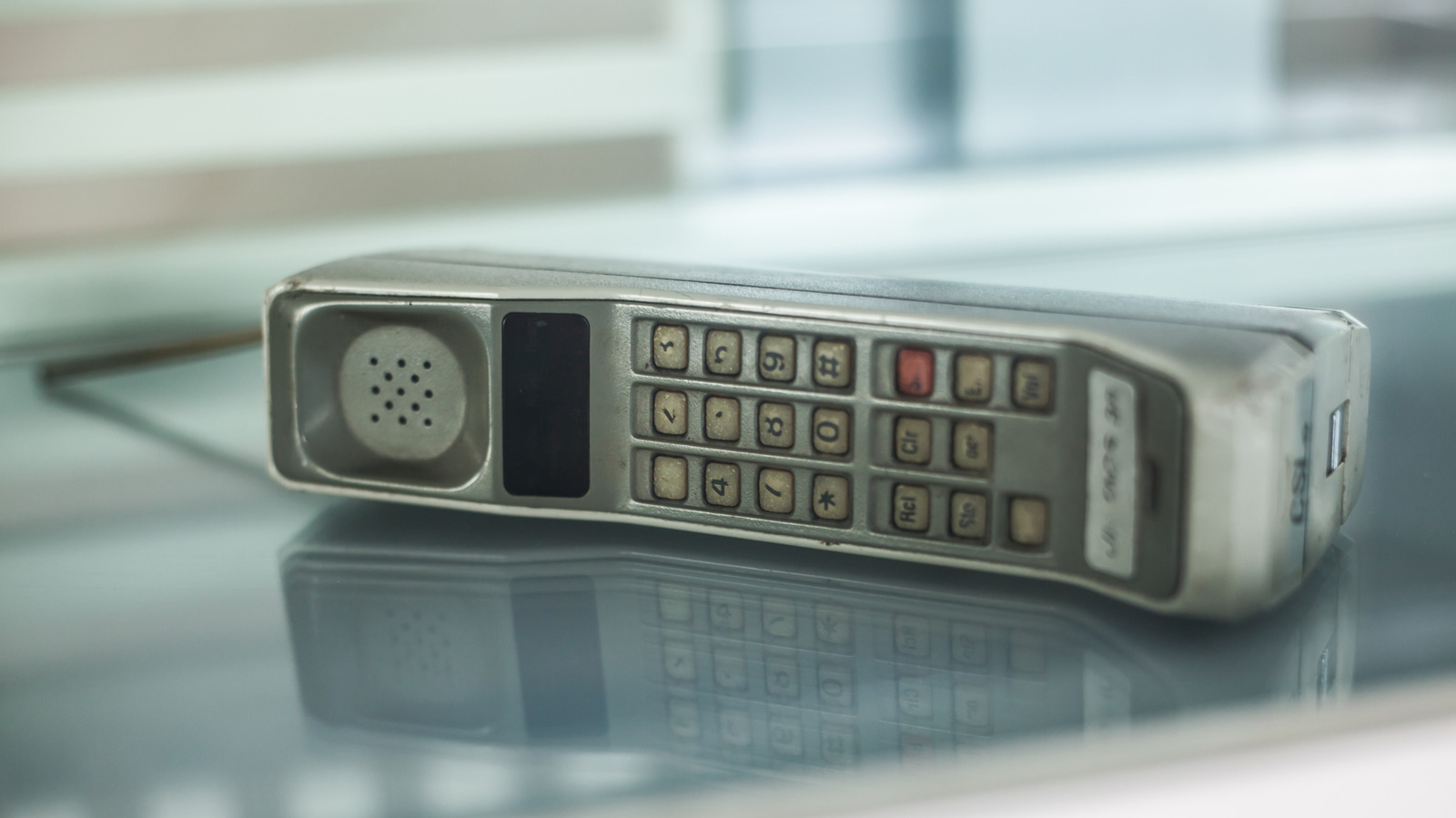
If you reflect on the history of the mobile phone industry, you will find that Motorola’s journey resembles a roller coaster ride full of sharp turns. While some may think that smartphones began only a decade and a half ago, the true credit goes to Motorola for making the first handheld mobile phone call in history in 1973, performed by its engineer Martin Cooper. A decade later, the company introduced its legendary DynaTAC 8000X as the first commercial phone known to humanity. From that moment on, the company dominated the industry and led the revolution of device miniaturization and the creation of iconic designs that changed the course of technology.
From the Peak of Glory to the Trap of Repetition: How Did the Decline Begin?
In the 1990s and the turn of the new millennium, Motorola introduced iconic devices that became etched in the public consciousness, such as the StarTAC in 1996 and the captivating RAZR V3 with its slimness and clamshell design in 2004. By 2006, Motorola sat on the throne of the industry with a global market share of about 21%, ranking second globally behind Nokia. The greatest credit for this dominance went to the RAZR series, which swept the markets and achieved staggering sales figures that made the company seem invincible.
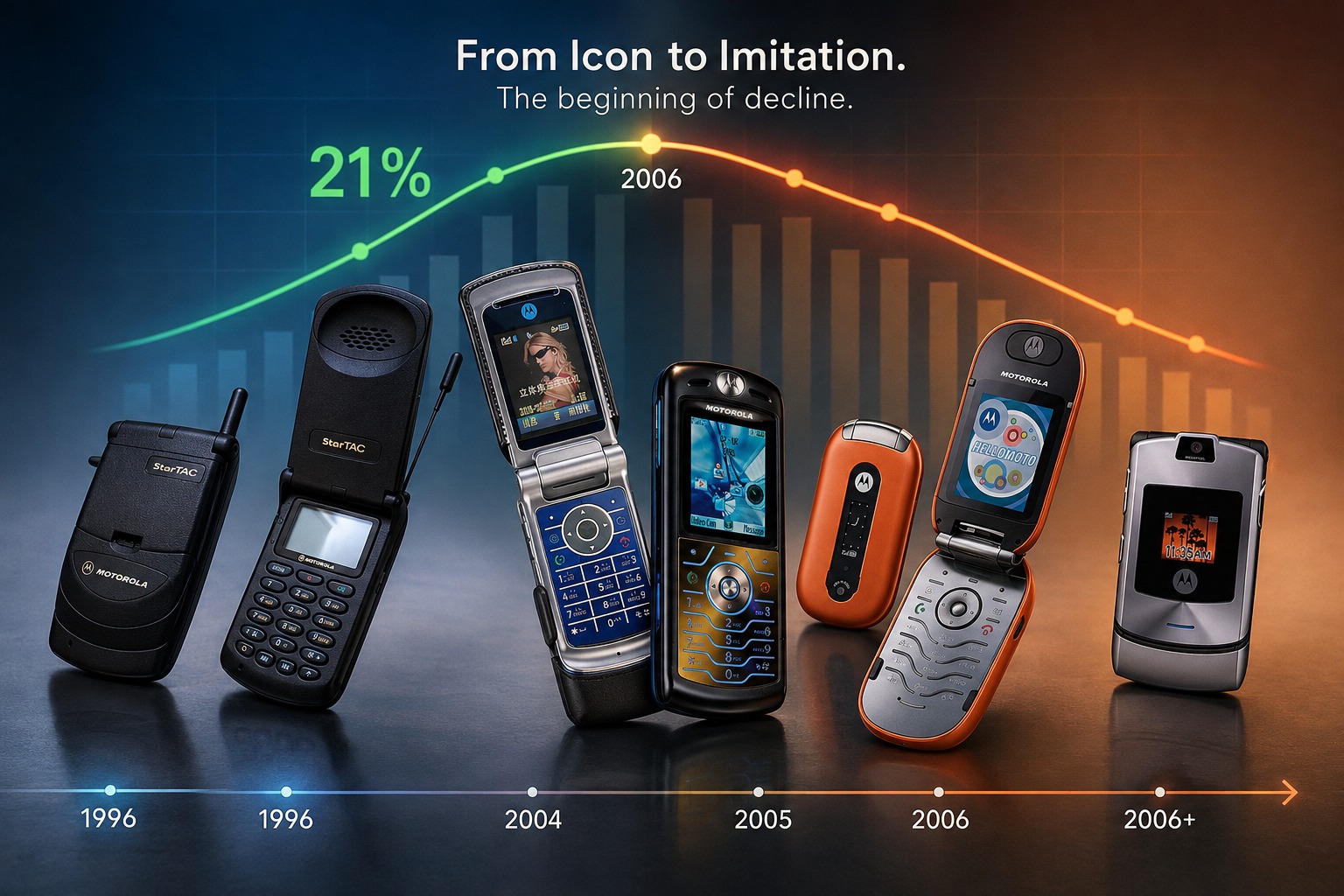
However, this brilliant success hid a dangerous trap. Instead of investing in creating entirely new generations and reading the coming shifts, Motorola surrendered to the comfort of a successful model and began recycling the same idea through derivative versions like the PEBL, SLVR, and KRZR. Meanwhile, competitors were accelerating toward 3G networks and developing the emerging smartphone category like BlackBerry devices, while Motorola was unable to offer a real alternative that could reignite the public’s passion with the same luster as the original RAZR.
The iPhone Earthquake and the Great Confusion
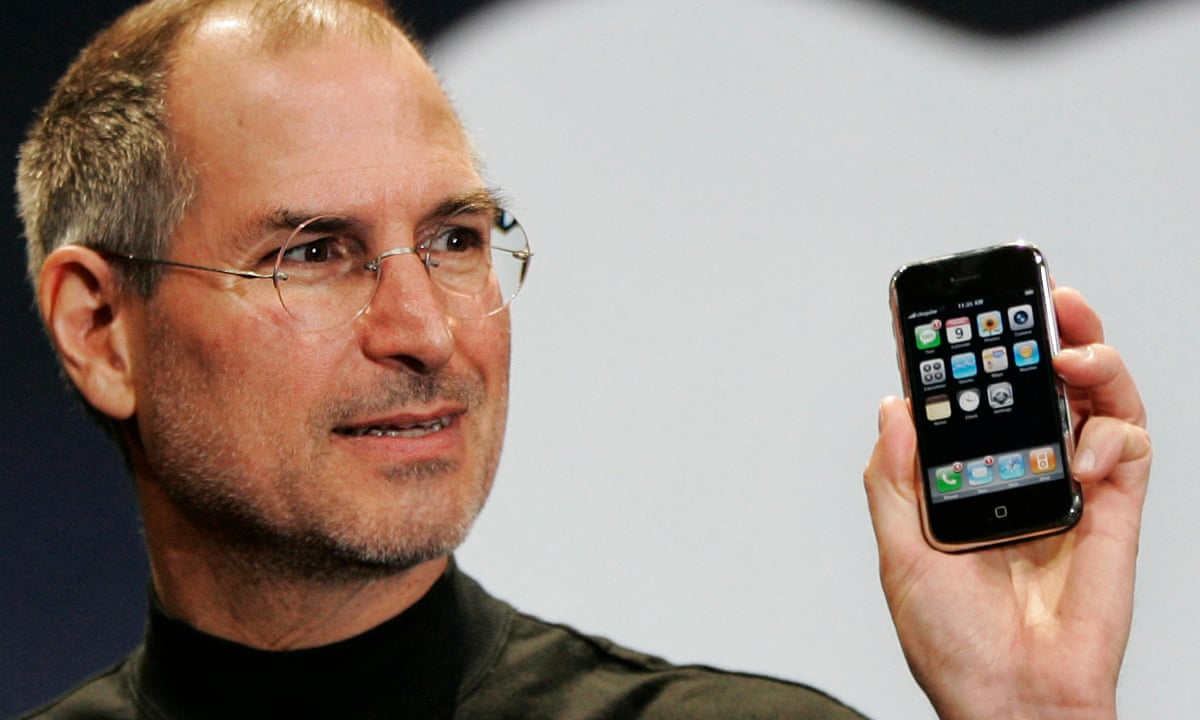
In 2007, Apple launched the first iPhone. Although Apple did not invent the smartphone concept itself, the iPhone redefined everything from scratch: a large interactive touchscreen, a revolutionary and smooth user interface, and a software environment prepared for thousands of apps. Motorola had previously tried to enter the market with the MOTO Q, equipped with a full keyboard in the style of BlackBerry, but it could not withstand the radical shift in consumer tastes and requirements that had leaped toward modern touchscreens.
The results were catastrophic for Motorola; its phone shipments collapsed, and the mobile division entered a spiral of massive financial losses. Its global market share plummeted from 21.1% at its peak in 2006 to just 8.7% in 2008, then continued its freefall to record 4.8% in 2009. While Apple continued to dazzle the world, reaching the iPhone 4, and Samsung established its empire with the Galaxy S series, Motorola found itself outside the circle of competition, which necessitated the appointment of Sanjay Jha in 2008 to completely restructure the division and save what could be saved.
The Road to Recovery: The Android Bet and the Comeback
The mobile division’s management made a decisive decision to cut costs and simplify the complex phone lineup, and most importantly, to fully adopt the Android system in 2009. The company launched the CLIQ phone, followed by the famous Motorola Droid (known globally as the Milestone), which received widespread critical acclaim and was considered by tech reviews to be the best Android phone of its time. This helped Motorola ship about two million Android phones in the last quarter of 2009 and achieve its first quarterly profit in more than 3 years by the fall of 2010, with total shipments exceeding 13.7 million smartphones that year.
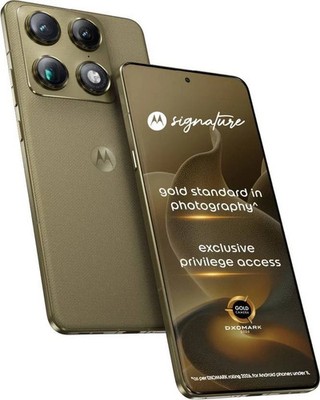
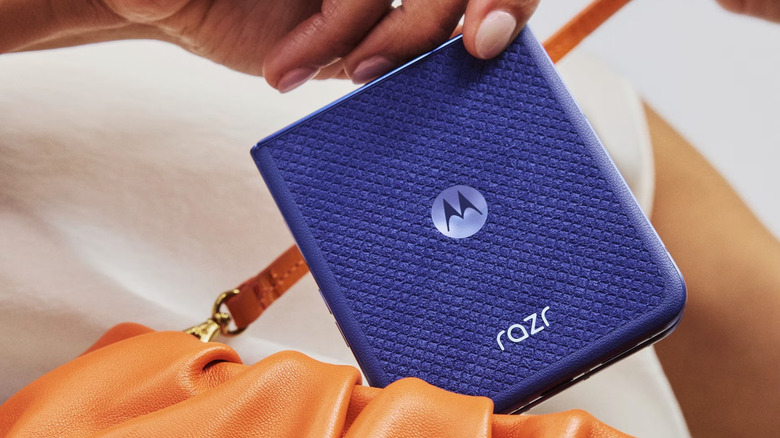
Dramatic shifts followed, as the phone division was separated into an independent company named Motorola Mobility in 2011, before being acquired by Google in 2012 to leverage its patents, and then its ownership transferred to Lenovo in 2014. Under Lenovo’s banner, the brand regained its global profitability by the 2018/2019 fiscal year and revived the legendary RAZR name, but this time as a foldable smartphone in 2020, with the company recording record revenues in the 2024/2025 fiscal year, proving that the classic giant still has much to offer tech enthusiasts.
Source:
Leave a Reply