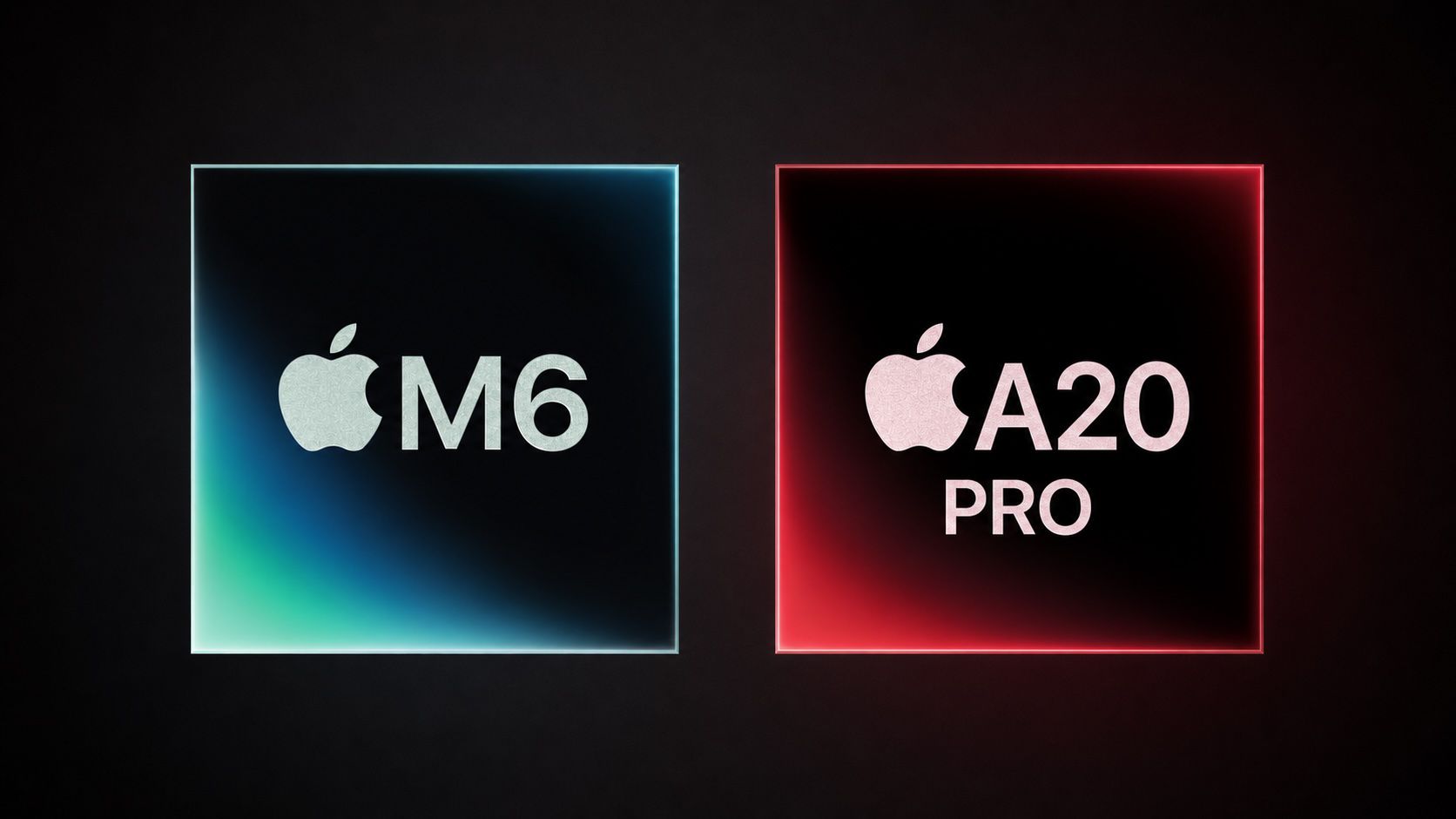
For many years, Apple has used the A-series processors for iPhones as the primary testing ground for its latest architectural designs, later adapting them to build the M-series processors for Mac devices. However, in an unusual move that turned back the clock, Apple unveiled the M6 chip just before the announcement conference for the iPhone 18 series. This shift in timing has provided us with a clear roadmap of what to expect from the upcoming A20 Pro processor inside the iPhone 18 Pro, which reports place as being up to 18% faster and 30% more energy-efficient compared to the A19 Pro processor—a figure that almost perfectly matches the difference between the M6 and M5.
2nm Architecture: A historical precedent that costs the iPhone an exclusive advantage
The M6 chip is the first Apple processor to be manufactured using TSMC’s advanced 2nm (N2) process, and it is almost certain that the A20 Pro will be the second. Historically, iPhone processors have held this honor first, thanks to their massive sales volume, which justifies the cost and helps stabilize manufacturing yields. Therefore, launching the N2 architecture for the first time in a desktop device like the Mac mini represents a radical shift in the company’s strategy.
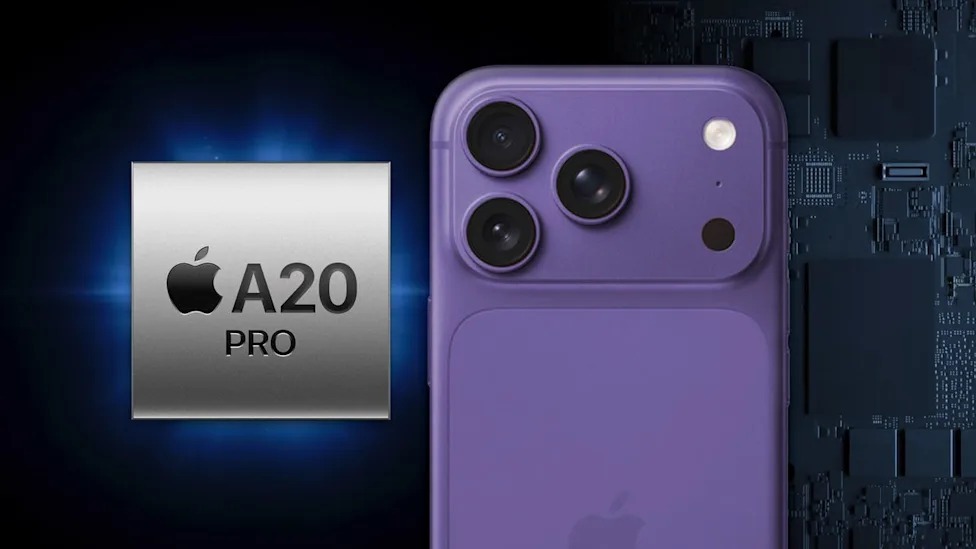
The direct result of this is that reports of the A20 and A20 Pro processors moving to a 2nm process have become a reality supported by a commercial product already available in the market, rather than mere analyst speculation. However, the only side effect for the upcoming iPhone event is that Apple will not be able to boast on stage about having the “first 2nm chip in our devices,” now that its sibling in the Mac family has already claimed that title.
Dual Neural Engine and a leap for Artificial Intelligence
The Neural Engine in iPhones has remained fixed at 16 cores with a computing power of approximately 35 trillion operations per second since the launch of the A17 Pro chip, continuing across three consecutive generations without a noticeable increase in the number of cores. However, the M6 chip introduced a dual Neural Engine featuring 16 cores per unit, allowing system software frameworks to address both simultaneously to achieve up to twice the peak computational performance of previous generations.
This development aligns with leaks suggesting that the A20 processor will adopt WMCM advanced packaging technology, which integrates memory on the same silicon die as the CPU, GPU, and Neural Engine to shorten the distance data travels. Nevertheless, thermal constraints and the chip’s footprint inside the phone’s chassis may make this dual Neural Engine a feature exclusive to the iPhone 18 Pro models rather than the base models.
GPU: AI gains become more stable
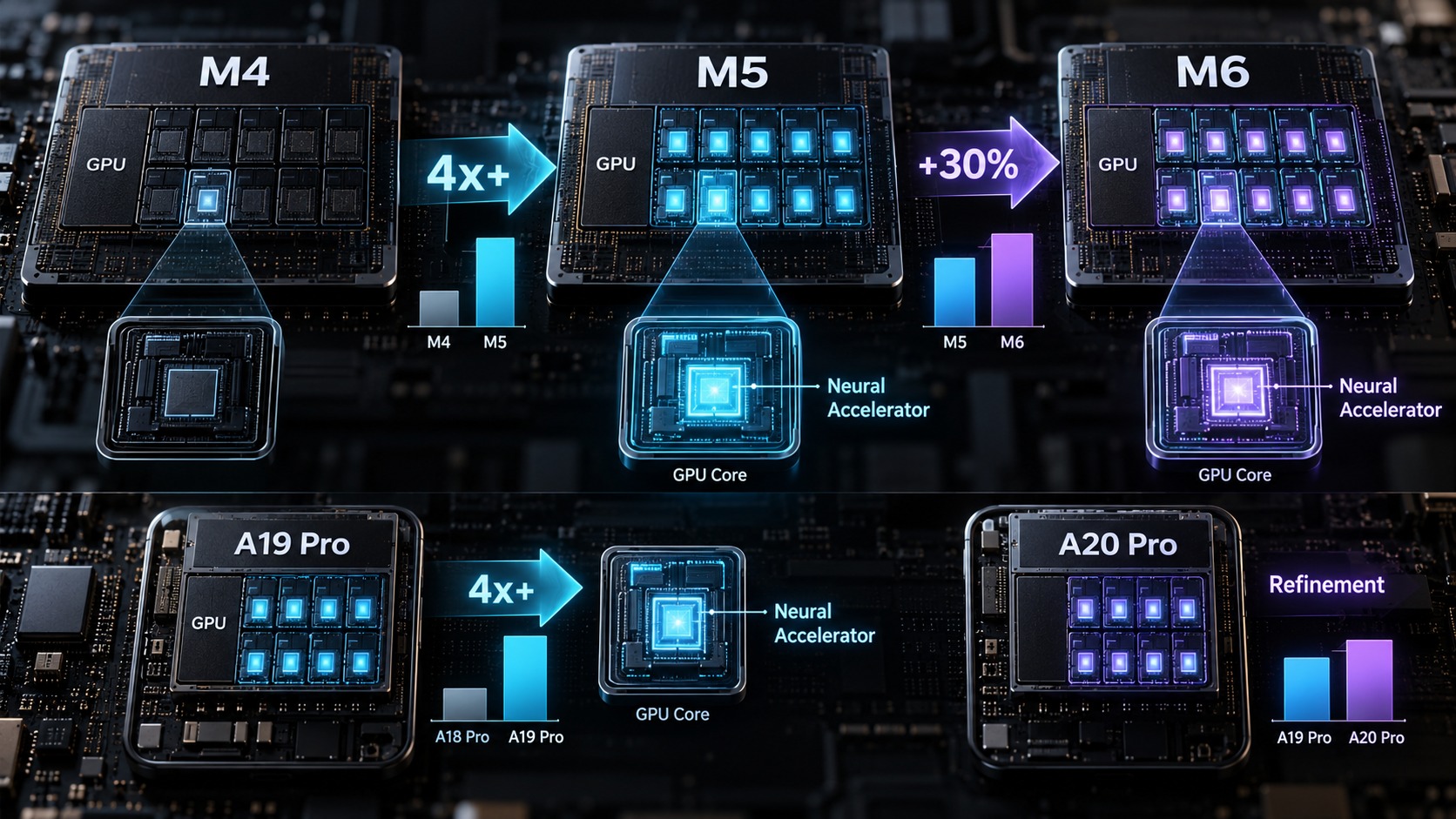
When Apple launched the A19 Pro chip on the iPhone 17 Pro and the M5 chip, it achieved a massive fourfold leap in AI-related graphics capabilities, thanks to the inclusion of dedicated neural accelerators within each GPU core. With the M6 chip, the increase was about 30% compared to the previous generation, indicating that the second generation of accelerators represents a stable engineering refinement rather than a sudden breakthrough. This means the A20 Pro processor will likely not repeat that extraordinary fourfold leap in marketing figures.

On the other hand, general graphics improvements will transition smoothly to iPhones as is customary across concurrent processor generations. The M6 architecture adds a 50% increase in geometry processing rates, an improved shader core structure, an upgraded version of Dynamic Caching technology, and hardware-accelerated ray tracing, ensuring stunning visual performance for high-end games on the iPhone 18 Pro.
Modest memory bandwidth and absence of AV1 encoding
Memory bandwidth represents the real bottleneck in data flow speed between memory and the processor, which is the decisive factor for running large language models on devices efficiently. The M6 chip offers a bandwidth of up to 170 GB/s, an increase of only 10% over the M5 chip—a figure that reflects Apple’s reliance on a faster class of LPDDR5X memory (manufactured by Samsung) rather than jumping to the new LPDDR6 standard, which would have provided a major leap.
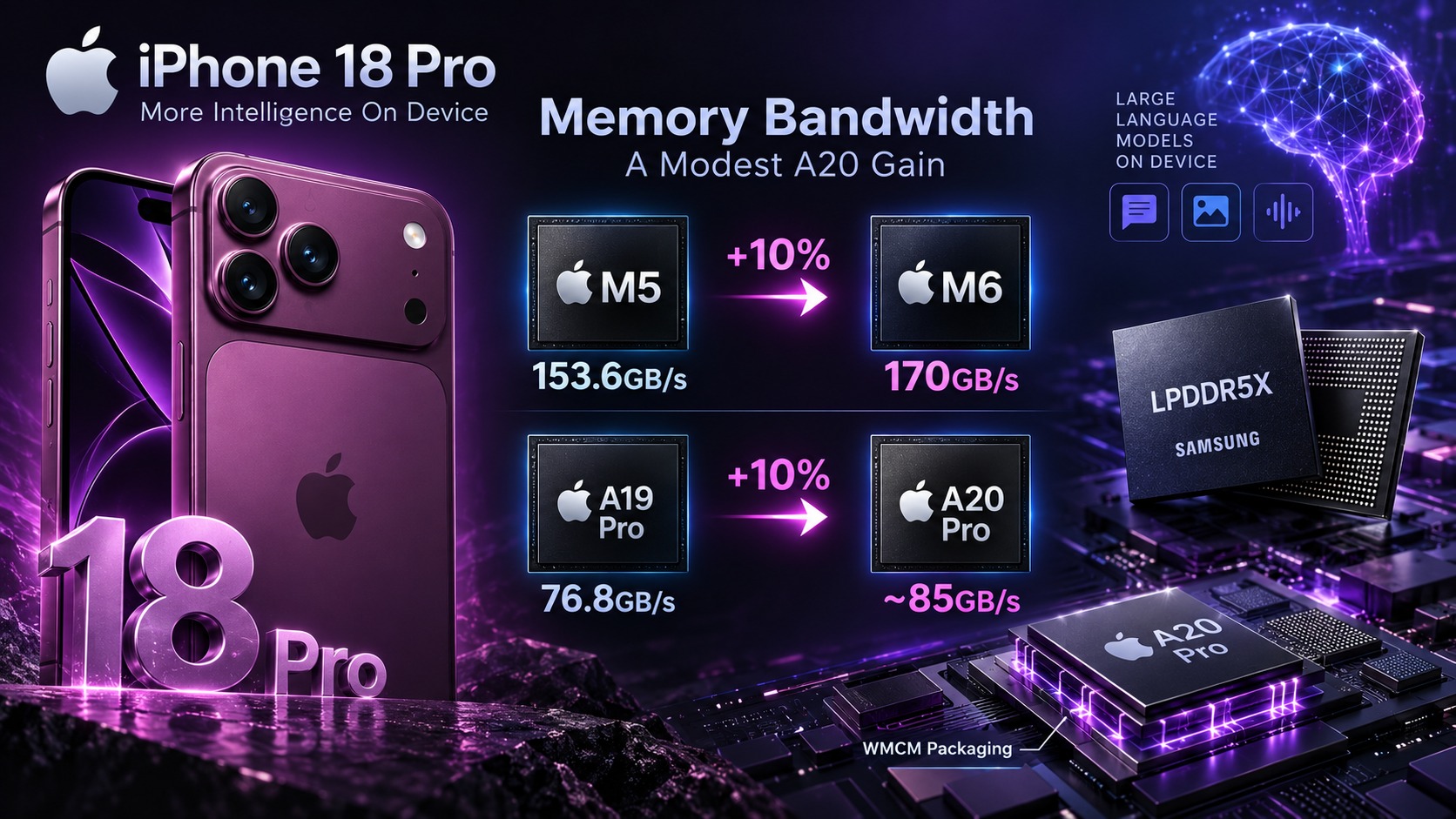
This data suggests that the A20 Pro processor will see a similar modest increase of about 10%, raising the bandwidth from 76.8 GB/s in the A19 Pro to approximately 85 GB/s. Consequently, any noticeable improvement in the response speed of AI models within the iPhone 18 Pro will be credited to the WMCM packaging technology that reduces signal latency, rather than raw memory speed. Regarding the media engine, the absence of AV1 encoding remains, with support limited to decoding only, which confirms that it will also not be available in the upcoming A20 Pro processor.
Source:


Leave a Reply