Foldable phones have long been a risky testing ground; hinges that creak over time, creases in the middle of the screen that look like war trenches, and designs that feel like rushed prototypes. But when Apple decided to enter this battle with the iPhone Duo, it was clear they weren’t looking for just any phone that opens and closes haphazardly. Instead, they wanted a complete mechanical masterpiece that allows for use at multiple angles with extreme stability. Recently, a tech content creator subjected the phone’s hinge to a precise CT scan, revealing what happens behind the scenes inside this highly complex mechanism.
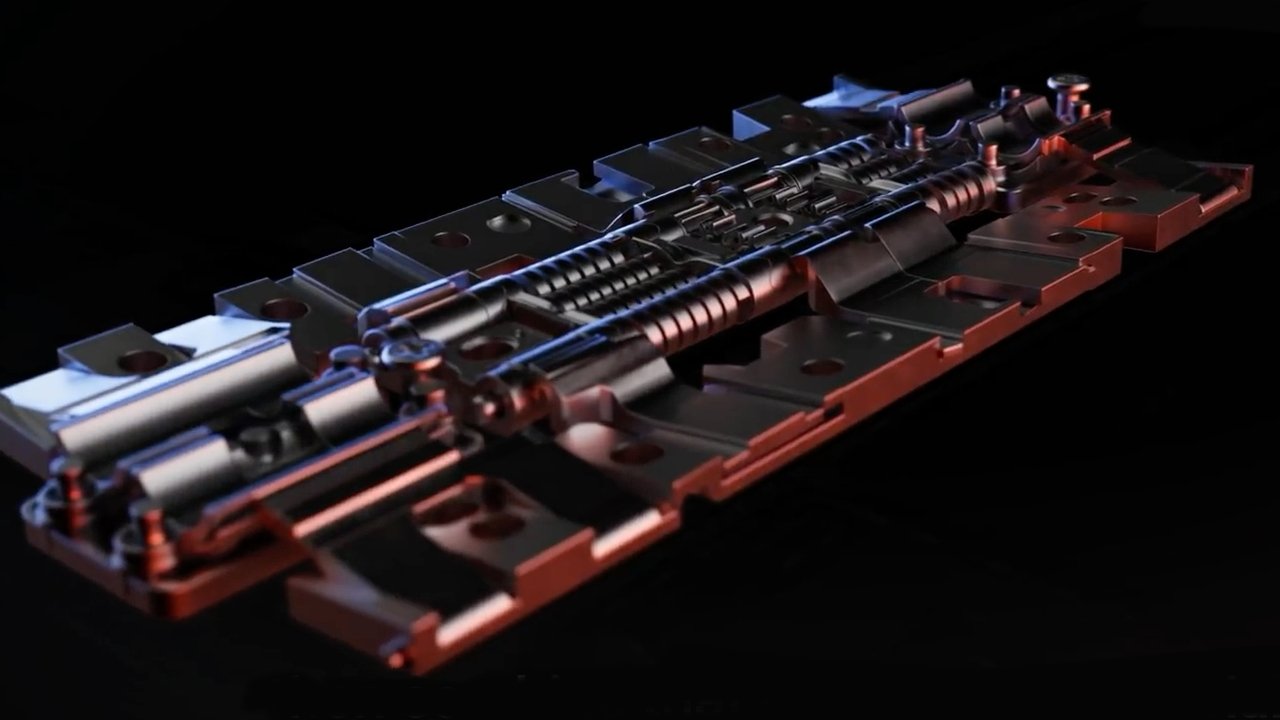
100-Piece Engineering: Free Angles and Synchronized Gears
One of the biggest surprises of the iPhone Duo launch was its ability to remain stable at various angles, rather than just being limited to fully open or fully closed positions. The CT scan conducted by the HTX Studio channel showed that the device can remain perfectly stable while open between 15 and 145 degrees. If you try to keep it at an angle of less than 15 degrees, built-in magnets automatically snap it shut securely. Similarly, if you exceed 145 degrees, the phone pushes itself to settle into the fully open position at a flat 180-degree angle.
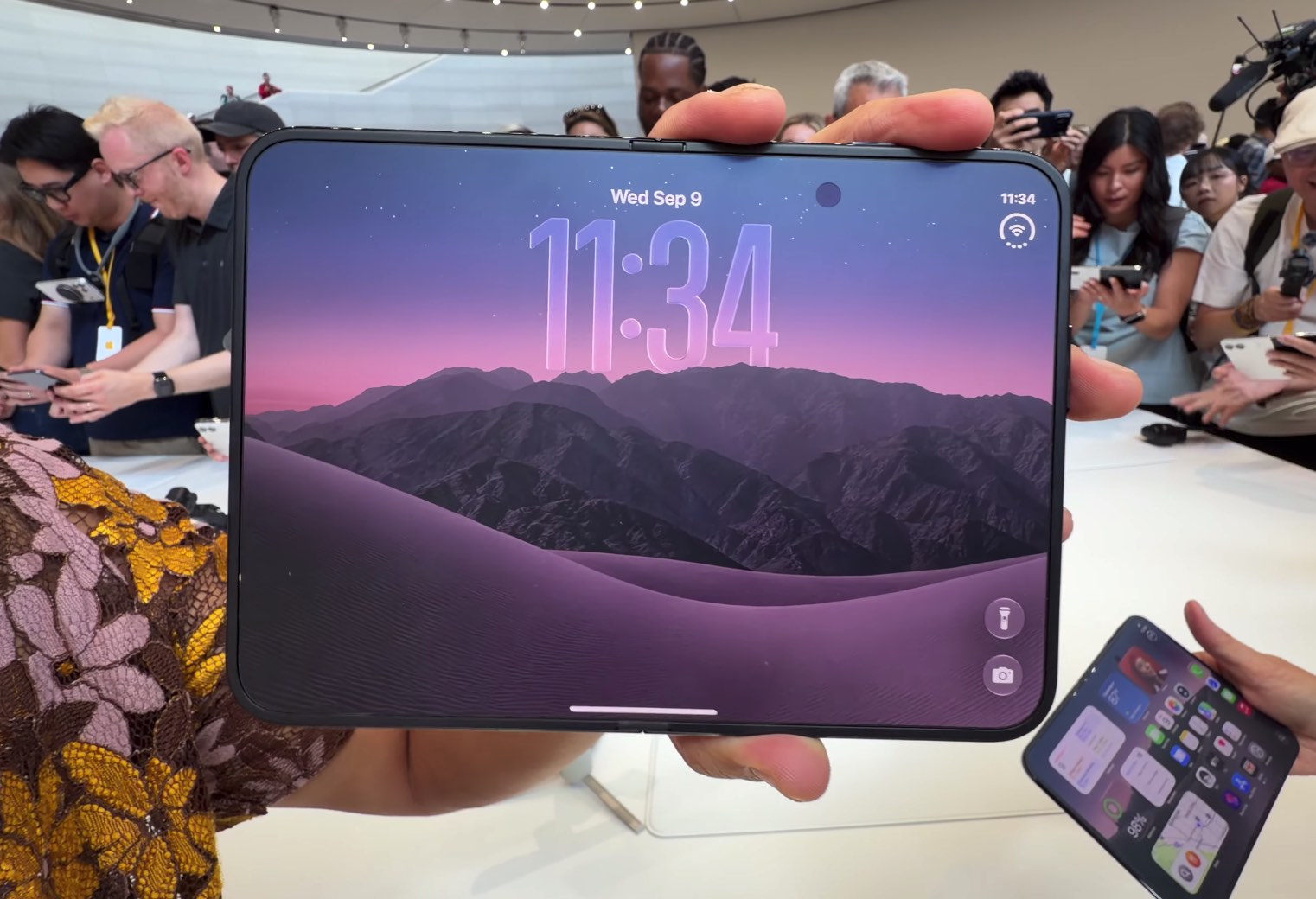
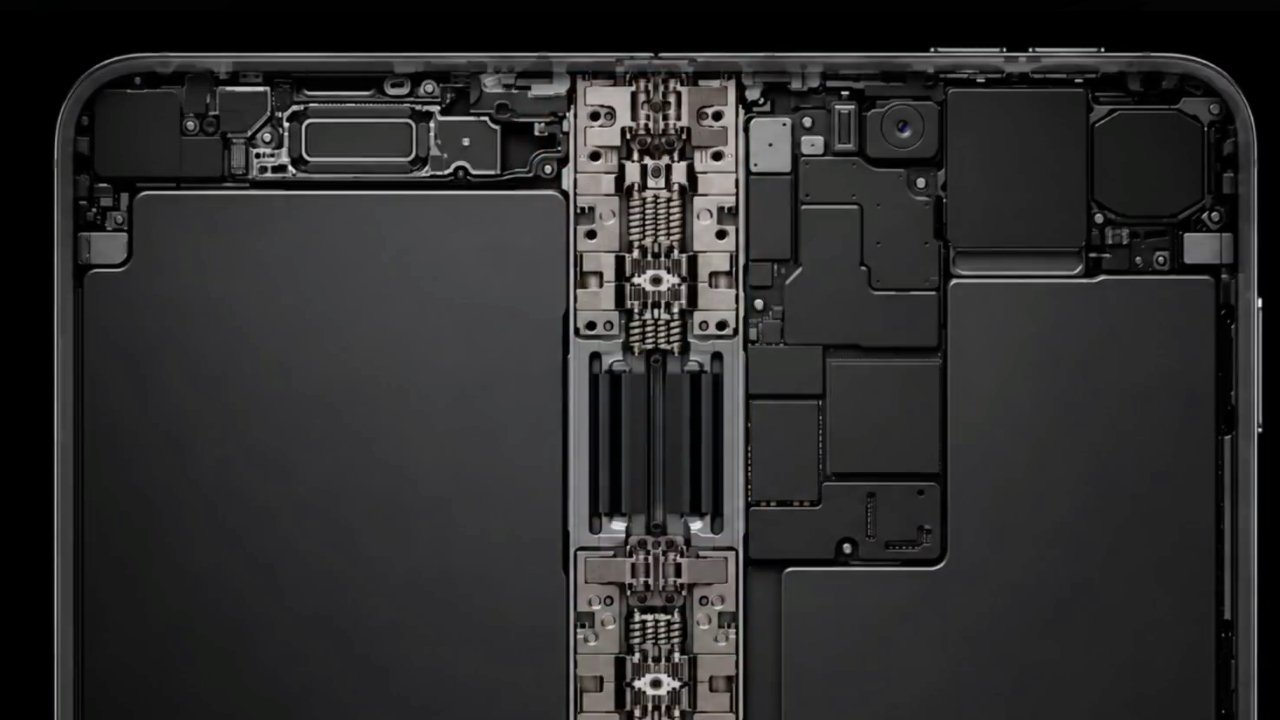
Apple had previously stated that the hinge contains nearly 100 internal components, and the scan confirmed that these components are concentrated in six main sections: two sections at the outer edges connected to a central axis, and a series of gears ingeniously designed to make the rotation of one side of the device turn the other with extreme precision. This mechanical synchronization ensures that the device opens and closes with identical, fluid motion regardless of where you hold the phone.
The real secret behind the hinge’s resistance to the screen’s weight and its stability at any angle lies in its reliance on opposing cams and springs. When the phone is fully open, the cams interlock and compress the springs to resist any unintended rotation. When you start folding the phone, the cams press against the springs to generate friction torque that completely overcomes the device’s own weight, giving the user a sense of solidity and precise control.
The Screen Crease Dilemma and Bending Space
The eternal dilemma in the world of foldable screens is the crease at the center line. Apple has dealt with this issue cleverly through ultra-thin glass layers—up to ten layers—as well as a matte Nano-texture layer that diffuses light reflections, unlike the glossy screens of competitors that highlight the crease as if it were a deep valley under direct lighting.
The CT scan also revealed Apple’s philosophy regarding “Bending Space,” which is the radius through which the screen bends when closed. As the experiment illustrates, if you fold a piece of paper while leaving a wide semi-circular space, it won’t leave a clear mark when unfolded, unlike if you press it hard to become completely flat. The width of the bending space in the iPhone Duo is 3.85 mm at its widest point, a figure that falls into the “golden zone” compared to competing phones that range between 3.8 mm and 4.2 mm, which protects the screen from permanent stress.
Titanium Protection and Hard Pencil Tests
One of the engineering marvels is the iPhone Duo achieving an IP68 rating for water and dust resistance, a very rare achievement in the category of foldable phones with moving hinges. Apple also did away with the unsightly plastic bumps that competitors place at the edges of the screen to absorb shocks, replacing them with a full hinge covering made of ultra-strong titanium, providing a completely flat and smooth surface around the screen without compromising the design.
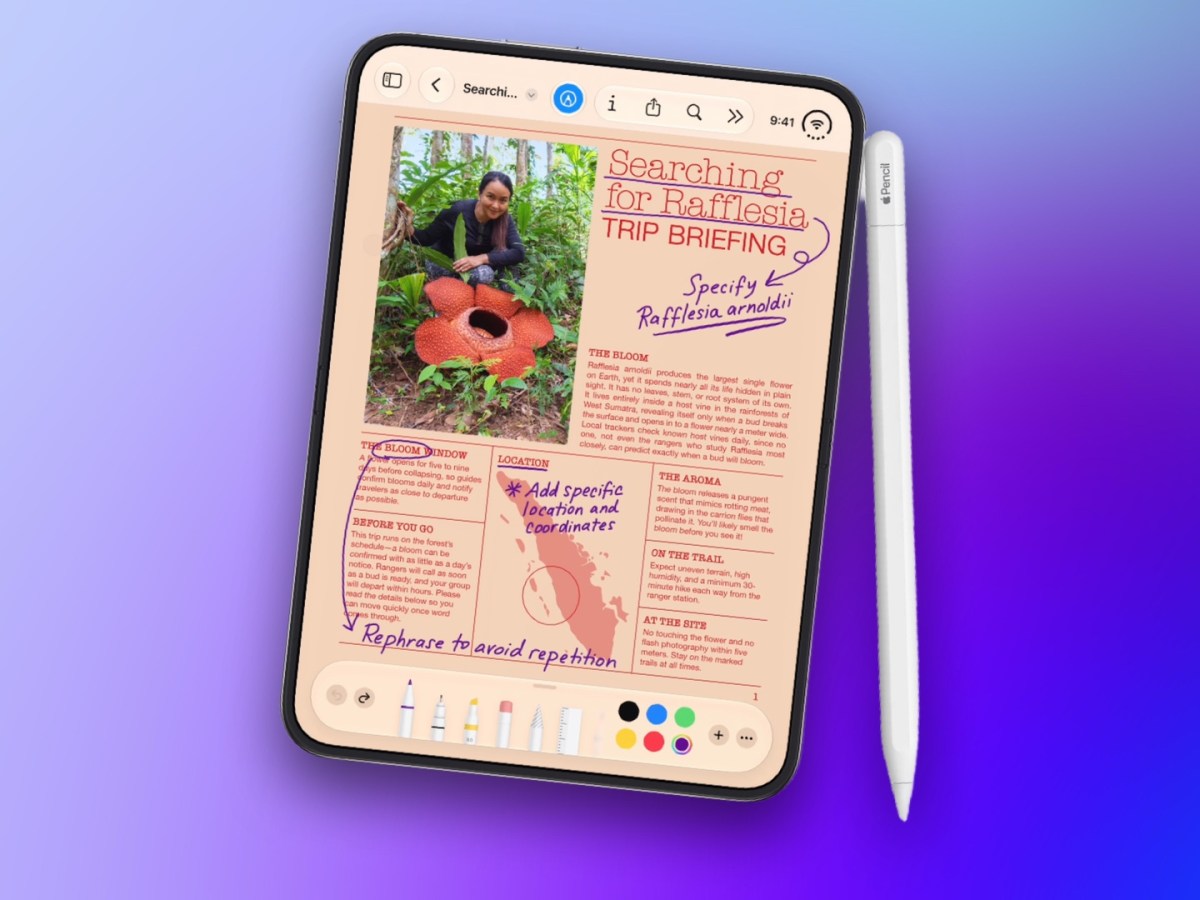
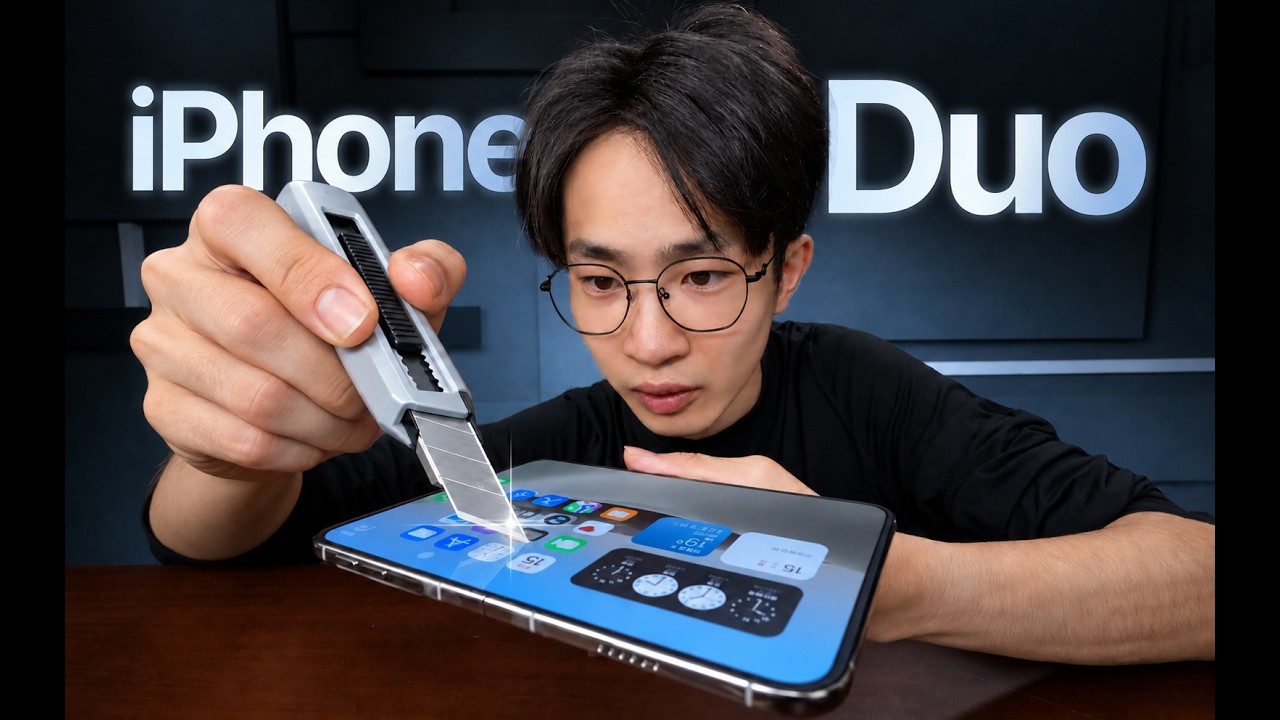
Given the device’s support for the Apple Pencil, it was necessary to test the surface’s hardness against scratches. The phone underwent a controlled 100-gram pressure test using different pencil hardness grades. No significant marks appeared until the 6H hardness grade, where a mark barely visible to the naked eye and impossible to feel appeared, while noticeable scratches began to emerge at the 8H hardness grade. This performance is far superior to most competing devices, whose screens might be affected even by a strong fingernail press.
Source:

Leave a Reply