Apple has long considered privacy protection a cornerstone of its software philosophy rather than just a catchy marketing slogan. While maintaining user anonymity while browsing the internet is one of the most difficult technical challenges in the digital age, the company continues its fierce battle to keep your personal data out of the hands of ad brokers. After previously closing the door on them by blocking third-party cookies, tracking companies resorted to new and cunning methods known as identity resolution, exploiting your email address. This is where the latest updates in the WebKit engine and the Safari browser come in, blocking these tricks through radical and innovative mechanisms.
The Post-Cookie Era: The New Trick of Data Brokers
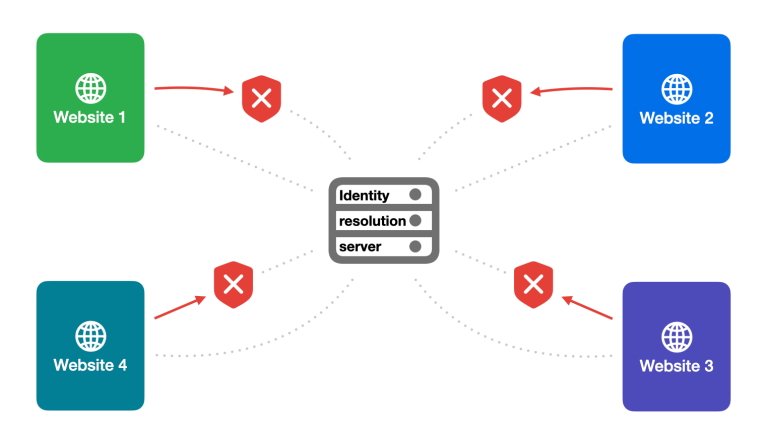
About six years ago, Apple dealt a crushing blow to the advertising industry when it blocked cross-site cookies, preventing advertising platforms from tracking a user’s browsing habits from one window to another. It also reinforced this protection with overwhelming success through the App Tracking Transparency feature on iPhone and iPad devices. However, ad companies did not give up easily; instead, they created an alternative system they called identity resolution, which relies fundamentally on collecting email addresses rather than relying on traditional tracking files.
This process begins when you enter your email address to log in to a website or to subscribe to a newsletter. Third-party intermediary companies capture this address and assign it an obscure tracking identifier, which is then sent to the webpage to act as a permanent fingerprint. When this step is repeated across different sites, those identifiers are linked to build a comprehensive digital profile known as an identity graph. This allows data brokers to track your interests and behavior on the internet with frightening accuracy and without your explicit knowledge.
Email is Not Just Text: Apple’s Strict Vision for Privacy

Apple views an email address as a primary form of highly sensitive personally identifiable information, just like your mobile phone number. Although it is easily used by users as a quick way to log in, in the hands of ad companies, it turns into a fixed digital identity that can last for years and allows all your movements to be linked. Apple believes the core problem is that you provide your email to a site for a specific and declared purpose, and you never shared it to build hidden tracking profiles that monitor your daily path across the web.
To clarify things precisely, Apple emphasizes that it does not oppose the idea of internal personalization for the site itself; if the site you are visiting voluntarily saves your preferences and personalizes your experience, this is not tracking, and the company is not trying to stop it. The real danger lies in the intervention of third parties that collect your data from dozens of different sites to create a cross-device and cross-platform profile, something an individual site cannot achieve on its own without collaborating with intermediary tracking networks.
Safari’s New Weapon: Choking Tracking Connections at the Source
To thwart this scheme, Apple has equipped the Safari browser and the WebKit engine in its software updates with advanced capabilities to block network connections directed straight to identity resolution infrastructure. This measure targets the servers of intermediary companies that plant invisible elements within webpages just to capture data, preventing the email from being passed to those systems in the first place. Thus, data brokers are unable to create a digital profile or match your identity with their existing databases.
This defense is characterized by operating at the entire domain level, meaning it is impossible to circumvent regardless of how the programmatic requests are formulated or attempts at camouflage. In parallel with this protection, iCloud+ subscribers benefit from the Hide My Email feature, which generates random addresses for each site to prevent the formation of any common denominator between your accounts. It seems this defensive system is working with such extreme firmness that it has recently blocked some ad companies entirely, proving Apple’s absolute seriousness in closing all avenues of intrusion.
Source:


Post Comment