Yesterday Apple announced the iPhone 17e and iPad Air, and today it unveiled its latest MacBook Pro models (14‑inch and 16‑inch), equipped with brand‑new M5 Pro and M5 Max processors. This time, Apple not only increased the core count but also introduced a new architecture called “Fusion Architecture,” a technology that bonds two third‑generation 3‑nanometer chips together to operate as a single, powerful heart.
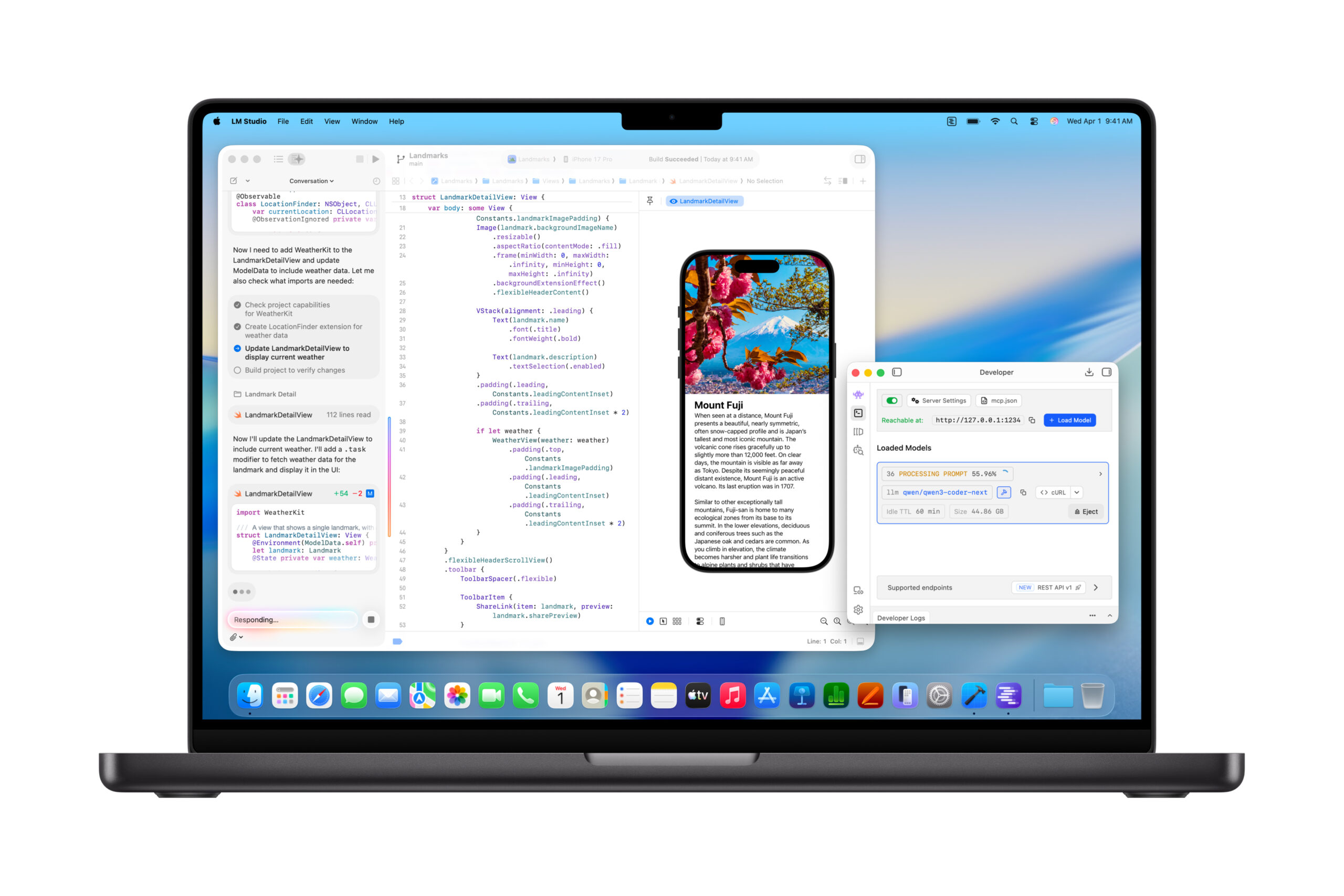
Architectural Revolution: When Two Chips Meet in One Body
For the first time in Apple Silicon history, we see a departure from the traditional single‑chip design in favor of the “Fusion” architecture. This advanced technical step integrates the CPU, GPU, neural engine, and even unified memory controllers into one massive package that delivers unprecedented efficiency and speed. It is simply smart engineering that allows data to flow between components without any noticeable bottlenecks.
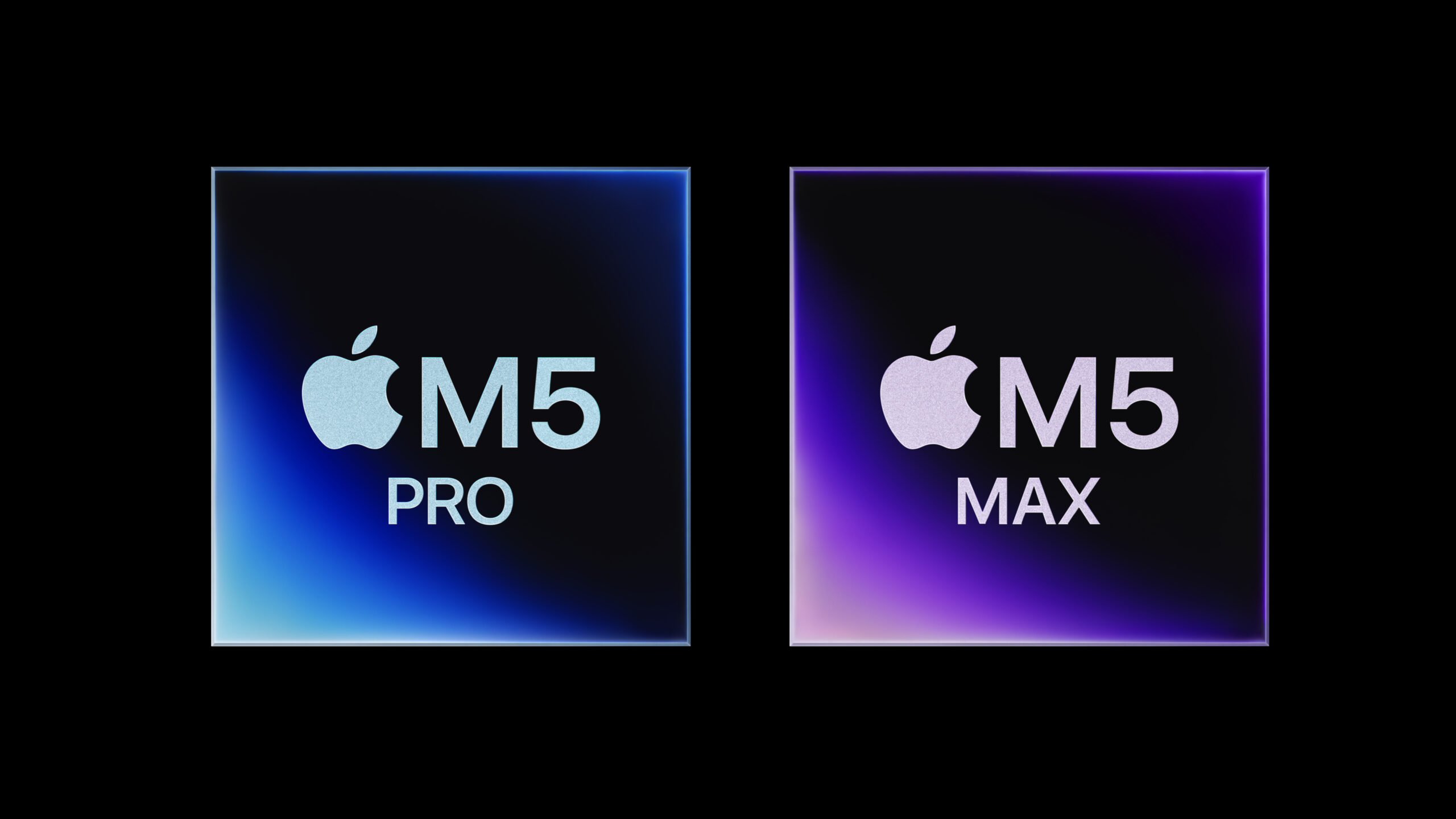
What’s exciting is the raw performance; both chips feature 18 CPU cores, a noticeable increase over the previous M4 generation. Apple introduced a new term, “Super Cores,” with six of these high‑performance cores alongside twelve efficiency cores. The result? A 30 % speed boost in multithreaded tasks compared to the M4, and a staggering 2.5× jump over the M1 Pro and M1 Max processors that were only recently considered technological marvels.
Artificial Intelligence and Graphics: The Age of Neural Accelerators
If you’re a graphics enthusiast or work in AI, get ready for a surprise. The M5 Pro chip sports 20 GPU cores, while the M5 Max doubles that to 40. The real story, however, lies in the Neural Accelerator embedded in each GPU core, giving the devices AI processing power that is four times that of the M4 generation.
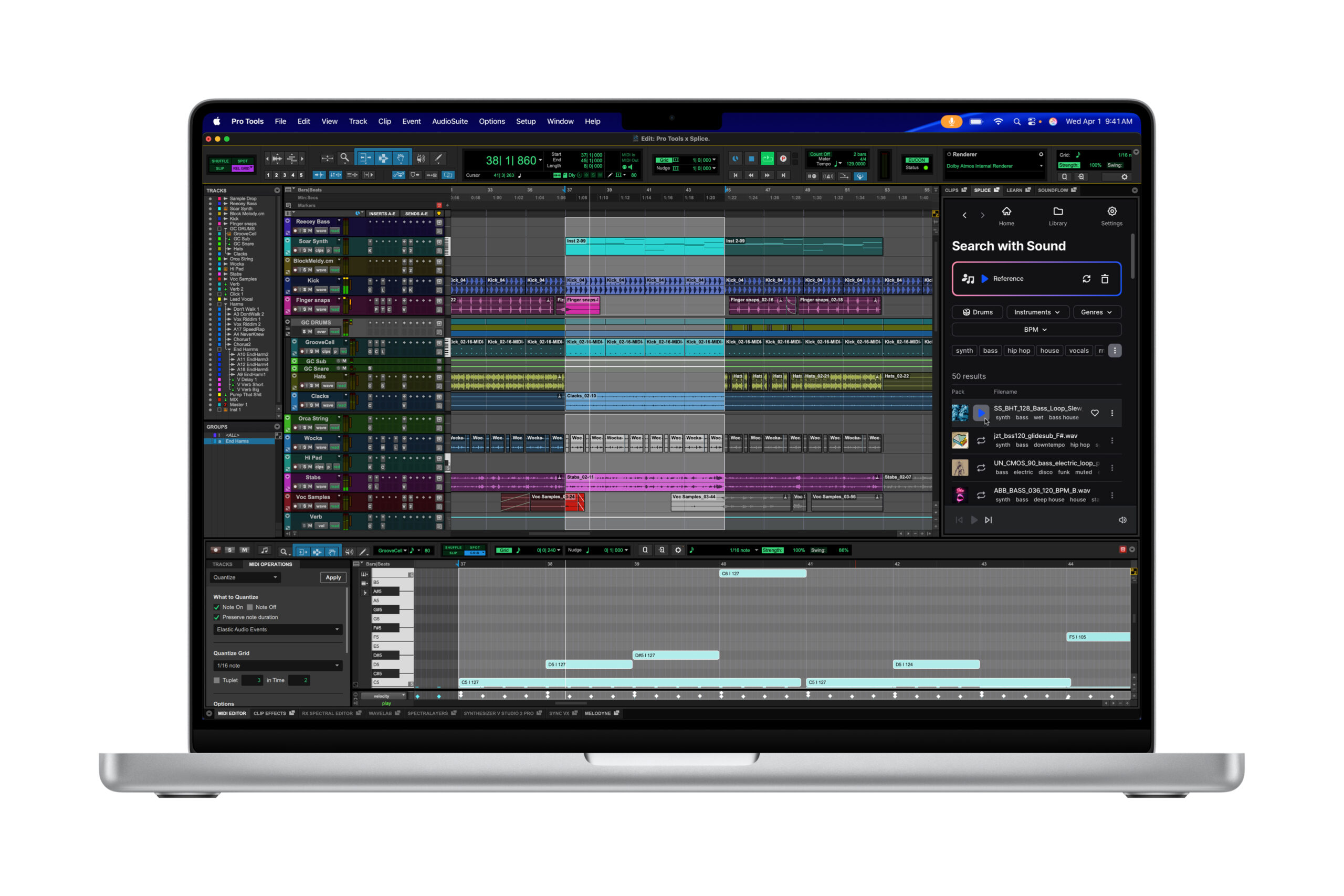
This advancement means that complex tasks such as ray‑tracing are now 35 % faster, while overall graphics performance has improved by 50 %. Apple no longer targets merely running applications; it aims to enable professionals to run massive language models (LLMs) locally on the machine at astonishing speeds, something that previously required dedicated servers.
Faster Memory and Unstoppable Storage
Apple did not overlook memory and storage. The M5 Pro now supports up to 64 GB of unified memory with a bandwidth of up to 307 GB/s. The beastly M5 Max retains a maximum of 128 GB, but its bandwidth jumps to a staggering 614 GB/s. These figures are not just statistics; they translate to absolute fluidity when opening hundreds of files or handling 8K video without any lag.
As for storage read/write speeds, they have doubled to reach 14.5 GB/s. Even better is the increase in base capacities: M5 Pro models now start at 1 TB, while M5 Max models start at 2 TB, meaning goodbye to the cramped storage of entry‑level models.
Future‑Ready Connectivity and Long‑Lasting Battery
The new devices are equipped with the N1 wireless chip, bringing support for Wi‑Fi 7 and Bluetooth 6—a qualitative leap that ensures stable, fast connections even in crowded environments. Thunderbolt 5 ports have also been updated, giving each port its own controller on the chip, allowing all three ports to operate at full capacity simultaneously without interference.
Despite all this power, Apple did not sacrifice the battery; the 16‑inch model can last up to 24 hours of use. If the charge runs low, you can replenish 50 % of the battery in just 30 minutes using a 96 W charger or higher. Apple also added a new security feature called “Memory Integrity Enforcement” to continuously protect memory, a capability the company claims is the first of its kind in the industry.
Source:



Leave a Reply