It seems Apple has finally decided to break the traditional constraints of its closed ecosystem. In a historic and unexpected move, the company is preparing to make a radical change to how artificial intelligence operates within its devices. With the launch of iOS 27 this fall, Apple will not rely solely on its own intelligence; instead, it will allow users to choose AI models from competing companies to power core features, effectively turning your iPhone device into an open platform for the world’s most powerful digital minds.

Extensions Feature: AI on Demand
According to a new report from Bloomberg, Apple internally calls this new feature “Extensions.” This capability will be available within the Settings app, allowing third-party developers to integrate their models into the Apple system. Once these models are installed via the App Store, users will be able to select their preferred service to handle specific tasks such as “Writing Tools” and “Image Playground” across iPhone devices, iPads, and Macs.
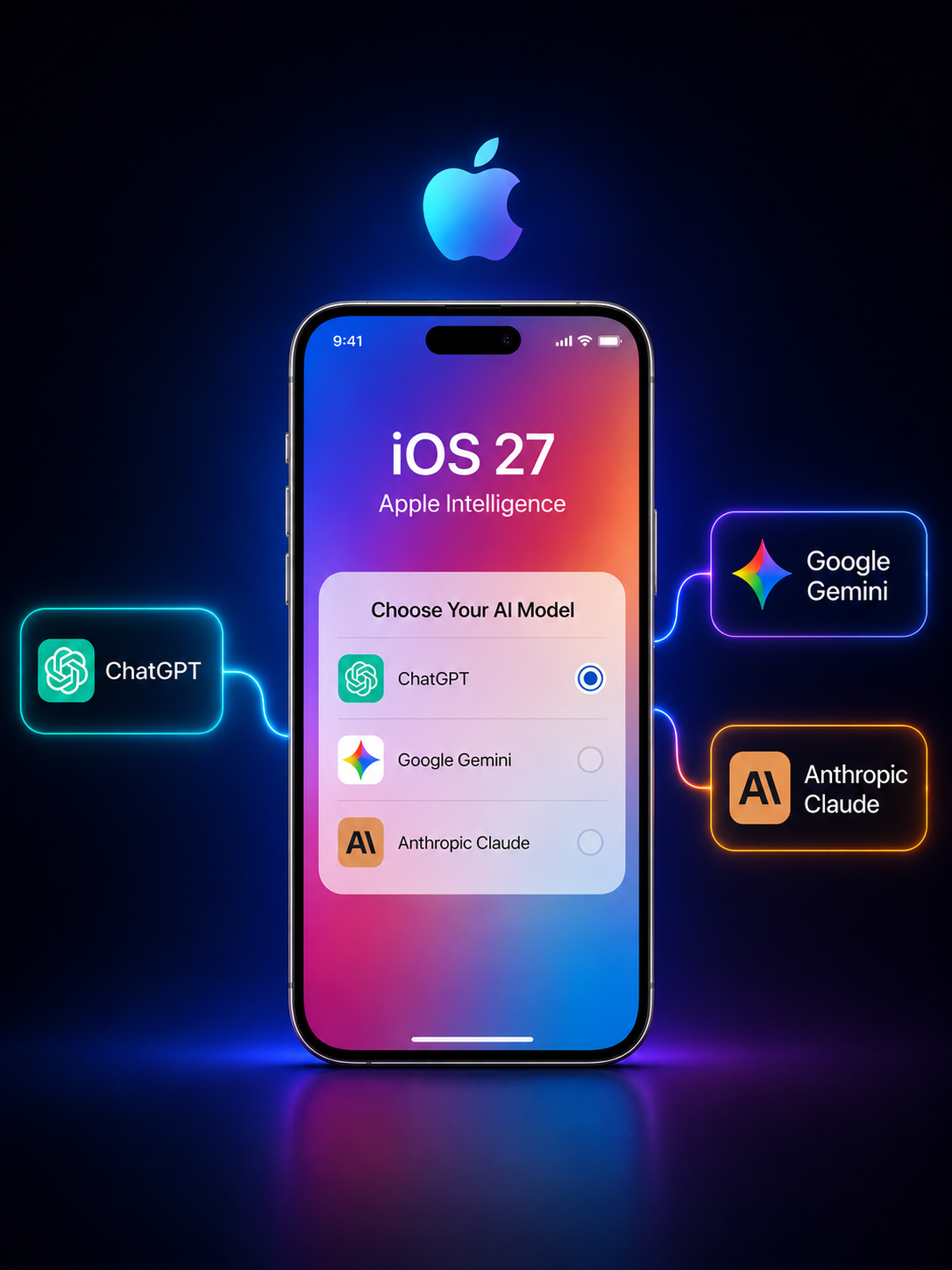
This direction means you will no longer be restricted by what Apple imposes; if you prefer Google’s accuracy in text drafting or Anthropic’s creativity in data processing, you will be able to make them the primary engine for operating system features. Apple is already testing these software frameworks with major companies like Google and Anthropic to ensure seamless and secure integration.
Siri is No Longer Alone: Multiple Assistants and Voices
This move goes beyond improving writing tasks to reach the heart of the personal assistant, Siri. The report indicates that Siri will open its doors to external assistants like Gemini and Claude. Interestingly, Apple will allow users to assign different voices to each AI model, helping you easily distinguish between Apple’s own system responses and those of external services during a conversation.
This diversity reflects Apple’s new strategy of portraying its devices as an open platform for AI rather than relying entirely on its internally developed models. Apple also plans to dedicate an entire section in the App Store for compatible AI apps, with clear disclaimers stating that the company is not responsible for the content generated by these external models.
The End of the Honeymoon with OpenAI
This openness marks a turning point in Apple’s relationship with OpenAI. After ChatGPT was the exclusive and only ally in the launch of Apple Intelligence, it seems its usage fell short of initial expectations. Furthermore, the relationship between the two companies is increasingly strained, especially with OpenAI’s active attempts to hire Apple engineers to build its own competing hardware.
By opening the platform, Apple ensures it is not dependent on a single company and provides its users with the best in the market. Apple has already utilized Google’s technologies to develop the core models for Siri and uses Anthropic’s technologies in its internal infrastructure, making this expansion a logical step to enhance system efficiency.
Amazing Features Await Us in iOS 27
In addition to the freedom to choose AI models, iOS 27 brings a massive set of updates. We will see a standalone Siri app that offers a full chat experience, and a special mode for Siri within the Camera app to enhance the “Visual Intelligence” feature. Photos will also receive revolutionary AI-powered editing tools, and the Wallet app will provide custom options for card creation.

All these additions confirm that Apple does not just want to catch up in the AI race, but aims to lead it by making its ecosystem the most flexible and powerful place for users and developers alike. It seems the era of the “high wall” around Apple’s garden is beginning to fade in favor of a more personalized and intelligent user experience.
Source:

Leave a Reply