Ever since Apple launched its Apple Silicon processors and changed the rules of the game in the computing world, Windows fans have been living in a state of anticipation and waiting for that “moment” that would save their favorite platform from the trap of high power consumption and excessive heat. Now, it seems the green giant, NVIDIA, has decided to step in itself to create this historic moment, officially unveiling at Computex Taipei 2026 its first revolutionary processor dedicated to Windows PCs: the RTX Spark chip, based on the Arm architecture in collaboration with MediaTek.
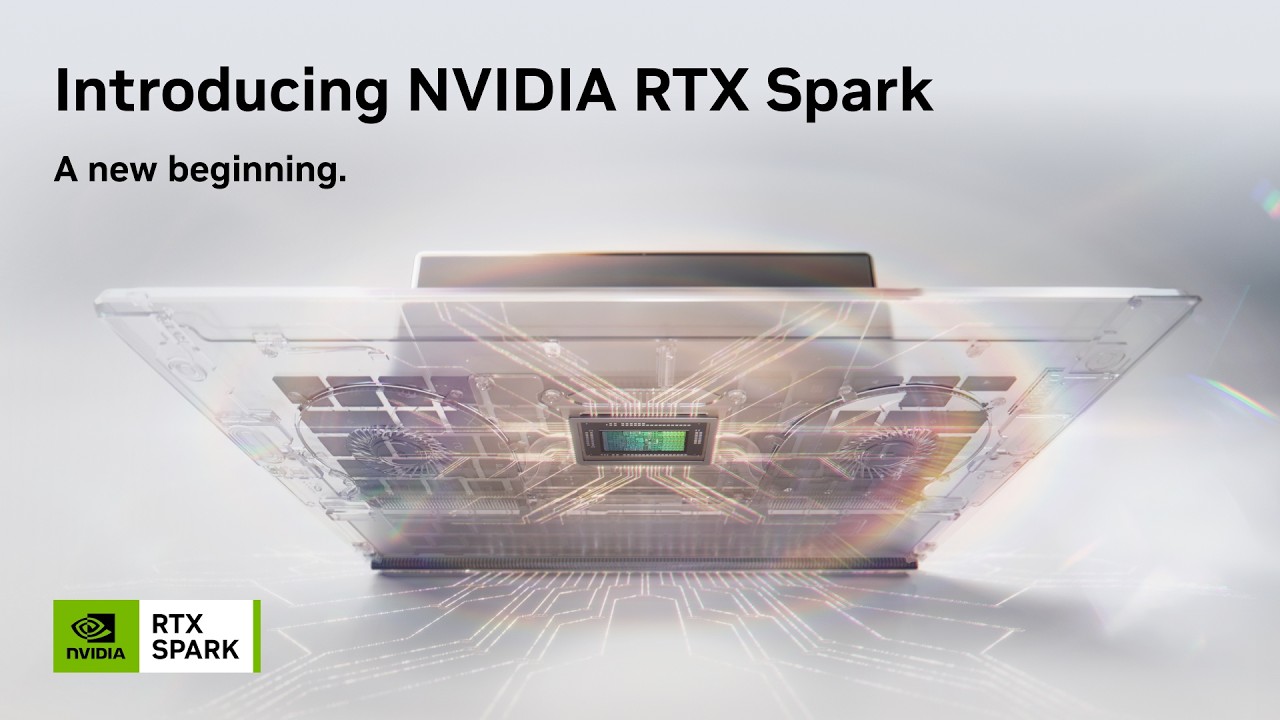
The Green Monster Flexes Its Muscles: Super Specs on a Single Chip
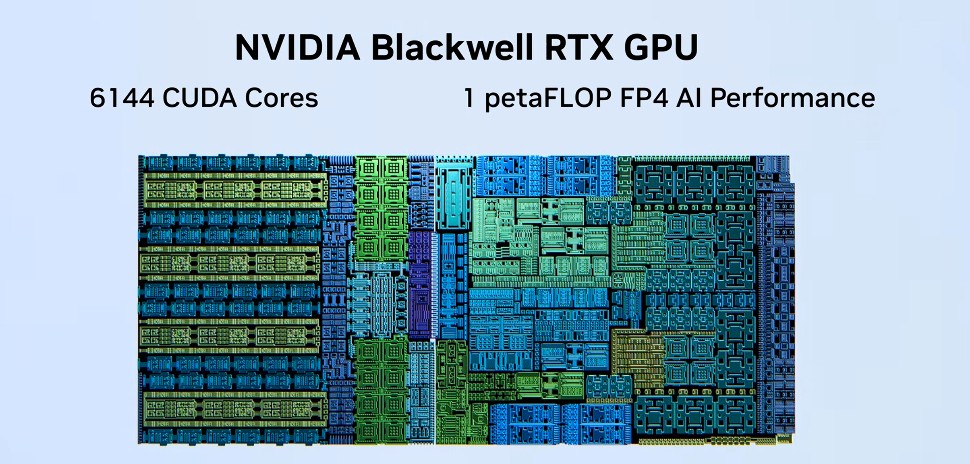
NVIDIA didn’t just stop at delivering a traditional processor; it poured all its expertise into a single chip manufactured using TSMC’s 3nm process. The new chip, previously known in leaks by the codename “N1X,” comes loaded with a 20-core Grace CPU (developed in collaboration with MediaTek), supported by a super-powerful Blackwell RTX GPU containing 6,144 CUDA cores, in addition to an NPU dedicated to artificial intelligence and up to 128GB of LPDDR5X unified memory.
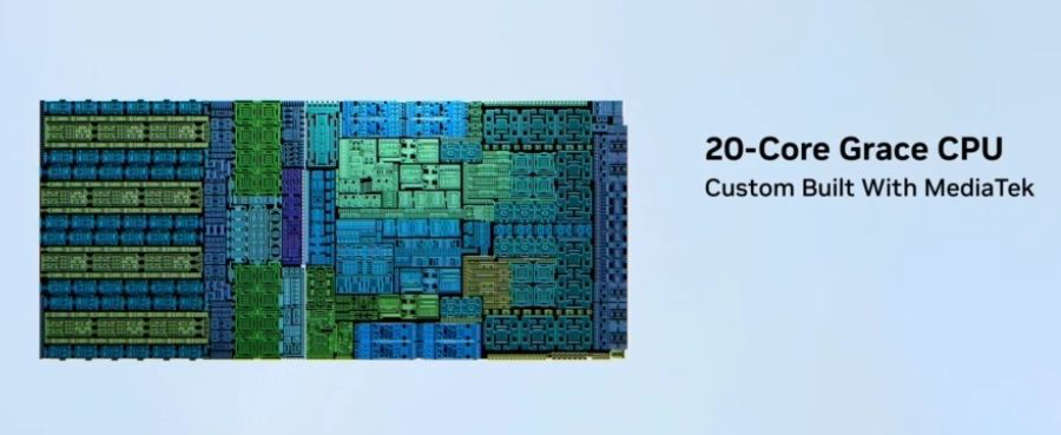
This terrifying combination means one thing: NVIDIA is bringing the concept of Unified Memory, which distinguished Apple, to the Windows camp with brute force. Thanks to this infrastructure, NVIDIA announced that the RTX Spark processor is capable of delivering stunning AI performance reaching 1 petaFLOP, a number with many zeros that puts competitors in a very critical position.
What Can RTX Spark Actually Do?
The numbers on paper look amazing, but actual performance is what matters to the user. NVIDIA confirms that its new processor is capable of running massive AI models containing 120 billion parameters entirely locally without the need for an internet connection. Not only that, but the chip can handle 12K video editing in 4:2:2 format with complete smoothness, and process 3D rendering for scenes exceeding 90GB in size!
As for gamers, the RTX Spark promises to run next-generation (AAA) games at 1440p resolution with frame rates exceeding 100 FPS, thanks to the activation of DLSS 4.5 and Frame Generation, technologies that were previously exclusive to large, power-hungry desktop NVIDIA cards.
A Terrifying Software Alliance to Support the New Platform
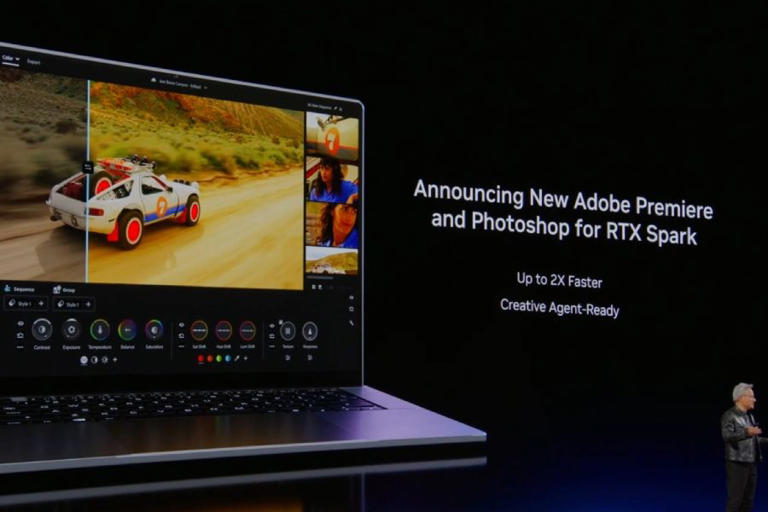
Powerful hardware is worthless without software to support it, and NVIDIA knows this well. The new chip comes fully supported by NVIDIA’s famous software suite such as CUDA, TensorRT, DLSS 4.5, Reflex, and G-SYNC, in addition to RTX Ray Tracing. Most importantly, programming giants have joined the alliance; Adobe announced the complete restructuring of its famous software like Photoshop and Premiere to support the RTX Spark processor, ensuring a performance leap of up to double the current speed in graphics processing and AI.
Other creative companies haven’t stood idly by; leading names such as Blackmagic Design (developer of DaVinci Resolve), Blender, CapCut, ComfyUI, and OTOY have joined to support the chip natively to provide the best possible performance for content creators and professionals.
Thin, Powerful PCs Coming This Fall
If you think these specs require a massive computer with fans that make noise like jet engines, think again. NVIDIA promises that devices running on the RTX Spark processor will be ultra-thin, with a thickness not exceeding 14mm and a light weight of about 1.3kg (3 lbs). These PCs will be available with stunning OLED screens in 14 and 16-inch sizes and chassis precisely crafted from premium aluminum.
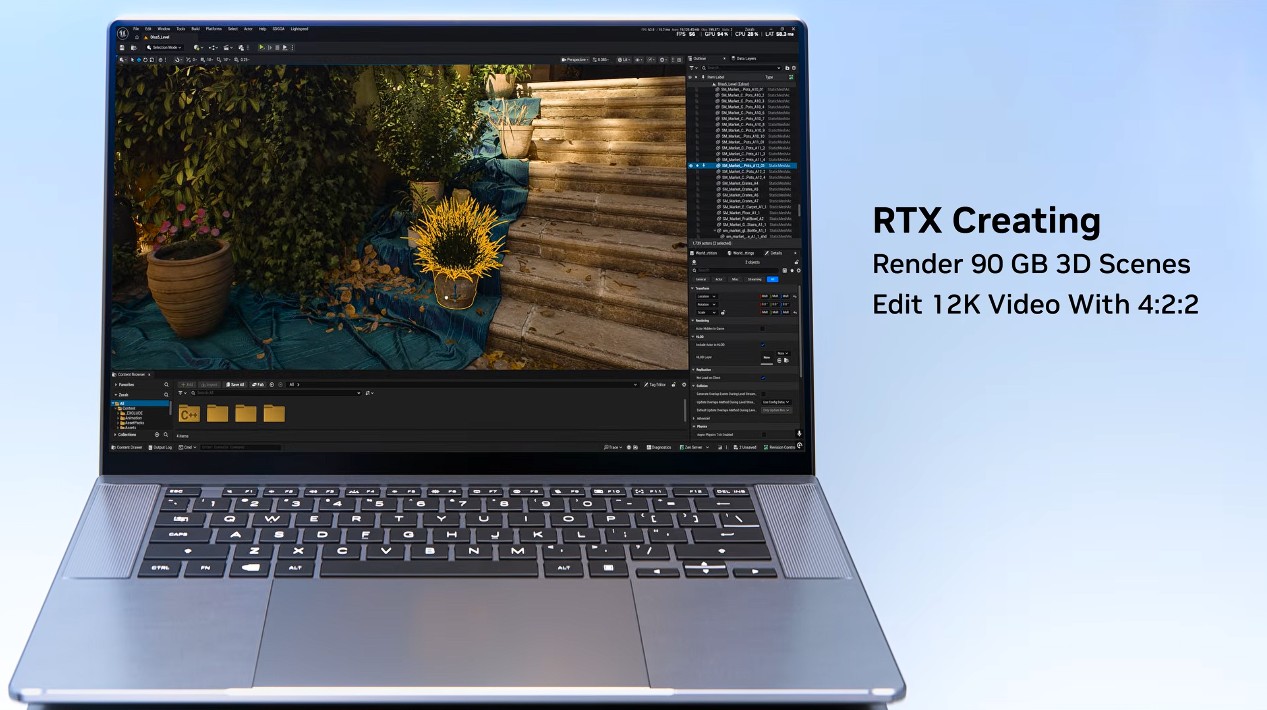
The good news is that we won’t wait long; the first laptops equipped with this processor will launch this fall from major global companies such as ASUS, Dell, HP, Lenovo, the Microsoft Surface family, and MSI. Although official benchmark numbers are missing so far, the leaks are enough to heat up over the coming weeks to reveal the true power hidden in this processor’s arsenal.
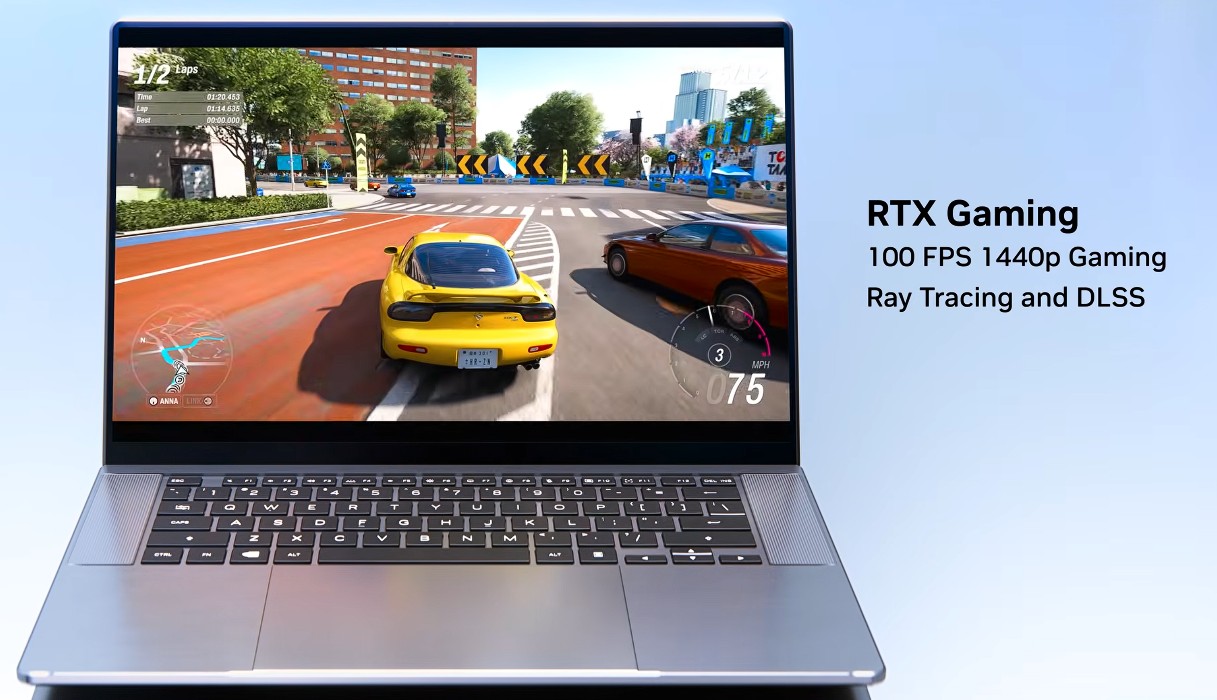
This move puts NVIDIA in direct confrontation not only with Apple and its legendary processors but also with Qualcomm, which dominated Arm-based Windows PCs over the past year with the Snapdragon X series. The game has become more exciting, and the biggest beneficiary is the user looking for massive performance without sacrificing battery life and thinness.
Source:
Leave a Reply