Apple has officially announced via a press release the largest and boldest update in the history of its smallest tablet, revealing the new iPad mini equipped with a superior OLED screen and the A20 Pro chip, alongside an unprecedented leap that makes it the first iPad in history to support water and dust resistance with an official rating. This update does not just redefine the power of compact devices; it brings long-awaited radical changes, accompanied by some controversial decisions, as is typical for Apple with its new devices.
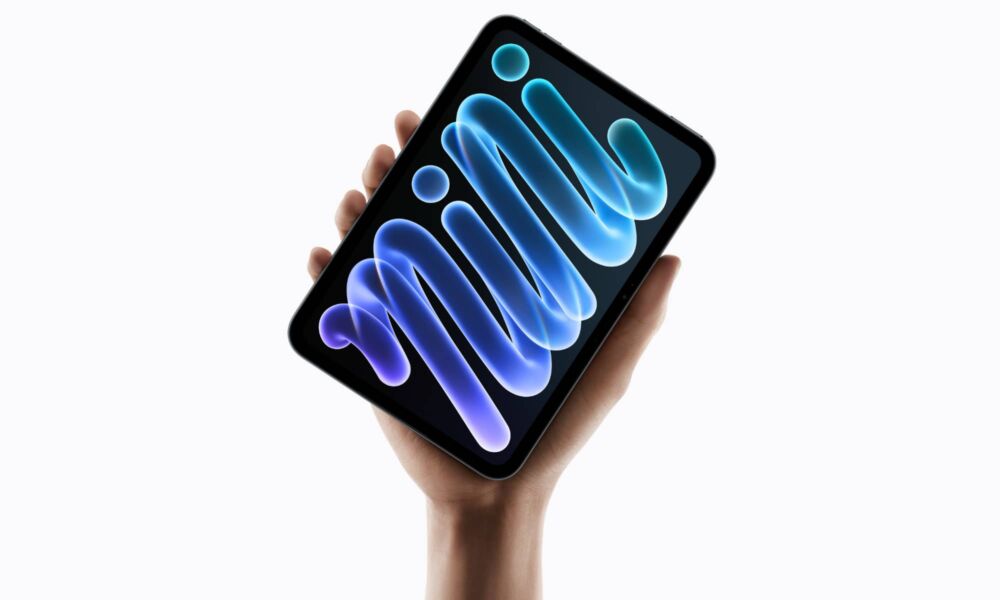
OLED screen with a larger size and Super Retina XDR technology
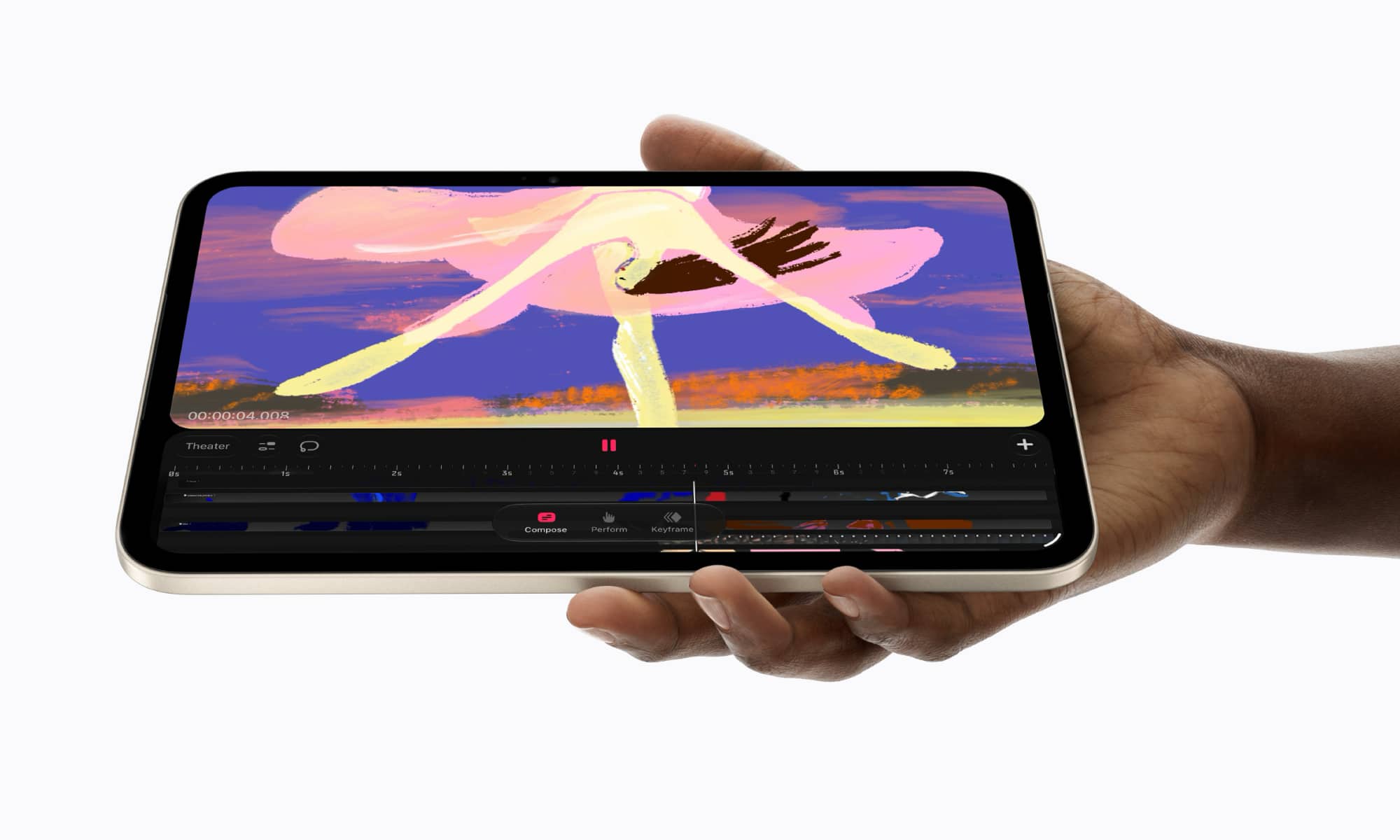
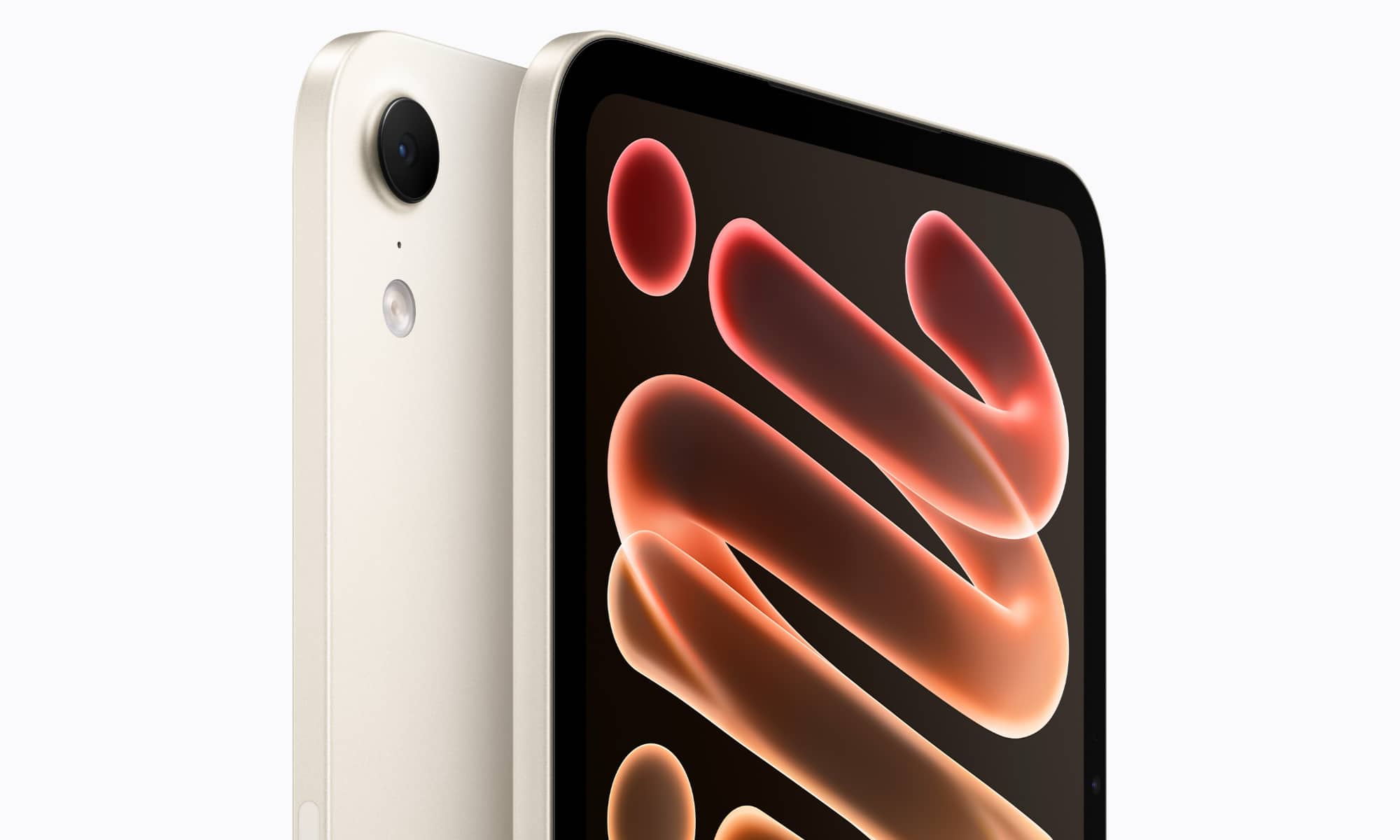
The most prominent upgrade that captured attention is the screen; the device not only received a stunning OLED display, but the screen size also increased from 8.3 inches to 8.5 inches with reduced surrounding bezels. Apple calls this screen Super Retina XDR, marking the first time an iPad has received this designation, which was previously associated with advanced iPhone models. This screen differs from the Ultra Retina XDR display found in the iPad Pro, which relies on dual-stacked OLED technology.
The new OLED screen offers a massive leap in brightness, reaching a peak of 1200 nits, which is more than double the brightness of the previous generation, making the tablet more comfortable to use under direct sunlight. Conversely, the screen can lower its brightness to just one nit to provide a completely comfortable experience for the eyes in dark environments. Apple also offers, for the first time, a Nano-texture glass option for an additional $100 for those wishing to diffuse reflections.

However, the joy of the new screen will not be complete for fans of ultra-smoothness; Apple has settled the ongoing debate and kept the refresh rate at the traditional 60Hz without support for 120Hz ProMotion technology. Although leaks indicated that Apple had tested high-refresh-rate screens for the small device, the company preferred to maintain a clear distinction between the mini category and the Pro category, just as it does with its standard phones that feature Super Retina XDR screens but at a fixed 60Hz rate.
Acoustic Display technology and IP67 water resistance for the first time
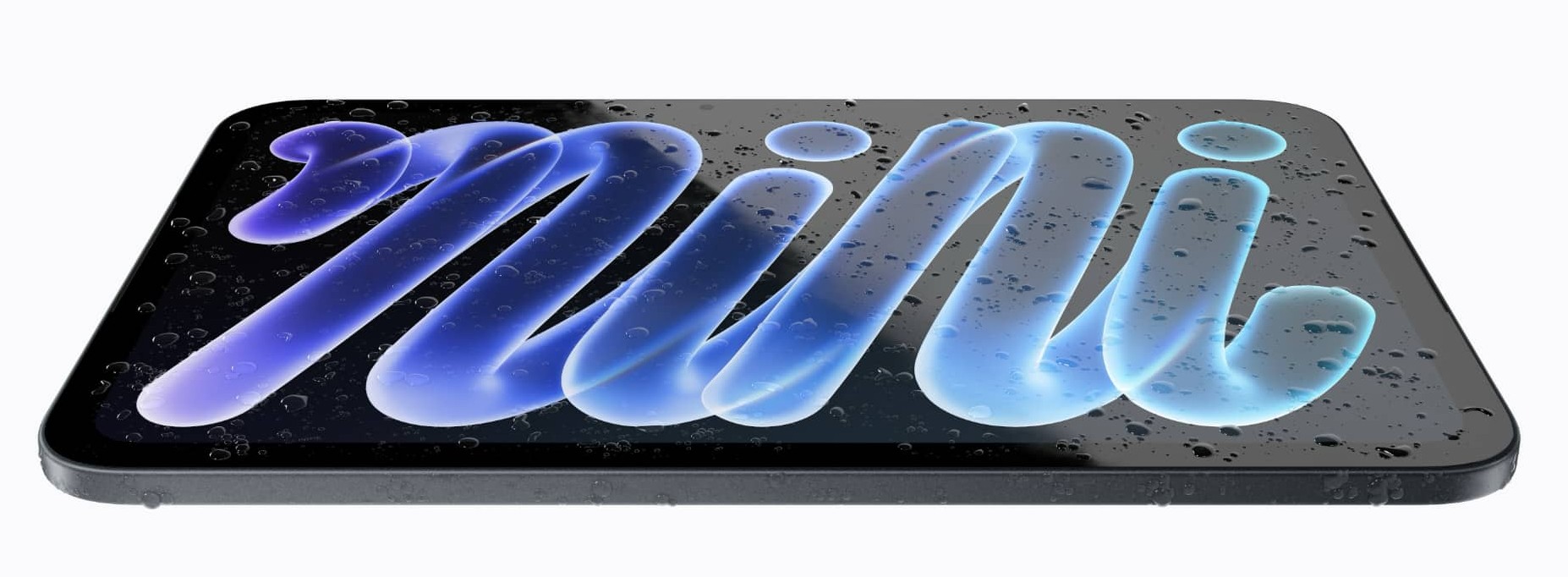
In addition to the dazzling colors and infinite contrast of OLED technology, the screen hides a unique engineering innovation that Apple calls “Acoustic Display.” Instead of relying entirely on traditional speaker grilles that allow liquid ingress, Apple has integrated special audio amplifiers that work by vibrating through the screen to produce deeper and more powerful bass, while discreetly hiding high-frequency tweeters between the glass and the aluminum chassis surrounding the device.
This smart innovation, which turned the screen into part of the audio system, enabled Apple to seal the usual ports and achieve a historic milestone: granting the iPad mini an IP67 rating for water and dust resistance. Thus, this tablet becomes the first iPad produced by Apple capable of withstanding water splashes and accidental drops into liquids without fear, opening up entirely new horizons for its use by pools, in kitchens, and in harsh outdoor environments.
Supercharged hardware with the A20 Pro chip and a strange memory detail
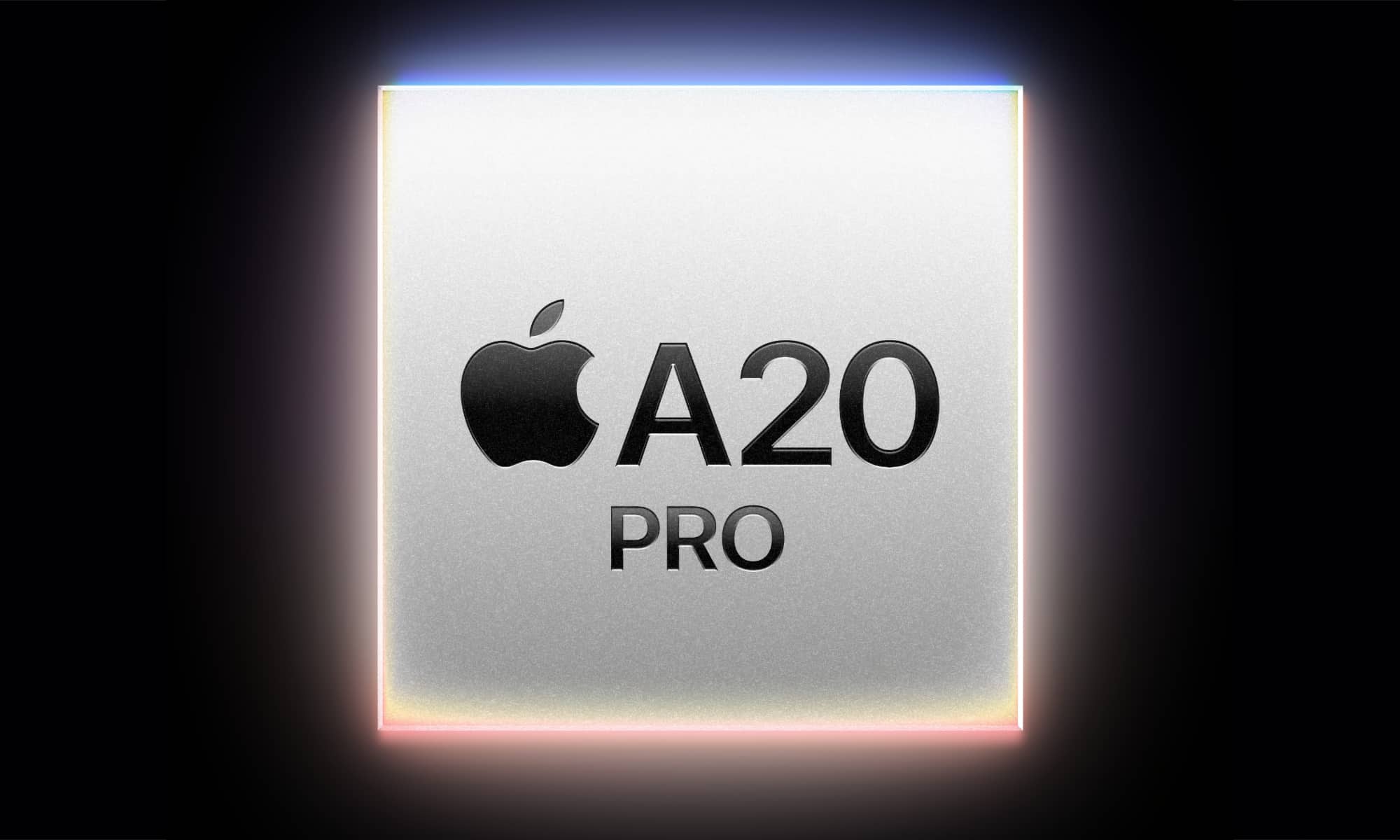
The device officially bears the name iPad mini (A20 Pro), clearly announcing its adoption of Apple’s latest advanced processors, the same chip used in the iPhone 18 Pro and iPhone Duo devices. This processor gives the little beast superior processing capabilities for heavy tasks, such as multi-track video editing, handling generative AI, and playing massive games with extreme smoothness and speed.
However, Apple decided to apply the “Binned Chip” principle to storage capacities; only the 512GB model gets the full, uncompromised version of the A20 Pro chip with a 7-core GPU, a 6-core CPU, and a 32-core dual Neural Engine. As for the 128GB and 256GB models, they receive a chip with five computing cores after disabling one efficiency core, along with a 16-core single Neural Engine, a strategy clearly aimed at pushing professionals toward higher storage capacities.
Landscape camera and modern connectivity technologies

Apple has finally responded to user demands and moved the 12MP front camera, which supports Center Stage, to the long landscape edge instead of the vertical one. This shift ensures a natural appearance for the user during FaceTime calls and virtual meetings when the device is mounted in landscape mode, aligning it with the rest of the modern iPad lineup.
The rear camera maintained its 12MP resolution but received an Adaptive True Tone flash, which significantly contributes to improving night photos, the quality of scanning documents and paper files, and reducing annoying shadows during desktop photography.

In terms of wireless connectivity, the device is equipped with Apple’s new N1 wireless chip, which provides support for the latest advanced standards such as Wi-Fi 7, Bluetooth 6, and the Thread protocol for the smart home. The cellular data model also supports the C2 modem chip, limited to sub-6 GHz 5G frequencies while omitting mmWave bands, which is expected and familiar in tablets outside of extreme field use cases.
Prices, colors, and market availability date
The major upgrades came with an increase in price; the new iPad mini starts at $699 for the 128GB Wi-Fi model, while adding cellular connectivity costs an extra $150 as usual. The 256GB model starts at $799, while the 512GB model, containing the full version of the A20 Pro chip, reaches $999 for the Wi-Fi model and $1149 for the cellular model.
In a move that will sadden fans of vibrant colors, Apple has abandoned the previous multiple color options and settled for only two neutral colors: Midnight and Starlight. The device will be available for pre-order starting Wednesday, October 28, and will arrive in stores and in users’ hands on Friday, November 6.
Source:

Leave a Reply