When a giant company like Amazon decides to spend $11.6 billion to fully acquire a satellite communications firm, we are not just talking about an ordinary deal, but a reshuffling of the entire digital game. As part of this massive and surprising transaction, Amazon will acquire Apple’s 20% stake in Globalstar, a company famous for its satellite services. This major development raises important questions about the future of emergency and satellite messaging services relied upon by iPhone users around the world, who have long found this feature to be a lifeline when cellular coverage is lost.
Deal Details and the Secrets of the Grapefruit Subsidiary
Details of this acquisition were first revealed via PCMag through official documents submitted to the US Federal Communications Commission (FCC). The documents clarified that Amazon did not acquire the stake in a traditional manner; instead, it created a new subsidiary with the peculiar name ‘Grapefruit Acquisition Sub II’. This company will transfer all securities and voting rights that Apple obtained in Globalstar following its recent 2024 investment.
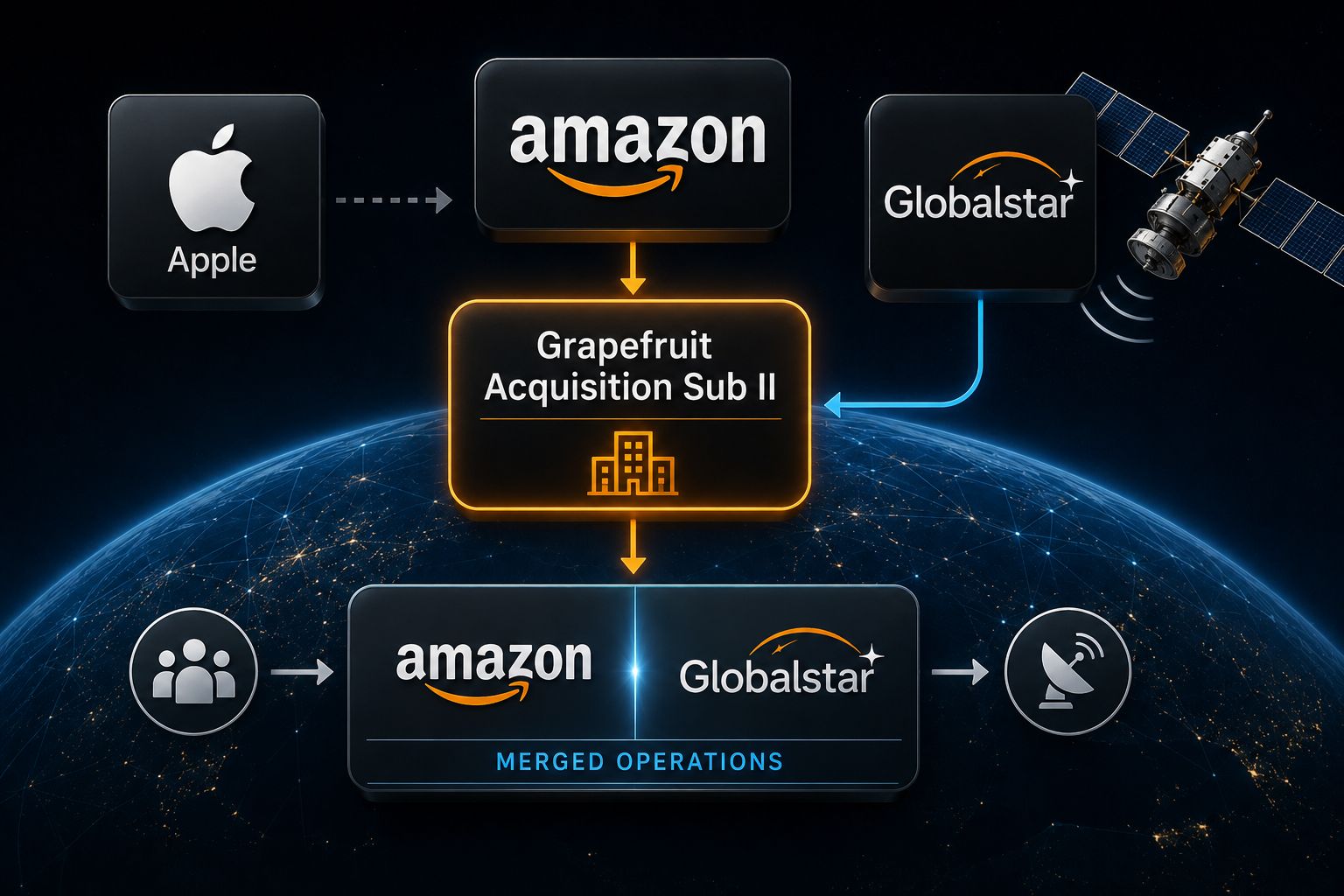
Although Apple has relinquished its direct stake to Amazon, this does not mean Apple is exiting the scene or backing away from providing satellite services to its users. Rather, it is a restructuring of the satellite network operator, with Apple remaining a key partner and beneficiary of this massive infrastructure.
The Future of Emergency and Satellite Messaging Features for iPhone
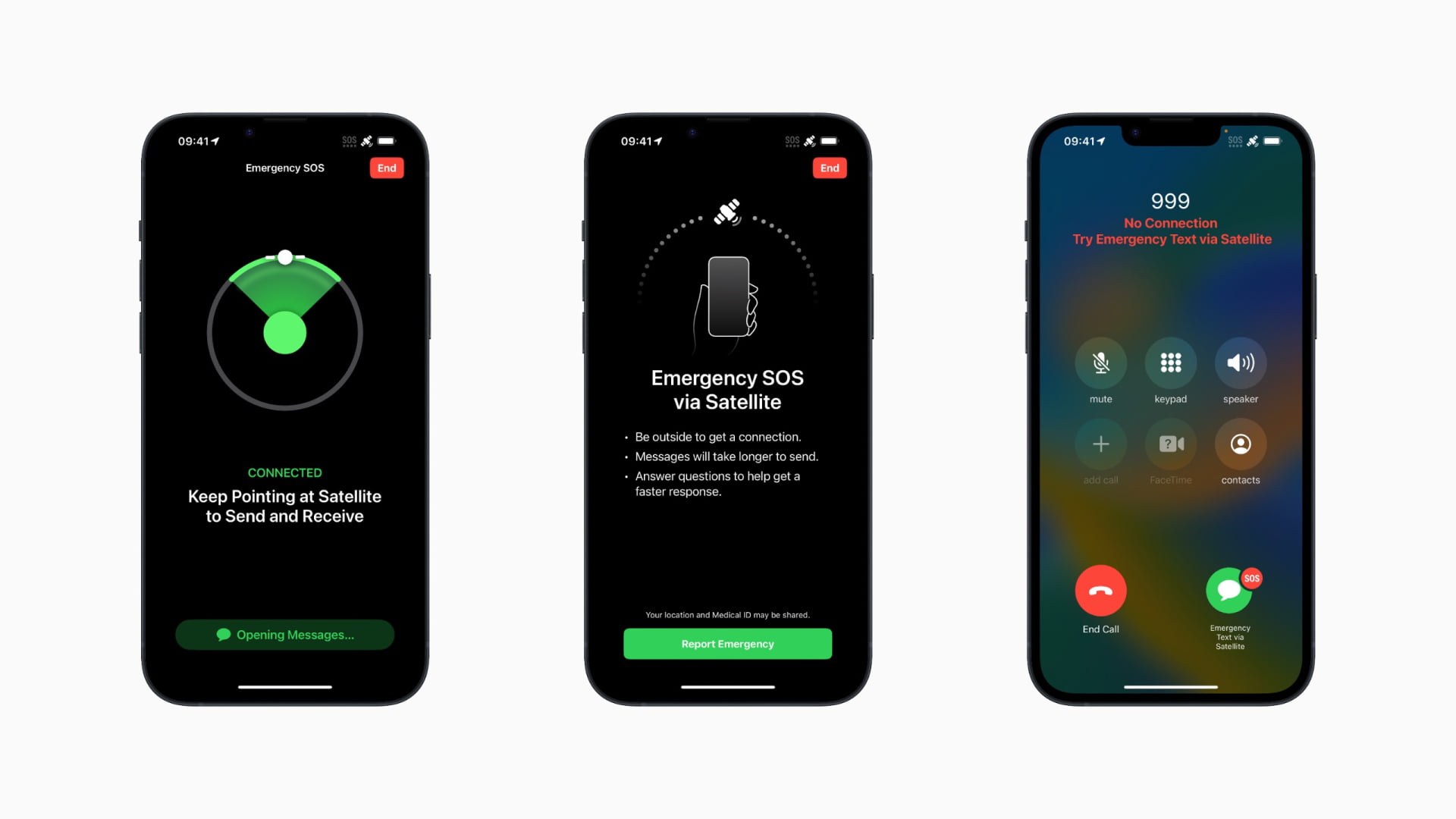
The good news for millions of users is that Emergency SOS via satellite and Messages via satellite features will not be negatively affected by this deal. On the contrary, Amazon has clearly stated that it plans to continue supporting and improving the technological infrastructure behind these vital services for iPhone users. Amazon aims to inject additional investments and perform extensive technical upgrades to enhance the operation of the mobile satellite service network, which operates on 1.6/2.4 GHz frequencies.
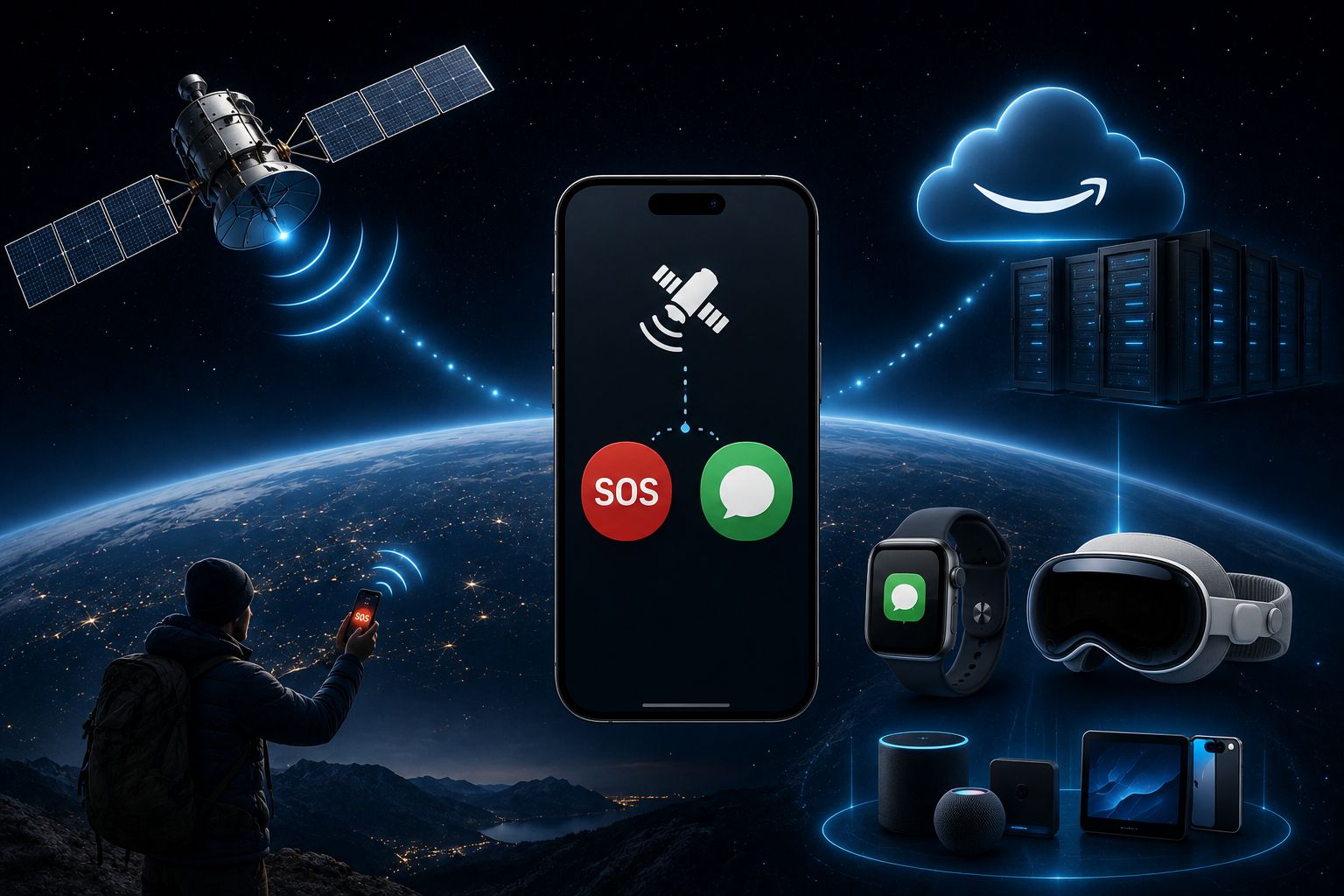
While Apple continues to dazzle the world with its other innovations, such as working on the second-generation Apple Vision Pro and expanding its smart ecosystem, it is well aware that the safety of iPhone users remains its top priority, which is guaranteed by its ongoing partnership with the new operator, Globalstar, under Amazon’s management.
Amazon’s Ambitions in Space and the C-3 Satellite Constellation
Amazon’s ambitions do not stop at managing what already exists; the company seeks to accelerate work on developing Globalstar’s next-generation satellite constellation, known as C-3, which consists of 48 advanced satellites. Additionally, Amazon intends to deploy an advanced satellite communications network that enables direct-to-device connectivity, working alongside Globalstar’s current systems.
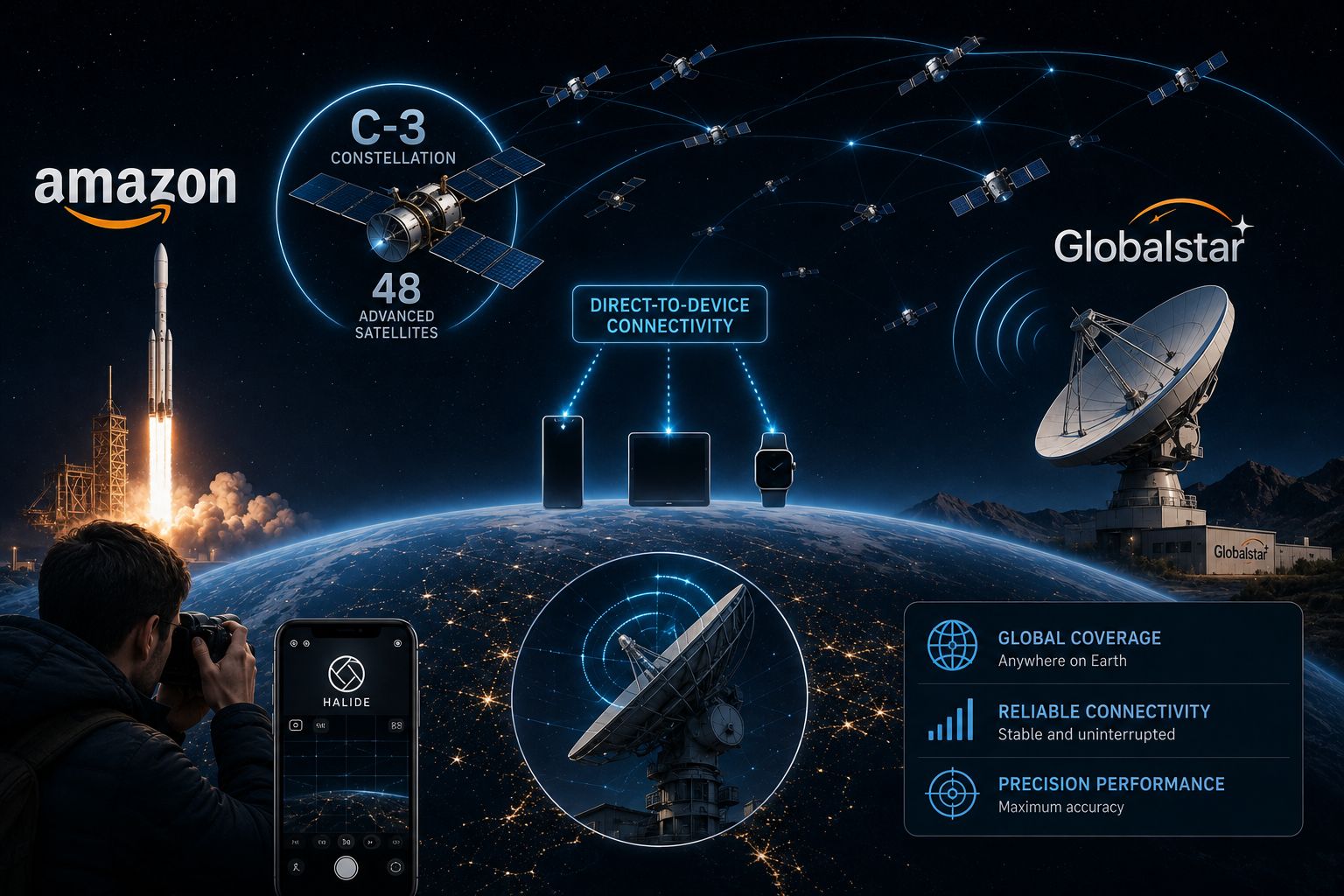
Just as professional photographers look for fine details in their photos using professional and advanced editing apps like the famous Halide app, Amazon seeks to tune its satellite antennas with the highest possible precision to provide stable, obstruction-free wireless connectivity anywhere on planet Earth.
Higher Connection Speeds and Revolutionary Phased-Array Antennas
According to FCC documents, the new satellite system designed by Amazon will rely on advanced phased-array antenna technology operating within the L-band and S-band frequencies. This technology ensures significantly faster connection times, greater data capacity, and improved signal quality to ensure connectivity is not lost even in the worst weather or environmental conditions.
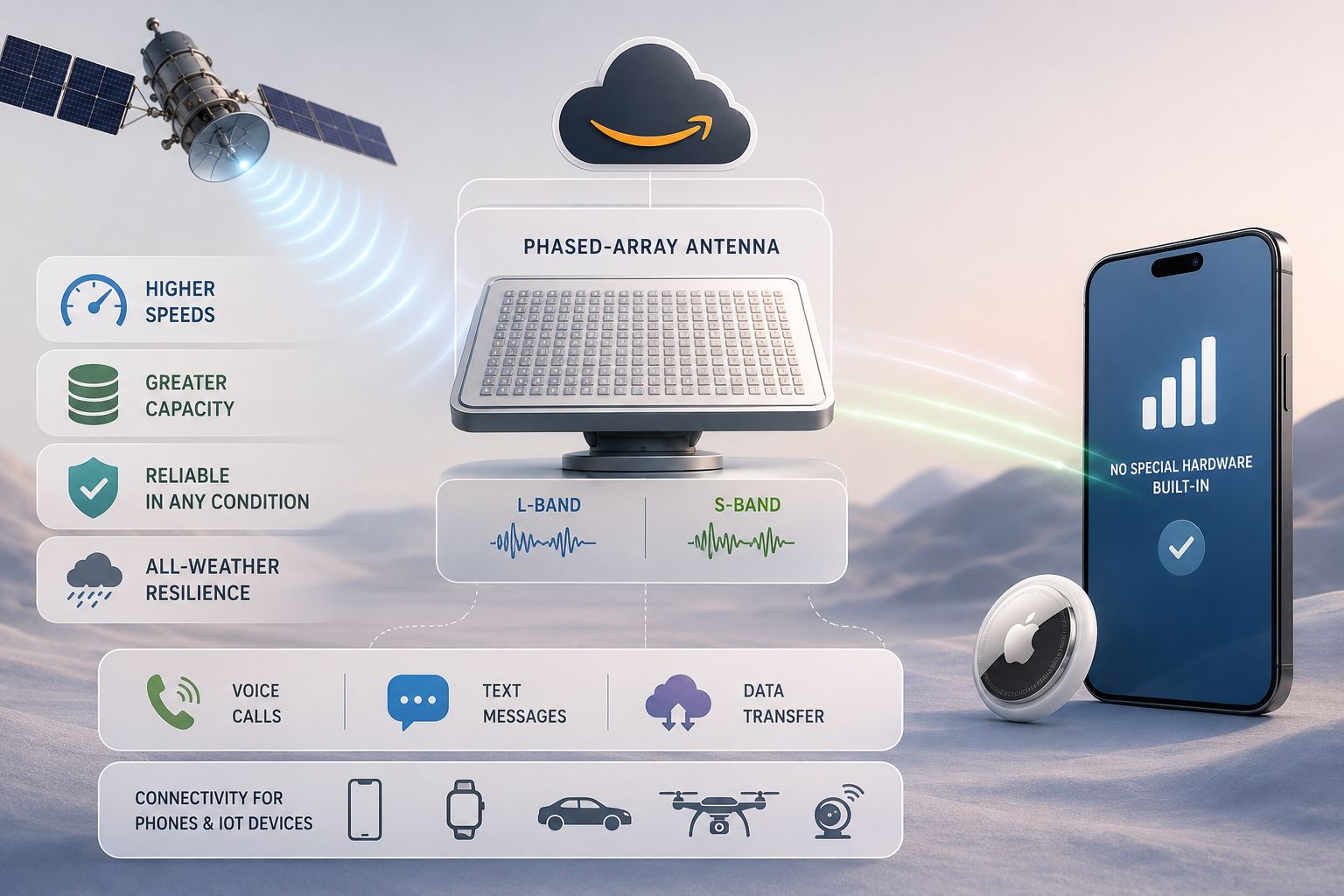
Amazon’s ultimate, long-term goal is to provide robust connectivity services including voice calls, text messaging, and data exchange for compatible phones and Internet of Things (IoT) devices without the need for any special hardware or additional components embedded in the phone. This approach reminds us of how Apple develops its small devices like the AirTag, offering integrated software and hardware solutions that make tracking and connectivity extremely easy with minimal power consumption.
The Great Competition in the Smartphone Satellite Connectivity Market
This massive deal puts Amazon in direct, head-to-head competition with other giants in this exploding market, led by Elon Musk’s SpaceX with its Starlink network, in addition to emerging companies like AST SpaceMobile and Lynk. This new conflict aims for total dominance over direct-to-phone satellite connectivity services.
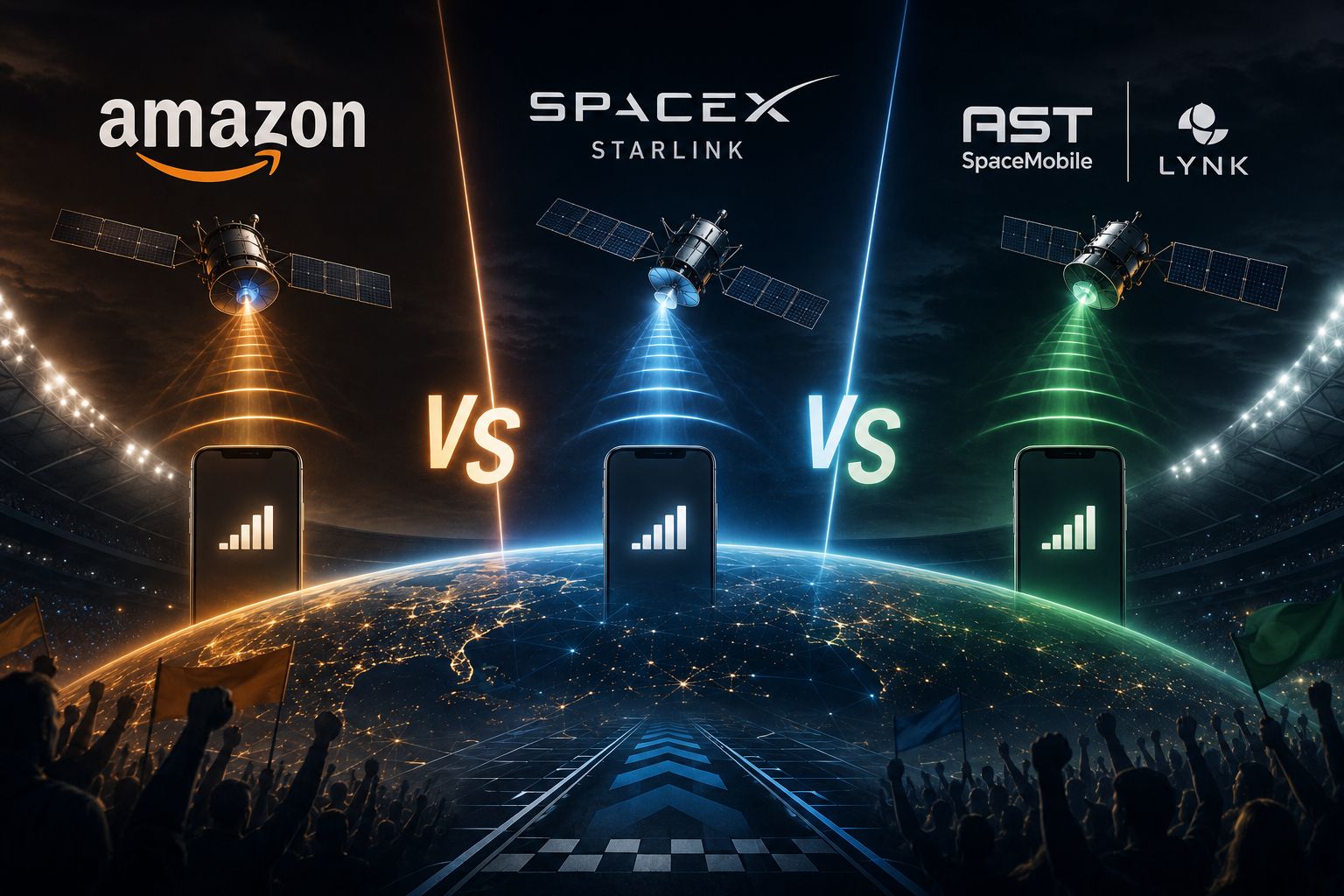
The race here is much like the intense competition between media platforms like Roku and Apple TV to attract audience attention, or the burning enthusiasm in hot sports coverage provided by the After the Whistle podcast, where everyone does their best to win user trust and provide the highest quality and most reliable service.
With the significant software development we are seeing in operating systems like macOS Sequoia and the deep integration between devices, permanent and reliable satellite connectivity will represent the backbone upon which all these connected technologies rely to ensure user productivity and safety anywhere.

Even previous versions like macOS Sonoma focused heavily on improving the cloud work experience and real-time data synchronization. Now, with an advanced satellite network managed by Amazon in cooperation with Apple, the idea of losing coverage or digital isolation will soon become a distant memory.
Amazon assures regulators that it ultimately seeks to provide satellite connectivity services for smartphones and mobile devices ‘across multiple operator networks and different manufacturers’ globally. This means that what began as an exclusive feature on iPhone devices may soon turn into a global standard supported by Amazon for all phones, opening a new and exciting chapter in the history of wireless communications.
Source:
Leave a Reply