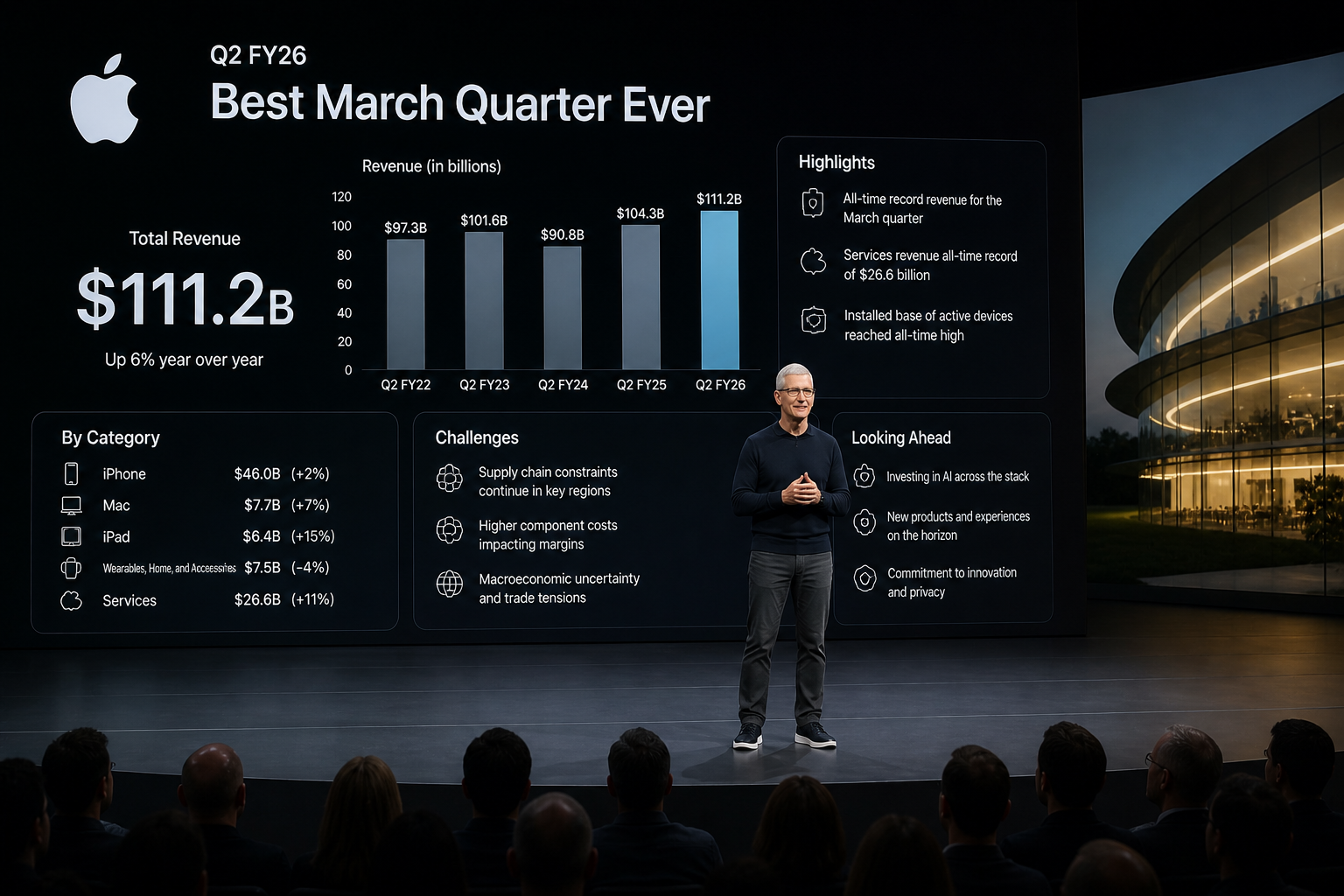
As is its custom in impressing analysts and investors alike, Apple revealed its financial results for the second fiscal quarter of 2026 (the first calendar quarter), achieving the best March quarter in its history with revenues of $111.2 billion. Despite the astronomical figures, the discussion was not without mention of supply chain challenges and rising component costs, alongside exciting details about the future of leadership at the company and artificial intelligence.
A Resounding Success for the iPhone 17 Family Despite Obstacles
Tim Cook confirmed that demand for the new iPhone models was “beyond expectations,” noting that the iPhone 17 family has now become the most popular phone lineup in the company’s history. However, the road was not paved with roses, as Apple faced supply constraints that impacted final revenues. Had the requested quantities been available, the figures would have been even more massive than they are now.

The reason for this shortage is primarily due to the A19 and A19 Pro processors, as TSMC uses advanced 3nm technology to produce these chips—the same technology experiencing huge demand from other AI sectors, creating a kind of “bottleneck” in production. Despite this, iPhone revenue reached $57 billion, a 22% increase compared to last year.
A New Era: John Ternus Prepares to Lead the Ship
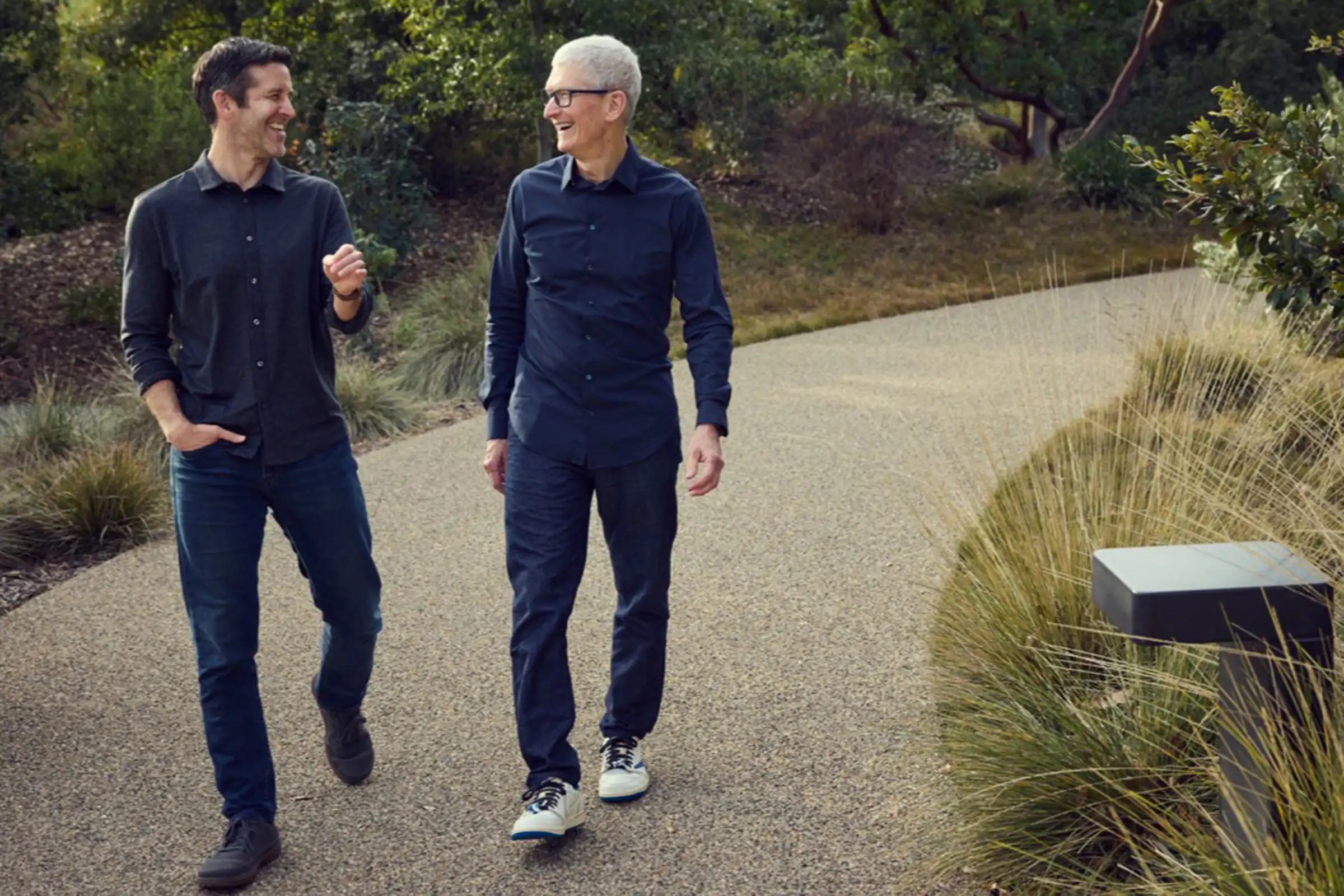
The most emotional moment of the call was Tim Cook’s talk about his successor, John Ternus, who will take over as CEO on September 1, 2026. Cook spared no effort in praising Ternus, describing him as a brilliant engineer, a deep thinker, and a natural leader, affirming that there is no person on this planet he trusts more than John to lead Apple into the future.
For his part, Ternus spoke with a tone full of optimism, noting that Apple has an amazing roadmap for upcoming products. Although he refused to reveal details, he described the current time as the most exciting in his 25-year career at Apple, confirming that the opportunities available to the company are endless.
Mac and AI: An Unexpected Love Affair
The Mac segment achieved revenues of $8.4 billion, a 6% increase from the previous year. What is interesting here is the great success of the recently launched “MacBook Neo,” where quantities sold out in markets and shipping times reached several weeks. The Mac mini and Mac Studio also saw unexpected demand, and the reason? Artificial intelligence.
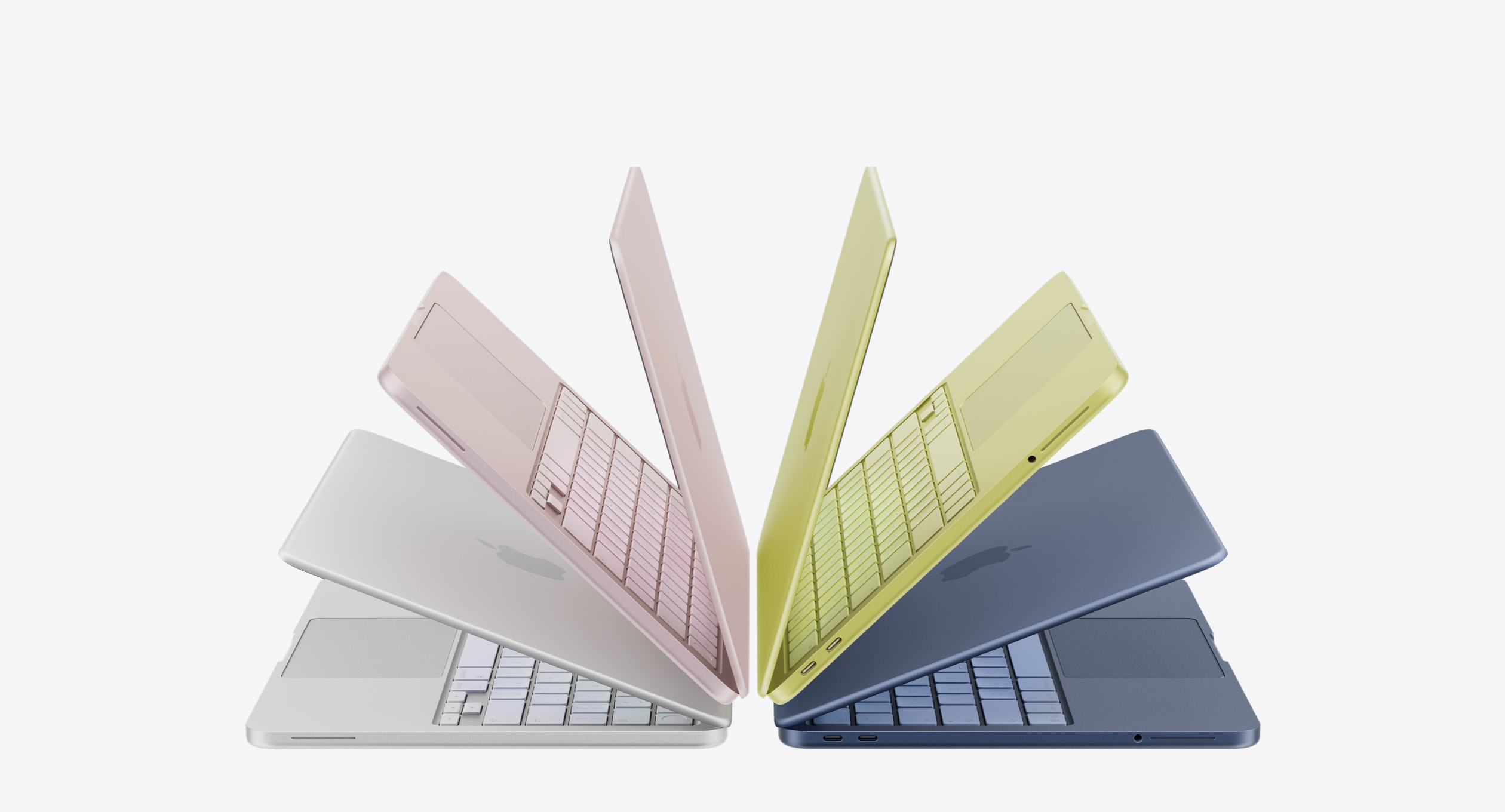
Tim Cook admitted that Apple underestimated the demand for the Mac mini and Mac Studio, as users quickly discovered that these devices represent amazing platforms for AI tools and Agentic Tools. This growing demand has led Apple to expect continued supply shortages for these devices for several months to come until a balance between supply and demand is achieved.
Memory Costs and AI as a Strategic Investment
Tim Cook warned that Apple has begun to face a noticeable rise in memory costs, something expected to worsen in the next quarter and beyond, which could affect profit margins. In a related context, Kevan Parekh confirmed that AI is a “critically important” area of investment, as the company plans to continue investing in it cumulatively above its usual R&D budgets.
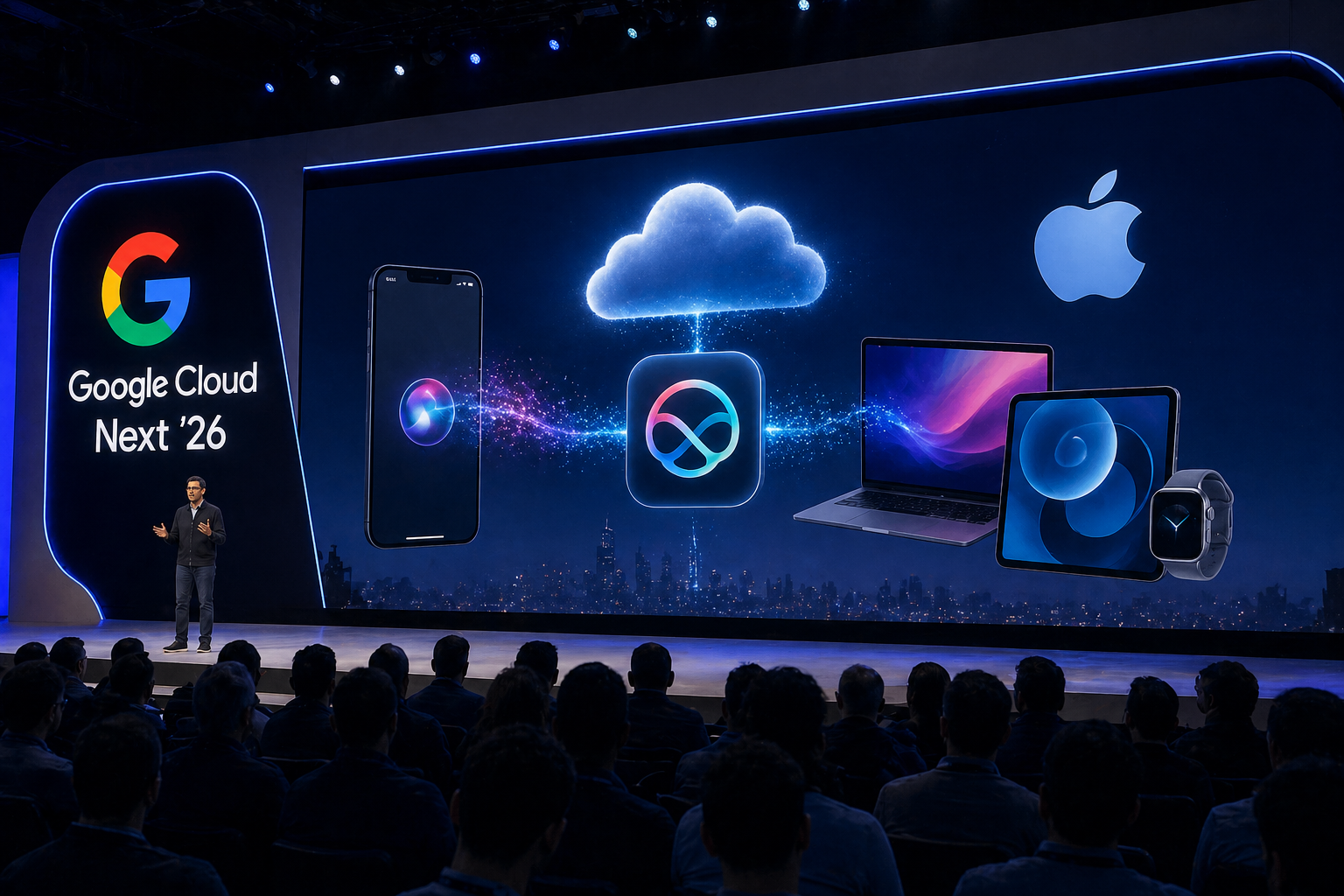
As for the collaboration with Google, Cook indicated that things are going well, expressing the company’s satisfaction with the work they are doing independently in this field as well. It seems Apple is following a dual strategy: building its own capabilities while leveraging strong partnerships to ensure its leadership in the heated AI race.
Quick Numbers from Behind the Scenes at Apple
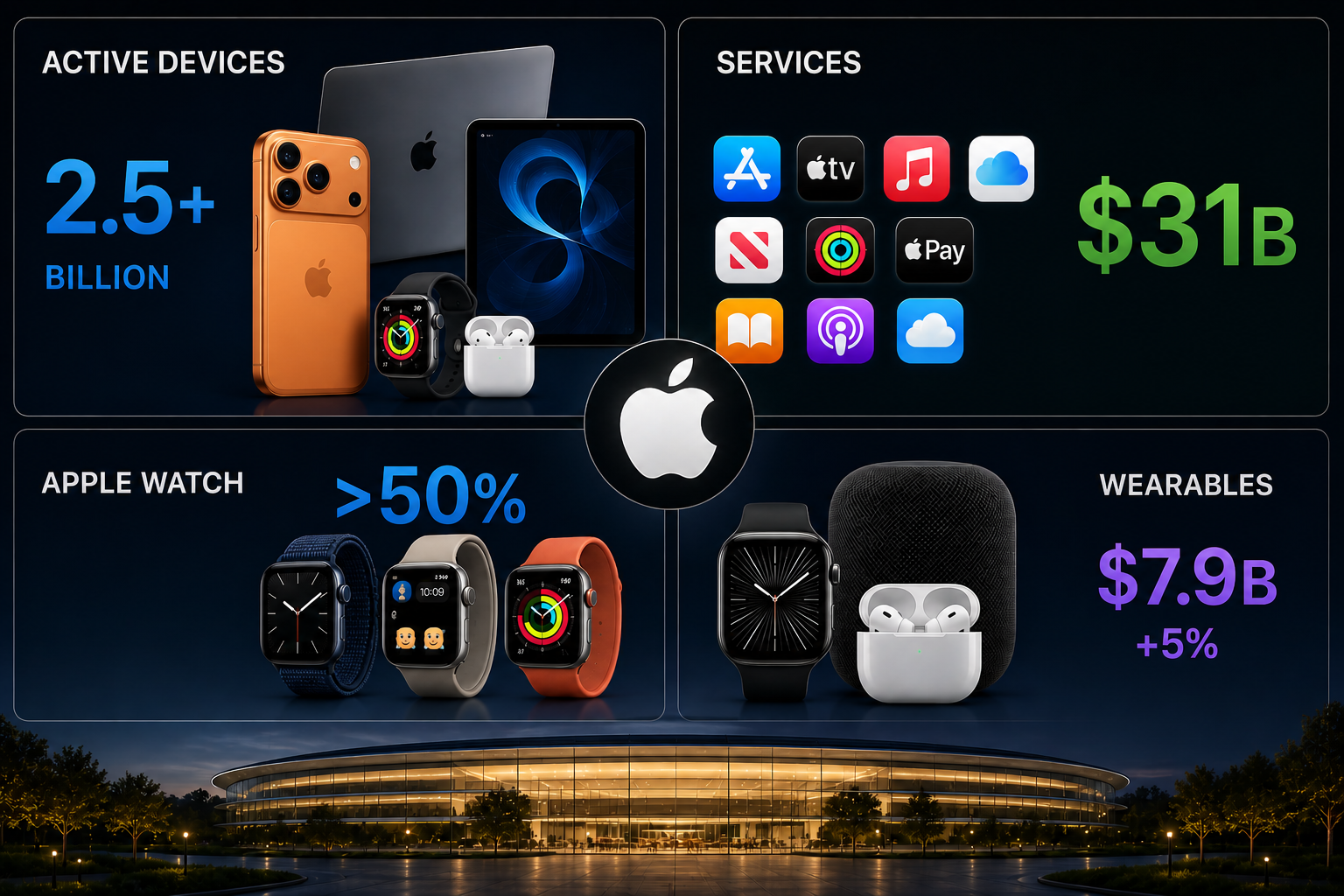
- Apple’s active device base reached a new record of over 2.5 billion devices globally.
- The services sector continues to be a gold mine for the company with record revenues of $31 billion.
- More than half of Apple Watch buyers during the quarter were new users of the product.
- Wearables sector revenue reached $7.9 billion, a 5% increase year-over-year.
Source:


Leave a Reply