Ever since Apple announced its major AI strategy, everyone has been asking: Did Apple sell its soul to Google? Is “Apple Intelligence” just a flashy interface for the Gemini assistant? Apple’s top executives, led by Craig Federighi, stepped up to set the record straight in their usual decisive and witty manner. In a lengthy technical discussion, the company revealed details about the architecture of its new Apple Foundation Models (AFM), confirming that the presence of Google’s assistant or its search engine infrastructure in the Apple system is “absolute zero.” Let’s dive into the fascinating details behind the scenes of this misunderstood collaboration.
The Ratio is Zero: Craig Federighi Clarifies the Truth
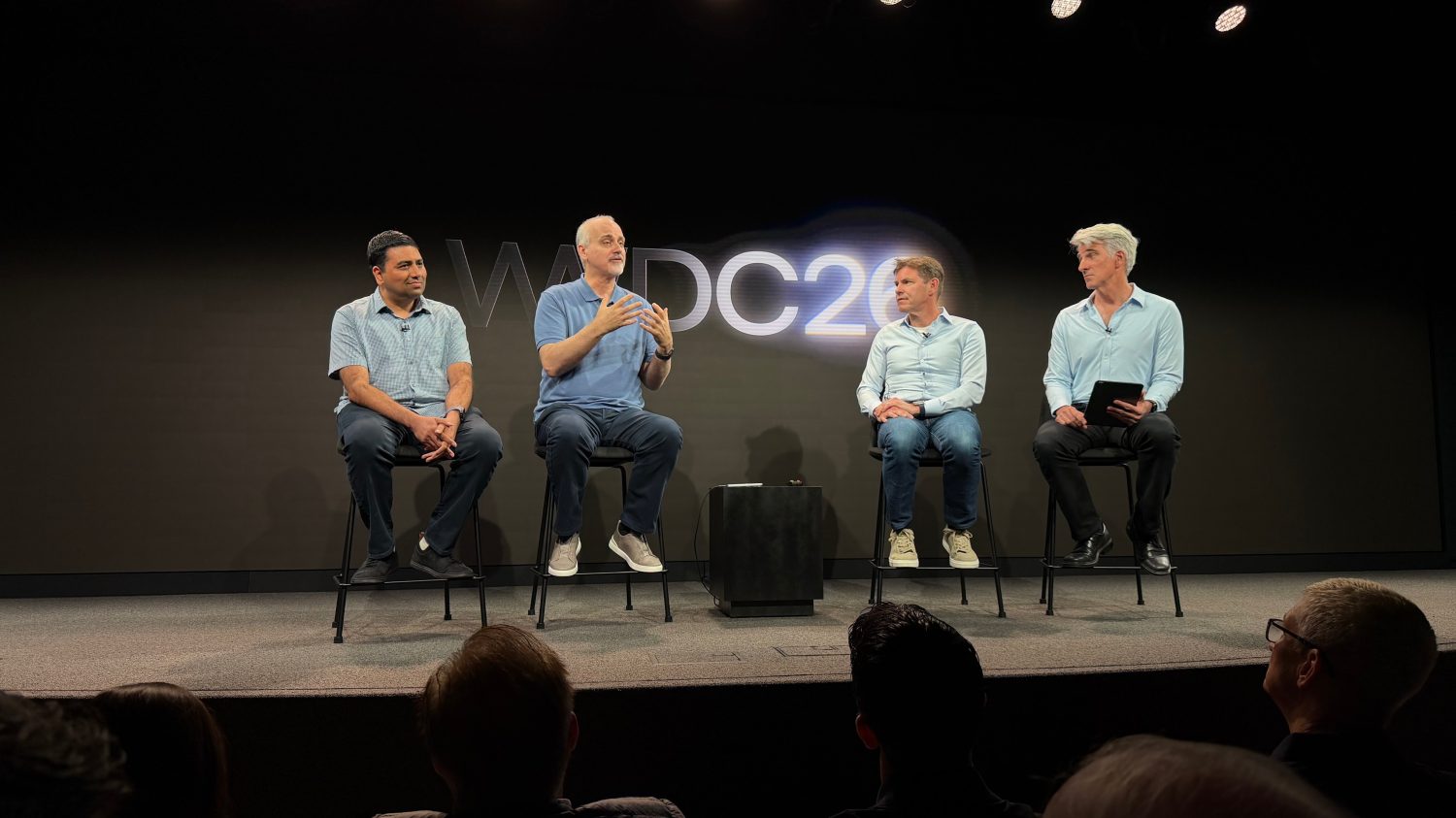
In a private technical session following the keynote, Craig Federighi, Apple’s Senior Vice President of Software Engineering, spoke alongside leaders of the AI and Siri personal assistant divisions. Federighi responded to the rumors clearly: “The amount of Google assistant we use is zero!” He explained that Apple does not use any of the Gemini models provided by Google to its customers, nor any client-side code in the iPhone operating system, nor even Google’s search engine infrastructure as a knowledge base for the system.
This powerful statement closes the door on skeptics who believed Apple had surrendered in the AI race and decided to simply repackage others’ technologies. Apple is building its own empire, in its usual way that focuses on privacy first and foremost.
The Apple Foundation Models (AFM) Family: Five Knights of Intelligence
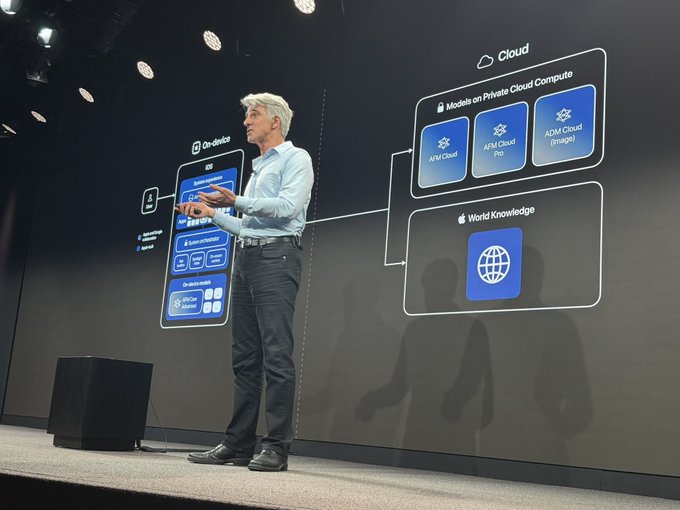
Amar Subramanya, Apple’s VP of AI, revealed details about the new model family, which is divided into two tiers: on-device models and private cloud models. The on-device models include the base AFM Core model and the advanced AFM Core Advanced model, which relies on a unique architecture that makes it fully multimodal to process expressive voices and complex requests directly on your iPhone without needing an internet connection.
On the cloud side, there are three models: AFM Cloud for fast operations, AFM Cloud Image responsible for generating and editing images and spatial reframing, and finally the biggest beast, AFM Cloud Pro, designed for complex tasks and advanced logical reasoning, which rivals the power of Google’s most powerful leading models.
How Did Google and Nvidia Help Train the Models?
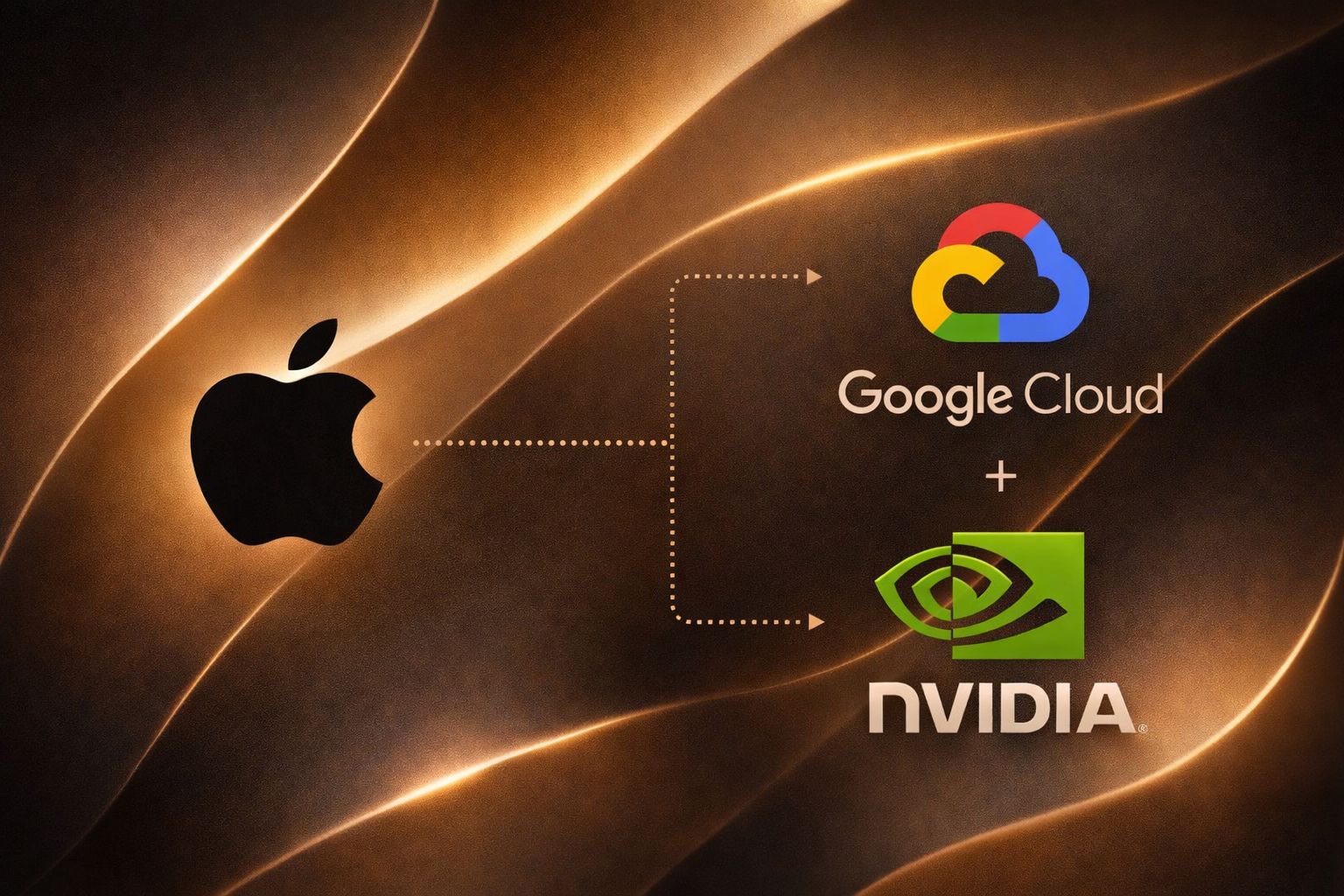
If the ratio is zero, what is the story behind the collaboration with Google? The truth lies in two stages: training and cloud infrastructure. The first four models were trained using Apple Silicon processors and custom Apple data, but they were refined and polished using the outputs of Gemini models (technically known as distillation). This means Apple benefited from the model’s outputs to teach its own models, and did not integrate the model itself into the system.
As for the most powerful model, AFM Cloud Pro, Apple wanted to use the latest Nvidia GPUs to handle heavy tasks. Since these chips are hosted in the Google cloud, Apple collaborated with both companies to expand its “Private Cloud Compute” infrastructure. To ensure absolute privacy, a modern security technology from Nvidia called “Ambiguous Confidential Compute” was used, which completely prevents Google servers from reading or accessing user data.
The Intelligent Orchestrator: How Does the System Work Together?
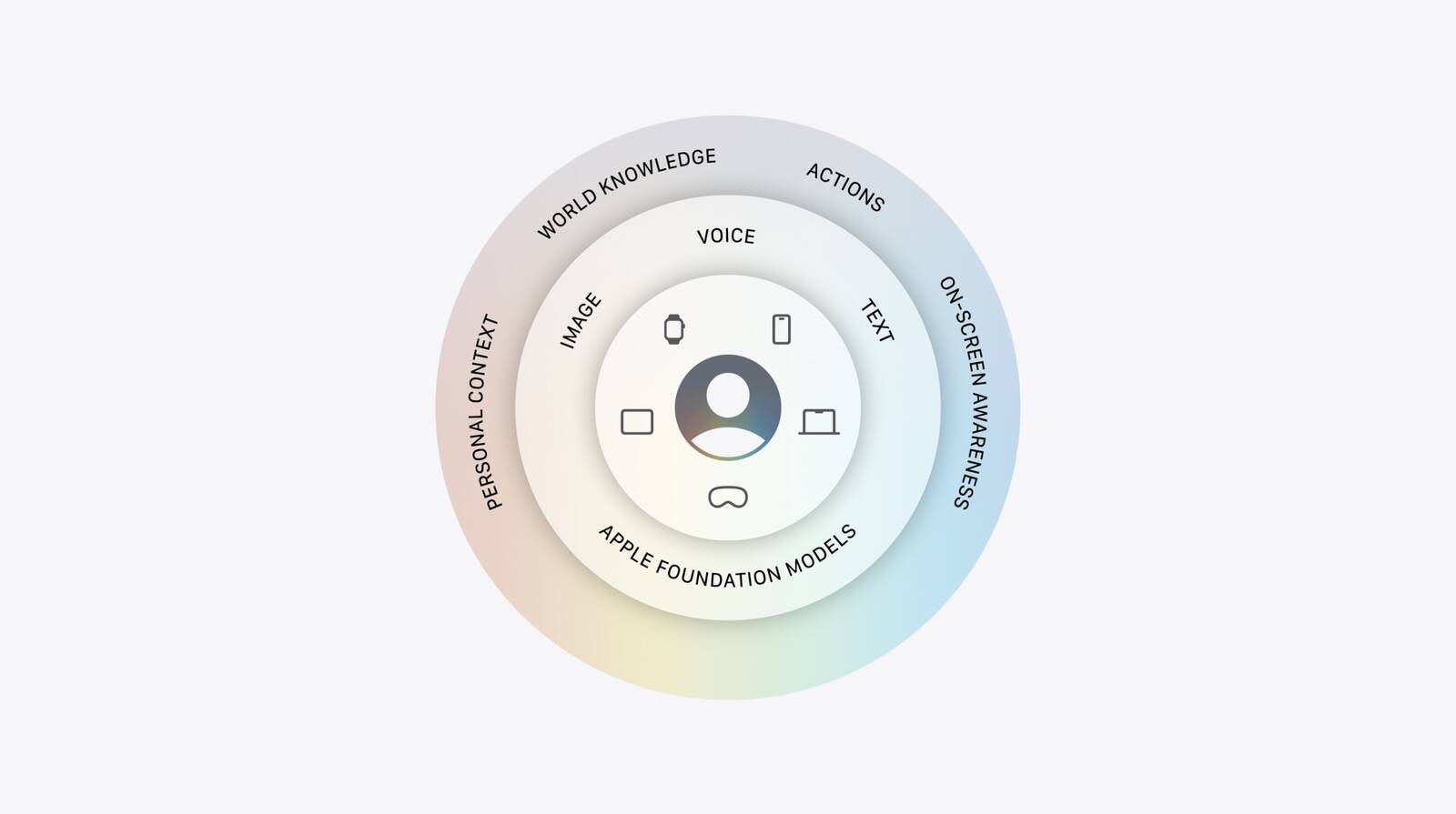
The orchestrator relies on integrated tools such as the “App Intents” toolbox to execute tasks within applications, the semantic Spotlight index to understand your personal context, and the World Knowledge Service that Apple has built over many years to answer general questions and current events without needing to rely on an external search engine.
Source:
Leave a Reply