Apple and OpenAI have entered one of the most sensitive legal confrontations in the tech sector, after the iPhone maker accused the developer of ChatGPT of misappropriating trade secrets and confidential information related to unannounced products and technologies. The case did not stop at OpenAI, as it also involved former Apple employees who moved to work for the AI company. Let us take you on a quick tour to learn the full details and the latest developments in Apple’s legal dispute against OpenAI.
How did the case begin?
The roots of the dispute go back to the lawsuit filed by Apple in July, which targeted OpenAI along with Tang Tan and Zhang Liu. Apple accused these parties of engaging in illegal conduct to access its proprietary information, and also stated that OpenAI asked questions about secret project details during job interviews.
Tan, who became the head of hardware at OpenAI after a 24-year career at Apple—including serving as Vice President of Design responsible for products like the iPhone and the Apple Watch—was accused of systematically using Apple’s confidential information for the benefit of OpenAI.
As for Liu, who worked as a systems engineer at Apple, the company accuses him of failing to return his work laptop after moving to OpenAI and using it to download confidential technical documents.
The case also includes io Products, co-founded by Tan and former Apple design chief Jony Ive, which was acquired by OpenAI in 2025 for $6.5 billion. However, Ive himself is not named as a defendant in the lawsuit.
Apple believes that what it has discovered so far is only the tip of the iceberg, as it does not have full visibility into what is happening inside OpenAI behind closed doors. Conversely, OpenAI asserts that it is not interested in other companies’ secrets and that its focus is on developing innovative technologies that serve users around the world.
OpenAI denies the accusations
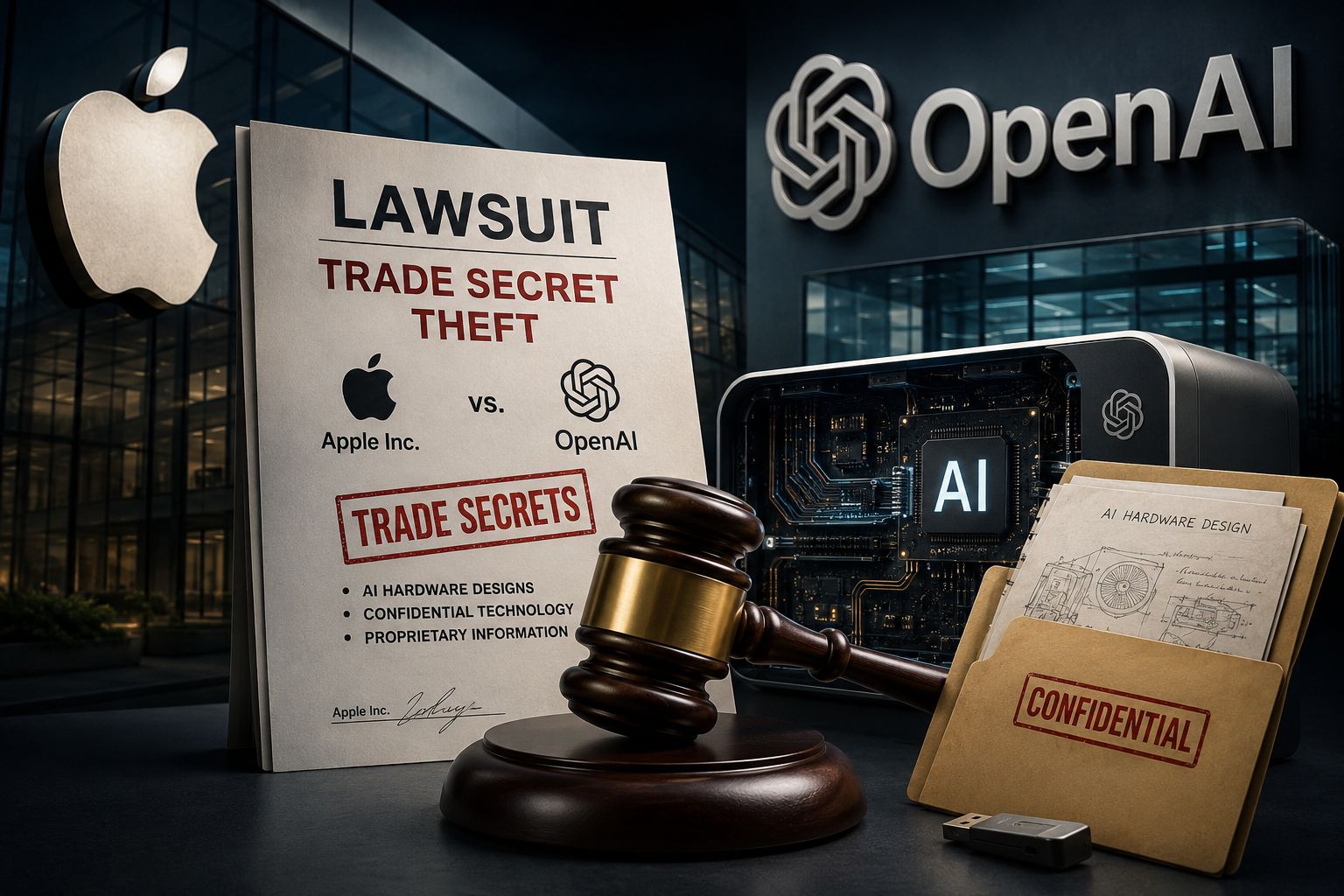
This August, OpenAI entered the fray more clearly. In a post published by the company on August 3 titled “Apple is wrong about this,” it stated that Apple did not raise these accusations when its lawyers contacted the company earlier in the year.
OpenAI went further, explaining that Apple employees reached out to Zhang Liu, a former Apple employee currently working at OpenAI, for help accessing certain documents, not the other way around. The company published screenshots of iMessage conversations that it claims support its account.
OpenAI also defended Tang Tan, its head of hardware, who spent 24 years at Apple, confirming that he was clear with his team about not using any confidential information belonging to other companies.
Apple expands the scope of accusations
The following day, August 4, Apple filed a motion to expedite discovery in the case, stating that its investigations revealed the potential involvement of other employees in the disputed events. The company pointed to more specific examples, including a former employee who met with Liu and another employee before her job interview at OpenAI, and spoke with them about proprietary Apple information related to unannounced products.
It also accused another former employee of taking photos of screens containing confidential documents regarding an unannounced product before an interview at OpenAI. Apple also stated that former employees currently working for the ChatGPT developer have been in contact regarding the return of work devices they received from Apple and kept after leaving the company.
Finally, as both companies prepare for a legal battle that could span years, it seems the case has moved beyond a simple disagreement between two companies. It has become a confrontation over the boundaries of corporate secrets, employee mobility, and the information that can accompany them when moving to a competitor in the heart of the AI and hardware race.
Do you think that the movement of major company employees to competitors could threaten their trade secrets? Tell us your opinion in the comments!
Source:
Leave a Reply