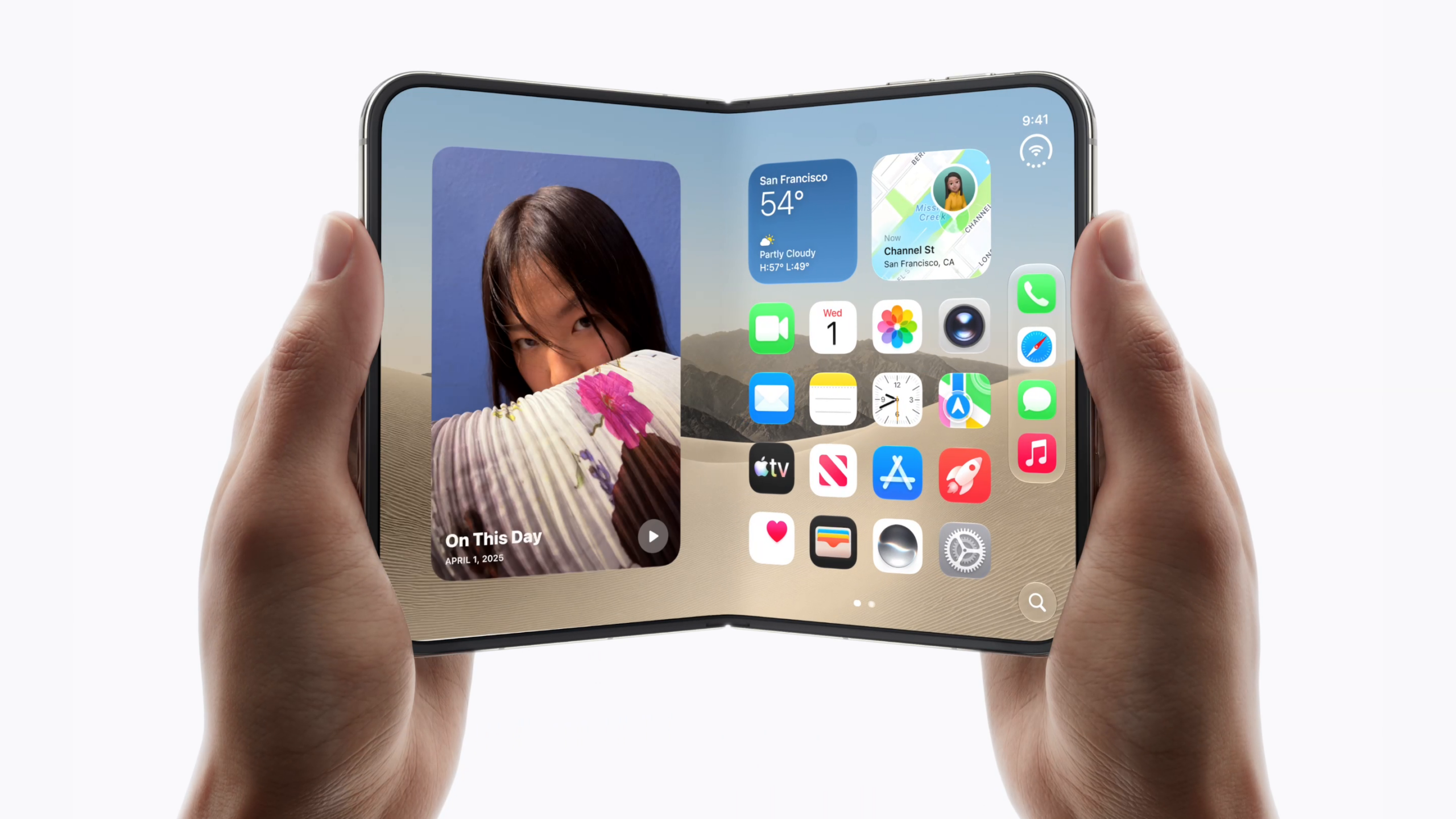
When Apple decides to enter an entirely new category of devices, it rarely does so just to catch up; instead, it waits until the vision is complete, making the experience justified and logical. Following the announcement of the iPhone Duo, top design officials in Cupertino—including John Ternus, Molly Anderson, and Steve Lemay—spoke in an extensive interview with GQ magazine to reveal the philosophy behind Apple’s first foldable phone, and how simple ideas inspired by pocket notebooks transformed into mechanical and software engineering that redefines the concept of foldable devices.
Notebooks and the standard paper system: The spark of the first idea
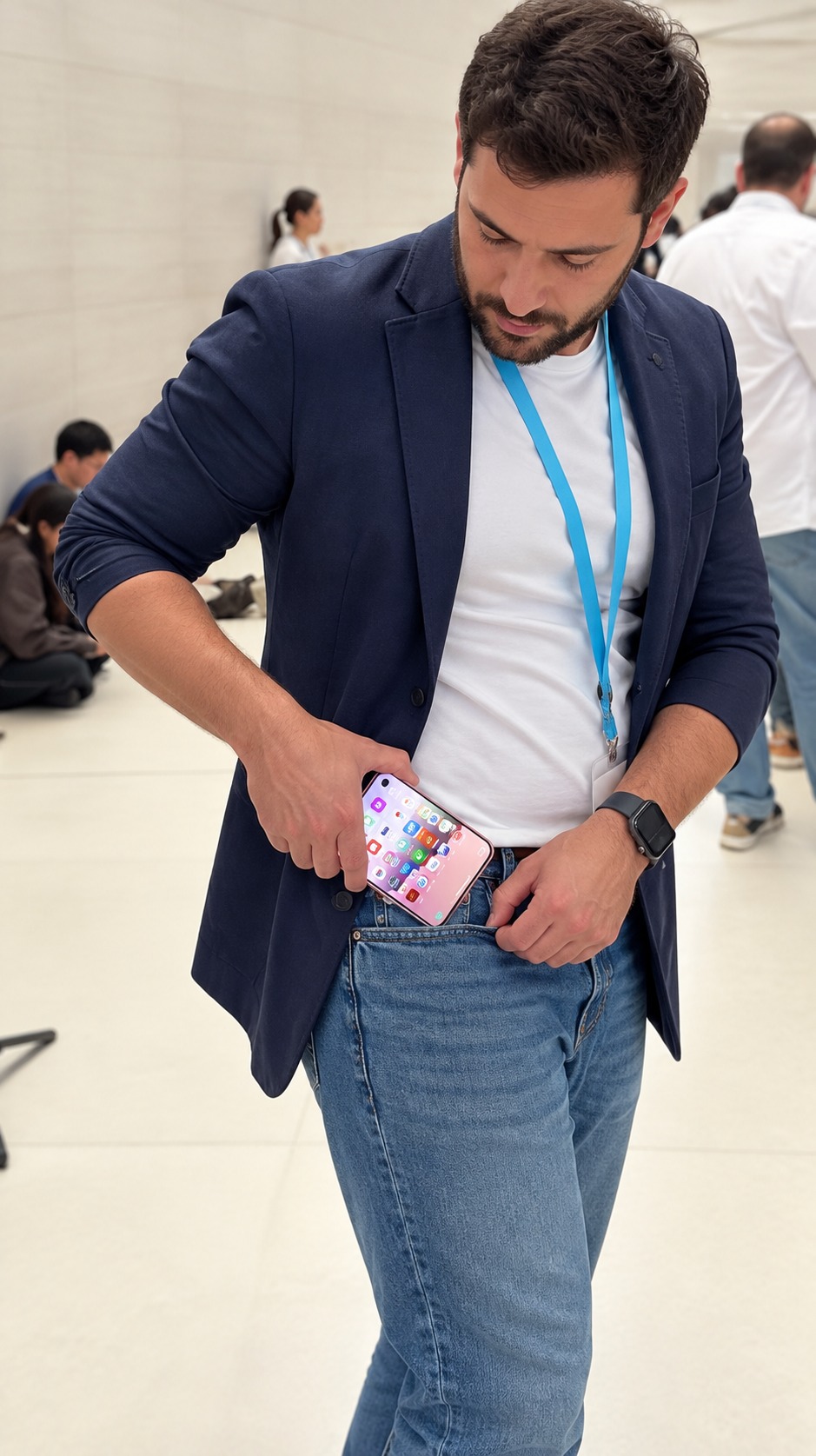
Molly Anderson, Apple’s Vice President of Industrial Design, emphasized that the starting point for the iPhone Duo’s design was not to mimic existing foldable phones on the market, but to study traditional paper notebooks. Everyone knows the feeling of a pocket notebook resting in your clothes, how you can carry it and move around with it comfortably, and then open it to suddenly have a vast space for writing and reflection. This harmony between compactness when carried and spaciousness when used was the cornerstone of the entire project.
To achieve this balance visually, Apple based the dimensions of the iPhone Duo on the international standard paper size system (A-series). This smart move allows the device to maintain the same geometric proportions whether folded in your palm like a traditional phone or fully opened as a wide screen, eliminating the problem of narrow external screens or square internal screens that confuse apps and users.
Hinge engineering: Variable resistance for superior stability and flatness
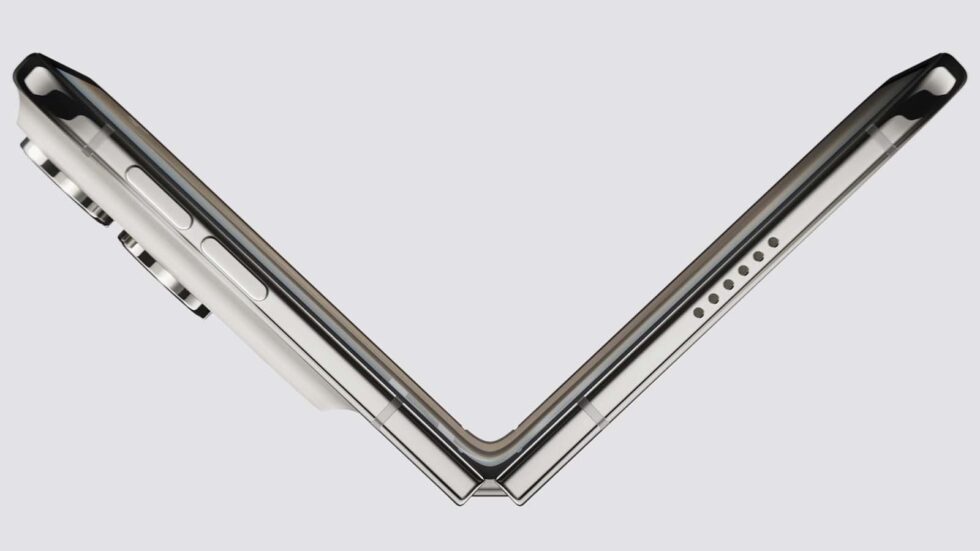
The biggest challenge in manufacturing any foldable phone remains the mechanical hinge. Anderson explained that Apple did not rely on a traditional hinge with fixed resistance, but instead developed a custom, variable torque profile system. This mechanism is designed to start with light resistance that allows the device to be opened smoothly without effort, then the resistance increases to precisely lock the screen and guide it to rest completely flat on a 100% level surface without any unwanted curvature.
The core goal of this innovation is to remove the annoying mechanical feel; the user does not feel like they are folding and unfolding two pieces connected by metal, but rather interacting with an integrated body that expands and bends with long-lasting rigidity and confidence.
This mechanical consistency ensures a natural integration with the internal hardware, reflecting the rigorous standards for which Apple devices have been known for decades.
Software interface: A blend of the best features of Mac and iPad
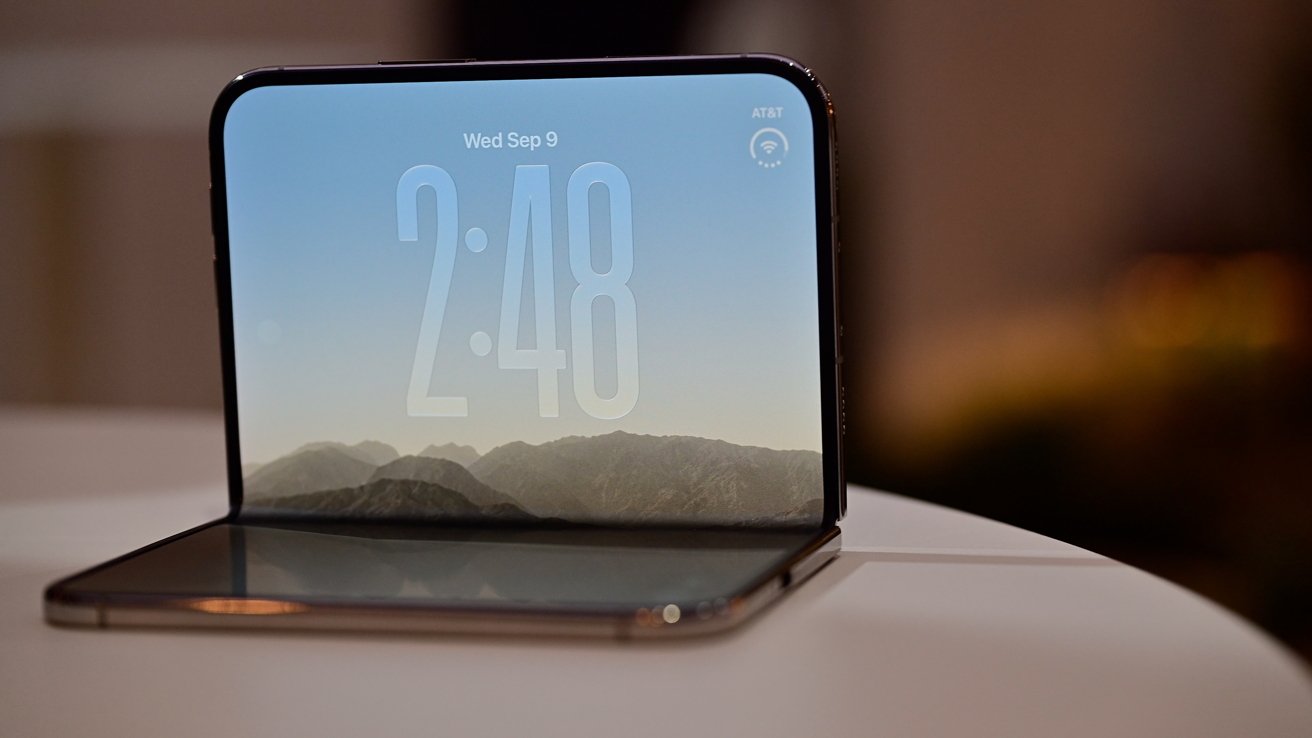
Steve Lemay, Apple’s Vice President of User Interface Design, spoke about the device’s software philosophy, emphasizing that opening the phone should give you an immediate feeling that you are extending and expanding the device you are currently holding, not that you are moving to another system or work environment. To solidify this principle, Apple kept the locations of buttons and controls familiar so that the user does not have to search for any option again after unfolding the screen.
Even the animations were designed with superior engineering care to suggest to the user that the internal screen grows and emerges organically from beneath the external screen without any sudden jumps or frame drops, making the transition incredibly smooth and continuous.
Lemay described the iPhone Duo interface as representing the best that Apple has produced in its history, borrowing the power and multi-window capability of Mac computers, the productivity flexibility of iPad devices, and the simplicity and familiarity of the iPhone system, to create a unified user experience that eliminates any feeling of strangeness or forced integration between two systems.
A bet on developers and the official launch date
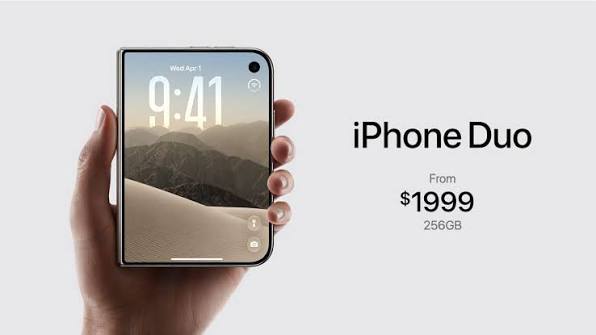
Regarding the future of the iPhone Duo and beyond its launch, Lemay noted that Apple is relying primarily on the minds of developers around the world. Many of the upcoming uses and innovations were not even anticipated by Apple’s internal design team, expecting some developer ideas to turn into revolutionary trends that could lead the foldable phone sector as a whole and change the course of future iPhone Duo generation development.
Pre-orders for the iPhone Duo begin on October 16, with its official arrival in markets and shipping to customers on October 23, starting at a price of $1,999. Through this pricing and craftsmanship, Apple aspires to redirect the foldable device market toward a more mature and practical path.
Source:

Leave a Reply