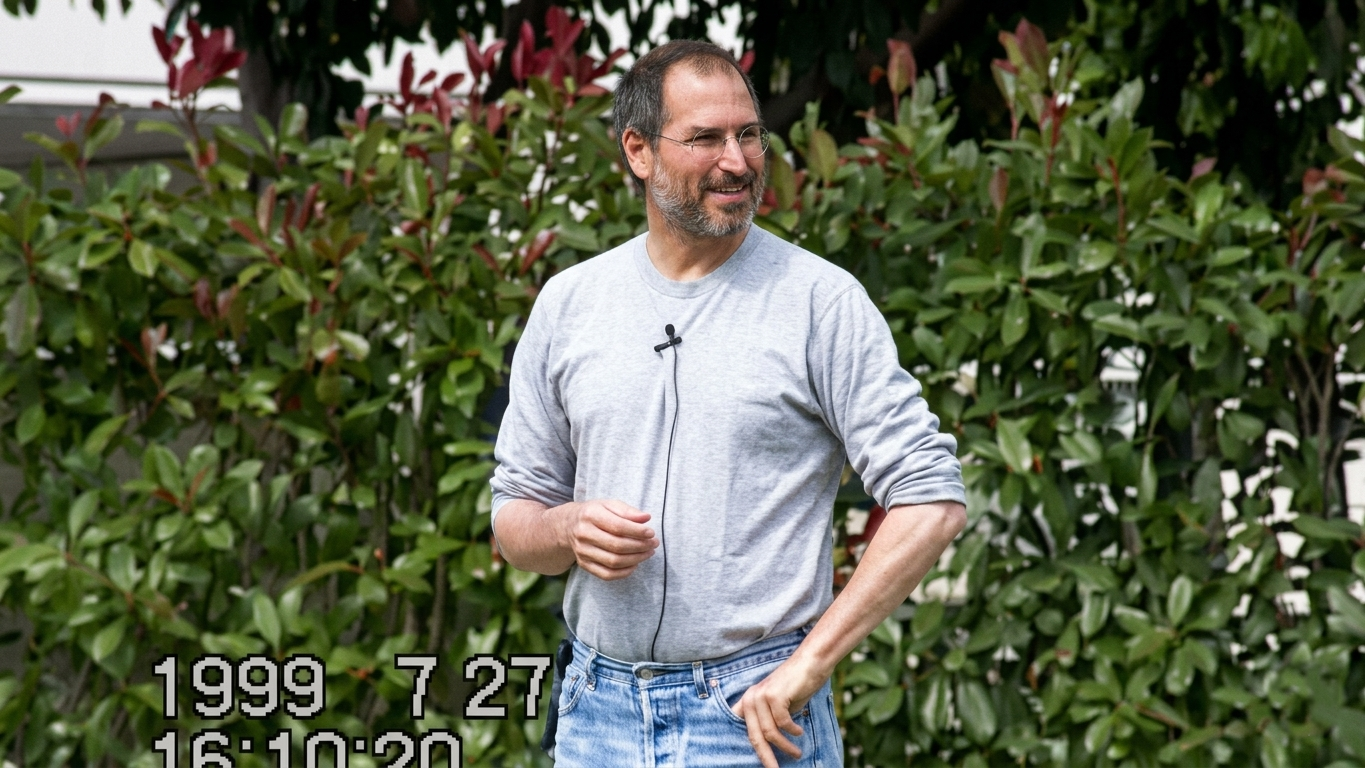
In the world of technology, we rarely get an unfiltered look at what goes on behind the scenes at major companies, especially during the historic moments that shape the future. Recently, an “leaked” internal video that had never been published before, dated July 27, 1999, has emerged, showing Apple’s legendary founder, Steve Jobs, speaking with enthusiasm and confidence to company employees at its Cupertino headquarters.
This 15-minute video was uploaded by Akira Nonaka, a former Apple software engineer, and offers a rare glimpse into the company’s strategy at a time when it had just begun to emerge from a crushing financial crisis to start its journey toward market dominance.
Completing the Matrix: Launching the “iBook” and Changing the Rules of the Game
Jobs’ talk in the video came immediately after his return from the 1999 Macworld Expo in New York, where Apple had unveiled the “iBook G3,” the company’s first consumer-oriented laptop in years. Jobs expressed great pride in the success of the event, which was attended by nearly 50,000 people, emphasizing that competitors, even before users, were stunned by the innovation the company had delivered.
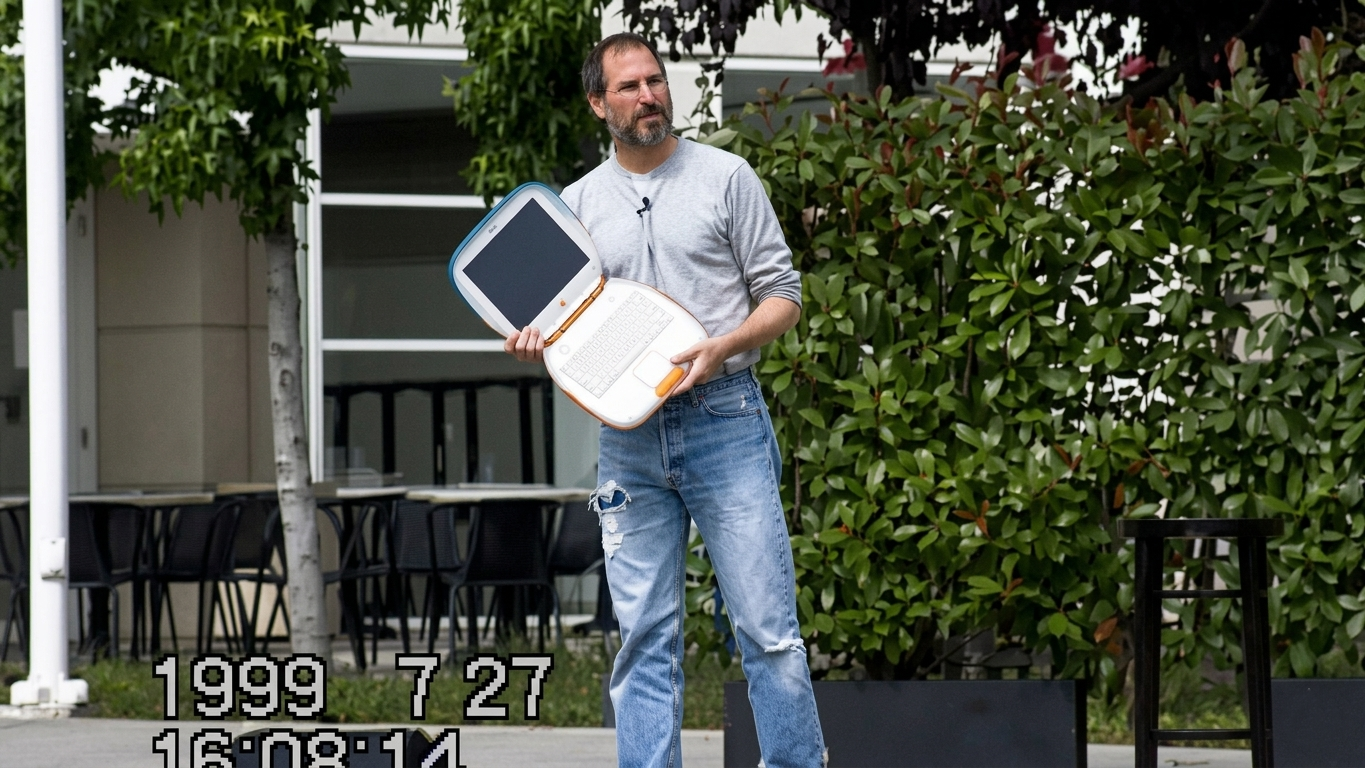
Jobs explained that the launch of the “iBook” was the final piece in the “product matrix” he had established upon his return to the company in 1997. This strategy was based on four pillars: desktops and portables, divided between professional and consumer categories. With the “iMac,” “Power Mac,” and “PowerBook” alongside the new “iBook,” Apple’s arsenal was complete and ready for the offensive.
The Wireless Revolution: The Philosophy of “The Whole Widget”
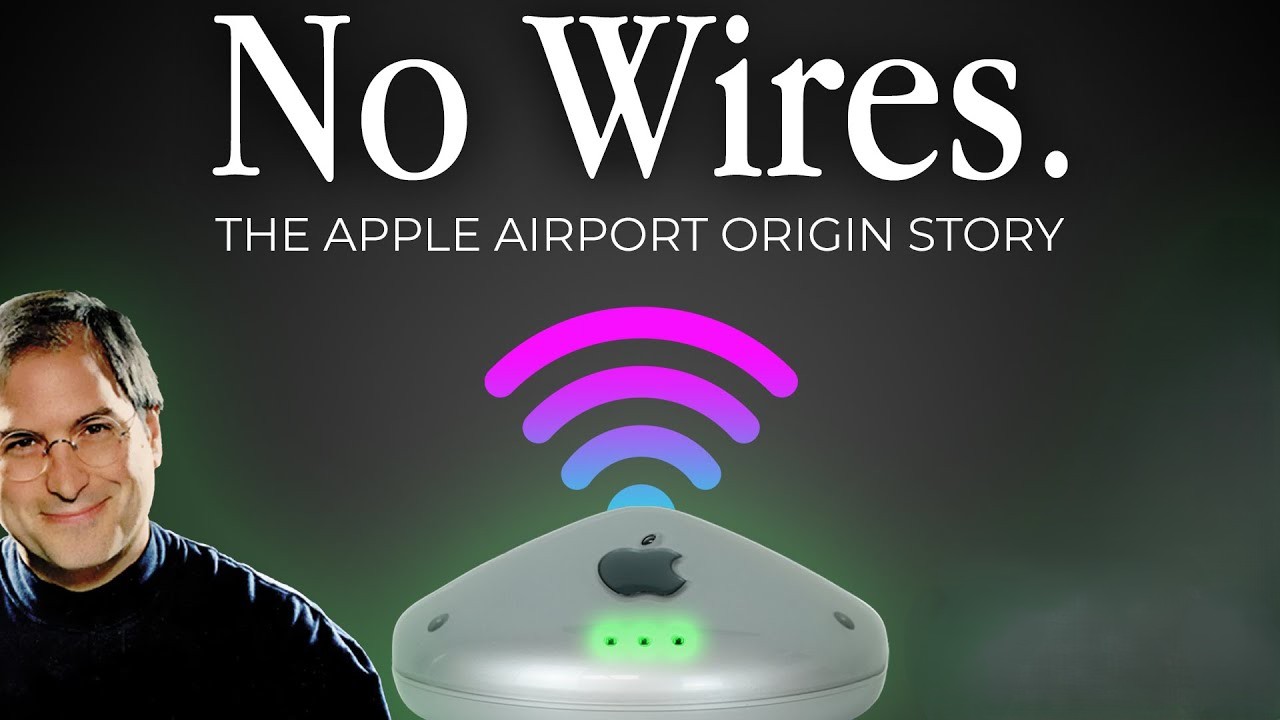
One of the most exciting parts of the video is Jobs talking about the “AirPort” wireless networking system, which Apple developed in collaboration with Lucent. At the time, wireless connectivity was a distant dream and difficult to use, but Jobs emphasized that Apple’s strength lies in making complex technology “simple and automatic.”
In the late 90s, the computer industry was divided into two camps:
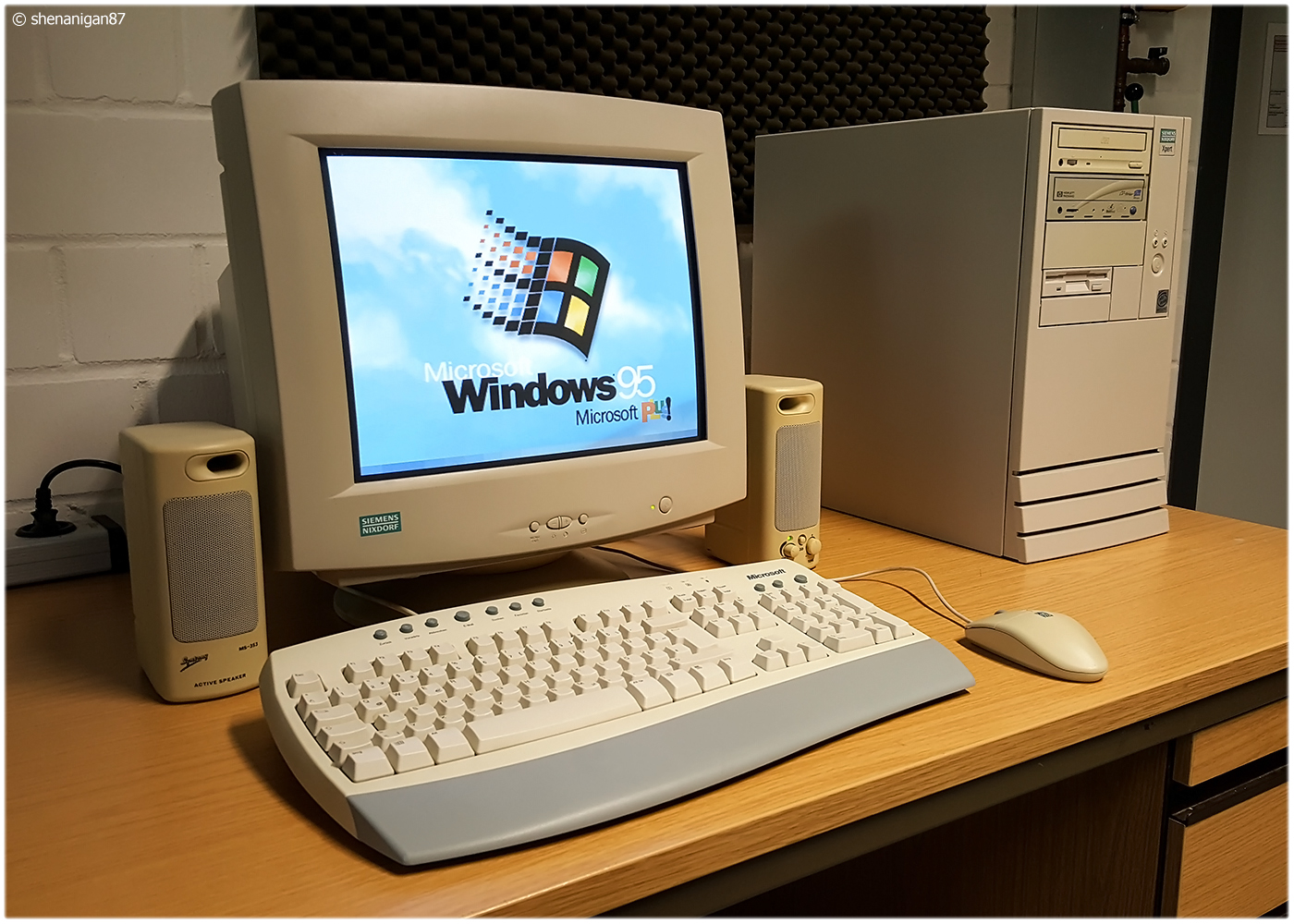
The Prevailing Model (Fragmentation): All major companies like Dell, Compaq, and HP had stopped making their own operating systems. They were merely companies that “assembled” parts and hardware components, putting Microsoft’s “Windows” and an Intel processor on them.
The Apple Model (Integration): Apple was the “last surviving company” that designed the hardware, developed its own operating system (Macintosh), and controlled the processor.
Analysts at the time mocked Apple, calling it a “dinosaur” that would eventually go extinct because it tried to do everything itself, while the whole world had moved toward specialization.
However, in this video, Jobs turned the tables on everyone, considering Apple the “last company” to do this, and that this was a “competitive advantage” rather than a flaw. They were the only ones who could deliver a harmonious innovation like AirPort wireless internet without waiting for permission from Microsoft or others.
Jobs explained with his keen vision that the secret to Apple’s superiority lies in being “the last company that handles the product from A to Z”; it designs the hardware and develops the system simultaneously. He emphasized that this total control gives the company an exceptional ability to innovate. While competitors get bogged down in the intricacies of coordination and negotiations between five different companies, waiting for years to agree on a standard or develop a new feature, Apple implements its innovative ideas immediately and with extreme precision because it controls every detail of the product, moving with complete freedom to offer magical technologies and features that put it ahead of everyone else.
This philosophy is what later made products like the Phonegram (iPhone) superior to everyone else, as Apple controls every detail of the device and the operating system, giving the user a simple and easy experience that competitors cannot easily replicate.
Offensive Strategy: Avoiding Major Corporate Conflicts
At a time when companies like Dell and Compaq were fighting over the enterprise sector dominated by Windows, Jobs announced a bold strategic decision in the video:
◉ Avoid direct confrontation; Apple would not attempt to conquer the enterprise sector at that time.
◉ Focus on creators and restore confidence among designers and professionals.
◉ Lead in education and return strongly to schools and universities.
◉ Dominate the consumer market by returning to users’ homes with products that are “insanely great” in their beauty and efficiency.
Operational Excellence: Tim Cook’s Mark Appears Early
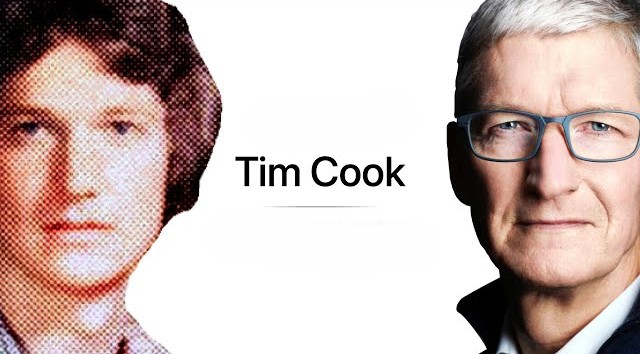
While Steve Jobs was stealing the spotlight as the maestro of innovation in front of the audience, Apple’s internal kitchen was witnessing an organizational revolution that made the gears work with the precision of Swiss watches! In the video, Jobs did not miss the opportunity to boast with confidence that Apple had achieved tremendous operational superiority, to the point that it defeated Dell on its own turf, even though the latter was considered at the time the invincible giant in the world of efficiency.
Surprisingly, this operational magic began to appear just one year after Tim Cook joined the management structure. While Jobs was dreaming of products that would change the world, Cook was silently building that mighty logistical machine we see today, proving that Apple’s successful recipe always needed a creator to innovate and a genius to execute!
“I didn’t come for the money.. I came to make Apple great again”
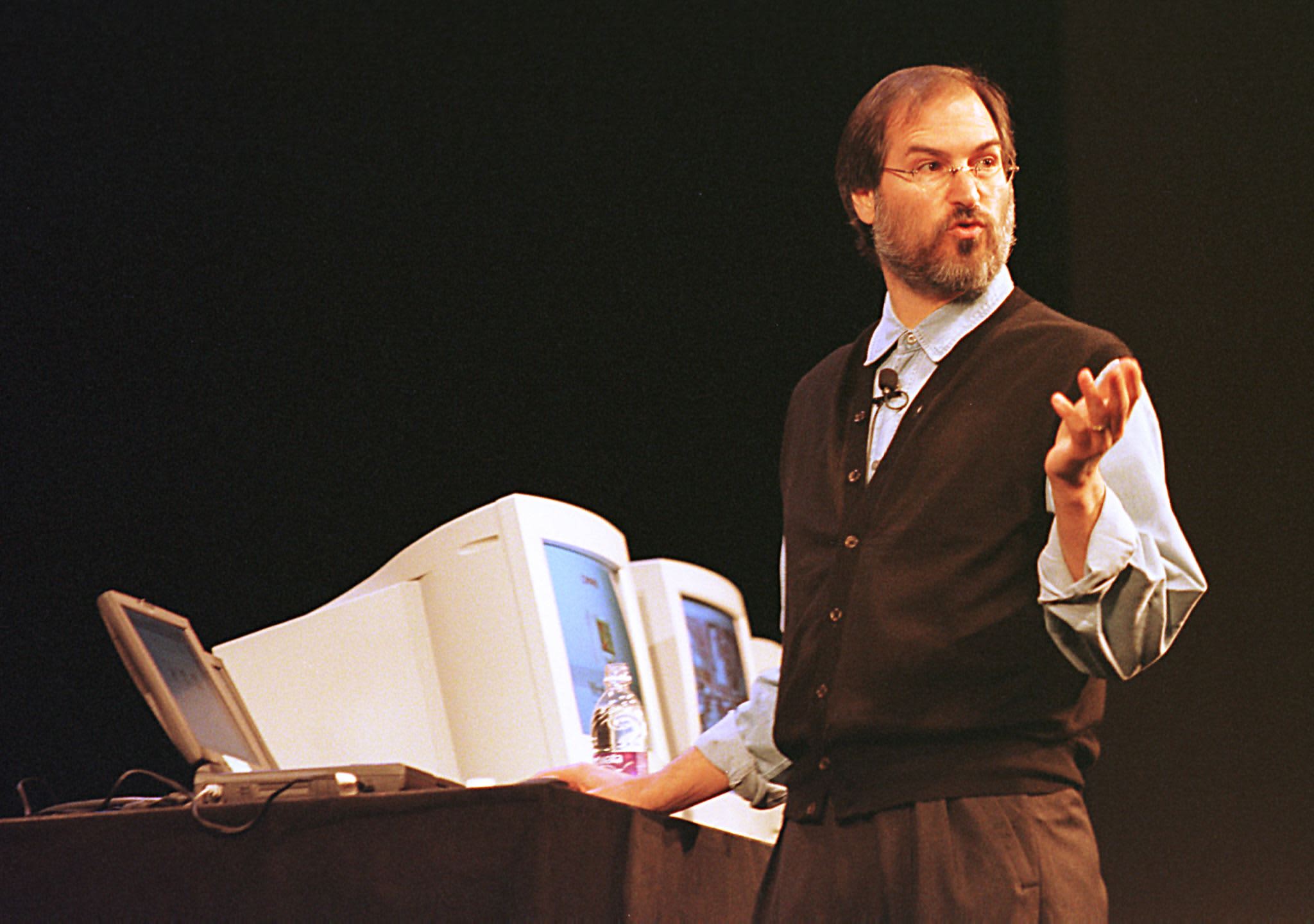
In concluding his talk, Jobs sent an emotional message to his employees, emphasizing that his return to the company was not just to save it financially, but to create great products that people see, use, and that work to change their lives.
Jobs hinted that the future held amazing surprises, which indeed happened two years later with the launch of Mac OS X and the iPod, which changed the music industry forever.
This video is not just an old memory, but a document confirming that Apple’s success today is not a coincidence, but the result of a solid vision that was set with precision more than a quarter of a century ago.
Source:
Leave a Reply