What happens when a foldable phone screen becomes part of the photography experience itself? With the Phonegram Duo, Apple is not just relying on a new design; it is leveraging the dual screens and folding mechanism to offer unconventional ways to take photos and make video calls. While the phone hides a set of smart features that could change how the camera is used, it unfortunately abandons a number of functions we are accustomed to seeing in Pro models. In this article, we will take you on a fun and quick tour to learn about what the Phonegram Duo camera can do and what it cannot.
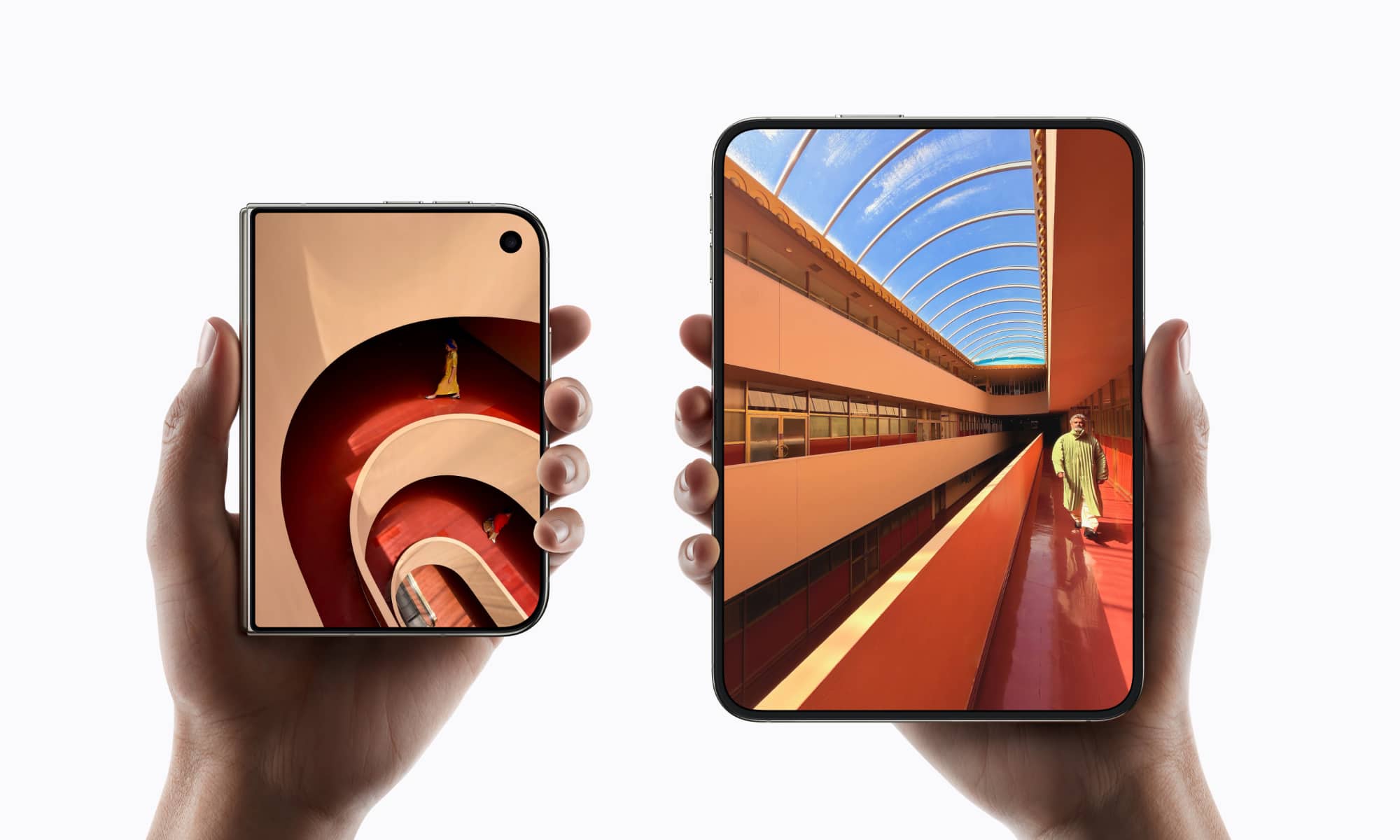
Smart Take Feature
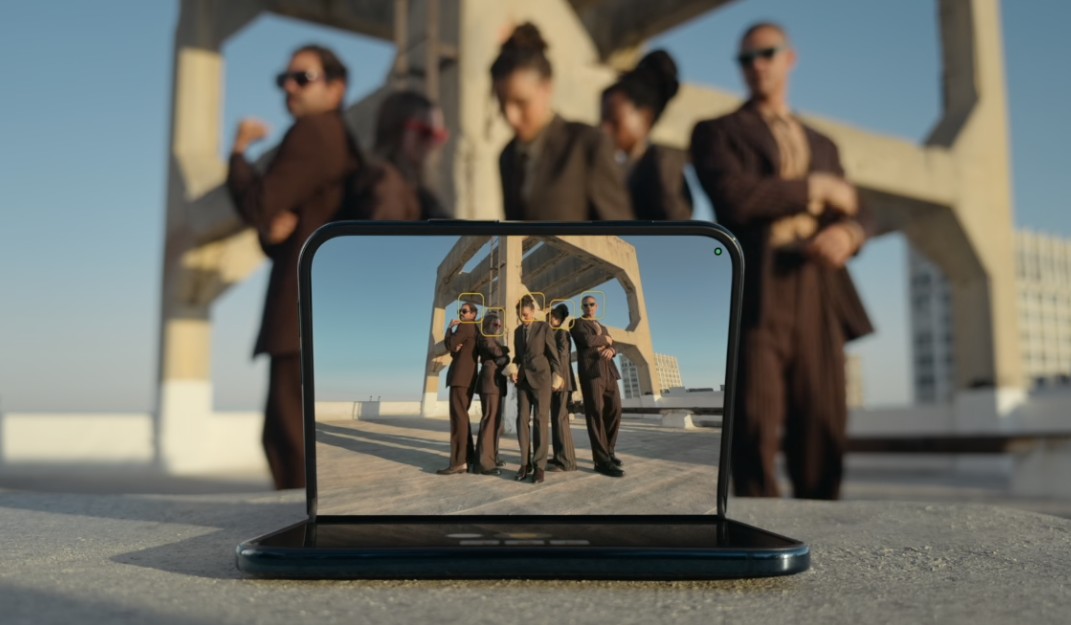
Apple introduces the Smart Take feature, which uses artificial intelligence to determine the moment when everyone, including the phone owner, is ready for a group photo. This way, the user does not need to set a timer or stay out of the frame to take the shot. The new feature works thanks to the foldable design and dual screen, where the user can place the Phonegram Duo in a half-folded position to stand on its own, then step into the frame and let the phone automatically take the picture at the right moment.
Kid Cue Feature
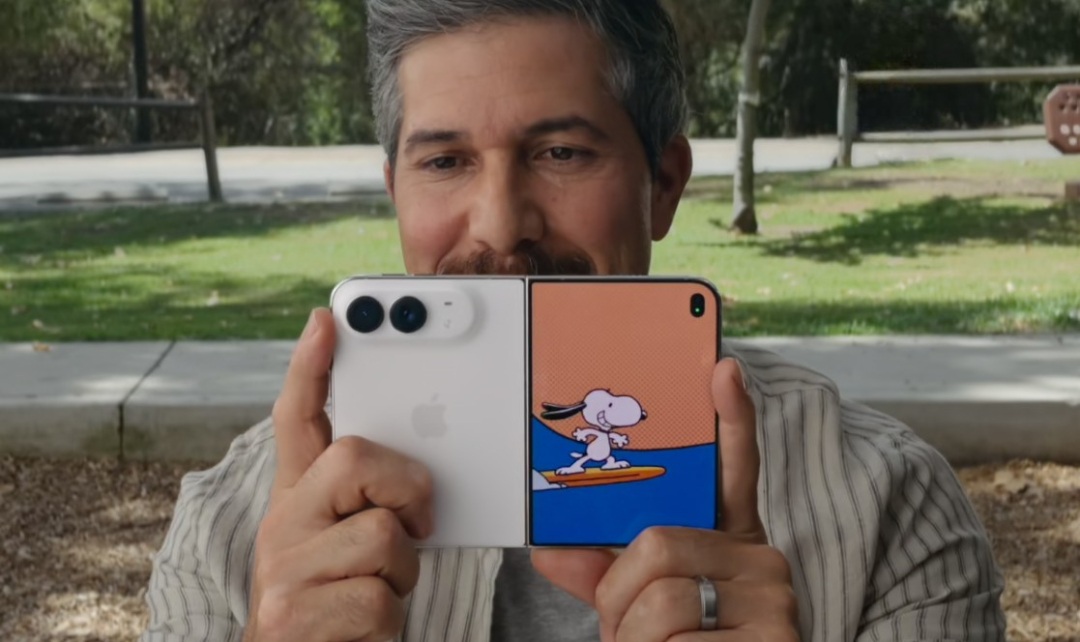
Kid Cue is a new feature from Apple targeting children, displaying entertaining animations inspired by characters from the famous Peanuts cartoon series to help children look at the camera while taking photos.
Duo Preview Feature

The Duo Preview feature takes direct advantage of having two screens, as the camera app displays a live preview of the photo on both screens. This allows the person being photographed to see the result directly and make adjustments to their pose or framing before the photo is taken.
Duo FaceTime Feature

The Duo FaceTime feature allows people with the user to participate in a FaceTime call using the external screen, while the phone owner uses the internal screen. Thus, more than one person can appear in the call without crowding around the phone or passing it between them.
Design Feature

The Phonegram Duo can operate in more than one position, including the half-folded mode, and can stand on its own during FaceTime calls or video recording without needing to be held. The folding mechanism itself acts as a built-in stand or a tripod-like base, which makes the phone practical for taking selfies or long-exposure photography (a photography technique where the camera shutter is kept open for a long period of time).
The main 48-megapixel rear camera can also be used to take high-quality selfies, using the external screen as a viewfinder to preview the image, a feature not available on traditional flat-design iPhones.
Camera System
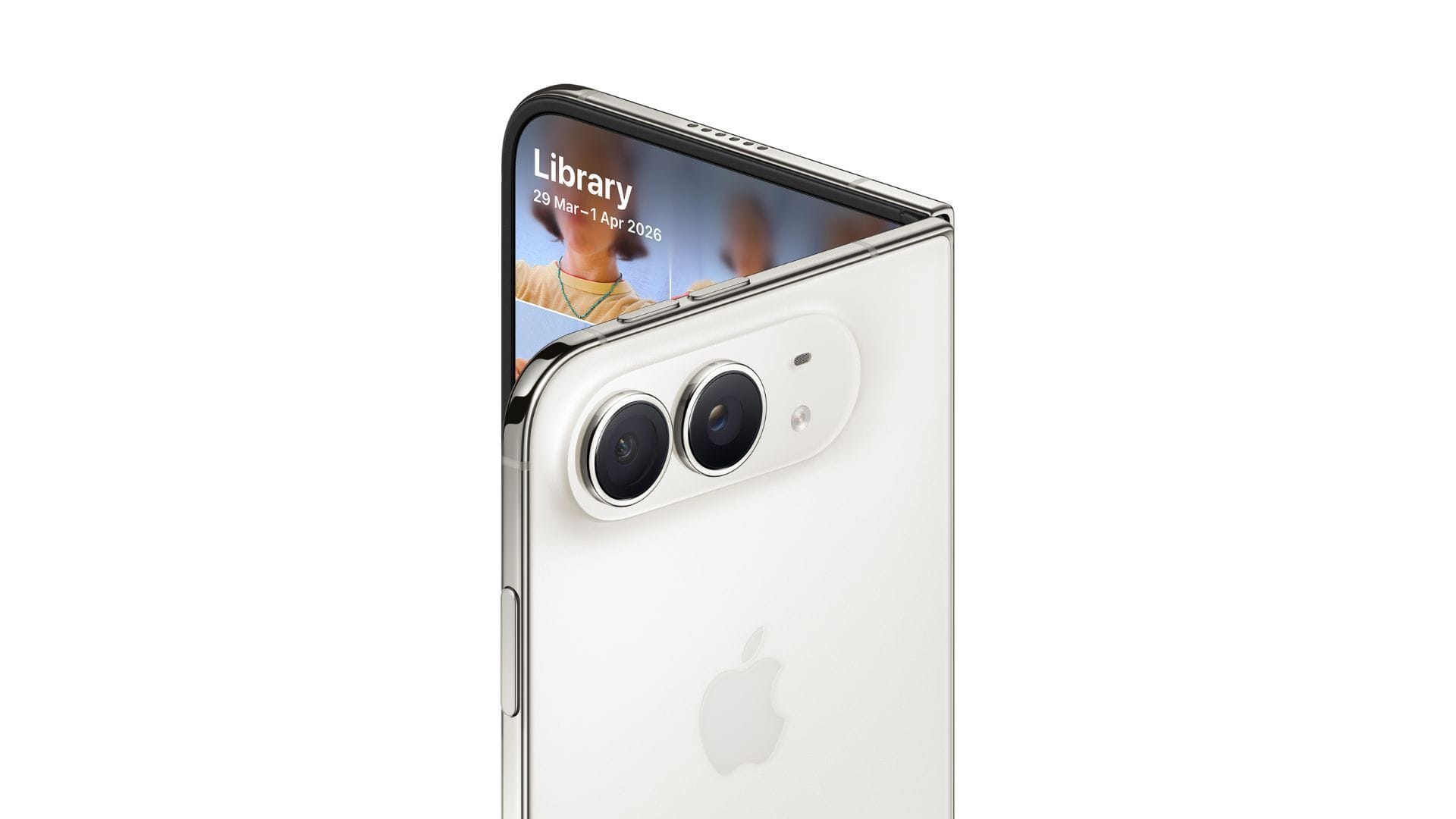
The Phonegram Duo relies on a dual-camera system called Dual Fusion, led by a 48-megapixel main camera, which is the same camera found in the standard iPhone 17, not the Pro models. This camera captures 24-megapixel photos with a 26mm focal length by default, alongside 12-megapixel photos with 2x optical quality zoom at 52mm.
The main camera also supports optical image stabilization via sensor-shift, but it does not support the second generation of this technology available in Pro models. The phone also lacks support for spatial photos and the ProRAW format. The second camera is ultra-wide and operates at 48 megapixels with a 13mm focal length, with macro photography support. Since there is no separate telephoto lens, the phone reaches 2x optical quality zoom, with the ability to zoom out optically by 2x, while digital zoom reaches 10x.
Video Recording

The camera introduces the new Smart Focus Tracking feature, which relies on AI to keep the camera focused on the subject constantly; it can also resume tracking a person or object if they leave the frame and then return. This feature is also available on the iPhone 18 Pro.
Apple’s foldable phone can record 4K Dolby Vision videos at up to 120 frames per second, alongside Cinematic mode, which allows recording 4K Dolby Vision videos at up to 60 frames per second. For the first time, Apple allows adding cinematic effects to video after finishing shooting, a feature available on the Phonegram Duo and Pro models. Apple has also improved low-light video shooting when recording at 1080p and added the option to record Time-lapse videos in 4K and Dolby Vision format.
Front Camera
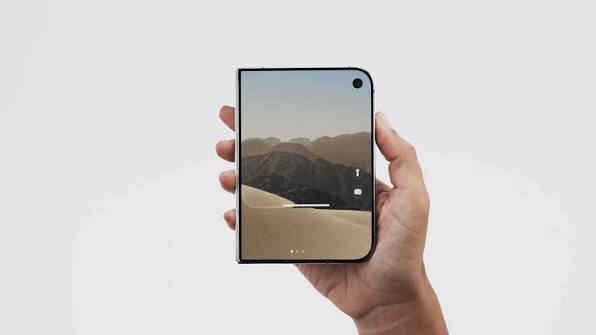
The external front camera comes with 12 megapixels, not 18 megapixels like the iPhone 17 and iPhone 18 Pro. However, it offers the same remaining features. The internal screen includes a 1080p FaceTime camera mounted under the display.
What is the Phonegram Duo camera missing?
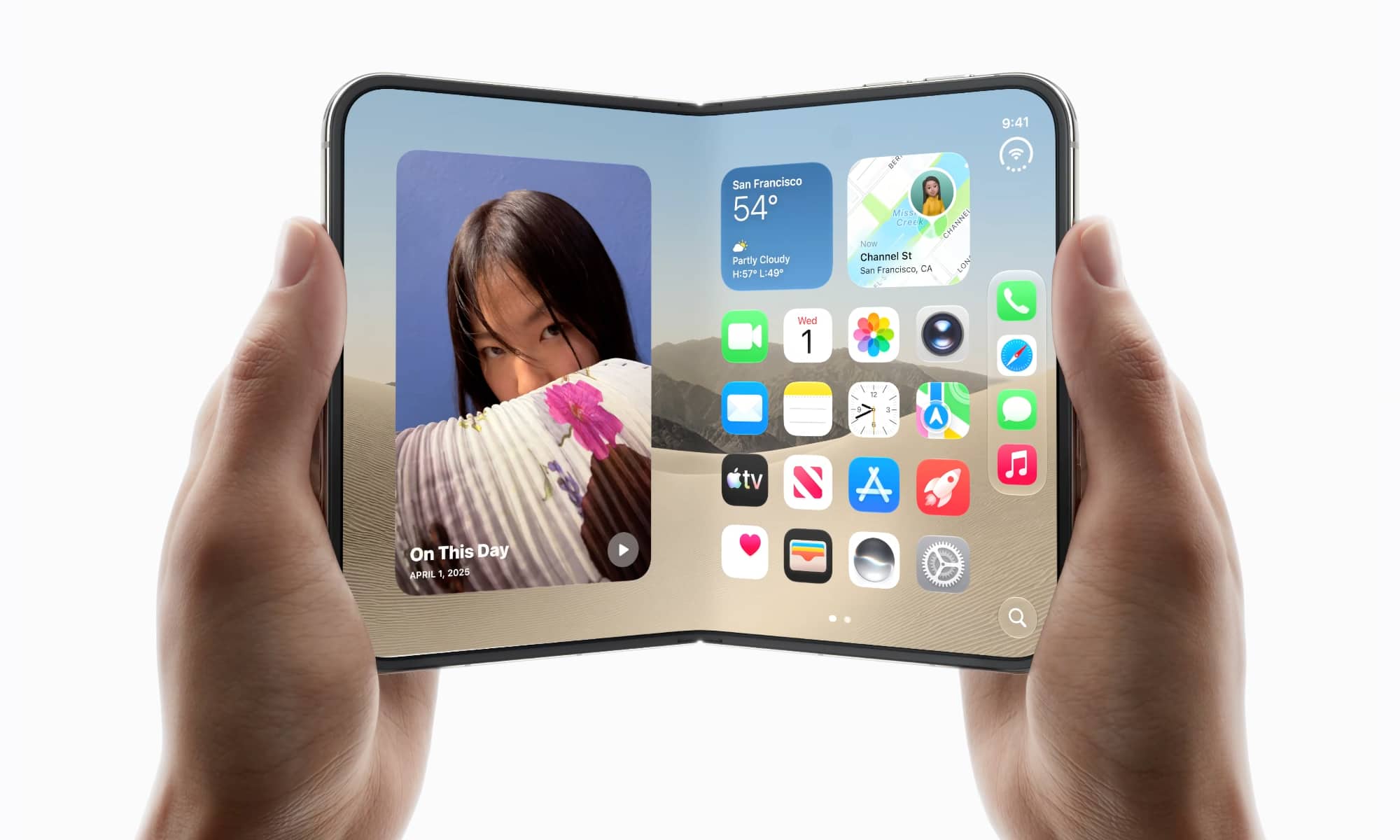
Despite the features we reviewed above, the photography system in the Phonegram Duo is simpler than the one found in the iPhone 18 Pro and Pro Max. It lacks a set of professional functions, which include the following:
- Telephoto lens
- Pro Controls
- Apple Reference Image
- Variable aperture
- Second generation of sensor-shift OIS
- Adaptive True Tone flash
- Capturing photos and recording video in Spatial format
- ProRAW format
- ProRes format
- ProRes RAW format
- Genlock support (works to synchronize the iPhone with professional cameras or other iPhones, so they all start capturing the same image at the same time)
- Video recording in Apple Log 2 format
- Studio-quality four-microphone array
Finally, the Phonegram Duo will be available for pre-order on October 16, and will officially arrive in markets on October 23. The price of Apple’s foldable phone will start at $1,999. Despite the capabilities and new ideas in photography that the Phonegram Duo offers, the high price will be a major problem for many, especially since the phone lacks some of the professional photography features found in Pro models.
Do you think the photography advantages in the Phonegram Duo justify its high price? Tell us in the comments!
Source:



Leave a Reply