The foldable phone market has entered a new phase of maturity with the adoption of a design philosophy entirely different from what we've seen in recent years. Instead of the tall, narrow screens that resemble remote controls when closed, the focus has shifted to a short, wide, passport-like design. This vision is being directly challenged by the two tech giants: Apple's all-new iPhone Duo, starting at $1999, and its direct competitor, Samsung's Galaxy Z Fold 8, priced at $1900. With a price difference of less than $100, the choice is no longer primarily about budget, but rather a fierce battle between two distinct philosophies of hardware and user experience.
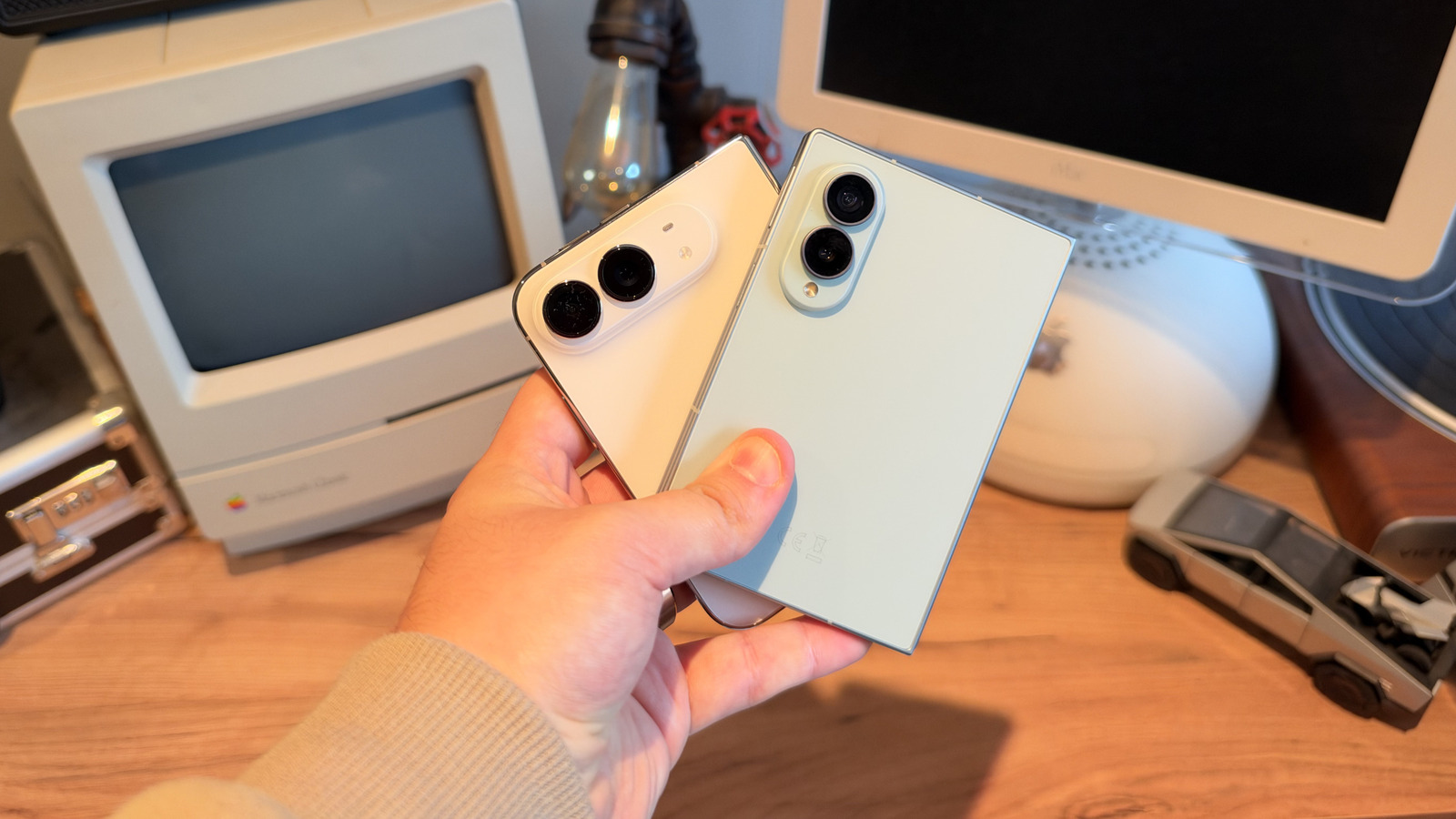
Similarities: Unified philosophy and harmony in basic hardware
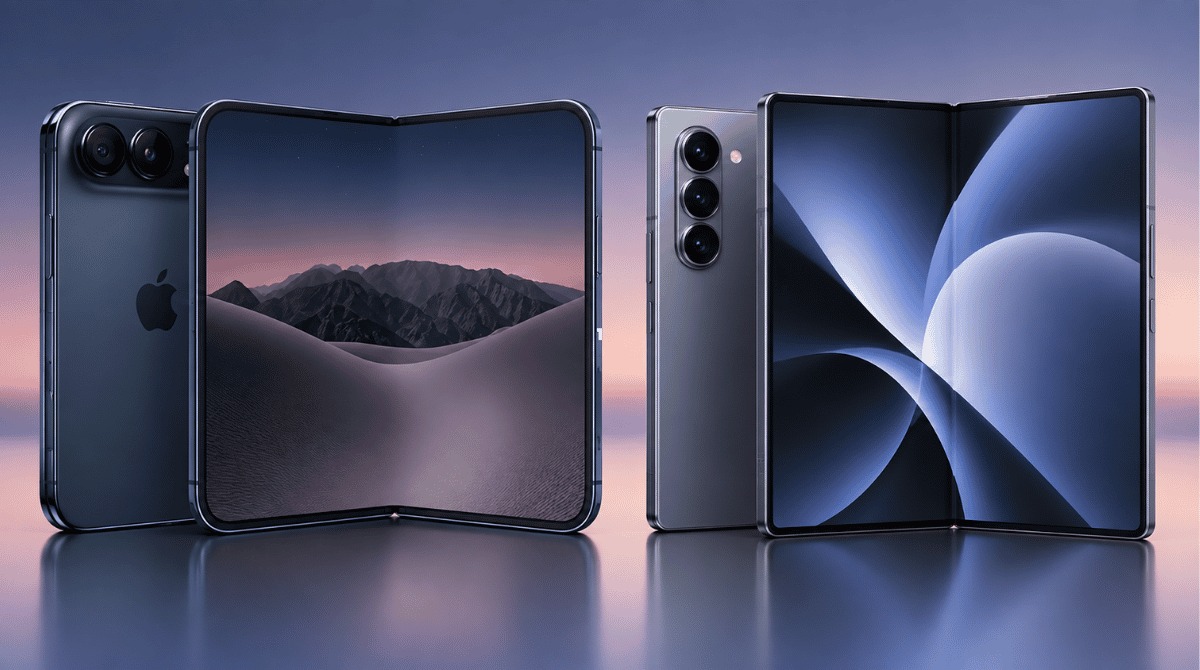
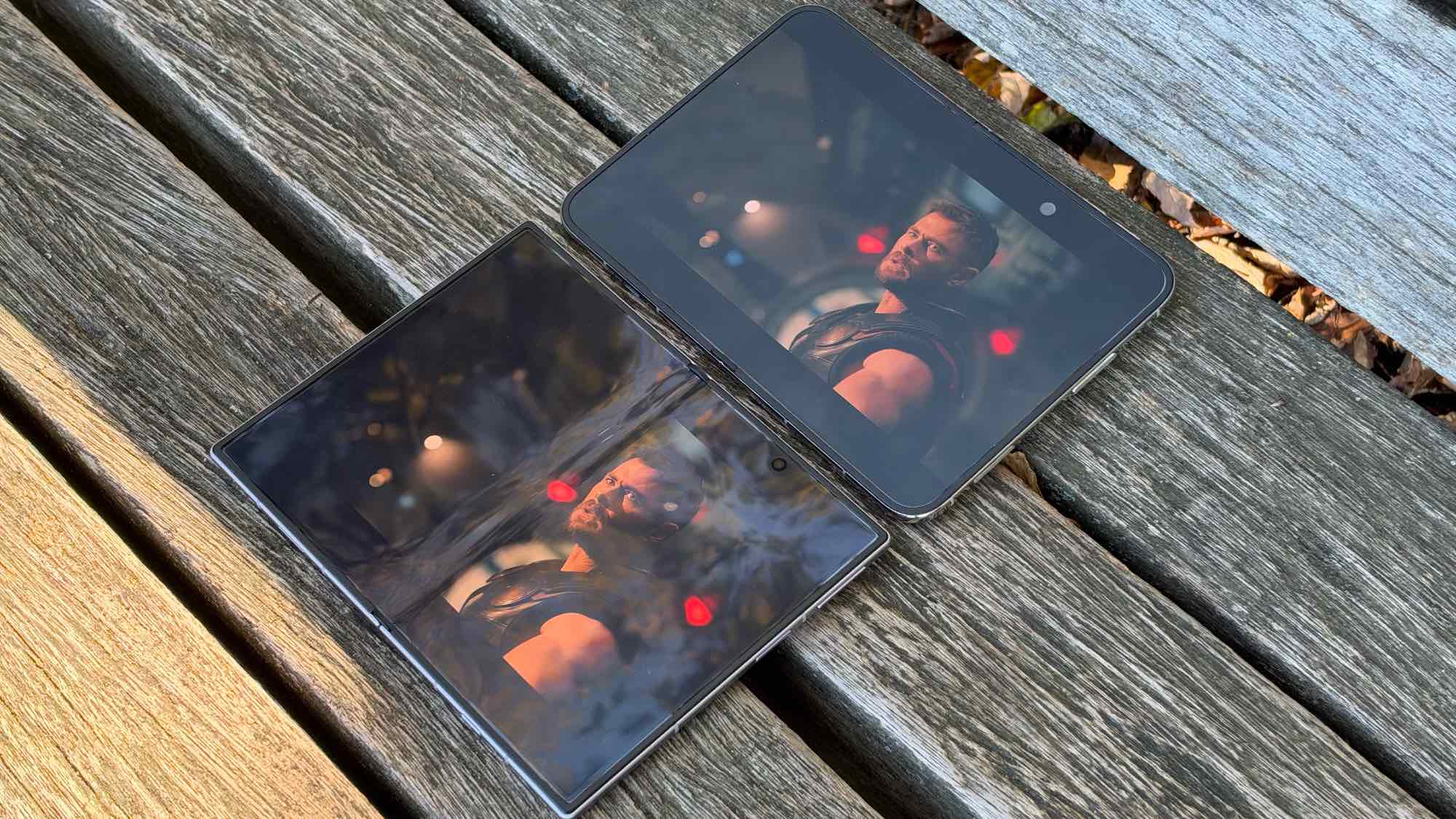
At first glance, it's clear that both phones share the same ideal dimensions; the iPhone Duo's internal screen measures 7.6 inches, exactly the same size as the Galaxy Z Fold 8. Both screens utilize a nearly square aspect ratio, which significantly reduces the appearance of wide black bezels when watching movies, compared to older designs. The external screens are also very similar, with the iPhone Duo offering a 5.4-inch cover screen compared to the Fold 8's 5.5 inches. These screens are practical sizes that allow for smooth and comfortable use of full applications, unlike the screens of vertically foldable phones, which are often limited to displaying widgets and notifications.
This similarity extends to the camera system; both companies opted to forgo a dedicated telephoto lens due to the impossibility of fitting it into such a slim body. Instead, the iPhone Duo features two rear cameras: a 48MP main camera and a 48MP ultrawide camera, while the Galaxy Fold 8 offers two 50MP sensors for the same purpose, both relying on a portion of the main sensor for digital zoom. Furthermore, Apple has replaced Face ID with a Touch ID fingerprint sensor integrated into the side power button, similar to Samsung's, though Apple's button has a slight protrusion for easy touch access. Both devices also start with 256GB of storage and utilize titanium in their construction and advanced vapor chambers to manage heat.
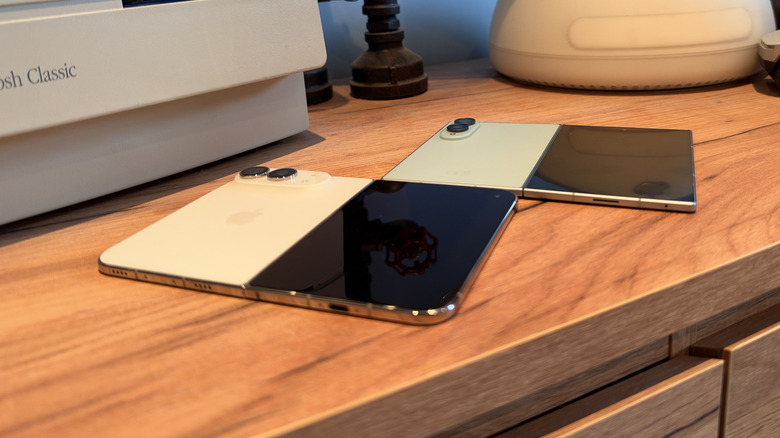
Differences: Slimness and weight versus durability and meticulous detailing
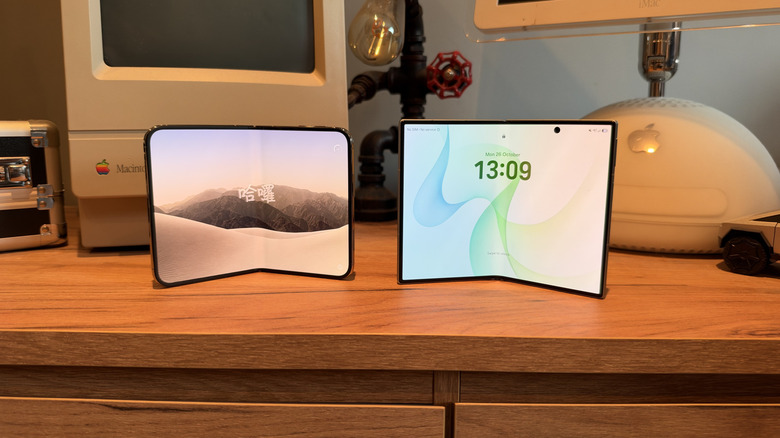
Samsung clearly excels when it comes to slimness and lightness; the Galaxy Z Fold 8 weighs just 201 grams and boasts an impressive thickness of 4.5 mm when unfolded and 9.7 mm when closed. In contrast, the iPhone Duo weighs a heavier 254 grams and is 5.2 mm thick when unfolded and 11.3 mm when folded, a weight that places it in the same league as the larger iPhone Pro Max. While the Apple phone's weight distribution is excellent for everyday use, those who prioritize thinness and lightness will find Samsung's design superior in this area.
But Apple responded strongly in terms of durability and screen quality. The iPhone Duo boasts a full IP68 water and dust resistance rating, guaranteeing it can withstand immersion in up to 19.6 feet of water for 30 minutes. In contrast, the Fold 8 only has an IP48 rating, offering very weak protection against dust particles—a critical flaw for foldable phones with complex hinges. Apple also excelled in using a nano-texture finish on the inner screen, making the center fold almost invisible to the eye and touch, unlike the glossy, reflective panel on the Samsung phone. Furthermore, Apple completely concealed the FaceTime camera beneath the screen, eliminating the camera cutout that interferes with the interface elements on the Samsung phone.
In terms of performance and productivity, the iPhone Duo is powered by the flagship A20 Pro processor and iOS 27, which finally brings the Split View feature for multitasking. It also boasts a 4883 mAh battery offering up to 31 hours of video playback and upcoming support for the Apple Pencil. Meanwhile, the Galaxy Z Fold 8 is equipped with the Snapdragon 8 Elite Gen 5 processor, specifically designed for Galaxy devices, and runs One UI 9 based on Android 17. This provides a seamless, windowed experience that excels in office productivity. The phone is powered by a 4800 mAh battery with 45W wired and 20W wireless charging speeds. It also features a physical SIM card, which Apple has completely abandoned in favor of an eSIM, and lacks any support for the S Pen.
Which one is worth buying?
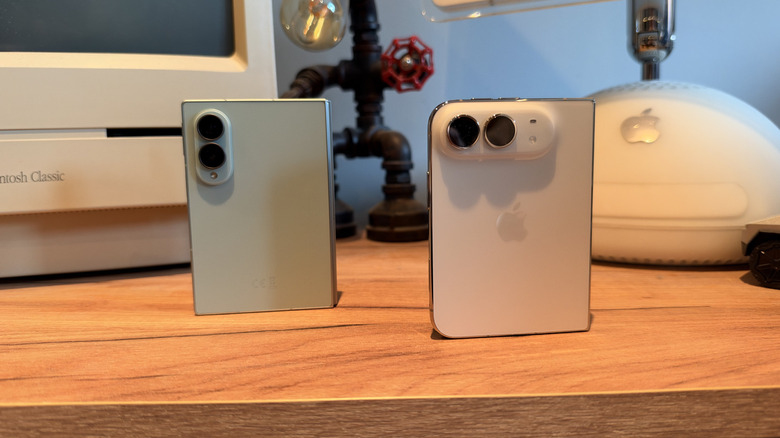
Ultimately, the operating system remains the true compass for your choice, given the significant convergence in hardware and price. If you're already immersed in the Apple ecosystem and are looking for a device that offers the highest possible durability in the foldable phone category thanks to its IP68 rating, along with an internal screen that brilliantly conceals the unsightly crease, and you're waiting for support for the Apple Pencil for note-taking and drawing, then the iPhone Duo delivers the luxurious and comprehensive experience you've been anticipating.
On the other hand, the Galaxy Z Fold 8 stands out as an exceptional option for those seeking the lightest and slimmest foldable phone that fits easily in a pocket, while still retaining a traditional SIM card slot and a sophisticated operating system that offers unparalleled window management and true multitasking. However, it's worth noting that neither device is ideal if telephoto zoom is your primary focus, as neither features dedicated zoom lenses, necessitating the consideration of thicker alternatives.
Source:


Leave a response